

OUT WEST ROUNDUP | Contest winners trap carbon in concrete; bankers report rural growth

WYOMING
High-dollar contest winners make concrete to trap carbon dioxide
CHEYENNE — Organizers of a $20 million contest to develop products from greenhouse gas that flows from power plants announced two winners April 19 ahead of launching a similar but much bigger competition backed by Elon Musk.
Both winners made concrete that trapped carbon dioxide, keeping it out of the atmosphere, where it can contribute to climate change. Production of cement, concrete’s key ingredient, accounts for 7% of global emissions of the greenhouse gas, said Marcius Extavour, XPRIZE vice president of climate and energy.
Meanwhile, Musk, the electric car and space entrepreneur, has pledged $100 million for researchers who can show how to trap huge volumes of carbon dioxide straight from the atmosphere and store the gas permanently.
The $20 million prize announced April 19 had two parts: One at a coal-fired power plant in Wyoming and the other at a gas-fired power plant in Alberta, Canada. The contest focused on using carbon dioxide nabbed from the plants’ smokestacks, and the winners showed they can trap the emissions in cement, making stronger concrete in some cases.
State to hold listening session on greenhouse gas reduction plan
CSU receives $1 million for energy research
The winner at the Wyoming plant, Los Angeles-based CarbonBuilt, used carbon dioxide to cure concrete, trapping it in a process that also emitted less of the greenhouse gas compared with traditional cement production, according to XPRIZE.
The U.S. portion of the contest took place at the Wyoming Integrated Test Center, a facility at a coal-fired power plant near the city of Gillette that hosts research into ways to trap and use carbon dioxide in real-world scenarios.
Gov. Mark Gordon has often touted the research center as an example of Wyoming’s interest in finding solutions to climate change — potentially preserving the state’s declining coal industry in the process.
THE WEST
Bankers report strong growth in rural parts of 10 states
OMAHA — Strong economic growth continues in rural parts of 10 Western and Plains states even though business continues to lag behind the level it was at before the coronavirus pandemic began, according to a new monthly survey of bankers.
The overall index for the region declined slightly from March’s 71.9 but remained at a strong level of 69. Any score above 50 suggests a growing economy, while a score below 50 suggests a shrinking economy.
Creighton University economist Ernie Goss, who oversees the survey, said improving grain prices, continued low interest rates and growing exports have all helped the economy in rural areas.
House panel approves incentives for events in Colorado
Bankers remain optimistic despite the challenges in the economy. The survey’s confidence index was a healthy 72.4 in April even though it was slightly lower than March’s 76.7.
Goss said the region is adding jobs at a solid pace, but region still has about 184,000 fewer jobs than before the pandemic began. The hiring index also remained strong at 62.5 even though it was lower than March’s 72.9 reading.
Bankers from Colorado, Illinois, Iowa, Kansas, Minnesota, Missouri, Nebraska, North Dakota, South Dakota and Wyoming were surveyed.
UTAH
Honduran woman exits church after 3 years in sanctuary
SALT LAKE CITY — After over three years living in a Salt Lake City church to avoid being deported, Honduran immigrant Vicky Chavez stepped outside on April 15 with tears in her eyes as church congregants and friends cheered, celebrating her newfound freedom.
Chavez and her two young daughters took sanctuary in First Unitarian Church in January 2018 after she said she fled an abusive boyfriend in Honduras and sought asylum in the United States but was denied.
Boulder County Democrats condemn Hickenlooper over vote on immigrant aid
Chavez entered the United States illegally in June 2014 and was ordered deported by a federal immigration judge in December 2016. After exhausting her appeals in January 2018, Chavez had a plane ticket home to San Pedro Sula, Honduras. She instead accepted an offer of sanctuary from the church.
Chavez said she received a notice from Immigration and Customs Enforcement on April 12 that she had been granted a so-called a stay of removal, which limits her risk of being deported for a year.
Chavez and her daughters were the first known immigrants to take sanctuary in Utah, according to local immigration advocates and the state chapter of the American Civil Liberties Union.
MONTANA
Governor signs bills defending campus free speech
HELENA — Montana Gov. Greg Gianforte signed two bills on April 15 that supporters say aim to protect freedom of expression and association on public university campuses in the state.
The new law prohibits universities from denying resources to religious, political or ideological student organizations even if they hold views that other students find offensive. Universities can still prohibit discrimination targeting particular students.
Alan Dershowitz, Robert Post to discuss free speech on campus in Colorado Wednesday
Trump orders colleges to back free speech or lose funding
That bill passed the Legislature largely along party lines, with Republicans in favor and Democrats opposed. Supporters of the measure say it is needed to avoid exclusion of groups that hold controversial views. Opponents say the measure would allow groups to receive university funding even if they uphold views that exclude or target certain students, such as members of the LGBTQ community.
The new law would also ban universities from limiting controversial speech to “free speech zones” – designated areas on campus that students and others are restricted to if they want to share views without getting approval from college officials for events that can be political in nature. Montana university officials said earlier this year that there are no free speech zones on their campuses.
NEW MEXICO
Solar entrepreneur becomes state’s 1st billionaire
ALBUQUERQUE — A longtime Albuquerque resident has been listed as a billionaire on Forbes’ annual list of the richest people in the world. The magazine published its latest rundown of global billionaires in early April.
Ron Corio, 59, was listed at No. 2,524, becoming the state’s first billionaire, The Albuquerque Journal reported April 7. Forbes reported that Corio had a net worth of $1.1 billion as of April 6.
He is one of 2,755 global billionaires included on this year’s list and one of 724 in the U.S.
Xcel Energy promises to double renewable energy use in Colorado; state leaders react
In rural Colorado, one town is looking to its community college to help survive the end of coal
Corio was born in New Jersey and moved to New Mexico in 1979, launching Array Technologies, Inc. in 1989 at the age of 28.
The company makes tracking systems for solar arrays that tilt and turn the panels to follow the sun. Array Technologies now controls 30% of the U.S. solar-tracker market, the Journal reported.
Array Technologies owns a 43,000-square-foot manufacturing facility in Albuquerque, plus 26,000 square feet of office and warehousing space. It employed nearly 350 people as of last June.
‘Godzilla’ shark discovered in fossil dig gets formal name
SANTA FE — The 300-million-year-old shark’s teeth were the first sign that it might be a distinct species.
The ancient chompers looked less like the spear-like rows of teeth of related species. They were squatter and shorter, less than an inch long, around 2 centimeters.
“Great for grasping and crushing prey rather than piercing prey,” said discoverer John-Paul Hodnett, who was a graduate student when he unearthed the first fossils of the shark at a dig east of Albuquerque in 2013.
Antlers taken by Hunter S. Thompson return to Hemingway home
CLAW Caucus, first gentleman hope to make Colorado an animal-care leader
Hodnett and a slew of other researchers published their findings in mid-April in a bulletin of the New Mexico Museum of Natural History & Science identifying the shark as a separate species.
He named the 6.7-foot monster Dracopristis hoffmanorum, or Hoffman’s Dragon Shark, in honor of the New Mexico family that owns the land in the Manzano Mountains where the fossils were found.
The name also harkens to the dragon-like jawline and 2.5-foot fin spines that inspired the discovery’s initial nickname, “Godzilla Shark.”
OUT WEST ROUNDUP | Grizzlies expand turf, need protections; NM oil, gas production up
OUT WEST ROUNDUP | New Mexico sues feds over nuclear waste; Utah OKs requiring porn filters
OUT WEST ROUNDUP | Special election set to replace Haaland; I-80 tolling bill advances

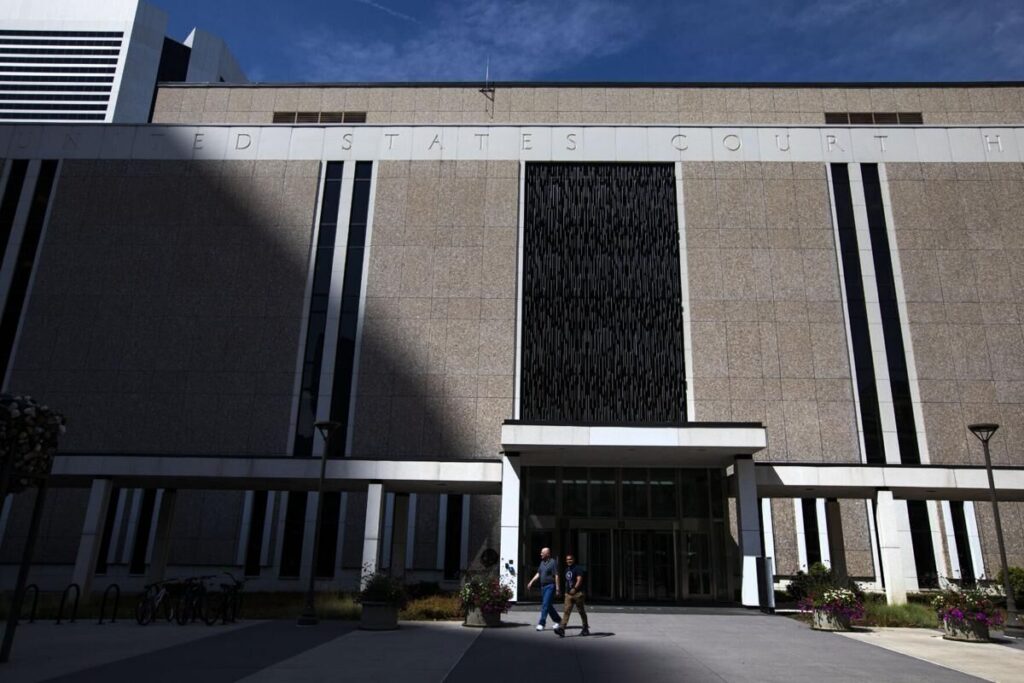
Federal judge dismisses ex-Colorado judicial discipline director’s conspiracy lawsuit
Michael Karlik
michael.karlik@coloradopolitics.com
Updated 8 hours ago
A federal judge dismissed a lawsuit from Colorado’s former judicial discipline director on Tuesday, finding that he failed to adequately state claims for conspiracy or constitutional violations. Christopher S.P. Gregory, who served as the executive director of the Colorado Commission on Judicial...
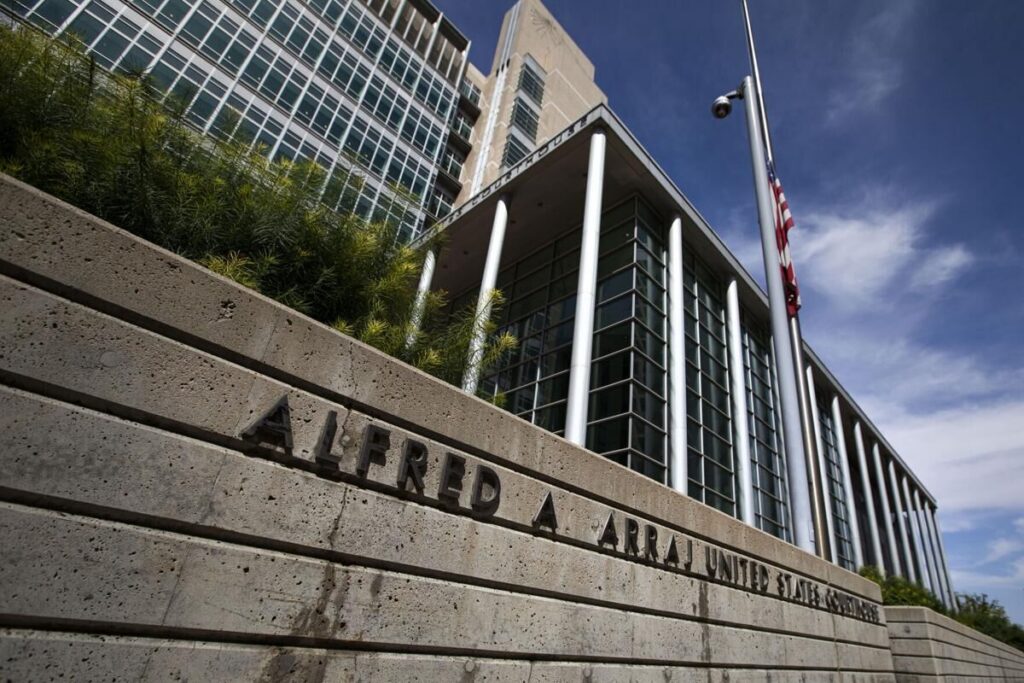
Federal judge allows retaliation claims to proceed against prison officials
Michael Karlik
michael.karlik@coloradopolitics.com
Updated 6 hours ago
A federal judge agreed last week that a man incarcerated at Sterling Correctional Facility had credibly alleged that employees retaliated against him for filing grievances, including by taking away his disability accommodations and turning off his electricity. Louis Peoples Jr.,...
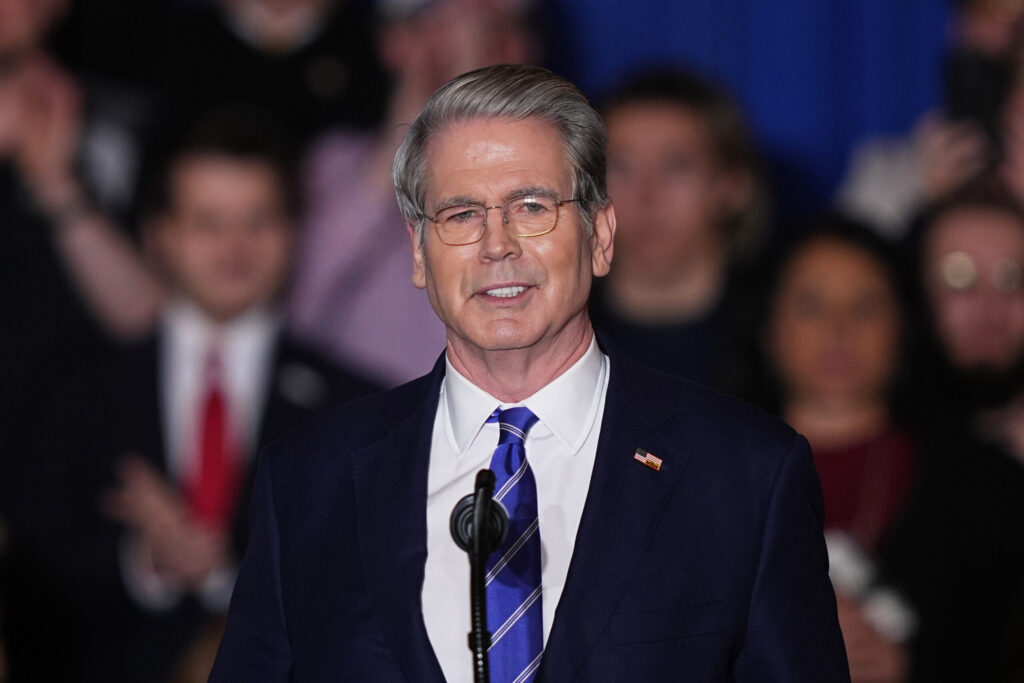
Treasury releases five-step guidance for employers to make contributions to Trump Accounts
Christian Datoc
christian-datoc@coloradopolitics.com
Updated 12 hours ago
Treasury Secretary Scott Bessent published new guidance Tuesday outlining the specific steps employers must take to contribute to employee Trump Accounts. The accounts, one of the most popular provisions included in President Donald Trump’s One Big Beautiful Bill Act, are...

Denver schools to refinance bonds to create capacity for future borrowing
Nico Brambila
nico.brambila@denvergazette.com
Updated 9 hours ago
Less than two years after voters approved a record $975 million school bond, Denver Public Schools is refinancing older debt — a move district officials say will save taxpayers money while creating capacity for another bond election. The district has...

Russia frees imprisoned US Marine over health concerns
Brady Knox
brady-knox@coloradopolitics.com
Updated 13 hours ago
Russia freed former U.S. Marine Robert Gilman upon the urging of U.S. officials so he could receive medical care in the United States. Gilman, 32, was released after 1,666 days in prison, having been arrested on Jan. 17, 2022. Eric...

Colorado students push AI task force as schools navigate new tech era
Marissa Ventrelli
marissa.ventrelli@coloradopolitics.com
Updated 6 hours ago
A group of students is urging lawmakers to establish a task force on artificial intelligence in education to advise districts on how to ensure that pupils and educators use the technology effectively without becoming overly reliant on it. The students...

Parker data center could get $19M tax rebate from Douglas County
Nicholas Fogleman
nicholas.fogleman@denvergazette.com
Updated 15 hours ago
At a time when Denver and Front Range governments are restricting or banning data center development, Douglas County commissioners are poised to approve a $19.3 million tax rebate agreement Tuesday for a new data center under construction in Parker. The...

Denver City Council rejects contract that would have given video maker 8-year deal
Deborah Grigsby
deborah.smith@denvergazette.com
Updated 18 hours ago
Denver’s Office of Human Resources will have to get creative to attract new city employees and place them in “hard-to-fill” jobs after a proposed five-year contract extension, valued at $600,000, failed to gain favor with the Denver City Council. The...
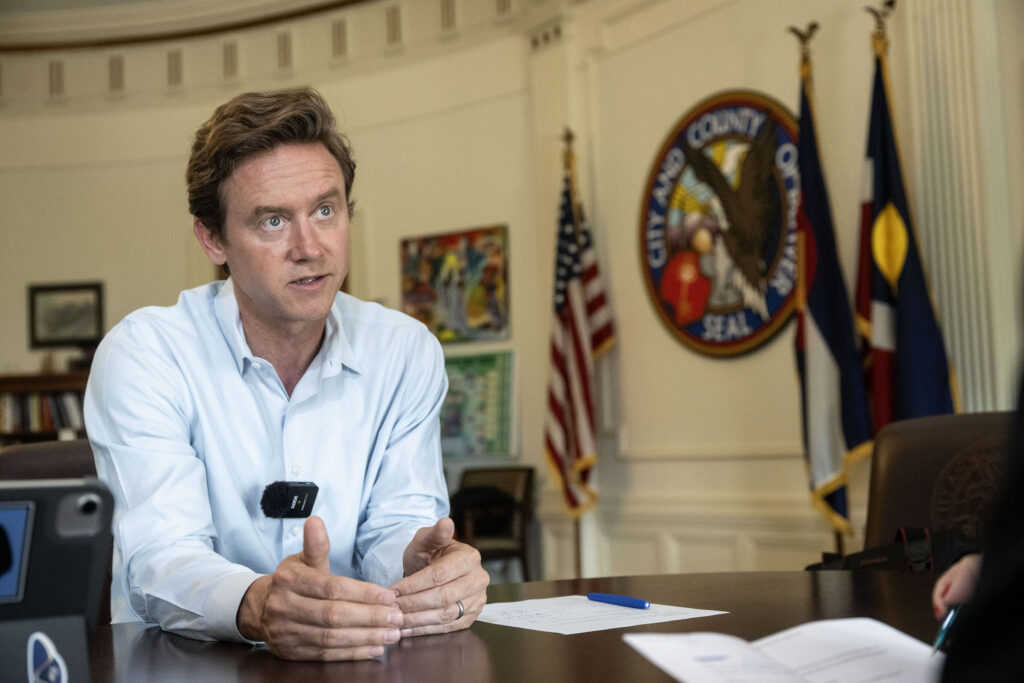
Denver Mayor Mike Johnston files to run for reelection in 2027
Michael Braithwaite
michael.braithwaite@gazette.com
Updated 18 hours ago
Denver Mayor Mike Johnston officially filed his paperwork Monday to run again for Denver’s mayoral office next year. The filing comes weeks after Johnston confirmed to The Denver Gazette that he would seek reelection as he focuses the final year...

U.S. Rep. Lauren Boebert’s son arrested, faces charges of sexual exploitation of minor
Matt Kyle
matt.kyle@denvergazette.com
Updated 1 day ago
U.S. Rep. Lauren Boebert’s son Tyler Jay Boebert has been arrested and accused of recording and sharing a video depicting himself having intercourse with a minor, according to court records. The case originated in Garfield County in Western Colorado and...
PREV
PREVIOUS

SONDERMANN | Three bills Colorado can do without
Eric Sondermann When all the hollering is over and the legislative session finally adjourns, much of the post-mortem analysis will center on the major bills passed. A good deal of that focus will be appropriate, particularly with lawmakers spending newfound as well as stimulus money rather freely. If enough wise heads can come together to […]

Two opponents of public option bill shift stance after latest rewrite removes public option
Two of the three major opponents to the proposed public option have shifted their stance, paving the way to possible agreement on a bill that has undergone hundreds of hours of negotiation and at least three rewrites. On Tuesday, the House Health & Insurance Committee will take another look at House Bill 1232, but it […]