

Court: No exemption for out-of-state police to Colorado’s criminal rules

Out-of-state police departments are not exempt from the rule requiring prosecutors to hand over evidence to the defense, the Colorado Court of Appeals decided on Thursday.
A three-judge appellate panel found it violated legal procedure to disclose in the middle of a defendant’s murder trial that he implied he was the suspect in a Colorado Springs murder to an officer while being arrested in Pennsylvania. However, the error did not warrant overturning his conviction.
“My argument is based on the fact that the agents in Philadelphia did not conduct any investigation into the underlying crime. All they did was to arrest the defendant,” senior assistant attorney general Majid Yazdi told the panel during oral arguments.
“I’m concerned that your attempt to distinguish this arrest from the investigative process,” countered Chief Judge Steve Bernard, “has wide-ranging and potentially problematic implications.”
An El Paso County jury convicted Eric William Grant and an associate of murdering George Maldonado in July 2017. The two men posed as utility workers to rob Full Throttle Auto Service in Colorado Springs, but ended up killing the 50-year-old Maldonado and seriously beating a customer. Three months later, Philadelphia police and cooperating federal agencies arrested Grant.
When an officer asked Grant if he had identification, he responded: “I’m on the run from Colorado, and you think I’m going to have identification? I want as little contact with you guys as possible, and I definitely don’t want you to know who I am.”
Under Colorado’s criminal procedures, the prosecution must disclose to the defense certain materials. Those include oral statements to police, which have a deadline of 21 days following the defendant’s first court appearance after charges are filed. The obligation applies to information “in the possession or control” of the prosecutor’s office, as well as to “any others who have participated in the investigation” who report to the office.
However, the prosecution did not learn about Grant’s admission until the seventh day of his trial.
When the prosecutor raised it to the court, Grant’s attorney objected. She said Grant’s line of defense relied on mistaken identity, which the statement would undermine. Further, it constituted the type of self-incrimination that the defense would have asked the court to suppress and contradicted her opening statement to the jury that there were no further statements from her client.
District Court Judge Barbara L. Hughes decided the statement’s disclosure in the middle of the trial did violate procedural rules, but ruled it was unintentional and declined to suppress the admission. A detective from Philadelphia subsequently told the jury what Grant had said.
Grant appealed, and the attorney general’s office argued that no violation had taken place because the detective’s report containing Grant’s statement was not within the “possession or control” of the Colorado Springs Police Department or the prosecution until they brought it to the court’s attention. Further the Philadelphia police did not participate in the investigation, as the rule required.
“That means the prosecution did not have any reason to believe that there could be relevant evidence,” Yazdi told the judges. To decide otherwise would be “expanding the whole notion of an investigation into any contact between the police and the defendant.”
The government contended the law was on its side: a 1984 decision from the Court of Appeals established that the disclosure rule only applied to “police in the county or district of trial.” The appellate panel in Grant’s case disagreed.
The 1984 decision, wrote Bernard in the April 22 opinion, was based on an “older version” of the disclosure rule. Colorado’s Supreme Court has since decided the directive was not just limited to the district attorney’s office or “local law enforcement agency primarily responsible for the investigation of the case.”
Furthermore, Bernard told Yazdi during oral arguments, “This wasn’t some random contact with the Philadelphia police. [Grant] got arrested because the Colorado Springs Police Department wanted the Philadelphia police to arrest him.”
Applying that guidance, the appellate panel decided Grant’s arrest and booking in Philadelphia were part of the investigation of the case. Even if the rule requiring 21-day disclosure did not apply, another requirement existed to hand over materials to the defense at least 35 days before trial.
Finally, the district court judge had not made a mistake by allowing the statement as evidence. Even though Grant said he was “on the run” from Colorado, the jury could infer that Grant was not referring to the robbery and murder, the Court of Appeals noted.
As a consequence, Grant’s conviction and life sentence will stand.
As part of the Courts in the Community program, oral arguments took place virtually in front of Durango High School students. Afterward, the attorneys and the judges had the opportunity to answer students’ questions.
The case is People v. Grant.

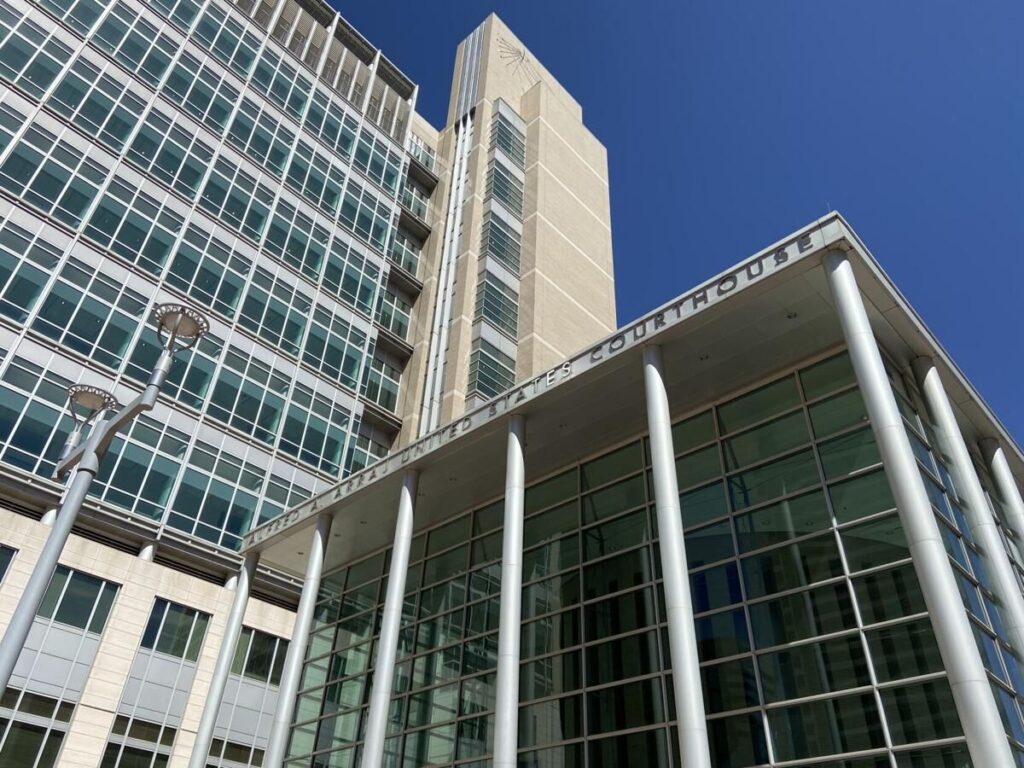
Wrongfully deported man to be returned to U.S., Colorado federal judge orders
Michael Karlik
michael.karlik@coloradopolitics.com
Updated 19 hours ago
Colorado’s chief federal judge took the extraordinary step of directing the government on Tuesday to do everything it can to return a man it deported in violation of his order. At the same time, Colorado’s chief magistrate judge has set...
Denver murder, assault convictions reversed due to faulty jury instructions
Michael Karlik
michael.karlik@coloradopolitics.com
Updated 1 day ago
Colorado’s second-highest court reversed a defendant’s convictions for murder and assault last week after concluding a Denver judge incorrectly omitted key jury instructions that could have affected the verdict and sentencing. Stephen C. Swainson fatally stabbed Israel Casillas in downtown...
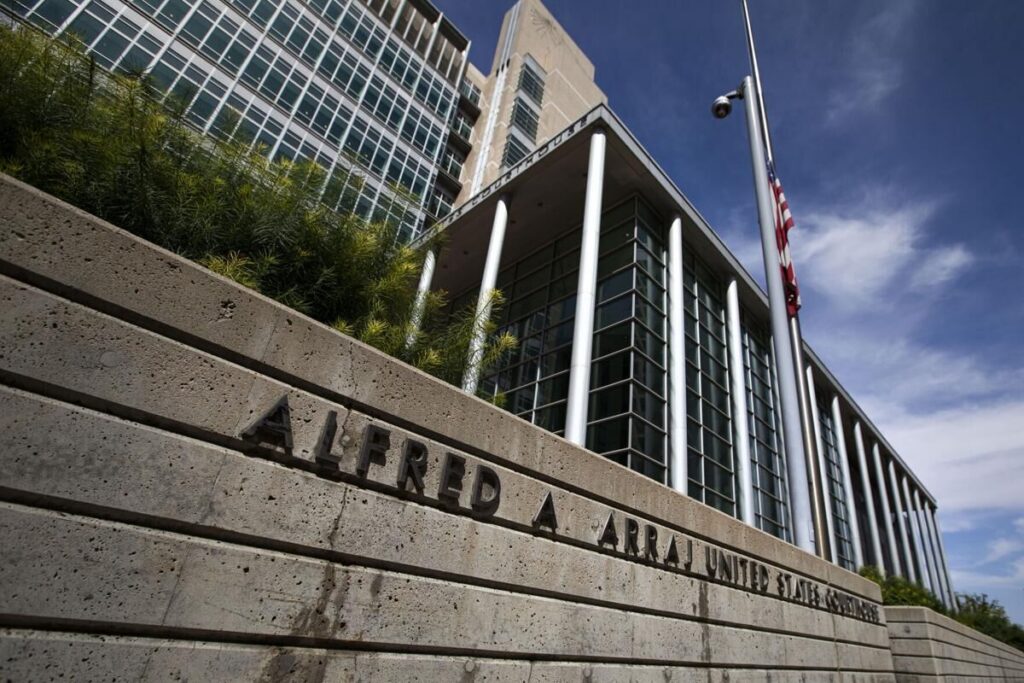
‘Understand people for who they are’: 2 federal judges talk about compassion in courtroom
Michael Karlik
michael.karlik@coloradopolitics.com
Updated 9 hours ago
Before taking the bench in 2022, U.S. District Court Judge Charlotte N. Sweeney was an employment discrimination attorney. While the cases could be emotionally charged, they were different from the criminal proceedings she is now handling. “It wasn’t necessarily affecting...
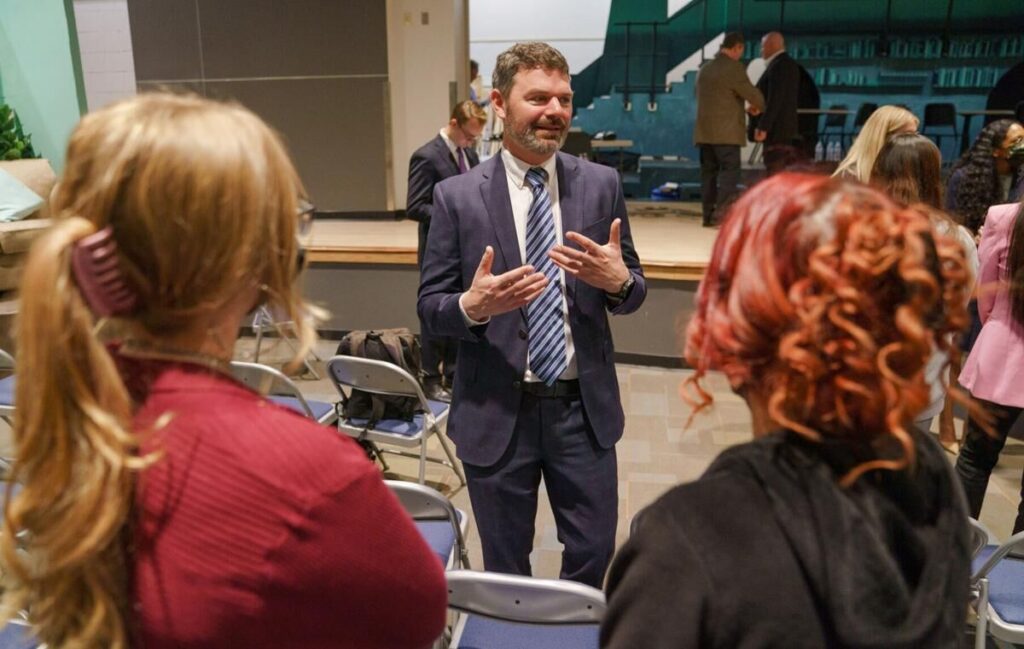
Denver murder conviction reversed for incomplete self-defense instruction
Michael Karlik
michael.karlik@coloradopolitics.com
Updated 2 days ago
Colorado’s second-highest court reversed a defendant’s murder conviction last week because a Denver judge gave an incomplete instruction to the jury about the man’s right to self-defense. Donald R. Gonzales and Gary McLaughlin met up in a Capitol Hill parking...
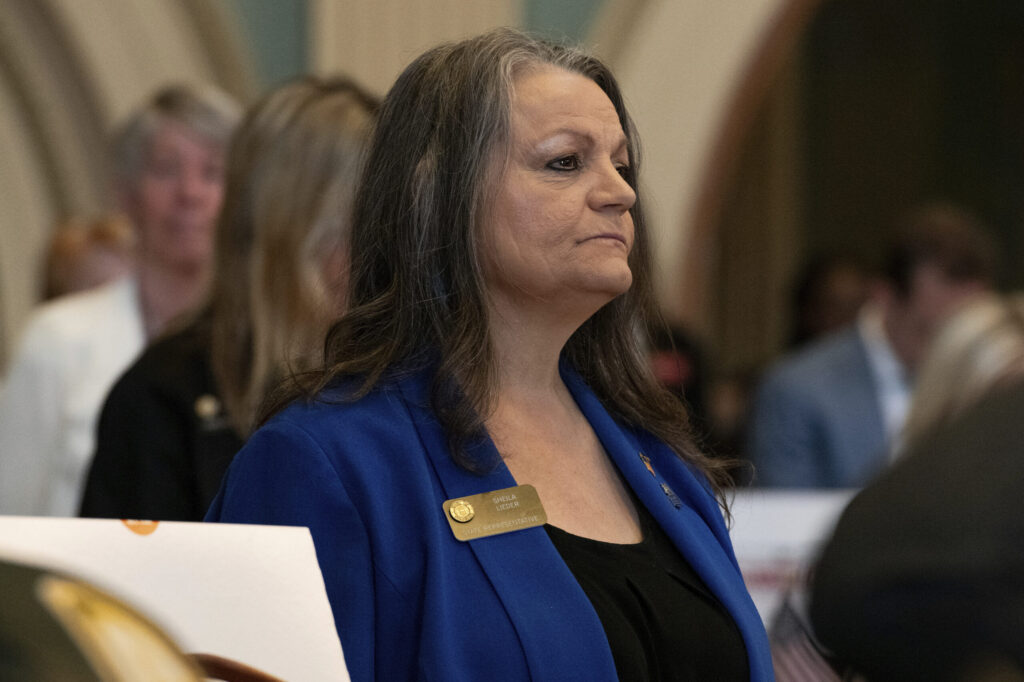
Colorado lawmaker, House leaders named in workplace-retaliation lawsuit
Marianne Goodland
marianne.goodland@coloradopolitics.com
Updated 3 days ago
A former legislative aide has filed a lawsuit alleging she was mistreated, illegally directed to perform campaign work and harmed by a House leadership structure she charged was fragmented, politicized and ineffective at protecting employees. The lawsuit, filed by Jennifer...
Federal judge hears arguments about Colorado’s 3-day gun purchase waiting period
Michael Karlik
michael.karlik@coloradopolitics.com
Updated 3 days ago
A federal judge heard arguments on Monday about the constitutionality of a 2023 Colorado law that generally imposes a three-day waiting period on firearm purchases after the initiation of a background check. The test that the U.S. Supreme Court created...
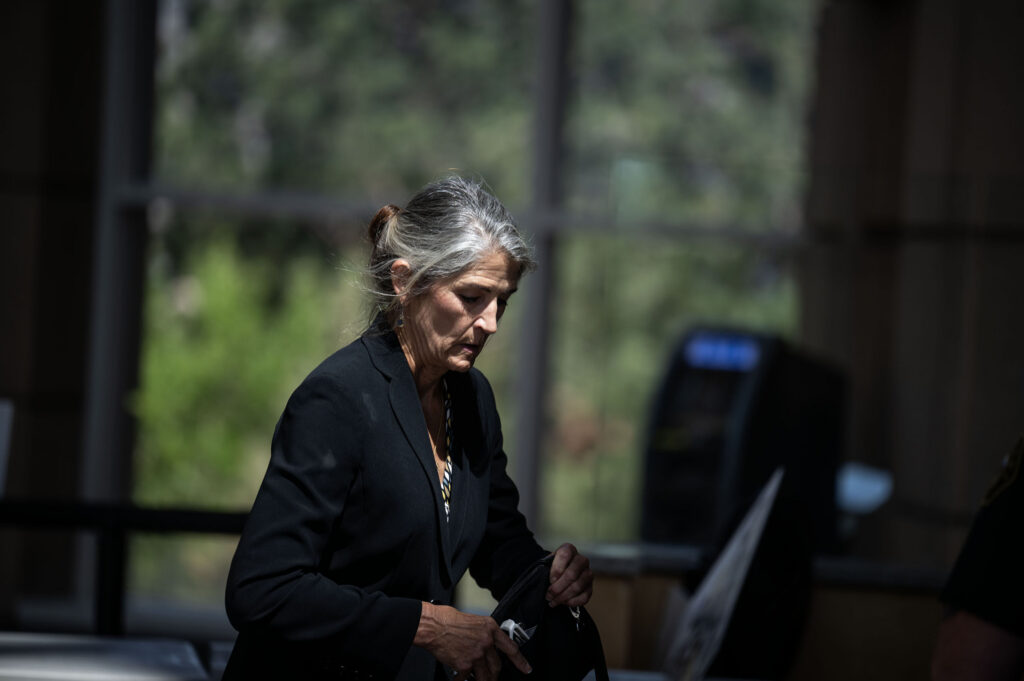
Colorado Supreme Court intervenes in Weld County prosecution dismissed due to Missy Woods misconduct
Michael Karlik
michael.karlik@coloradopolitics.com
Updated 2 days ago
The Colorado Supreme Court ordered a Weld County trial judge last week to respond to the district attorney’s claim that he improperly dismissed a criminal case because of “outrageous” conduct by the Colorado Bureau of Investigation. Daniel Lee Eatinger stood...
Schoolchildren’s presence at child sex-related trial did not harm Arapahoe County defendant, appeals court says
Michael Karlik
michael.karlik@coloradopolitics.com
Updated 5 days ago
Colorado’s second-highest court decided on Thursday that the presence of a group of schoolchildren on the first day of a child sexual exploitation trial did not violate an Arapahoe County defendant’s constitutional right to a fair trial. Prosecutors charged Jerry...
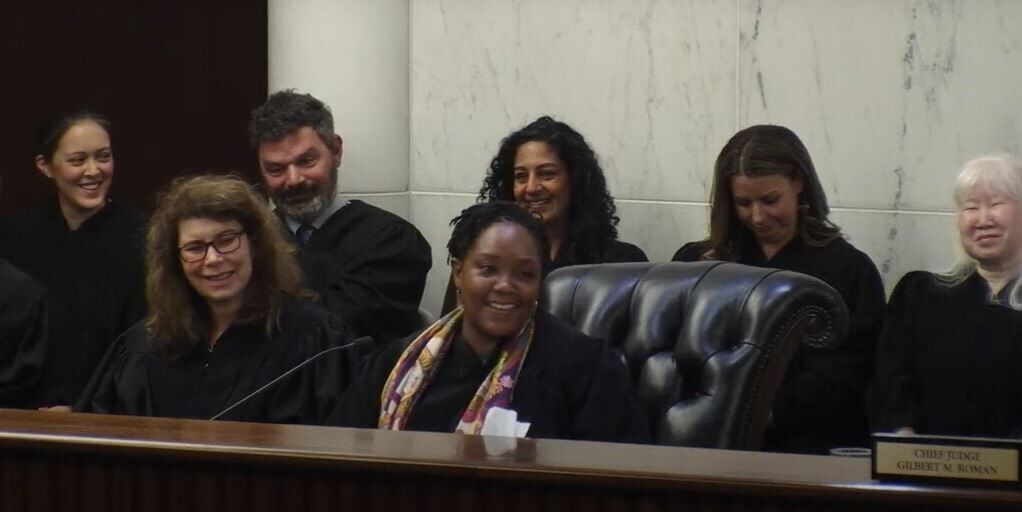
Appeals court cites week-old Colorado law to reinstate child neglect case at child, father’s request
Michael Karlik
michael.karlik@coloradopolitics.com
Updated 5 days ago
Colorado’s second-highest court invoked a new state law for the first time on Thursday and reinstated a child neglect case that both the child and her father wished to reopen. House Bill 1227 took effect on Aug. 12, reversing a...
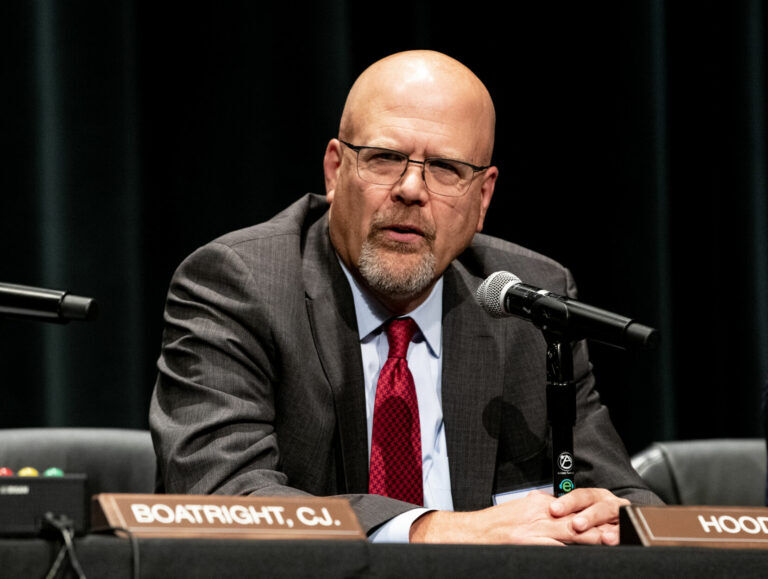
Colorado Supreme Court names William Hood as next chief justice
Michael Karlik
michael.karlik@coloradopolitics.com
Updated 13 hours ago
The Colorado Supreme Court has selected Justice William W. Hood III to be the next chief justice, the judicial branch announced on Friday. Hood will succeed Chief Justice Monica M. Márquez, who took over the role in July 2024. “I...
PREV
PREVIOUS

Misconduct allegations against Arapahoe judge more extensive, document shows
The Arapahoe County judge who resigned last week after allegations of racist behavior and other workplace misconduct had a much broader set of accusations against her than the Colorado Supreme Court originally disclosed. A statement of charges from the Colorado Commission on Judicial Discipline revealed probable cause existed to initiate formal proceedings against District Court […]

COURT CRAWL | A Supreme Court justice gets direct, Biden's court nominee gets her hearing
Welcome to Court Crawl, Colorado Politics’ roundup of news from the third branch of government. The Biden administration’s judicial for nominee for Colorado is scheduled to go before senators this week, and the newest Supreme Court justice in Colorado issued a standout dissenting opinion that packed a punch. The word from on high > It […]