

COURT CRAWL | A Supreme Court justice gets direct, Biden’s court nominee gets her hearing
Welcome to Court Crawl, Colorado Politics’ roundup of news from the third branch of government. The Biden administration’s judicial for nominee for Colorado is scheduled to go before senators this week, and the newest Supreme Court justice in Colorado issued a standout dissenting opinion that packed a punch.
The word from on high
> It isn’t every day that the state’s highest court reviews someone’s medical bill, but the Colorado Supreme Court announced it would do just that. The justices will hear the appeal of a woman who agreed before her surgery to pay “all charges” that insurance didn’t cover. Those amounted to $229,000. A jury cut her verdict to just $767 after a trial court judge deemed “all charges” referred to reasonable charges, but the Court of Appeals reinstated the original amount.
• At issue is whether the hospital could bill based on the “chargemaster,” a list of prices that exceeds what hospitals negotiate with insurance companies.
• “For whatever reason, some (not all) courts have allowed hospitals to collect on charges that are not disclosed, impossible for patients to discover, and are so high that no informed payer would ever agree to them.” —Barak Richman, a professor of law and business administration at Duke University, speaking of the chargemaster
Focus on Justice Berkenkotter
> In a 4-3 decision last Monday, a majority of justices decided that lying about your income on an application for public benefits means you can be charged with theft of the whole amount. The dissenting justices believed if you are legally eligible for some amount of financial aid, a theft conviction should only be based on the extra amount obtained through fraud.
• Two interesting points: first, the decision featured all four male justices on one side and all three female justices on the other. Second, this case followed almost precisely in the footsteps of the Ohio Supreme Court, which decided exactly 20 years ago — also on a 4-3 basis — in the exact same way on the theft of public benefits.
> The strongly-worded dissenting opinion came from the newest justice, Maria E. Berkenkotter, who was so concerned about the implications of the decision that she went so far as to ask the General Assembly to change the law.
• To date, Berkenkotter has been a quiet presence during oral arguments. As opposed to the justices who regularly interject questions or repeatedly follow up with lawyers, Berkenkotter’s most common words have been “I defer,” letting the senior justices have their say.
• So it was a bit surprising to see such strong phrasing as, “This case illustrates the dangers of the sweeping assumptions built into the majority’s iteration” coming from Berkenkotter. During the next round of oral arguments, we will see whether Berkenkotter’s deference persists.
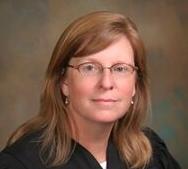
Maria E. Berkenkotter, former Boulder County Chief Judge

Judge resignation update
> Since the Supreme Court announced that Arapahoe County District Court Judge Natalie T. Chase will resign for multiple instances of misconduct, Colorado Politics reviewed a statement of allegations against Chase that contained a more extensive set of complaints than originally disclosed.
• While Chase has made national news for saying the N-word repeatedly in front of a Black court employee, the allegations also included that Chase planned to sue her son’s school and asked her clerk to do research on this non-work-related matter; that she wished everyone a “happy Father’s Day” right after terminating a father’s parental rights; and that she questioned lawyers about what they wrote about her in anonymous judicial reviews.
Chauvin verdict
> The Sam Cary Bar Association, the professional organization for Colorado’s Black attorneys, held a discussion two days after a jury convicted former Minneapolis police officer Derek Chauvin for murdering George Floyd. Among the takeaways: a desire for accountability among police supervisors, a skepticism about the accountability signified by the verdict, and a disconnect between what law enforcement leaders say and what patrol officers do.
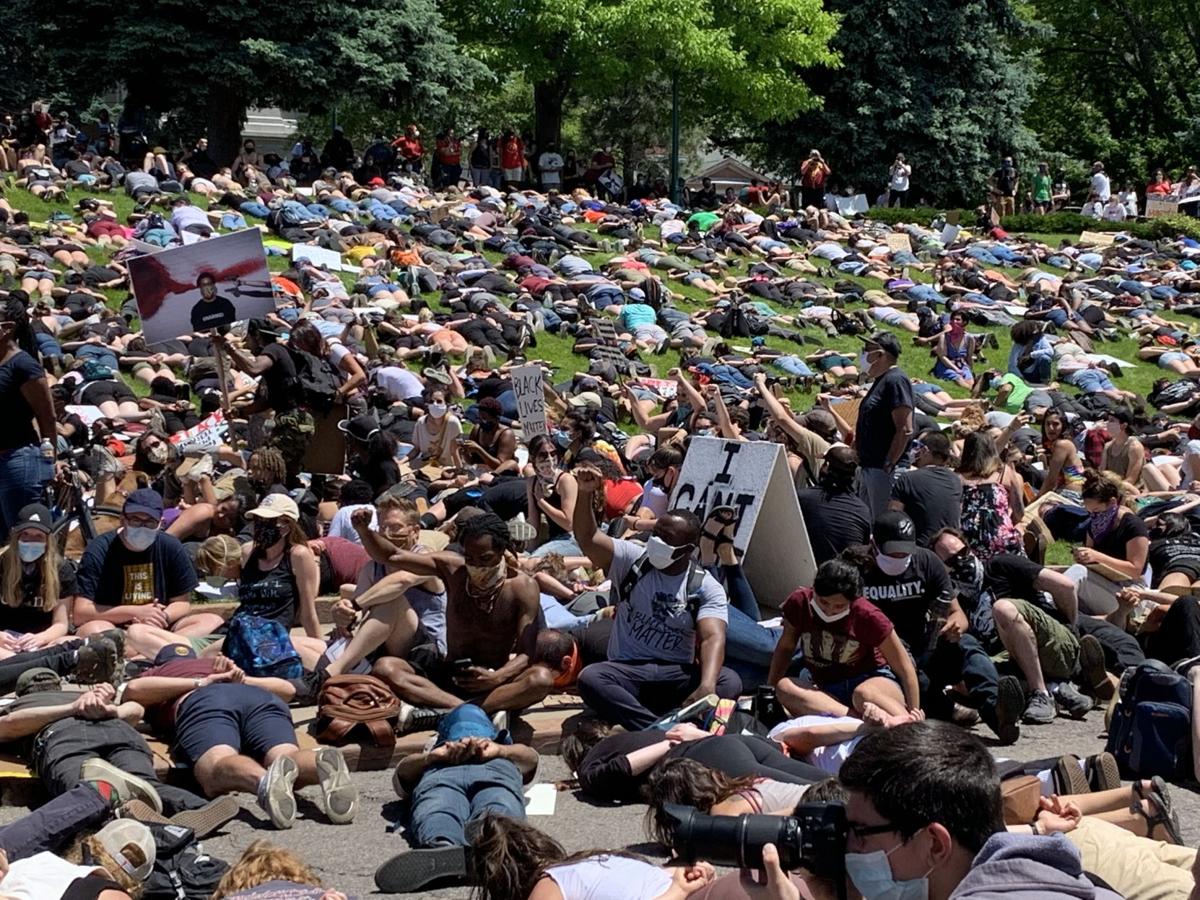
Protesters at Saturday's demonstration at the Capitol laid on their stomachs for nine minutes, chanting "I can't breathe," reportedly the last words uttered by George Floyd.
Marianne Goodland, Colorado Politics

Vacancies and appointments
> Three months and one week after President Joe Biden’s inauguration, the U.S. Senate Committee on the Judiciary will consider the first five of the administration’s nominees to the federal bench on Wednesday. Those include Regina M. Rodriguez, Biden’s nominee for the vacant trial court seat in Colorado.
> There is a vacancy on the Arapahoe County District Court effective May 31, and applications are due to the judicial district’s nominating commission by May 5.
> In El Paso County, Gov. Jared Polis will select a finalist to succeed former Judge Laura Findorff. The three attorneys vying for the seat are Marika Frady, Steven Katzman and Amanda Philipps.
Taylor Swift and Guantanamo Bay
> What ties those very different things together is Jeffrey P. Colwell, the clerk of the U.S. District Court in Colorado. A former military prosecutor and defender of Guantanamo Bay detainees, Colwell also handled logistics for the high-profile 2017 trial involving singer Taylor Swift. He spoke to Colorado Politics in a Q&A.
• “While I had several opportunities to do so, I did not meet Ms. Swift personally. She was in our courthouse because of a legal proceeding, not for me to get her autograph….One of our court employees, however, took the day off and brought her daughter in to watch some of the trial. During a break in the case, her daughter got to meet and speak with Taylor briefly. It made her day.” —Jeffrey Colwell
Miscellaneous decisions
> A man who had his convictions reversed on legal grounds is not eligible for compensation for the time he spent incarcerated, the Court of Appeals ruled.
> A Denver judge was wrong to conclude he had no authority to approve payments for an indigent man’s defense, the Supreme Court and the Denver District Attorney’s Office both agreed.
> A Fremont County magistrate acted beyond his authority when he dismissed an inmate’s COVID-19-related petition, the Supreme Court decided.

10th Circuit overturns framework for sentencing probation violators by 11-1
Michael Karlik
michael.karlik@coloradopolitics.com
Updated 18 hours ago
In a rare decision by all 12 of its full-time judges, the Denver-based federal appeals court ruled in a lopsided vote on Friday that one of its members created a sentencing process for probation violators that was out of step...

Federal judge dismisses excessive force lawsuit against Colorado Springs, officer
Michael Karlik
michael.karlik@coloradopolitics.com
Updated 17 hours ago
A federal judge concluded last week that a Colorado Springs police officer could not be held liable for shooting a suspect three times after the man menaced two victims with a gun and fled the scene. Al’morion Germany was involved...
Weld County man sentenced to 236 years for sexually assaulting 9-year-old girl
Kyla Pearce
kyla.pearce@gazette.com
Updated 21 hours ago
A Weld County man was sentenced to 236 years in prison for repeatedly sexually assaulting a 9-year-old girl. Joshua Andrews, 41, was charged in June with 12 counts of sexual assault on a child by a person in a position...
Wrongfully deported man to be returned to U.S., Colorado federal judge orders
Michael Karlik
michael.karlik@coloradopolitics.com
Updated 2 days ago
Colorado’s chief federal judge took the extraordinary step of directing the government on Tuesday to do everything it can to return a man it deported in violation of his order. At the same time, Colorado’s chief magistrate judge has set...
Denver murder, assault convictions reversed due to faulty jury instructions
Michael Karlik
michael.karlik@coloradopolitics.com
Updated 1 day ago
Colorado’s second-highest court reversed a defendant’s convictions for murder and assault last week after concluding a Denver judge incorrectly omitted key jury instructions that could have affected the verdict and sentencing. Stephen C. Swainson fatally stabbed Israel Casillas in downtown...
‘Understand people for who they are’: 2 federal judges talk about compassion in courtroom
Michael Karlik
michael.karlik@coloradopolitics.com
Updated 13 hours ago
Before taking the bench in 2022, U.S. District Court Judge Charlotte N. Sweeney was an employment discrimination attorney. While the cases could be emotionally charged, they were different from the criminal proceedings she is now handling. “It wasn’t necessarily affecting...
Denver murder conviction reversed for incomplete self-defense instruction
Michael Karlik
michael.karlik@coloradopolitics.com
Updated 4 days ago
Colorado’s second-highest court reversed a defendant’s murder conviction last week because a Denver judge gave an incomplete instruction to the jury about the man’s right to self-defense. Donald R. Gonzales and Gary McLaughlin met up in a Capitol Hill parking...
Colorado lawmaker, House leaders named in workplace-retaliation lawsuit
Marianne Goodland
marianne.goodland@coloradopolitics.com
Updated 4 days ago
A former legislative aide has filed a lawsuit alleging she was mistreated, illegally directed to perform campaign work and harmed by a House leadership structure she charged was fragmented, politicized and ineffective at protecting employees. The lawsuit, filed by Jennifer...
Federal judge hears arguments about Colorado’s 3-day gun purchase waiting period
Michael Karlik
michael.karlik@coloradopolitics.com
Updated 4 days ago
A federal judge heard arguments on Monday about the constitutionality of a 2023 Colorado law that generally imposes a three-day waiting period on firearm purchases after the initiation of a background check. The test that the U.S. Supreme Court created...
Colorado Supreme Court intervenes in Weld County prosecution dismissed due to Missy Woods misconduct
Michael Karlik
michael.karlik@coloradopolitics.com
Updated 4 days ago
The Colorado Supreme Court ordered a Weld County trial judge last week to respond to the district attorney’s claim that he improperly dismissed a criminal case because of “outrageous” conduct by the Colorado Bureau of Investigation. Daniel Lee Eatinger stood...
PREV
PREVIOUS

Court: No exemption for out-of-state police to Colorado's criminal rules
Out-of-state police departments are not exempt from the rule requiring prosecutors to hand over evidence to the defense, the Colorado Court of Appeals decided on Thursday. A three-judge appellate panel found it violated legal procedure to disclose in the middle of a defendant’s murder trial that he implied he was the suspect in a Colorado […]

Judge tosses white barbershop owner's challenge to race-based criteria in COVID-19 relief
A federal court has thrown out the lawsuit from a white Colorado Springs barbershop owner who challenged the constitutionality of a state COVID-19 relief program because it gave a preference for financial aid to businesses owned by people of color. In an April 19 order, U.S. District Court Chief Judge Philip A. Brimmer noted the […]