

SONDERMANN | On baseball, politics and voting


Here is hoping that public voting for the starting lineups for baseball’s All-Star game proceeds with less controversy than is the case with most balloting these days.
Any keen political observer along with any fervent baseball fan (those who check both boxes have a special place in my heart) knows by now that Major League Baseball reacted to Georgia’s passage of a problematic, new voting law by moving its Midsummer Classic out of Atlanta in favor of Denver’s very own Coors Field.
I am not one for looking a gift horse in the mouth. Heck, I do not understand the origin of that strange phrase or have any real interest in equine dentistry.
Hooray for Colorado for landing this event and making it a centerpiece of what we hope is a recovery summer. However, much of the conversation surrounding this move has been light on facts and short on nuance. America’s real national pastime in this era may be stark, unyielding absolutism. To push back on that just a bit, let’s try to bring a bit of context to the various factors at play?
Leading off is the question of whether baseball commissioner Rob Manfred was right to take such a bold stand. It is part and parcel of current culture, usually not for the better, to make everything political. Once the Georgia legislation became a flashpoint, a response was inevitable. Manfred would have been roundly criticized no matter which course he took.
That said, his woke words would carry more heft were Major League Baseball not playing such footsie with authorities in Cuba and China. Of course, it is a worthy pursuit to grow new markets. But it reeks of a certain double standard to treat Georgia quite so punitively while doing business with overtly repressive regimes which employ the ultimate in voter suppression.
Next up is the notion that Colorado was awarded this prize as recognition for our safe, convenient system of voting-by-mail. Coloradans can – and should – appreciate our easy, proven approach. But it is a delusion to think it a factor in this decision.
Rather, Denver’s sudden selection speaks to some quick and deft maneuvering by Rockies’ top brass along with requisite political support. The made-for-TV spectacle of a home-run derby at altitude provided a nice bonus.
All of which brings us to the heart of the order, if you will, and the key question of just how bad is the new Georgia law.
To be sure, Georgia’s Republican Legislature and Governor did not dream up this measure in a vacuum. Rather, as a high, hard inside pitch inevitably follows back-to-back home runs, this bill was the product of Trump’s narrow and shocking loss in the state; and then the defeat of two incumbent GOP senators handing Democrats control of the U.S. Senate.
Even more than the actual losses, the bill bears the unmistakable imprint of Trump’s non-stop, face-saving, evidence-free claims that the election was somehow fraudulent and illegitimate. Whatever the Trump acolytes lack in proof, they more than make up for in mythical belief as this idea of a stolen election is now deeply embedded in Republican psyches.
Further, the assertion of some on FOX News and in similar media precincts that Colorado’s voting process is, wait for it, more restrictive than Georgia’s new law is flat-out silly. Through luck or pluck, the Colorado system comes darn close to being a contemporary model for the multiple goals of security, convenience and access.
Given the origins of the Georgia bill, of course its purpose was not to make voting easier, especially for the state’s black citizens who have all too much historic experience with deliberate, calculated disenfranchisement. This 98-page law is not without redeeming features. Early voting periods are expanded. Ballot drop boxes are now required in every county. Which begs the question of why it chisels the number of such boxes in urban areas, especially Atlanta.
Some elements are defensible; others less so. The net impact, consistent with the intent, is to make voting more restrictive. Most egregiously, the legislature can now appoint the head of the State Elections Board, a role that had been filled by the elected Secretary of State. The current occupant of that office is Republican Brad Raffensperger who incurred the post-election wrath of Trump-world for showing the kind of spine too long out of fashion in many Republican circles.
The only explanation for that provision is one of political score-settling. Imagine the potential for post-election chicanery last November and December had the legislature been so involved. In a further invitation to mischief, SB202 allows the elections board to replace local election supervisors. While some have raised the specter of Jim Crow, this is just as much about bringing back the Three Stooges.
The merits of the Georgia law are in the eyes of the beholder. If your focus is on protecting voting rights, there is far more here to dislike than like. On the other hand, if your uppermost concern is one of election security, you will approve of the new requirements on balance.
So a closing word to each camp. To those motivated by rights and participation – let’s call them Democrats: Just as border security is an essential precondition to immigration reform, a guarantee of ballot security has become a political necessity. More than two-thirds of states now mandate some form of voter identification. As you push your cause on other fronts, it is time to accept that you have lost this voter ID argument.
Next, to those focused on safeguards – or Republicans, for short: When your political prosperity depends on limiting participation and keeping some from the polls, you might think about the breadth of your appeal. And when your diehard loyalty to a defeated, grievance-ridden President puts you on the opposite side of such American institutions as baseball and Coca-Cola, your team is on an extended losing streak.


10th Circuit rejects invitation for full-court review of tax-avoidance case
Michael Karlik
michael.karlik@coloradopolitics.com
Updated 41 minutes ago
The Denver-based federal appeals court declined to reconsider the standards for holding entities liable for their tax-avoidance schemes, with a majority of judges voting against full-court review on Monday. In April, a three-judge panel of the U.S. Court of Appeals...
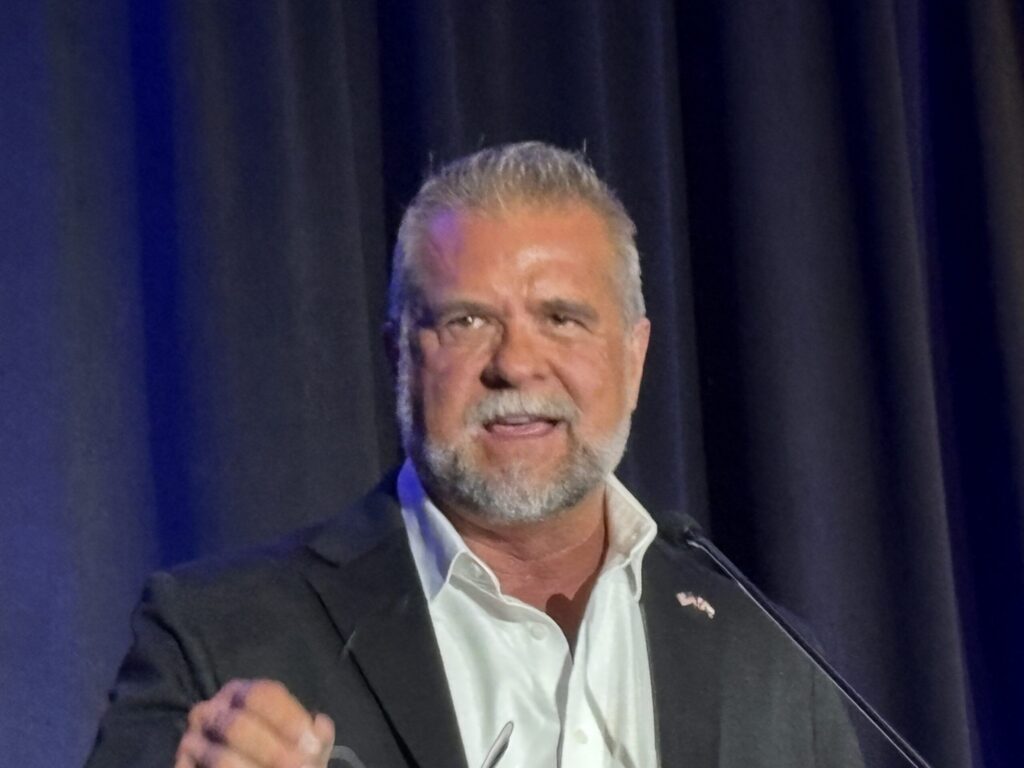
GOP gubernatorial candidate Victor Marx pushes aggressive water-storage expansion at Colorado Water Congress
Marianne Goodland
marianne.goodland@coloradopolitics.com
Updated 20 minutes ago
Victor Marx, the Republican nominee for governor, took the spotlight Wednesday during the opening day of the Colorado Water Congress, laying out how he says the state should approach its water future. Marx told the standing-room-only audience in Steamboat Springs,...
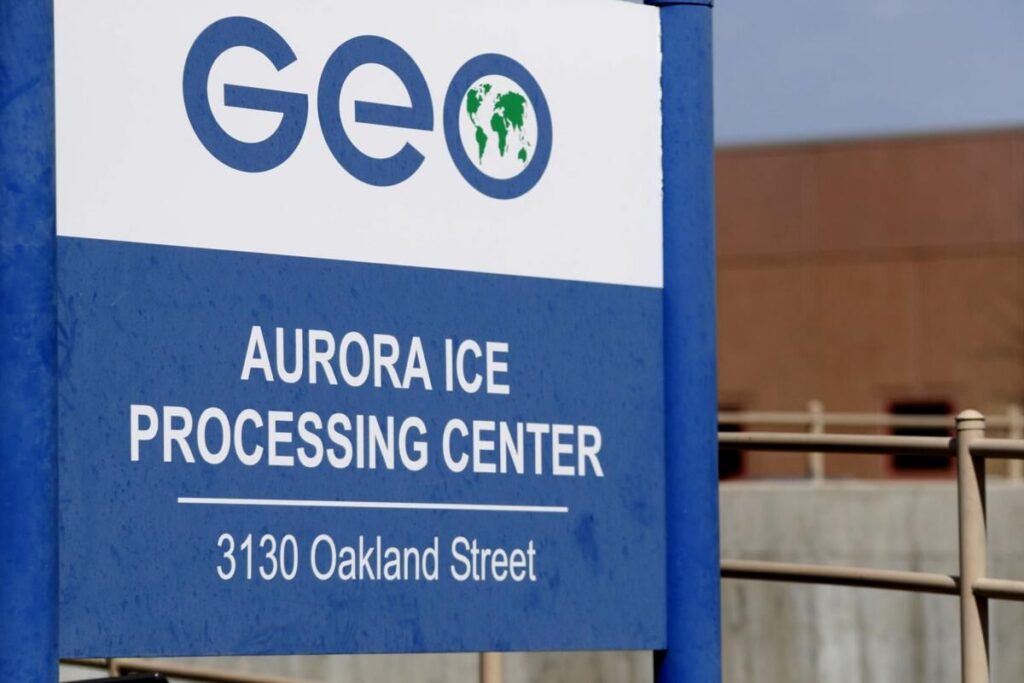
Colorado AG sues GEO Group over noncompliance with tuberculosis investigation
Kyla Pearce
kyla.pearce@gazette.com
Updated 45 minutes ago
The Colorado Attorney General’s Office on Wednesday filed a lawsuit against GEO Group, which operates the Aurora ICE Processing Center, alleging the company failed to comply with a state tuberculosis investigation. Weiser’s lawsuit demands that GEO provide “critical information” needed...

U.S. Rep. Lauren Boebert stresses storage, forest health and Upper Basin rights at Colorado Water Congress
Marianne Goodland
marianne.goodland@coloradopolitics.com
Updated 1 hour ago
Republican U.S. Rep. Lauren Boebert used her brief Wednesday appearance at Colorado Water Congress to tout her record on delivering water projects for the state and her district. Boebert, who is running for her second term representing Colorado’s 4th Congressional...
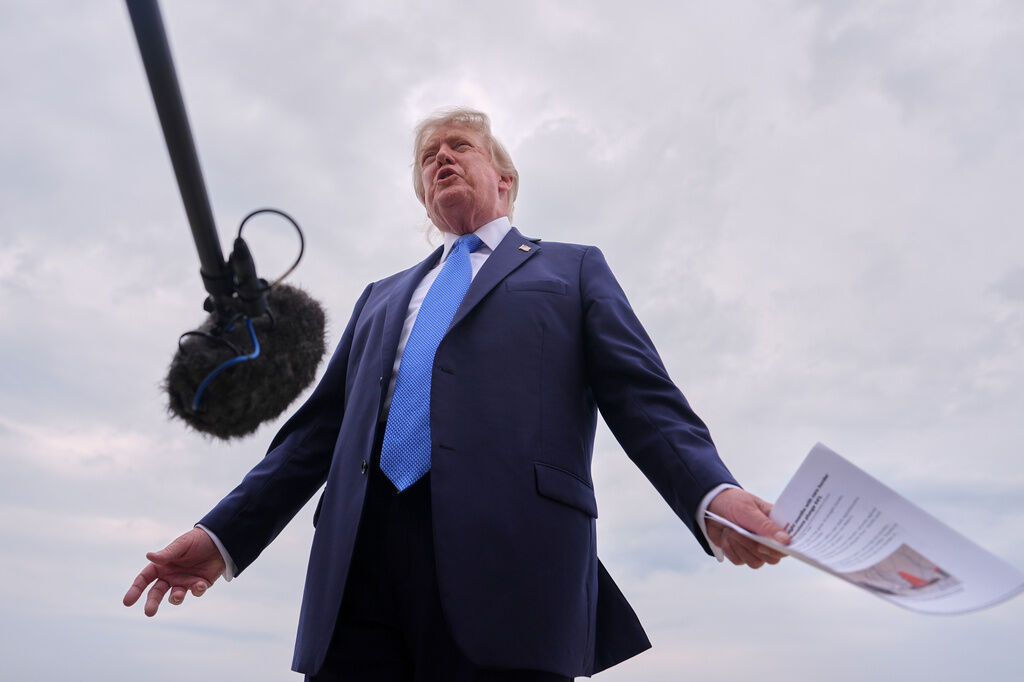
Trump has a 96% endorsement success rate. Here are the Republicans he’s backed who have lost
Mabinty Quarshie
mabinty-quarshie@coloradopolitics.com
Updated 2 hours ago
President Donald Trump’s 2026 primary endorsement success rate remains staggeringly high, but the president has seen a growing number of losses stack up in recent weeks. According to Ballotpedia, Trump has endorsed in 313 U.S. Senate, U.S. House, and state...
Colorado judge blasts state forensics lab in dismissing child sex case
Jenny Deam
jenny.deam@gazette.com
Updated 2 hours ago
In a potentially widely consequential action, a Weld County district judge dismissed a child sexual assault case, citing the ongoing scandal at the Colorado Bureau of Investigation’s forensic lab that “has left a dark mark on the history of Colorado...

Colorado officials urge stronger water safety after 6 drownings and multiple Front Range rescues
Elizabeth Pond
elizabeth.pond@denvergazette.com
Updated 6 hours ago
At least eight people have drowned in Front Range waters since mid-March, including two at Eleven Mile Reservoir, three at Cherry Creek Reservoir, one at Rockbridge Lake and two at Lake Pueblo State Park. In the wake of these deaths,...

Vehicle registration crackdown across Front Range starts next week
Nick Smith
nick-smith@coloradopolitics.com
Updated 3 hours ago
Colorado drivers with expired tags or unregistered vehicles still have time to get registered before a scheduled enforcement crackdown starts next week. According to an announcement from the Colorado Springs Police Department, a multi-agency enforcement effort will happen across the...

Aurora grapples with affordable housing needs, deficits
Kyla Pearce
kyla.pearce@gazette.com
Updated 4 hours ago
Aurora is grappling with affordable housing needs as demand for project funding increases and the state cuts grant money. Currently, the city needs about 12,000 affordable housing units, Martin Petrov at Aurora Housing Authority told members of the Housing, Neighborhood...

Wheat Ridge considers ordinance to restrict drone use in public spaces
Matt Kyle
matt.kyle@denvergazette.com
Updated 4 hours ago
Drone users may soon have to abide by new restrictions should they wish to fly in Wheat Ridge. During Monday night’s City Council meeting, council members discussed a proposed ordinance that would restrict the use of remote-controlled drones within city...
PREV
PREVIOUS

LEGISLATIVE ROUNDUP | Catching up with Colorado Politics legislative coverage
We’re more than a month into the General Assembly’s resumption of work for the 2021 session. Here’s a look at Colorado Politics coverage so far: WEEK ENDING APRIL 17 WEEK ENDING APRIL 10 WEEK ENDING APRIL 3 The General Assembly was off for Good Friday on April 2. WEEK ENDING MARCH 27 WEEK ENDING […]

OUT WEST ROUNDUP | New Mexico to require paid sick leave; protection sought for monarchs
NEW MEXICO Governor signs bill to require paid sick leave SANTA FE – New Mexico Gov. Michelle Lujan Grisham signed legislation April 9 requiring that employers throughout the state provide paid sick leave to workers. The Democrat-sponsored legislation ensures that employees accrue an hour of paid sick leave for every 30 hours worked, up to […]