

OUT WEST ROUNDUP | New Mexico to require paid sick leave; protection sought for monarchs
NEW MEXICO
Governor signs bill to require paid sick leave
SANTA FE – New Mexico Gov. Michelle Lujan Grisham signed legislation April 9 requiring that employers throughout the state provide paid sick leave to workers.
The Democrat-sponsored legislation ensures that employees accrue an hour of paid sick leave for every 30 hours worked, up to 64 hours of leave annually.
The law takes effect on July 1, 2022 – a delay in concession to employers who argued that businesses already are under intense financial pressure from the pandemic.
Democratic legislators argue the requirement is essential to ensuring public health and a stable workforce. They advanced the bill over unified Republican opposition in the state House and Senate.
Lujan Grisham, a first-term Democrat, said the coronavirus has driven home the need for paid sick leave.
The governor also signed a bill that increases the surtax on insurance premiums from 1% to 3.75% to shore up subsidies to health insurance policies for low- and moderate-income patients provided through New Mexico’s health insurance exchange.
The changes are offset by the recent elimination of a federal fee on insurance. The governor’s office says the law will eliminate copayments and cost sharing by patients to access mental health services.
The state’s 60-day legislative session that ended March 20 included approval of a $7.5 billion state spending plan for the coming year.
MONTANA
Advocates sue to protect monarchs, Northern spotted owls
BILLINGS – Wildlife advocates sued federal officials April 1 in a bid for greater protections for monarch butterflies, northern spotted owls and eight other species inching toward possible extinction.
The move comes after federal officials have said the species named in the lawsuit need protections, but that other imperiled plants and animals have higher priority.
The Center for Biological Diversity asked a U.S. District Court in Washington to order the Fish and Wildlife Service to move immediately to grant the species protections under the Endangered Species Act.
Federal officials declared the monarch butterfly a candidate for protections in December, but said no action would be taken for several years because of the many other species needing protection.
The spotted owl of the Pacific Northwest has been in decline for decades as old growth forests disappear. It was rejected for an immediate upgrade to “endangered” status last year despite losing nearly 4% of its population annually.
Also included in the lawsuit were the eastern gopher tortoise of the Southeast, the Penasco least chipmunk of New Mexico, a North Carolina snail known as magnificent ramshorn, the twistflower plant of south Texas and three mussel species — Texas fatmucket, Texas fawnsfoot and Texas pimpleback.
NAVAJO NATION
Solar plant leases finalized on tribal land
CAMERON, Ariz. – The Navajo Nation is moving forward with two more solar plants on the reservation that are expected to generate millions of dollars in revenue for the tribe over the projects’ lifetimes.
Tribal leaders met at the site of the larger solar plant in Cameron on April 7 to finalize the lease for the Cameron Solar Generation Plant. A committee of the Navajo Nation Council had approved the lease in late March.
The solar plant is expected to produce 200 megawatts of energy for one of Arizona’s largest utilities, the Salt River Project, though a power purchase agreement hasn’t yet been signed. About 400 people will be employed during construction.
Tribal President Jonathan Nez said the solar plants are part of a move toward renewable energy sources. Tribal officials also gathered near the Arizona-Utah border to finalize a lease for a 70-megawatt solar plant there. The tribe has two other solar plants near Kayenta.
The Red Mesa Tapaha Solar Generation Plant is expected to create 300 jobs during the yearlong construction phase. It will be majority owned by the Navajo Tribal Utility Authority and provide energy largely to the Utah Associated Municipal Power Systems.
Lease payments to the tribe will approach $7 million over the 30-year life of the project, the tribal utility said. The tribe also will receive tax revenue.
Some of the revenue from both projects will go toward connecting more Navajo homes to the power grid and keeping rates down for tribal customers, according to the tribal utility.
Cameron lies along the route to the east entrance of Grand Canyon National Park, which reopened in April after being closed for more than a year amid the coronavirus pandemic.
Over three decades, the solar plant is expected to bring in $90 million in energy transmission payments, $13 million in land lease payments and $6 million in tax revenue for the tribe.
WYOMING
Cheyenne Frontier Days to return in full this year
Cheyenne Frontier Days will host its 125th anniversary celebration in full at Frontier Park from July 23 to Aug. 1, according to an April 7 announcement.
The rodeo and surrounding entertainment events were canceled last year for the first time in Frontier Days history due to the coronavirus pandemic. An annual report from February showed the cancellation netted a $3.34 million loss in 2020.
In conjunction with the governor’s office and public health officials from the Global Center for Health Security at the University of Nebraska Medical Center, organizers plan to implement COVID-19 procedures to ensure cleanliness and sanitation.
However, there will be no limitations on crowd sizes for concerts, rodeo or other outdoor events, and masks will not be required, according to Tom Hirsig, CEO of Cheyenne Frontier Days. Hirsig and Gov. Mark Gordon spoke at a news conference in Cheyenne.
A lineup announcement was still pending, but a few performers have already been announced, including Garth Brooks. Thomas Rhett, Eric Church and Blake Shelton are also set to return this year after originally being scheduled for the 2020 lineup.
The rodeo previously announced that it will dedicate the 2021 event to to late Wyoming country music star and world rodeo champion Chris LeDoux.
The governor said the state can do Cheyenne Frontier Days safely due to the low COVID-19 cases and hospitalizations.
Gordon said in a statement: “Our big message that we want people to hear loud and clear today is that Wyoming is back and we are open for business.”
Eighth-grader wins contest to name supercomputer
CHEYENNE – A Wyoming middle school student has won a contest to name one of the world’s fastest supercomputers.
The new machine will be named “Derecho,” after a type of weather event that can bring hurricane-force winds and heavy rains, the Boulder, Colorado-based National Center for Atmospheric Research announced April 12.
Riverton Middle School eighth-grader Cael Arbogast, 13, submitted the winning name for the supercomputer that will be used to study phenomena including climate change, severe weather, wildfires and solar flares. It will be housed at the NCAR-Wyoming Supercomputing Center on the outskirts of Cheyenne.
Houston-based Hewlett Packard Enterprise won a bid to provide the $35 million to $40 million replacement machine for the supercomputing center, the National Center for Atmospheric Research announced in January.
The HPE-Cray EX supercomputer will likely rank among the world’s 25 fastest when it goes into operation in 2022. It will have a theoretical maximum speed of almost 20 quadrillion calculations per second, 3.5 times faster than the center’s current supercomputer, according to NCAR.
The facility’s existing supercomputer, named Cheyenne, is over three times faster than its predecessor, which was named Yellowstone.


Judicial performance evaluations released, Montezuma County judge disciplined | COURT CRAWL
Michael Karlik
michael.karlik@coloradopolitics.com
Updated 15 hours ago
Welcome to Court Crawl, Colorado Politics’ roundup of news from the third branch of government. Colorado’s citizen-led judicial performance commissions released their voter narratives for the judges standing for retention in November, plus a disciplinary panel imposed consequences on a...

Colorado House Democrats’ caucus finances under scrutiny as ethics case against leader advances
Marianne Goodland
marianne.goodland@coloradopolitics.com
Updated 16 hours ago
Democratic lawmakers told a legislative ethics panel that a leader’s management of caucus finances left them with unanswered questions, disputed reimbursements and a breakdown in communication that ultimately triggered a formal complaint. The House Ethics Committee is examining a complaint...
Federal judge holds off on dismissing formerly bankrupt medical contractor from Jeffco jail death lawsuit
Michael Karlik
michael.karlik@coloradopolitics.com
Updated 18 hours ago
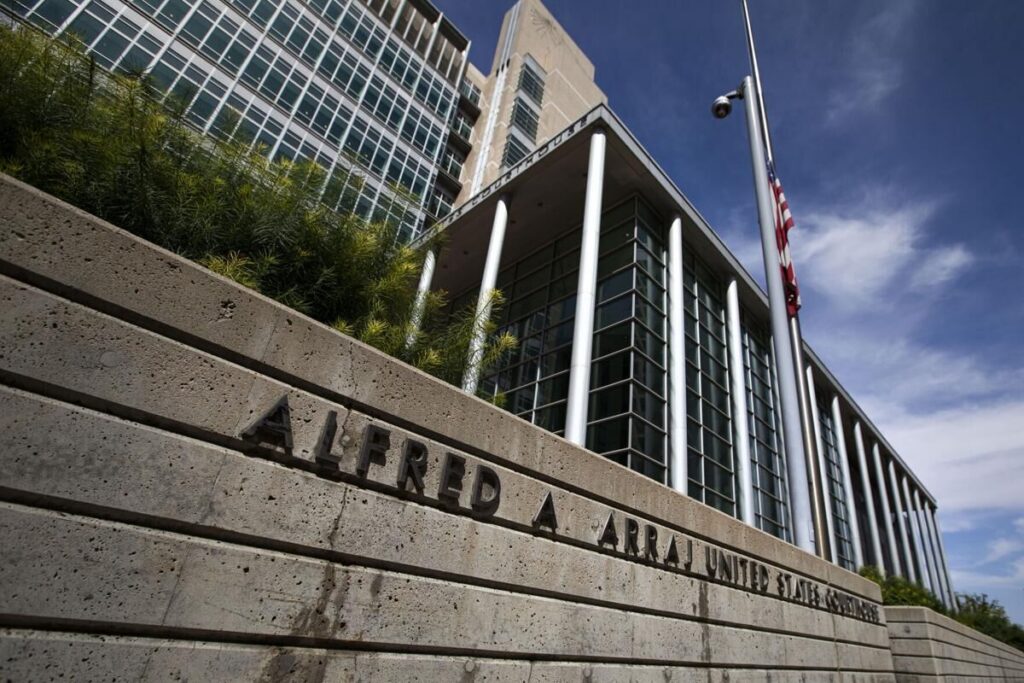
A federal judge declined on Monday to dismiss the formerly bankrupt medical contractor from a lawsuit over a detainee’s death in Jefferson County jail, but indicated she would do so if the plaintiffs’ attorneys go through the process to ensure...

Here are the 10 oldest members of Congress running for reelection
Lauren Green
lauren-green@coloradopolitics.com
Updated 19 hours ago
Capitol Hill has long been called a “retirement home,” as well over 100 House members and half the Senate are over the age of 65. That reputation doesn’t look due to change anytime soon — there are currently more than...
Fauci ignored reports of COVID vaccine side effects, new documents show
Gabrielle M. Etzel
gabrielle-m-etzel@coloradopolitics.com
Updated 20 hours ago
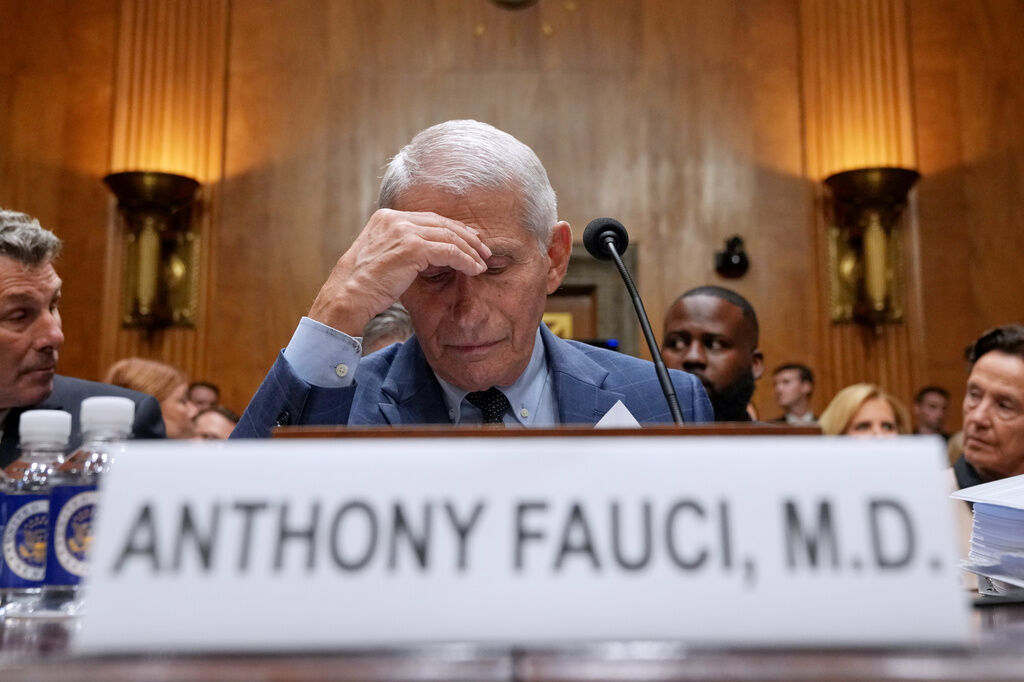
Dr. Anthony Fauci was made aware of possible COVID-19 vaccine complications by other senior-level public health officials in early 2021, according to new emails and text messages released by Senate Republicans on Sunday. Documents released by Sens. Rand Paul (R-KY)...

Majority of Americans say they’re worse off financially since Trump took office again: Poll
Emily Hallas
emily-hallas@coloradopolitics.com
Updated 20 hours ago
The majority of the public believes they are worse off financially than when President Donald Trump won a second term nearly two years ago, according to a new poll that painted an ominous picture of Republicans’ electability in the 2026...

Colorado River crisis: Lake Mead, Lake Powell inch closer to ‘dead pool’
Marianne Goodland
marianne.goodland@coloradopolitics.com
Updated 15 hours ago
In the past 10 days, both Lake Mead on the Arizona-Nevada border and Lake Powell roughly 300 miles northeast on the Utah-Arizona line have recorded their lowest water levels since the reservoirs were first filled. Lake Mead, the nation’s largest...

Colorado lieutenant governor candidate Markert says early discipline and key mentors set his course
Marianne Goodland
marianne.goodland@coloradopolitics.com
Updated 22 hours ago
Editor’s note: This is the first installment in a three-part series examining Colorado’s candidates for lieutenant governor. In this piece, Colorado Politics speaks with George Markert, the Republican running mate to gubernatorial candidate Victor Marx. Marx is competing against Democrat...

The hidden politics of time: How clocks, calendars — and now-contentious time zones — came to be
The Associated Press
the-associated-press@coloradopolitics.com
Updated 1 day ago
NEW YORK (AP) — It flies. It heals all wounds. It can be of the essence, and it can be money. We thrill in the best of it, lament the worst. We’re warned not to waste it, since we can’t...

1 killed in flash flooding in Beulah: Pueblo County Sheriff’s Office
O'Dell Isaac
odell.isaac@gazette.com
Updated 23 hours ago
One person was killed in Beulah on Sunday after floodwaters swept him downstream, according to a news release from the Pueblo County Sheriff’s Office. The male victim, whose name was not released, was standing near Colorado 78 and Central Avenue...
PREV
PREVIOUS

SONDERMANN | On baseball, politics and voting
Eric Sondermann Here is hoping that public voting for the starting lineups for baseball’s All-Star game proceeds with less controversy than is the case with most balloting these days. Any keen political observer along with any fervent baseball fan (those who check both boxes have a special place in my heart) knows by now that […]

Colorado to receive additional FEMA funding for COVID-19 response
The Federal Emergency Management Agency said Colorado will receive an additional $1.6 million to assist with the state’s COVID-19 response effort. This additional funding will go to the state’s Department of Homeland Security and Emergency Management to assist in administering and managing public assistance awards, according to a release from FEMA. Earlier this month, the […]