

In 2019, an audit found errors in the state controller’s office that accounted for millions. Those issues are still not fixed, report finds
Updated with comments from the state controller’s spokesman.
Errors in statements by the Office of the State Controller – previously identified more than two years ago – are still present and account for just short of $1 billion that did not correspond with financial reports from state agencies, an auditor’s report found.
The findings were part of the first half of the state auditor’s review of Colorado’s financial books for 2020. .
In 2019, State Auditor Dianne Ray and her staff released a scathing report that raised “serious issues in the Office of the State Controller’s preparation of the State’s financial statements.” That audit, which looked at the state’s Comprehensive Annual Financial Report – the same report reviewed Tuesday – found millions of dollars in errors as well as numerous misstatements. It blamed a lack of internal controls and appropriate processes within the state controller’s office, led by Bob Jaros.
At the time, Jaros pledged to the audit committee that “the next time we meet, and the next time there’s an audit review, there’s won’t be a repeat of these findings.”
The audit on Tuesday reported significant errors are still taking place, and that recommendations from the 2019 audit to fix those problems have not been implemented.
For example, one error could have misled a reader of the state’s financial reports to overestimate a depreciation expense by more than $1 trillion, the audit found. A typographical error discovered by auditors overstated pledged revenue by $700 million for one higher education institution. The audit identified a total of 37 errors in the controller’s financial reports that affected various sections of the annual report.
In total, there were $944 million in revisions done by the controller’s staff that did not gel with exhibits submitted by state agencies, and so the controller’s staff changed the numbers in the exhibits rather than getting corrected figures from the state agencies.
Tuesday’s audit said the state controller’s office does not have “effective internal controls in place over its Fiscal Year 2020 financial reporting.” The OSC “did not appropriately design, or require staff to follow, its procedures or otherwise ensure that the Financial Statements, Annual Report, and SEFA [a report on spending of federal awards] were prepared and reviewed appropriately, and that errors were identified and corrected.”
The audit said that the lack of internal controls and procedures could lead to errors in the state’s financial statements and the annual report. That could lead those who use those reports, such as the governor and the General Assembly, “to make decisions based on inaccurate information.”
The OSC corrected the errors when the auditors brought them to their attention.
Doug Platt, spokesman for the Department of Personnel and Administration, where the state controller’s office is housed, told Colorado Politics that even the auditors’ report noted that the financial statements in their final forms were correct. The audit looked at preliminary versions of the Comprehensive Annual Financial Report, and the auditor is part of looking at all of those versions, Platt said. When the auditor identifies errors, it’s in the draft versions of the CAFR and then corrected. The final published CAFR did not have errors, Platt said.
The controller is always committed to continually improving processes in his office, Platt added.
Ray told Colorado Politics that the continued problems with internal controls in the OSC has been going on now since 2018, and that it appears these problems are being “pushed down the road.”
Of the five material weaknesses in OSC controls identified in the 2019 audit, three were to be implemented by December 2020; two more are not due to be completed until December 2022, and the most serious, strengthening the policies and procedures for preparing and reviewing the State’s financial statements and the annual report, did not list a date for compliance.
The audit was presented to the Legislative Audit Committee on Tuesday morning. Also at that meeting, Ray issued an unheard-of “no opinion” on the health of the state’s unemployment trust fund, reporting that the staff could not verify the numbers for the fund, which claimed to be short $510 million in receivables and overspent by $872 million as of June 30, 2020.

Colorado House pass bill raising threshold for agriculture overtime by one vote
Marianne Goodland
marianne.goodland@coloradopolitics.com
Updated 8 hours ago
The bill that would raise the overtime threshold for overtime pay for certain agricultural workers won the narrowest of votes Thursday in the Colorado House. Senate Bill 121 won a 33-32 vote, a dramatic difference from votes cast Wednesday on...
Colorado’s $46.8 billion budget nears finish line
Marianne Goodland
marianne.goodland@coloradopolitics.com
Updated 10 hours ago
The Colorado Senate on Thursday voted largely along party lines to approve $46.8 billion in spending for the next state budget. The spending plan is bigger than what legislators originally approved for the current fiscal year’s budget, driven by increases...

Colorado Senate passes bill for voluntary $5 fee to fund wildlife crossings
Scott Weiser
scott.weiser@gazette.com
Updated 10 hours ago
The Colorado Senate approved bipartisan legislation allowing drivers to voluntarily pay an extra $5 when registering their vehicles to help finance wildlife crossings and reduce the growing number of dangerous collisions between cars and animals on state highways. In 2024...
A proposed Democratic bill would make taking Colorado workers’ IDs a crime
Marissa Ventrelli
marissa.ventrelli@coloradopolitics.com
Updated 11 hours ago
After a narrow 6–5 vote, a bill to bar employers from taking workers’ identification documents is moving to the full Colorado House, sparking questions about how often such intimidation occurs and whether a new state law is necessary. House Bill...
House rejects effort to withdraw US forces from the Iran war as Republicans stick with Trump
Kevin Freking
kevin.freking@associatedpress.com
Updated 15 hours ago
WASHINGTON (AP) — The House rejected a resolution Thursday requiring President Donald Trump to withdraw U.S. forces from the war with Iran unless Congress authorizes military action. It was the latest such vote that fell short of passage as Republicans...
9 Colorado hospitals at risk of closing due to Medicaid cuts
Nico Brambila
nico.brambila@denvergazette.com
Updated 16 hours ago
The $900 billion in Medicaid cuts over the next decade could threaten the viability of more than 400 hospitals nationally and at least nine in Colorado, a new report has found. The hospitals span the Front Range and rural communities,...
Democrats vow to block next Trump Supreme Court pick amid Alito speculation
Ramsey Touchberry, Washington Examiner
ramsey.touchberry.washington.examiner@gazetteedit.wpenginepowered.com
Updated 16 hours ago
Justice Samuel Alito hasn’t tipped his hat on retiring just yet, but Senate Democrats are already entrenched in opposing the confirmation of a successor that would deliver President Donald Trump his fourth lifetime appointment to the high court. Democrats need...
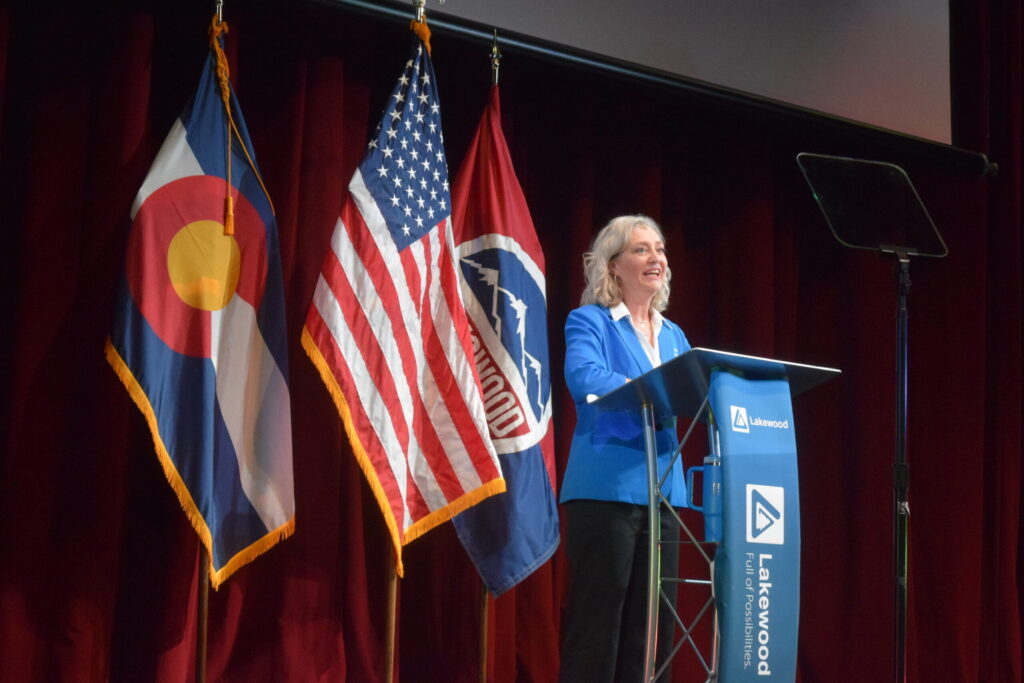
Lakewood mayor calls for unity, community in State of the City speech
Sage Kelley
sage.kelley@denvergazette.com
Updated 17 hours ago
Lakewood held its first State of the City address since 2018 on Wednesday — timing Mayor Wendi Strom attributed to fate. “We got bumped a few times on dates,” Strom said to a room of nearly 100 residents and officials....

Colorado Senate reworks key programs, gives preliminary nod to $46B budget
Marianne Goodland
marianne.goodland@coloradopolitics.com
Updated 17 hours ago
With the Senate’s traditional Budget Day barbecue setting a lighter tone, lawmakers worked through the $46.8 billion state budget Wednesday, navigating a long list of amendments but avoiding the partisan clashes that defined the House debate last week. The Senate...
Colorado budget plan seeks to keep $306 million by canceling TABOR refunds
Marianne Goodland
marianne.goodland@coloradopolitics.com
Updated 17 hours ago
Tucked deep within the hundreds of pages of the proposed $46.8 billion 2026–27 state budget is a line item showing $306.1 million in savings — achieved by canceling Taxpayer’s Bill of Rights refunds. Gov. Jared Polis has recommended withholding TABOR...
PREV
PREVIOUS

Aurora Mayor Mike Coffman sues city over new campaign finance law ‘designed to silence him’
Aurora Mayor Mike Coffman has filed a lawsuit against the city of Aurora due to reform to its campaign finance law passed by the City Council last year, claiming the new law violates his freedom of speech. The law limits donations from individuals and committees to $1,000 in at-large and mayor races and $400 for […]
Following critical comments, Title Board advances ballot measure on animal cruelty
Critics of a proposed three-page ballot initiative that would extend animal cruelty prohibitions to livestock blasted the measure for its vagueness, unintended consequences and potential new hurdles for veterinary medicine as it came under consideration on Wednesday for a ballot title. The proposal “represents a sweeping change that is nowhere reflected in the language here in […]