

Following critical comments, Title Board advances ballot measure on animal cruelty
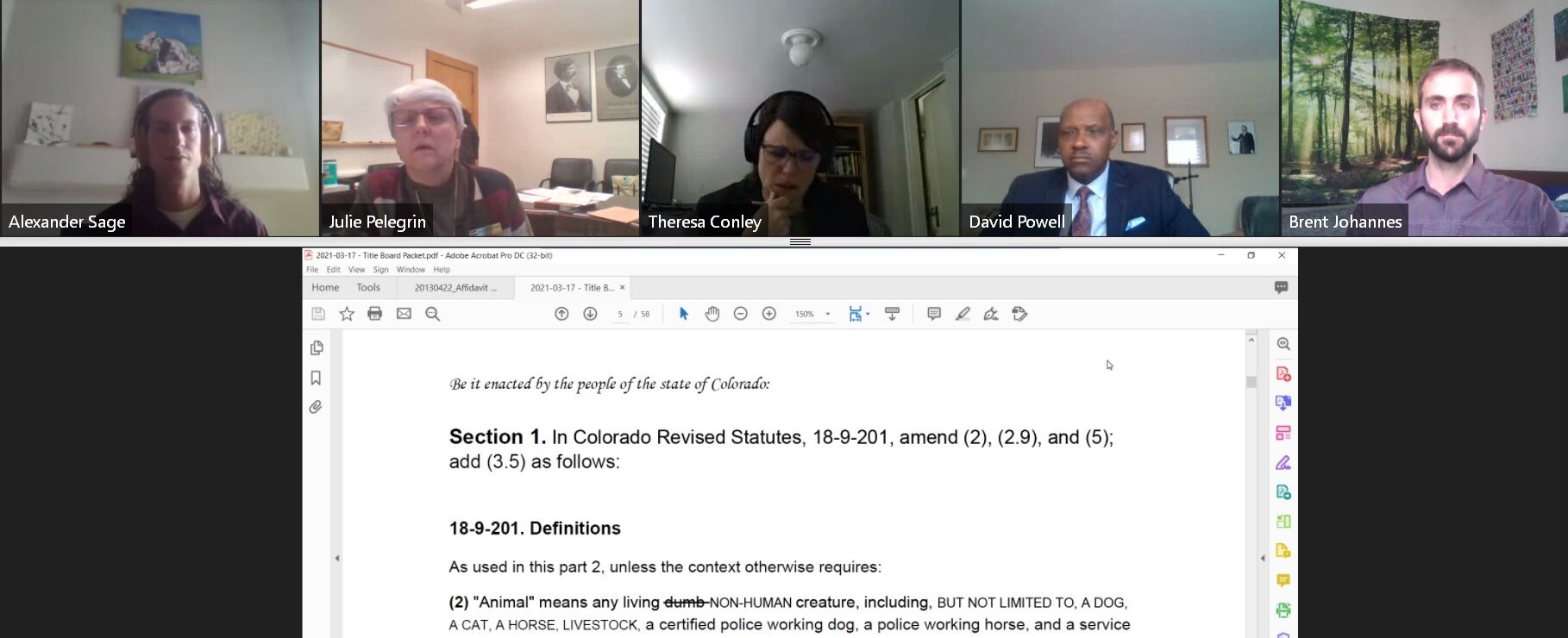
Critics of a proposed three-page ballot initiative that would extend animal cruelty prohibitions to livestock blasted the measure for its vagueness, unintended consequences and potential new hurdles for veterinary medicine as it came under consideration on Wednesday for a ballot title.
The proposal “represents a sweeping change that is nowhere reflected in the language here in a way that the general public can really apprehend it,” warned Diane Matt at the Title Board’s meeting.
Board member David Powell, representing Attorney General Phil Weiser, explained to those frustrated at the measure that the Title Board’s job was merely to summarize its contents for a ballot title, and not to weigh the pros and cons of the ballot initiative.
“I think the problem is our scope is limited. These are all good comments, but we can’t redraft the measure,” he said.
Initiative #16, from designated representatives Alexander Sage and Brent Johannes, seeks to expand animal cruelty protections to livestock and include the penetration of an animal with an object or a person’s body part in the definition of sexual act with an animal. There would be an exception, forever, for care to improve the animal’s health.
The measure would further allow for slaughter of animals in accordance with accepted animal husbandry practices, as long as the animal has lived one-quarter of its natural life and does not needlessly suffer.
Jim Santomaso commented to the board that a pipette and veterinarian’s arm are used in artificial insemination of cows, and the ballot initiative would potentially outlaw fertility tools for farmers and ranchers.
“It’s not to improve an animal’s health, these are standard practices,” Santomaso said. “You’re eliminating a standard practice out of the rancher and farmer’s use here.” He also observed there was no definition of what the natural lifespan of an animal would be.
“Our phrasing does not explicitly call out artificial insemination,” Sage responded. “While you’re definitely accurate that it does subscribe to the general concept very closely, that would be left up to veterinarians to decide whether that fits within the realm of the animal’s best interest.”
He clarified that under the measure, animals would be capable of breeding among themselves, and nothing is “inherently illegal about standard animal agriculture.”
Other commenters observed that “needless suffering” was another vague provision, as was the measure’s silence on animal euthanasia. In response to a concern about whether hunting would be considered animal cruelty, the designated representatives said existing hunting statutes would take precedence over Initiative #16.
“I don’t know what the full effect of this change is,” conceded board member Julie Pelegrin, representing the Office of Legislative Legal Services. The Title Board, however, is obligated to determine whether a proposed initiative satisfies the constitutional single-subject requirement. If so, it sets a title that is brief, yet describes all central features of the measure, without considering in depth the consequences of passage.
The board voted unanimously to set a ballot title to appear before voters, placing the designated representatives on a path to collect signatures to put Initiative #16 on the general election ballot. Board members also received written comments from the La Plata–Archuleta Cattlemen’s Association and the CEO of the Colorado Veterinary Medical Association.
The Title Board subsequently set a title for Initiative #18, which would increase retail marijuana taxes by 5% and transfer state revenue to fund a Learning Enrichment and Academic Progress program for children ages 5-17.
The program would provide financial aid to parents for out-of-school learning opportunities, including tutoring, support for children with special needs, and technical, music or art training. The tax increase would bring an estimated $124.5 million increase in revenue.
Pelegrin expressed her concern that a transfer of money from the public school lands fund, which captures revenue from leasing and extraction activity, toward the program would affect the General Assembly’s accounting for the state share of K-12 funding.
“I never underestimate the General Assembly’s ability to go rogue,” she commented.
So far this election cycle, the Title Board has approved three other initiatives: two to revamp the state’s direct democracy process and one to reduce property tax rates.



Understanding Trump’s remarkable political comeback in 2024 | Cronin and Loevy
Tom Cronin Bob Loevy
tom-cronin-bob-loevy@coloradopolitics.com
Updated 10 hours ago
President Donald Trump lost the 2020 presidential election. He inspired a riot at the U.S. Capitol to try to overthrow the results of that election. He was impeached by the U.S. House of Representatives and later was indicted for several...
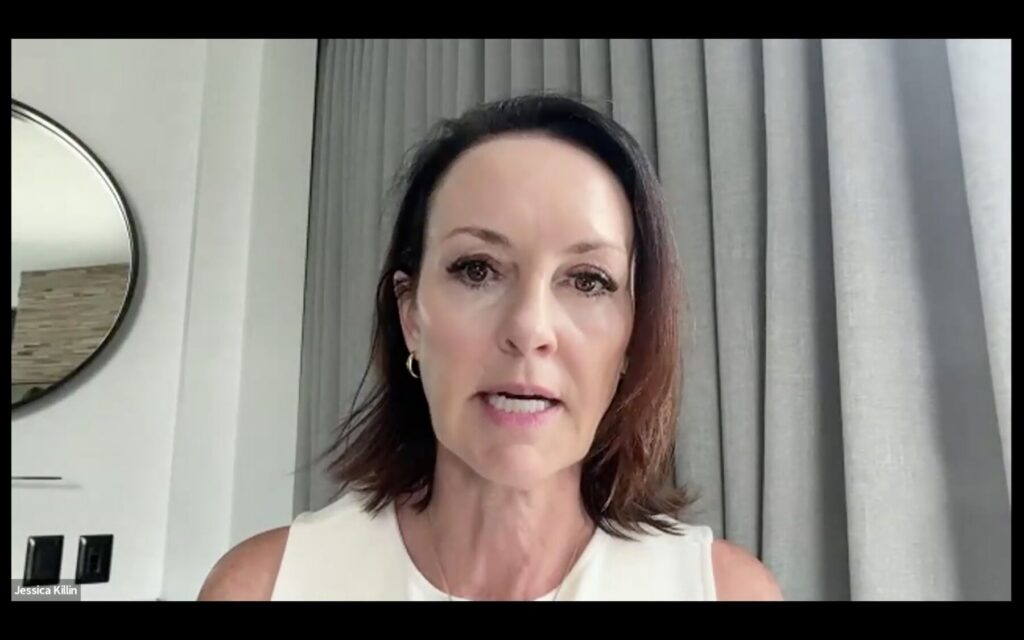
Crank challenger Jessica Killin signs on to new centrist Democratic group’s ‘Promise to America’
Ernest Luning
ernest.luning@coloradopolitics.com
Updated 19 hours ago
Jessica Killin, one of the Democrats running in Tuesday’s primary for the chance to challenge U.S. Rep. Jeff Crank in Colorado’s 5th Congressional District, joined with more than a dozen incumbent Democratic lawmakers and candidates this week signing on to...
Who’s spending in Colorado to get your vote?
Marianne Goodland
marianne.goodland@coloradopolitics.com
Updated 2 days ago
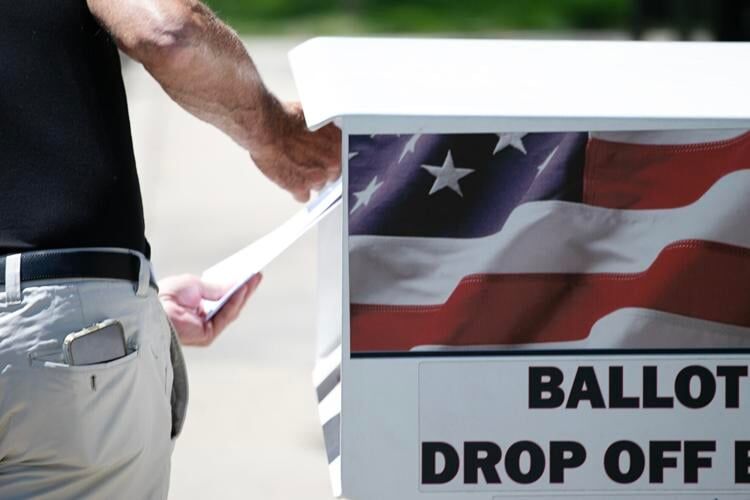
Groups that raise unlimited amounts of money have spent about $20 million in May and June to try and influence Colorado voters’ choices in the upcoming June 30 primaries. By law, these groups cannot coordinate with the candidates they support....

Phil Weiser leading Michael Bennet in Colorado’s Democratic gubernatorial primary, internal poll finds
Ernest Luning
ernest.luning@coloradopolitics.com
Updated 3 days ago
Attorney General Phil Weiser holds a lead over U.S. Sen. Michael Bennet among likely voters less than a week before ballots are due in Colorado’s Democratic gubernatorial primary, according to a new poll released Thursday by a group backing Weiser....
Colorado’s ‘right to natural gas’ measure submits signatures to qualify for November ballot
Marissa Ventrelli
marissa.ventrelli@coloradopolitics.com
Updated 5 days ago
A natural-gas rights initiative backed by Advance Colorado is likely headed to the November ballot, triggering a parallel campaign by environmental groups seeking to impose new liabilities on oil and gas operators. Petitions for Initiative No. 177 were turned in...
Colorado’s ‘right to natural gas’ measure submits signatures to qualify for November ballot
Marissa Ventrelli
marissa.ventrelli@coloradopolitics.com
Updated 5 days ago
A natural-gas rights initiative backed by Advance Colorado is likely headed to the November ballot, triggering a parallel campaign by environmental groups seeking to impose new liabilities on oil and gas operators. Petitions for Initiative No. 177 were turned in...
Colorado’s ‘right to natural gas’ measure submits signatures to qualify for November ballot
Marissa Ventrelli
marissa.ventrelli@coloradopolitics.com
Updated 5 days ago
A natural-gas rights initiative backed by Advance Colorado is likely headed to the November ballot, triggering a parallel campaign by environmental groups seeking to impose new liabilities on oil and gas operators. Petitions for Initiative No. 177 were turned in...
Colorado’s ‘right to natural gas’ measure submits signatures to qualify for November ballot
Marissa Ventrelli
marissa.ventrelli@coloradopolitics.com
Updated 5 days ago
A natural-gas rights initiative backed by Advance Colorado is likely headed to the November ballot, triggering a parallel campaign by environmental groups seeking to impose new liabilities on oil and gas operators. Petitions for Initiative No. 177 were turned in...
Colorado’s ‘right to natural gas’ measure submits signatures to qualify for November ballot
Marissa Ventrelli
marissa.ventrelli@coloradopolitics.com
Updated 5 days ago
A natural-gas rights initiative backed by Advance Colorado is likely headed to the November ballot, triggering a parallel campaign by environmental groups seeking to impose new liabilities on oil and gas operators. Petitions for Initiative No. 177 were turned in...
Colorado’s ‘right to natural gas’ measure submits signatures to qualify for November ballot
Marissa Ventrelli
marissa.ventrelli@coloradopolitics.com
Updated 5 days ago
A natural-gas rights initiative backed by Advance Colorado is likely headed to the November ballot, triggering a parallel campaign by environmental groups seeking to impose new liabilities on oil and gas operators. Petitions for Initiative No. 177 were turned in...
PREV
PREVIOUS

In 2019, an audit found errors in the state controller's office that accounted for millions. Those issues are still not fixed, report finds
Updated with comments from the state controller’s spokesman. Errors in statements by the Office of the State Controller – previously identified more than two years ago – are still present and account for just short of $1 billion that did not correspond with financial reports from state agencies, an auditor’s report found. The findings were part […]

A moment to honor Latinos, Irish and Atlanta shooting victims turns heated in state House
A moment to honor Latinos and St. Patrick’s Day turned into a battle over white supremacy on the House floor Wednesday. It started off as a vote on Senate Joint Resolution 5, which recognizes Latino Advocacy Day. The resolution stated that Latinos are a key part of Colorado’s constituency, leaders in their families and communities, […]