

Appeals court finds El Paso County judge violated speedy trial deadline, dismisses charges

An El Paso County judge incorrectly postponed a defendant’s trial past the legal deadline, and consequently her convictions are void, the Court of Appeals ruled on Thursday.
Under Colorado law defendants must be brought to trial within six months of a not guilty plea, pursuant to the Sixth Amendment’s guarantee of a speedy trial. Unless an exception applies, the General Assembly has provided one consequence for a violation: dismissal of the charges and a prohibition against future indictment.
“It is the prosecution and trial court’s duty to make sure the defendant’s speedy trial rights are upheld,” deputy public defender Meredith O’Harris told the three-member appellate panel during oral argument.
Lonnie E. Shaffer pleaded not guilty to two drug charges in April 2017. The El Paso County prosecutor had two witnesses: a drug analyst who could testify that the substance found in her vehicle was heroin, and the state trooper who arrested Shaffer. He estimated their testimony would take about two hours.
Shaffer’s trial was scheduled for Aug. 21, but a series of requests pushed the start to Oct. 5. That morning, the defense attorney had an obligation in another case, so District Court Judge Gregory R. Werner pushed the trial to the afternoon. When everyone reconvened in the courtroom, the prosecutor announced that the state trooper scheduled to appear at 4 p.m. would not be available the following morning.
Therefore, if the parties could not get through jury selection and opening statements in time, the witness would have to appear in the afternoon again. The prosecutor suggested the trial proceed with that scheduling note in mind.
However, Werner responded that “we’re not going to be able to get a jury done or selected here today and get the witnesses on that need to be on.” He reset the trial to Oct. 16 and, because the defense lawyer’s morning obligation in the other case was also rescheduled, attributed the day’s delay to the defense.
When Oct. 16 arrived, the prosecutor disclosed that the drug analyst was unavailable and asked for another extension. The defense objected, but Werner rescheduled the trial to Feb. 5, 2018, a practice known legally as a continuance.
“Six months is not always enough time to bring a case to trial, especially when the defense requires extensive investigation, preparation, and litigation,” explained Charles J. Testa on the website of Berg Hill Greenleaf Ruscitti. “When the defense requests a continuance, that constitutes a waiver of the right to a speedy trial, re-setting the six-month clock as of the date of the waiver.”
By ascribing the Oct. 5 postponement to the defense counsel, Werner believed the new trial date complied with the law. A jury convicted Shaffer on both charges following her February trial.
“The problem, it seems, was the state trooper’s schedule,” wrote Judge Elizabeth L. Harris in the court’s opinion. But the prosecutor “did not share with the court until the moment trial was set to begin.” Under the panel’s reading of events, Werner had already agreed to start the trial on the afternoon of Oct. 5, and the defense attorney was ready to proceed at that time. Therefore, Werner was incorrect to find the defendant waived her speedy trial right with that day’s late start.
The appellate panel observed that a six-month extension is allowable if prosecutors have diligently attempted to obtain evidence that is key to the case, but it is unavailable by the trial date.
Prosecutors argued that even if the court determined the defense was not responsible for the extension of the speedy trial deadline on Oct. 5, the extension Werner granted on Oct. 16 was proper because the drug analyst, a central part to the state’s case, was unavailable.
“She was under subpoena. She was legally required to be in Virginia that week. There was only so much the prosecutor could do,” Daniel Rheiner, representing the attorney general’s office, told the judges at oral argument. O’Harris, the public defender, disagreed.
“The state didn’t even allege at the hearing that it had acted diligently in securing either witness’s presence,” she responded.
The appellate panel sided with the defense. Because the law requires prosecutors to show “due diligence” to obtain evidence, the trial court would have needed to evaluate the prosecutor’s attempts to get the drug analyst to appear. Werner, believing the defense had already triggered a six-month extension, did not make those findings.
“The prosecutor did not offer any information about the efforts he had made to secure the drug analyst’s appearance for trial on October 16 and the reason why those efforts were unsuccessful,” Harris noted.
The panel overturned the two convictions. The case is People v. Shaffer.


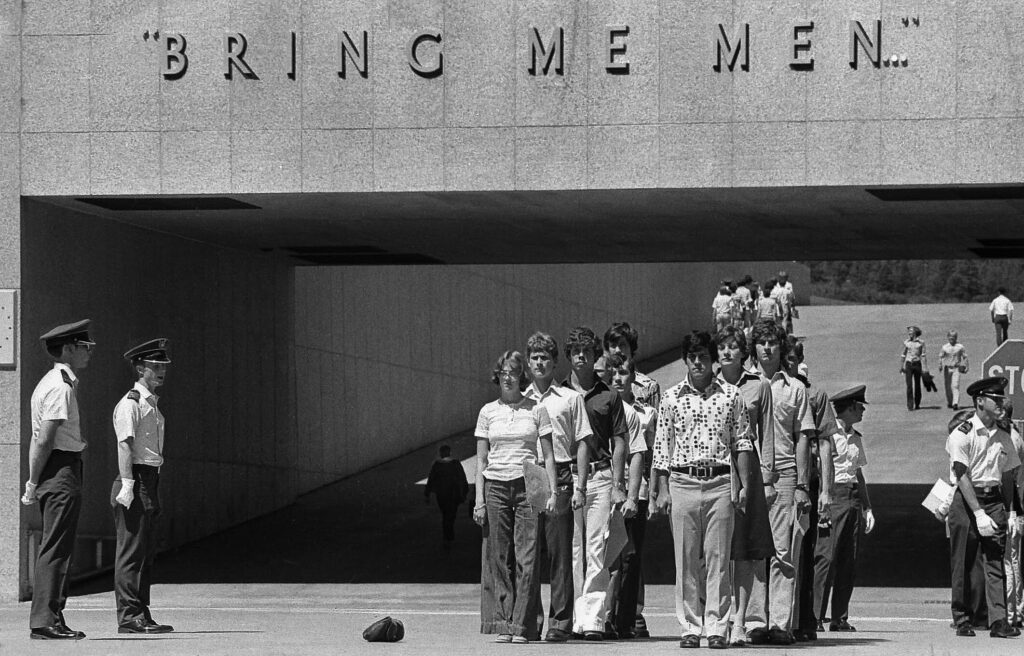
Fifty years later, women reflect on first coed class at the Air Force Academy, struggle for equality
Mary Shinn
mary-shinn@coloradopolitics.com
Updated 2 days ago
When the first female Air Force Academy cadets arrived 50 years ago this summer, they stood in front of an enormous sign on campus that read “Bring me men.” In the shadow of that sign, Kathleen Utley Kornahrens, one of...

As Lake Powell shrinks, marinas are having to adapt to dwindling water levels | OUT WEST ROUNDUP
The Associated Press
the-associated-press@coloradopolitics.com
Updated 5 days ago
ARIZONA Reservoirs near record lows PAGE — The Colorado River’s Lake Powell, the second largest reservoir in the U.S., is shrinking. A record-dry winter and extreme heat — as well as decades of overuse, chronic drought and climate change —...

A new day? Colorado’s troubled guardianship office pursues ‘cultural reset’
Marianne Goodland
marianne.goodland@coloradopolitics.com
Updated 4 days ago
Colorado’s guardianship program, long criticized for mismanagement and high staff attrition, is undergoing a “cultural reset,” as its new director works to repair partnerships and prepare for a major expansion under recent legislation. Created by lawmakers in 2017, the Office...

U.S. Senate OKs funding bill to avoid government shutdown
Wire Services
wire-services@coloradopolitics.com
Updated 2 days ago
Hemp provision became point of contention WASHINGTON • The U.S. Senate in an overnight vote Saturday approved a short-term measure to fund federal agencies into early December and avoid a government shutdown during the middle of campaign season. The late-summer...

The relevance of Watergate more than a half-century later | SONDERMANN
By Eric Sondermann
by-eric-sondermann@coloradopolitics.com
Updated 5 days ago
It was the scandal for which all other scandals are now named. In June 1972, a small group of Cuban burglars with high-level connections broke into the headquarters of the Democratic National Committee. Those headquarters were located in the Watergate...

Wirth downplays Social Security disaster talk | A LOOK BACK
Rachael Wright, Special to Colorado Politics
rachael.wright@coloradopolitics.com
Updated 4 days ago
Forty-five years ago this week: “As time goes on,” said Democratic U.S. Rep. Tim Wirth, of the 2nd Congressional District, “we are finding that the safety net, which was proposed earlier this year, has some very large holes in it,”...

Colorado Politics Calendar Aug. 10-16
Rachael Wright, Special to Colorado Politics
rachael.wright@coloradopolitics.com
Updated 4 days ago
CoPo’s weekly political calendar will help you find political and public-policy events throughout Colorado. It includes candidate and issue campaign events, public policy meetings, court hearings, state and local party conventions, assemblies, debates, rallies, parades, speaking engagements, traveling dignitary appearances,...

Democratic group aims Spanish-language TV ad at Gabe Evans in Colorado’s battleground 8th CD
Ernest Luning
ernest.luning@coloradopolitics.com
Updated 3 days ago
A national group tied to House Democratic leadership launched a six-figure Spanish-language TV ad in Colorado this week targeting Republican U.S. Rep. Gabe Evans and the GOP’s signature budget legislation. The 30-second spot is part of $15 million in new...

Colorado School of Mines lands major share in Trump’s $100M mining-education plan
Thelma Grimes
thelma.grimes@coloradopolitics.com
Updated 3 days ago
President Donald Trump on Friday named the Colorado School of Mines among roughly a dozen institutions that will share in a $100 million commitment “to train the next generation of American miners.” Paul Johnson, the university’s president, said he is...
Local party leaders, incoming judge among members of judicial performance commission that violated law
Michael Karlik
michael.karlik@coloradopolitics.com
Updated 2 days ago
A local Democratic leader and 2024 presidential elector. A legislative aide and leader in the Young Republicans. An incoming county court judge freshly appointed by the governor. They are among the eight members of the northeastern Colorado judicial performance commission...