

Court allows suit against Durango hospital based on questionable medical theory

A child and her mother may sue a Durango hospital and the doctor who delivered her for malpractice, based on a disputed medical theory about pressure applied to a baby’s head during birth, the Colorado Court of Appeals ruled.
After 26 hours of labor, a child identified as Abigail Dean was born not breathing and not moving. A doctor in the newborn intensive care unit at Centura Health-Mercy Regional Medical Center of Durango noted at the time: “I have never seen anything remotely like this.”
That night, the doctor ordered her transfer to Children’s Hospital of Colorado in Denver, following two episodes of breathing cessation. A cooling therapy was available in Denver to reduce or mitigate brain damage. However, upon arrival in Denver, staff determined too much time elapsed for the therapy to be effective on the child.
When Abigail and her mother sued Catholic Health Initiatives, which operates the hospital, CHI sought to limit expert testimony. Specifically, they disputed the theory that a compression of the child’s head due to uterine contractions decreased the oxygen and blood flow to the brain during birth, causing injury. The defendants referred to this phenomenon as “cranial compressive ischemic encephalopathy.”
Arapahoe County District Court Judge Elizabeth Beebe Volz appointed a special master to look into the facts, who concluded that CCIE was not a reliable theory. He also recommended excluding evidence, including expert testimony, relating to CCIE. Volz adopted the recommendation, and also barred testimony related to the separate theory of a traumatic brain injury resulting from child’s head impacting her mother’s pelvis – even though CHI did not dispute that theory.
Subsequently, Volz dismissed the case.
“Child contends that the district court abused its discretion by excluding evidence of the CCIE theory of causation,” wrote Judge Michael H. Berger for the three-member appeals panel. “Although this is a close question, we agree.”
Both of the parties agreed that the plaintiffs’ experts were qualified, but the district court found CCIE to be an unreliable theory because of a lack of peer-reviewed studies upholding it and no data to support it.
A 2017 paper that compiled findings on the subject concluded fetal intracranial pressure and blood flow “appear well protected” from the external pressures of labor and the mother’s pushing, in large part due to the molding of the baby’s head. The author, Kent D. Heyborn of Denver Health, also noted that the CCIE theory’s proponents have not indicated how head compression should be diagnosed or mitigated.
However, “[r]andomized controlled trials of ‘excessive’ head compression (however, that might be defined) are of course not practicable,” Heyborn added.
Two leading medical associations, the American College of Obstetrics and Gynecologists and the American Medical Association, have also come out in opposition to CCIE. In a 2018 case in Texas, the two groups filed a brief arguing “there is no reliable literature showing that the hypothetical mechanism of injury ever has been reported or even observed outside of litigation.”
The CHI lawsuit was not the first in Colorado to raise the question of CCIE’s admissibility. A separate appeals panel in August of this year reinstated a lawsuit involving an infant who was born with cerebral palsy after 36 hours of labor deprived his brain of oxygen. The panel in that case, Trujillo v. Vail Clinic, Inc., wrote that “[w]hile CCIE is not junk science, its lack of testing, widespread acceptance, and publication will almost certainly be the subject of cross-examination.”
“Wouldn’t it be an odd state of affairs,” asked Judge Jerry N. Jones during oral arguments in the CHI case, “for one division of this court to say this is a valid scientific theory and another division to say this is not a valid scientific theory?”
The appellate judges found that in evaluating the scientific theory of CCIE against such factors as peer review, general acceptance and the relationship of the theory to scientific analysis, the Arapahoe County judge did not consider whether the underlying principles of CCIE were themselves widely-accepted.
“For example, Dr. Stewart Ater testified that peer-reviewed studies describe a relationship between decreased oxygen flow to a fetal brain and increasing uterine pressure. That portion of his testimony was not disputed by the defendants,” Berger wrote. “By focusing only on the acceptance of the ultimate theory, and not the subsidiary components of the theory, the court failed to consider all of the relevant circumstances.”
The panel concluded the district judge erred by omitting expert testimony from medical professionals who could speak to CCIE from firsthand knowledge. Because the special master and the defendants did not raise the trauma theory of injury, the judge was also incorrect to dismiss the claim on those grounds.
The panel reinstated the lawsuit against CHI and the doctor who delivered the child, Mareca Pallister. By a 2-1 vote, the appellate judges allowed the dismissal to stand against the doctor who ordered the baby airlifted to Denver. Retired Judge JoAnn L. Vogt, sitting on the panel at the chief justice’s assignment, indicated she would have allowed the malpractice claim to proceed against the NICU doctor, citing an expert witness’s statement that the child likely would have benefitted from the cooling therapy much sooner.
The case is Dean v. Catholic Health Initiatives Colorado et al.


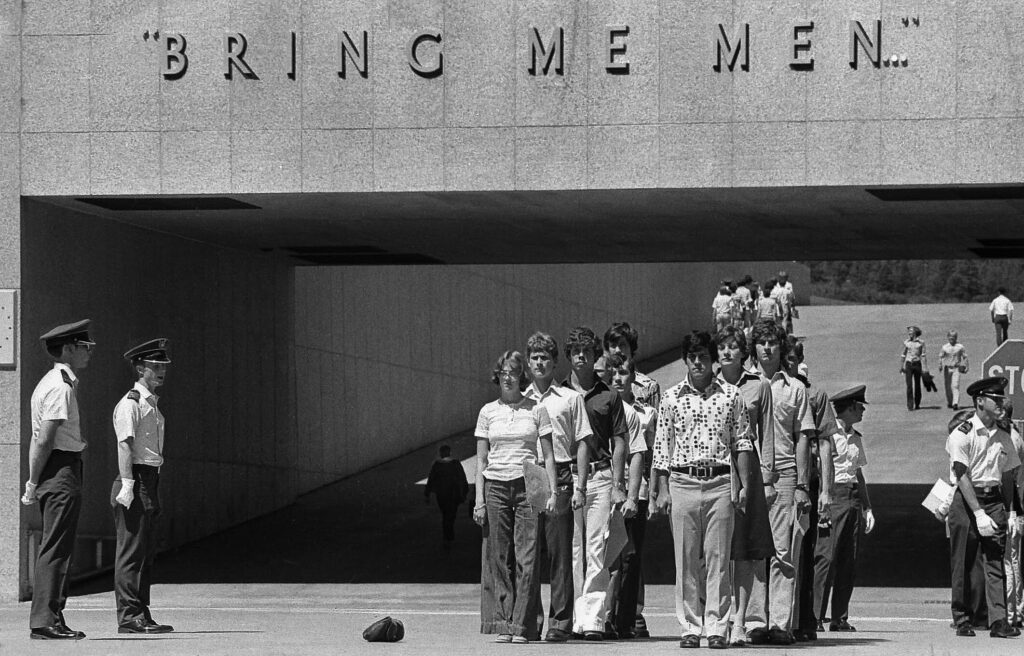
Fifty years later, women reflect on first coed class at the Air Force Academy, struggle for equality
Mary Shinn
mary-shinn@coloradopolitics.com
Updated 1 day ago
When the first female Air Force Academy cadets arrived 50 years ago this summer, they stood in front of an enormous sign on campus that read “Bring me men.” In the shadow of that sign, Kathleen Utley Kornahrens, one of...

As Lake Powell shrinks, marinas are having to adapt to dwindling water levels | OUT WEST ROUNDUP
The Associated Press
the-associated-press@coloradopolitics.com
Updated 4 days ago
ARIZONA Reservoirs near record lows PAGE — The Colorado River’s Lake Powell, the second largest reservoir in the U.S., is shrinking. A record-dry winter and extreme heat — as well as decades of overuse, chronic drought and climate change —...

A new day? Colorado’s troubled guardianship office pursues ‘cultural reset’
Marianne Goodland
marianne.goodland@coloradopolitics.com
Updated 3 days ago
Colorado’s guardianship program, long criticized for mismanagement and high staff attrition, is undergoing a “cultural reset,” as its new director works to repair partnerships and prepare for a major expansion under recent legislation. Created by lawmakers in 2017, the Office...
U.S. Senate OKs funding bill to avoid government shutdown
Wire Services
wire-services@coloradopolitics.com
Updated 2 days ago
Hemp provision became point of contention WASHINGTON • The U.S. Senate in an overnight vote Saturday approved a short-term measure to fund federal agencies into early December and avoid a government shutdown during the middle of campaign season. The late-summer...
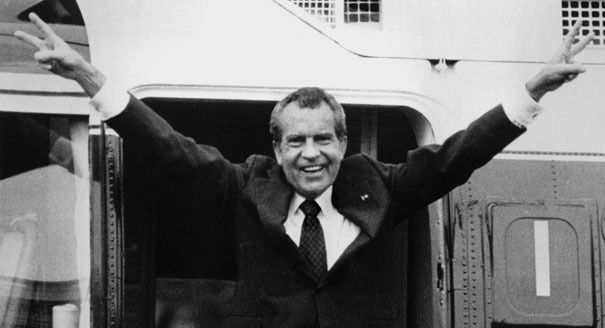
The relevance of Watergate more than a half-century later | SONDERMANN
By Eric Sondermann
by-eric-sondermann@coloradopolitics.com
Updated 4 days ago
It was the scandal for which all other scandals are now named. In June 1972, a small group of Cuban burglars with high-level connections broke into the headquarters of the Democratic National Committee. Those headquarters were located in the Watergate...

Wirth downplays Social Security disaster talk | A LOOK BACK
Rachael Wright, Special to Colorado Politics
rachael.wright@coloradopolitics.com
Updated 4 days ago
Forty-five years ago this week: “As time goes on,” said Democratic U.S. Rep. Tim Wirth, of the 2nd Congressional District, “we are finding that the safety net, which was proposed earlier this year, has some very large holes in it,”...

Colorado Politics Calendar Aug. 10-16
Rachael Wright, Special to Colorado Politics
rachael.wright@coloradopolitics.com
Updated 4 days ago
CoPo’s weekly political calendar will help you find political and public-policy events throughout Colorado. It includes candidate and issue campaign events, public policy meetings, court hearings, state and local party conventions, assemblies, debates, rallies, parades, speaking engagements, traveling dignitary appearances,...

Democratic group aims Spanish-language TV ad at Gabe Evans in Colorado’s battleground 8th CD
Ernest Luning
ernest.luning@coloradopolitics.com
Updated 2 days ago
A national group tied to House Democratic leadership launched a six-figure Spanish-language TV ad in Colorado this week targeting Republican U.S. Rep. Gabe Evans and the GOP’s signature budget legislation. The 30-second spot is part of $15 million in new...

Colorado School of Mines lands major share in Trump’s $100M mining-education plan
Thelma Grimes
thelma.grimes@coloradopolitics.com
Updated 2 days ago
President Donald Trump on Friday named the Colorado School of Mines among roughly a dozen institutions that will share in a $100 million commitment “to train the next generation of American miners.” Paul Johnson, the university’s president, said he is...

Local party leaders, incoming judge among members of judicial performance commission that violated law
Michael Karlik
michael.karlik@coloradopolitics.com
Updated 1 day ago
A local Democratic leader and 2024 presidential elector. A legislative aide and leader in the Young Republicans. An incoming county court judge freshly appointed by the governor. They are among the eight members of the northeastern Colorado judicial performance commission...
PREV
PREVIOUS
Gorsuch to take over Colorado-based home circuit amid Supreme Court assignment shuffle
Neil M. Gorsuch, President Donald Trump’s first appointment to the U.S. Supreme Court, will oversee his home appellate circuit based in Colorado, after a shuffling of assignments effective Nov. 20. All nine justices oversee one or more federal circuit courts, considering emergency requests and other matters from the region to which they are assigned. Before […]
Scarred by Obama years, conservatives prep for battle against added unemployment benefits
Many conservatives are skeptical of renewing expanded federal unemployment aid to counter pandemic layoffs because they fear a repeat of the Obama era’s 99 weeks of jobless benefits, which they say kept unemployment unnecessarily high. At the end of President George W. Bush’s second term, just as the Great Recession was beginning, Congress extended the […]