

Ineffective counsel claim not valid for defendant facing ICE detention, justices decide
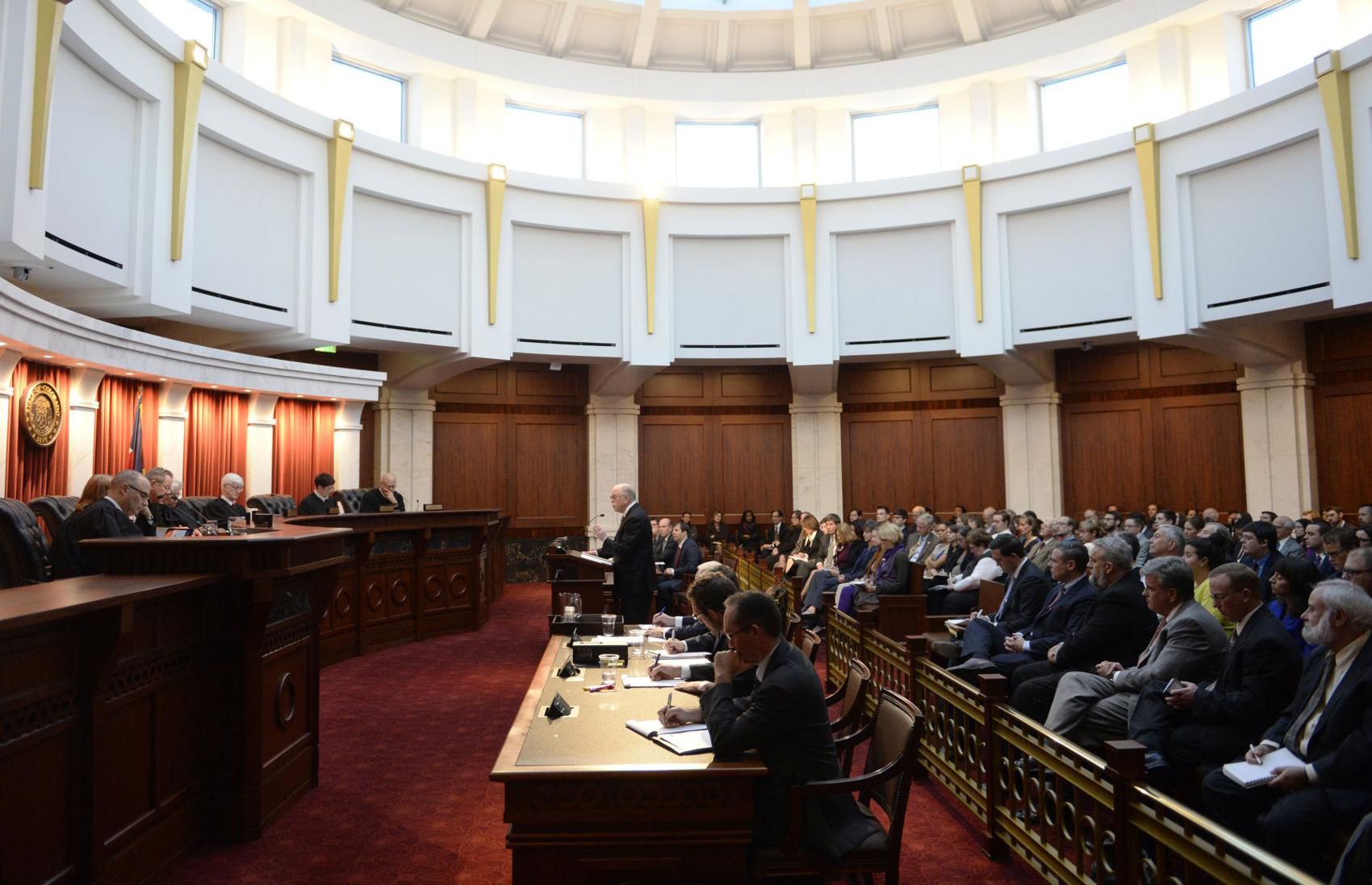
Choosing to rule on the merits of a defendant’s ineffective counsel claim, the state Supreme Court decided on Monday that a man was correctly advised of the immigration consequences of his guilty plea, even though he claimed his lawyer should have told him about his mandatory detention without bond.
Eswin Ariel Figueroa-Lemus was arrested in October 2012 for possession of a controlled substance and driving under the influence. A lawful permanent resident, he pleaded guilty to the controlled substance charge and acknowledged that this action could make him eligible for deportation. Figueroa-Lemus’s defense attorney acknowledged that he and his client talked at length about the immigration consequences of his plea.
“[F]or purposes of immigration,” the attorney recalled, taking a deferred judgment “was the same as if he was pleading guilty straight up.”
Figueroa-Lemus received the deferred sentence, which normally entitles a defendant to dismissal of the case if conditions of the sentence are met. However, shortly afterward, in August 2013, U.S. Immigration and Customs Enforcement officials arrested him. Two months later, Figueroa-Lemus attempted to withdraw his guilty plea, alleging that he received faulty advice from his lawyer about the fact he would be detained without bond during his deportation proceedings.
The defense attorney admitted that he had not explicitly covered this detail during the discussions with his client, and Figueroa-Lemus said he would not have pleaded guilty had he known about the mandatory detention. An immigration attorney who also consulted with Figueroa-Lemus also acknowledged neglecting to cover the detention aspect.
The trial court in Jefferson County refused to allow the withdrawal of Figueroa-Lemus’s guilty plea, finding that his legal advice was adequate. A Colorado Court of Appeals panel also sided against him.
“Figueroa-Lemus fails to explain how such an advisement would have affected his decision to accept the plea offer if he had been advised that he would be detained before he was deported,” wrote then-Judge Daniel M. Taubman. Judge David Furman wrote separately, believing that the court lacked jurisdiction over the matter.
Prosecutors asked the Supreme Court to weigh in on the proper timing of an appeal in the instance of a deferred sentence. The court agreed with Furman’s dissent, that the Court of Appeals had no jurisdiction until a sentence was imposed and a conviction was formally entered.
Writing for the Supreme Court, Chief Justice Nathan B. Coats referenced the 2012 case of Kazadi v. People, in which the state’s high court determined a defendant could attempt to withdraw his guilty plea prior to the imposition of a sentence by arguing he received ineffective counsel. Like Figueroa-Lemus, the defendant in the 2012 case was also facing deportation as a consequence of the plea. But the court this time disputed that the Kazadi decision entitled Figueroa-Lemus the opportunity to commence his appeal.
Moreover, the justices decided to go one step further and also review Figueroa-Lemus’s allegation of ineffective counsel.
“In Padilla v. Kentucky,” Coats explained, “the United States Supreme Court found that the virtually automatic deportation mandate of existing federal immigration law was a unique consequence of which counsel has an obligation to inform his client before pleading guilty. Where immigration law is less than clear, the Court required counsel to advise his client merely that there may be a risk of adverse immigration consequences, but where the law is ‘succinct and straightforward,’ it required counsel to provide correct advice.”
In this instance, the correct advice was that a guilty plea would lead to deportation, which is what Figueroa-Lemus heard. The court found that the U.S. Supreme Court did not require any advice be given about Figueroa-Lemus’s detention.
“Nothing more concerning the immigration consequences of his plea was required of his counsel,” Coats concluded.
The case is People v. Figueroa-Lemus.


Victor Marx, Phil Weiser lead Colorado gubernatorial fundraising, as all campaigns’ hauls top $20 million
Ernest Luning
ernest.luning@coloradopolitics.com
Updated 4 minutes ago
Colorado gubernatorial candidates and the independent expenditure committees backing them hauled in more than $20 million between them by the end of April, as the primary election approaches, according to campaign finance reports filed this week. Republican Victor Marx and...

DOJ sues Colorado over gun law banning ‘large-capacity’ magazines
The Denver Gazette
the-denver-gazette@coloradopolitics.com
Updated 14 hours ago
The Trump administration on Wednesday sued Colorado over a state law prohibiting a gun magazine that can hold more than 15 rounds of ammunition. It’s the second lawsuit filed by the administration in two days targeting gun statutes in Colorado....

Colorado bill redirecting $300M in TABOR refunds raises legal concerns, sparks budget committee dispute
Marianne Goodland
marianne.goodland@coloradopolitics.com
Updated 17 hours ago
A discussion about a bill that would eliminate $300 million in TABOR refunds over the next two fiscal years quickly shifted into a strategy session — and a tense exchange among Joint Budget Committee members — over what would happen...

Colorado adds 1,400 jobs in March, but state still on track for annual job losses
Bernadette Berdychowski
bernadette.berdychowski@denvergazette.com
Updated 18 hours ago
Colorado added 1,400 jobs to the economy in March, according to new state data. The Colorado Department of Labor and Employment reported the state had job growth in March and kept its unemployment rate at 3.9% amid a slowing labor...
Colorado’s incoming chief appeals judge lays out agenda | APPELLATE UPDATE
Michael Karlik
michael.karlik@coloradopolitics.com
Updated 20 hours ago
The incoming chief judge of Colorado’s Court of Appeals told lawyers on Friday that his goals for his four-year term include figuring out why criminal cases are taking nearly 1.5 years on average to reach appellate judges’ desks. “Criminal briefing...

Colorado appeals judges give tutorial on friend-of-the-court briefs | APPELLATE UPDATE
Michael Karlik
michael.karlik@coloradopolitics.com
Updated 20 hours ago
Two members of the Colorado Supreme Court and Court of Appeals described to attorneys on Friday how and when to submit advocacy briefs from outside entities — and the tactics that turn off the judges who read them. “I get...
Colorado appellate judges, lawyers hold annual conference | APPELLATE UPDATE
Michael Karlik
michael.karlik@coloradopolitics.com
Updated 12 hours ago
Appellate judges and attorneys gathered in Denver on Friday to discuss recent trends, exchange tips, and clarify confusing areas of practice. “One of the things I really had to focus on, coming from the trial court, is that my inclination...

Colorado enacts new laws on nursing home staffing, housing eligibility
Marissa Ventrelli
marissa.ventrelli@coloradopolitics.com
Updated 16 hours ago
Gov. Jared Polis on Wednesday signed two bills aimed at easing Colorado’s workforce shortages in nursing homes and expanding access to affordable homeownership, marking the state’s latest efforts to address long‑standing gaps in these two areas. House Bill 1244, sponsored...
Colorado lawmakers to get automatic pay increase as $1.5B shortfall forces cuts to Medicaid, other services
Marianne Goodland
marianne.goodland@coloradopolitics.com
Updated 14 hours ago
Colorado’s $1.5 billion budget deficit is driving widespread cuts across state services, including reduced reimbursement rates for Medicaid providers and steep income losses for families caring for relatives with intellectual and developmental disabilities. However, as those reductions take effect, an...
Lone Tree City Council to welcome 2 new members
Nicholas Fogleman
nicholas.fogleman@denvergazette.com
Updated 17 hours ago
Lone Tree City Council elections concluded Tuesday, with two new members set to join the council once final results are certified later this month. Michelle Béchamps and Tara Meekma Collins defeated their opponents to serve as District 1 and District...
PREV
PREVIOUS

Lane change unlawful, creating reasonable suspicion for drug seizure, high court determines
Law enforcement properly pulled over a vehicle for not signalling before its tires crossed the lane divider, the Supreme Court ruled on Monday, making the seizure of drugs from the truck permissible under the Fourth Amendment. Colorado State Patrol Trooper Christian Bollen began following a pickup truck driving on Interstate 70 in Mesa County after […]

Oil and Gas Commission announces new 'professional' members
Gov. Jared Polis on Monday named the five “professional” members of the Colorado Oil and Gas Conservation Commission, who will start their new jobs July 1. The five new commissioners will be full-time salaried employees rather than serving as volunteers. That comes out of Senate Bill 19-181, a law passed by the General Assembly to […]