

Lane change unlawful, creating reasonable suspicion for drug seizure, high court determines
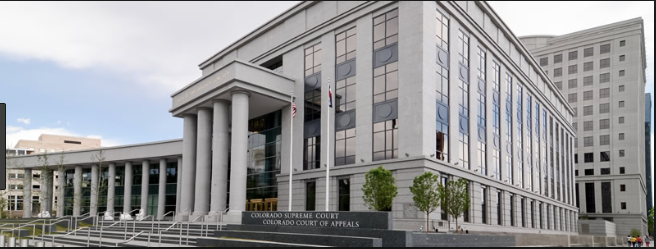
Law enforcement properly pulled over a vehicle for not signalling before its tires crossed the lane divider, the Supreme Court ruled on Monday, making the seizure of drugs from the truck permissible under the Fourth Amendment.
Colorado State Patrol Trooper Christian Bollen began following a pickup truck driving on Interstate 70 in Mesa County after computer databases told him that it was a rental registered in Nevada that recently appeared in Texas. He saw on two occasions that the truck’s tires were “on top of the center dividing line” when the driver, Aldo Gabriel Gutierrez, activated the turn signal.
Bollen pulled the truck over and, while interrogating Gutierrez, became suspicious that he and his passenger were transporting narcotics. Gutierrez agreed to let Bollen search the truck, whereupon the trooper found five pounds of heroin.
Gutierrez and his passenger, Julio Cesar Carrillo-Toledo, asked the trial court to suppress the evidence of the seized drugs, alleging that Bollen violated their Fourth Amendment protection against unreasonable searches when he had no reasonable basis to pull them over. The court agreed, concluding that Gutierrez had not violated the lane-change law, despite the trooper’s belief to the contrary.
Gutierrez and Carrillo-Toledo appealed to the Colorado Court of Appeals, which transferred the matter directly to the Supreme Court. The justices agreed that a traffic stop triggers Fourth Amendment protections, meaning that an officer needs a “reasonable suspicion of criminal activity.”
Colorado law requires a “signal of intention to turn right or left…be given continuously for at least two hundred feet on all four-lane highways and other highways where the prima facie or posted speed limit is more than forty miles per hour.”
The trial court judge interpreted the law to mean that a driver can have his or her wheels on the lane divider when signalling, as long as the “intention” is communicated.
Justice William W. Hood III quoted the dictionary definition of “intention” as something indicating future action, therefore determining that the lower court judge misinterpreted the law.
“The driver must signal to show that he plans to change lanes. In short, the signal must precede any movement between lanes,” Hood wrote in the court’s opinion. The trooper also testified that in one of the lane change violations, the truck’s tires were partially in the other lane when Gutierrez activated the turn signal. Because the trial court did not question the accuracy of that testimony, the justices had no choice but to defer to the record.
The court concluded that the traffic stop did not create a Fourth Amendment violation, reversing the prior ruling. The cases are People v. Gutierrez and People v. Carrillo-Toledo.


Colorado to get $615M from Meta child safety settlement
Thelma Grimes
thelma.grimes@coloradopolitics.com
Updated 9 hours ago
The parent company of Facebook and Instagram will pay hundreds of millions of dollars to Colorado, part of an $18 billion multistate deal, in which the company also agreed to adopt extensive child-safety changes to its operations. The settlement ended...
Colorado’s chief federal judge orders return of wrongfully deported man, second judge to explore ‘series’ of violations
Michael Karlik
michael.karlik@coloradopolitics.com
Updated 11 hours ago
Colorado’s chief federal judge took the extraordinary step of directing the government on Tuesday to do everything it can to return a man it deported in violation of his order. At the same time, Colorado’s chief magistrate judge has set...

Counties warn CPW that new comment limits sideline local governments
Marianne Goodland
marianne.goodland@coloradopolitics.com
Updated 9 hours ago
The September meeting of the Colorado Parks and Wildlife Commission will feature newly revised public‑comment rules — changes introduced by chair Jay Tutchton of Bent County, who announced them without first discussing the revisions publicly with the rest of the...

Controversial two-bag furbearer limit heads to CPW meeting under legal threat
Marianne Goodland
marianne.goodland@coloradopolitics.com
Updated 9 hours ago
Next week’s Colorado Parks and Wildlife Commission meeting in La Junta is likely to open under the cloud of threatened legal action. Safari Club International and the Sportsmen’s Alliance Foundation warned the commission this month that its July vote imposing...

Golden to pay $155,000 to fired city manager
Matt Kyle
matt.kyle@denvergazette.com
Updated 11 hours ago
The Golden City Council on Tuesday approved a roughly $155,000 severance payout to former city manager Scott Vargo, who was fired earlier this month following a “racist incident” at a city fire station. The payout is part of a separation...

Trump says the US doesn’t need Canada. America’s economy says otherwise.
The Associated Press
the-associated-press@coloradopolitics.com
Updated 12 hours ago
TORONTO (AP) — U.S. President Donald Trump says his country does not need Canada. But every day, roughly 4 million barrels of Canadian crude oil flow south, helping fuel American cars, trucks and airplanes and supply U.S. industry. And oil...
USPS ballot rule faces lawsuit from Colorado, other states
Thelma Grimes
thelma.grimes@coloradopolitics.com
Updated 10 hours ago
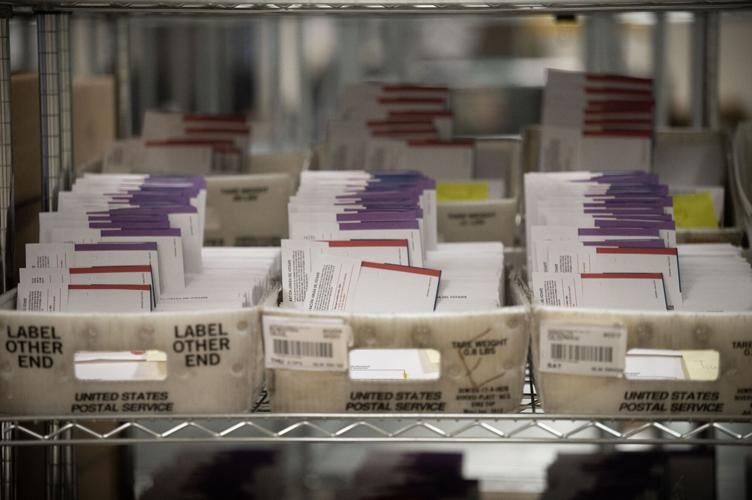
Colorado, along with 25 other states, filed a lawsuit against the U.S. Postal Service to challenge a new rule that seeks to restrict the mailing of ballots to American citizens in an eligible voters list. Colorado relies heavily on the...

FDA approves landmark pancreatic cancer drug that’s shown to improve survival
The Associated Press
the-associated-press@coloradopolitics.com
Updated 12 hours ago
WASHINGTON (AP) — The Food and Drug Administration on Wednesday approved a groundbreaking new drug for advanced pancreatic cancer, offering U.S. patients a more effective treatment against one of the deadliest types of cancer. FDA officials gave expedited approval to...
Trump defends pause on beef tariffs: Prices are ‘coming down very rapidly’
Naomi Lim
naomi-lim@coloradopolitics.com
Updated 15 hours ago
President Donald Trump defended his decision to pause tariffs on some beef imports, even as Republicans criticize the decision. “Prices are coming down very rapidly, and now beef is starting to come down,” Trump told The Glenn Beck Program on...
Denver murder, assault convictions reversed due to faulty jury instructions
Michael Karlik
michael.karlik@coloradopolitics.com
Updated 10 hours ago
Colorado’s second-highest court reversed a defendant’s convictions for murder and assault last week after concluding a Denver judge incorrectly omitted key jury instructions that could have affected the verdict and sentencing. Stephen C. Swainson fatally stabbed Israel Casillas in downtown...
PREV
PREVIOUS

Paid leave ballot measure kicks off, backed by dark money groups
Backed by $1.7 million in dark money contributions, the effort to put a paid family leave measure on the November ballot kicked off its petition drive on Monday. Colorado Families First announced the beginning of a campaign that seeks to put Initiative 283, which sets up paid family and medical leave, on the November 3 […]

Ineffective counsel claim not valid for defendant facing ICE detention, justices decide
Choosing to rule on the merits of a defendant’s ineffective counsel claim, the state Supreme Court decided on Monday that a man was correctly advised of the immigration consequences of his guilty plea, even though he claimed his lawyer should have told him about his mandatory detention without bond. Eswin Ariel Figueroa-Lemus was arrested in […]