

Gardner updates NOCO business leaders on coronavirus, outdoors funding
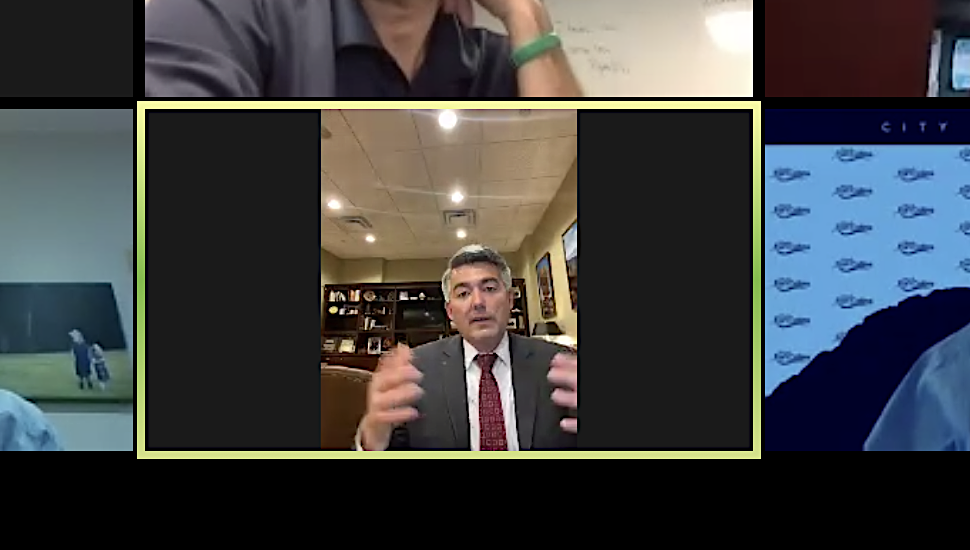
Colorado’s U.S. Sen. Cory Gardner told northern Colorado business leaders Wednesday afternoon that additional support is on the way to recover from the pandemic, but leaders in both parties will have to work together.
Congress is trying to shape the next recovery package, but Washington being Washington, the two sides seem far apart this election year. Gardner is one of the most targeted and endangered Republicans in the nation’s Capitol for reelection, as Democrats angle to unseat him and take control of the Senate, while holding the House and bouncing President Donald Trump from the White House.
“It cannot pass if it’s a partisan bill,” Gardner told chamber and other economic development officials from the region.
Three weeks ago, the U.S. House narrowly passed a $3 trillion relief bill – the fourth such stimulus effort – that’s bottled up by Republicans in the Senate. The bill in the House attracted just one Republican vote, while 14 Democrats voted against it.
That bill included $1 trillion for state and local governments and $200 billion for hazard pay for essential frontline workers and another round of $1,200 direct payments to most Americans.
“Whatever happens is going to have to be bipartisan,” Gardner said Wednesday. “What the House did was not bipartisan.”
Senate leaders are working on extending paycheck and unemployment protections, as well as disaster loans and a path toward a COVID-19 vaccine, he said.
The next relief package is expected to bail out state and local governments, where budgets have been decimated by the coronavirus crisis and subsequent economic collapse as tax revenue in a downward spiral. The Colorado state budget is facing a loss in excess of $3 billion, a quarter of state government’s operating budget and $500 to K-12 schools.
An estimated 1 million government jobs at the state and local level have been lost, a congressional committee heard Tuesday.
“I’ve got great faith in this country,” Gardner said, setting up his only mention of the country’s racial strife caused by the police killing an unarmed black man in Minneapolis. “We learn the from the past. We have to, whether it’s the coronavirus or this tragic murder of George Floyd. We have to do everything we can to learn from it and do better in the future.”
Reopening the economy, however, isn’t as simple as reopening businesses, Gardner explained.
“We have to restore confidence in the American consumer that if they’re going to go out to a business, everything is going to be OK,” he said. “If they don’t have confidence, even if businesses are open, they’re not going to reengage in the system of commerce.”
Gardner told the Colorado leaders that he’s hopeful his Great American Outdoors Act, will be up for a vote in the Senate next week.
He called it a significant bonus to the state’s outdoors and its economy, and he’s confident it will become law, as he’s gotten assurances of support from the White House.
Though the left has criticized Gardner for President Trump’s move to slash the Land and Water Conservation Fund, the senator’s bill would permanently restore that funding.
This bipartisan bill Gardner authored would establish the National Parks and Public Land Legacy Restoration Fund to address deferred maintenance projects on federal lands up to $1.9 billion a year from 2021 to 2025 for the national park system
Colorado alone has nearly a quarter of a billion in backlogs, including hiring people to fix facilities, trails and make other improvements, stimulating local economies, he said. Nationally estimate that it could help generate 40,000 jobs throughout the economy, describing it as “almost like a Civilian Conservation Corps.”
Rocky Mountain National Park, alone, has “millions and million and millions of dollars” in needs, including barracks to house outdoors workers.
“Estes Park with be a prime beneficiary,” Gardner said.
His bill takes half the federal money from development of oil, gas, coal or alternative or renewable energy on federal lands and waters.
“It will be one of the biggest conservation success Congress has had in the last 50 years,” Gardner said. “Certainly at this time, with the economic need, it’s going to provide an excellent economic boost for our country.”
In a May 11 letter, 850 outdoor groups and environmental organizations endorsed the bill, including Environment Colorado, the American Hiking Society, The Trust for Public Land, the Wilderness Society, The Nature Conservancy and the Colorado Mountain Club.
Gardner is a member of the Senate Commerce Science and Transportation Committee, the Energy and Natural Resources Committee and the Foreign Relations Committee, where he chairs the subcommittee on East Asia, the Pacific and International Cybersecurity.

Colorado board permits state to appeal injunction against arthritis drug price cap
Marissa Ventrelli
marissa.ventrelli@coloradopolitics.com
Updated 14 hours ago
A Colorado board voted Friday to allow the Attorney General’s Office to fight an injunction against a price cap on a drug that treats arthritis. A U.S. district court judge had granted the company Amgen a preliminary injunction, temporarily blocking...

Federal judge rejects constitutional claims, ‘expressions of hatred’ by Club Q defendant
Michael Karlik
michael.karlik@coloradopolitics.com
Updated 14 hours ago
A federal judge rejected a defendant’s claims that he received constitutionally ineffective assistance of counsel while facing federal hate crime and firearms charges for murdering five people at a Colorado Springs LGBTQ nightclub in 2022. Anderson Lee Aldrich is serving...

Divided 10th Circuit upholds Colorado congestion fee on car rentals
Michael Karlik
michael.karlik@coloradopolitics.com
Updated 11 hours ago
The Denver-based federal appeals court concluded on Monday that a 2024 “congestion impact fee” that lawmakers imposed on short-term vehicle rentals did not conflict with a federal prohibition on certain airport-related charges. Beginning in the 1970s, Congress began limiting the...

Space Force should measure workforce needs as it prepares to double in size, GAO report says
Mary Shinn
mary-shinn@coloradopolitics.com
Updated 20 hours ago
The Space Force needs more people. It’s just not precisely sure how many more. A Government Accountability Office report released earlier this month found that the youngest and smallest military branch does not have a process to consistently or accurately...

Colorado schools receive $24 million for free meals program
Marissa Ventrelli
marissa.ventrelli@coloradopolitics.com
Updated 14 hours ago
The Colorado Department of Education is providing Colorado schools with nearly $24 million in grant funding to implement a free lunch program. Approved by voters in 2022, the Healthy School Meals for All provides free breakfast and lunch to all...
Secret Service agent placed on administrative leave after arrest for near-deadly hazing ritual
Claire Carter
claire.carter@washingtonexaminer.com
Updated 22 hours ago
A Miami Secret Service agent in Florida was placed on administrative leave following his arrest on Sunday in connection with a near-deadly hazing incident at a University of Miami fraternity. Marquez Christopher Pinder, 29, was arrested alongside two other individuals...
Forest fire west of Sedalia prompts evacuations in Douglas County
Nicholas Fogleman
nicholas.fogleman@denvergazette.com
Updated 1 day ago
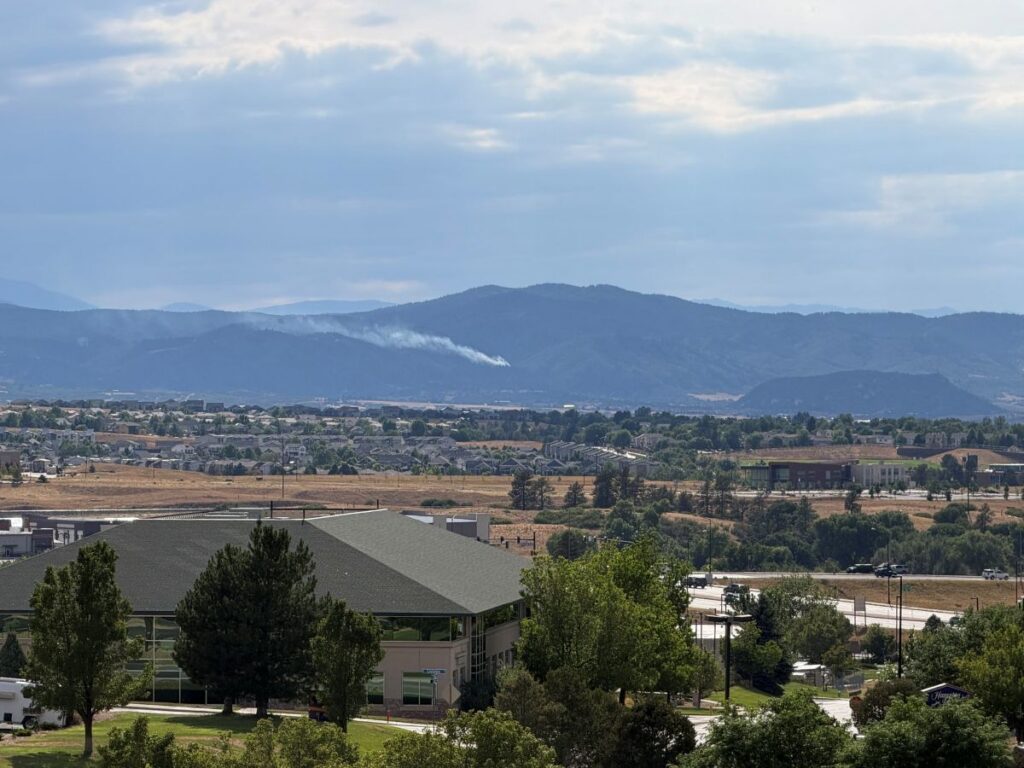
Emergency crews are responding to a forest fire burning west of Sedalia, prompting evacuation orders for nearby residents Sunday afternoon. At about 5 p.m. Sunday, the Douglas County Sheriff’s Office issued an evacuation order for residents within a 2-mile radius...
Airstrikes have paused and talks are pressing forward. But can the US and Iran take the off-ramp?
The Associated Press
the-associated-press@coloradopolitics.com
Updated 24 hours ago
WASHINGTON (AP) — The U.S. military has paused its airstrikes on Iran after nearly two weeks of intensifying bombing, while diplomatic efforts have pushed forward to try to avert a return to all-out war. But it remains to be seen...
Penrose fortune paved the way for Colorado Springs to be a military, space and sports town
Mary Shinn
mary-shinn@coloradopolitics.com
Updated 1 day ago
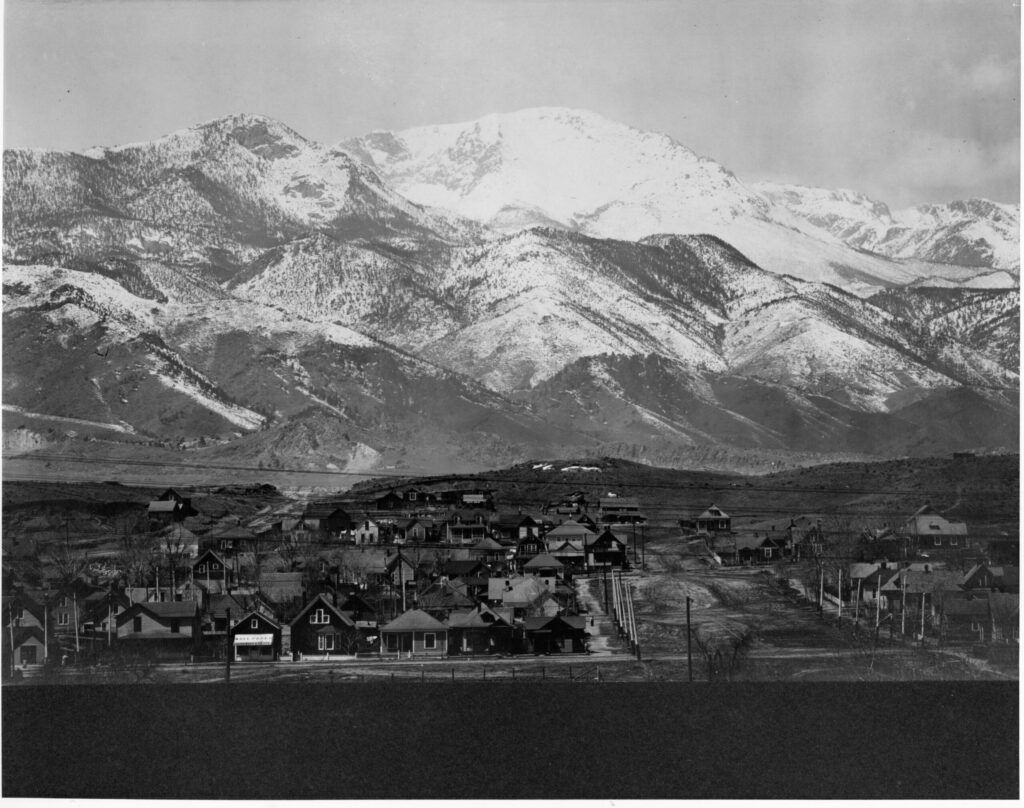
Colorado Springs is always working to catch the next big economic wave. “We’re always trying to figure out what the next thing is going to be,” explained Matt Mayberry, director of the Colorado Springs Pioneers Museum. In the early days,...

Colorado Politics Calendar July 27-Aug. 2
Rachael Wright, Special to Colorado Politics
rachael.wright@coloradopolitics.com
Updated 6 days ago
CoPo’s weekly political calendar will help you find political and public-policy events throughout Colorado. It includes candidate and issue campaign events, public policy meetings, court hearings, state and local party conventions, assemblies, debates, rallies, parades, speaking engagements, traveling dignitary appearances,...
PREV
PREVIOUS
Bennet among senators demanding explanation of military role in protests
U.S. Sen. Michael Bennet and 20 other members of the Senate’s Democratic caucus are demanding to know whether the Trump Administration will deploy the military to contain racial justice demonstrations enduring across the country, and the details of any such operation. “President Trump’s behavior over the last three years has repeatedly politicized our Armed Forces […]

10th Circuit: Winnebago did not violate state, federal consumer protection laws
Recreational vehicle manufacturer Winnebago did not violate consumer protection laws through its warranty with a Colorado couple, the U.S. Court of Appeals for the 10th Circuit ruled on Wednesday. “Winnebago did not breach the warranty because the Platts failed to provide it with an opportunity to perform repairs,” wrote Senior Judge Stephanie K. Seymour for […]