

10th Circuit: Winnebago did not violate state, federal consumer protection laws

Recreational vehicle manufacturer Winnebago did not violate consumer protection laws through its warranty with a Colorado couple, the U.S. Court of Appeals for the 10th Circuit ruled on Wednesday.
“Winnebago did not breach the warranty because the Platts failed to provide it with an opportunity to perform repairs,” wrote Senior Judge Stephanie K. Seymour for the circuit panel.
Deborah Ann Platt and Dallas Vaughn Platt bought a Winnebago Era RV in 2016, but needed to bring it to a Camping World service center in Golden seven times for warranty-covered repairs. The defects included “a loud squeaky noise, an inoperable GPS and furnace, and screens falling off the windows,” according to records. The 12-month warranty required that an owner bring their vehicle to an authorized dealer and then to the company itself before resorting to legal action. The Platts continued to need repairs and scheduled an appointment with Winnebago in Forest City, Iowa.
However, the couple canceled the appointment and sued the company for breaches of federal and state law, including the Colorado Consumer Protection Act. Despite the company’s assurance that it would fix all outstanding defects at no cost to the Platts, the couple claimed they had “lost faith” in Winnebago.
Under the Magnuson-Moss Warranty Act, consumers are allowed to sue companies that fail to comply with a warranty. The Platts argued that bringing the RV to the Golden service center on multiple occasions therefore gave Winnebago the opportunity to correct the problems, but failure to do so violated the terms.
“The facts of this case plainly show that, while the Platts completed step one of the limited warranty,” wrote Seymour, referring to the work that Camping World performed, “they stopped short of completing step two,” which was to permit Winnebago to address the defects in Forest City.
The circuit court concluded that the Platts were attempting to treat Camping World and Winnebago as the same entity, which the warranty did not support.
“If we were to accept the Platts’ reading of the warranty, the two steps of the warranty process would collapse into one,” Seymour explained.
Despite the plaintiffs’ contention that they had not received a copy of their limited warranty and there was no “meeting of the minds” that enabled both buyer and seller to understand it, Colorado law provides that “in the absence of fraud or concealment, a party signing a contract without reading it cannot deny knowledge of its contents and is bound by what she [or he] signed.”
The 10th Circuit also dismissed the Platts’ claim of Colorado consumer protection violations. The plaintiffs contended that the promotional brochures that described the RV as a “pure joy” with “legendary construction standards” were a deceptive marketing practice. In her opinion, Seymour said that Winnebago did not hide any information about the warranty and the company made an effort to fix the Platts’ vehicle, but for the couple’s own cancellation.
The case is Platt v. Winnebago Industries Inc.


Colorado board permits state to appeal injunction against arthritis drug price cap
Marissa Ventrelli
marissa.ventrelli@coloradopolitics.com
Updated 11 hours ago
A Colorado board voted Friday to allow the Attorney General’s Office to fight an injunction against a price cap on a drug that treats arthritis. A U.S. district court judge had granted the company Amgen a preliminary injunction, temporarily blocking...

Federal judge rejects constitutional claims, ‘expressions of hatred’ by Club Q defendant
Michael Karlik
michael.karlik@coloradopolitics.com
Updated 11 hours ago
A federal judge rejected a defendant’s claims that he received constitutionally ineffective assistance of counsel while facing federal hate crime and firearms charges for murdering five people at a Colorado Springs LGBTQ nightclub in 2022. Anderson Lee Aldrich is serving...

Divided 10th Circuit upholds Colorado congestion fee on car rentals
Michael Karlik
michael.karlik@coloradopolitics.com
Updated 7 hours ago
The Denver-based federal appeals court concluded on Monday that a 2024 “congestion impact fee” that lawmakers imposed on short-term vehicle rentals did not conflict with a federal prohibition on certain airport-related charges. Beginning in the 1970s, Congress began limiting the...

Space Force should measure workforce needs as it prepares to double in size, GAO report says
Mary Shinn
mary-shinn@coloradopolitics.com
Updated 16 hours ago
The Space Force needs more people. It’s just not precisely sure how many more. A Government Accountability Office report released earlier this month found that the youngest and smallest military branch does not have a process to consistently or accurately...

Colorado schools receive $24 million for free meals program
Marissa Ventrelli
marissa.ventrelli@coloradopolitics.com
Updated 11 hours ago
The Colorado Department of Education is providing Colorado schools with nearly $24 million in grant funding to implement a free lunch program. Approved by voters in 2022, the Healthy School Meals for All provides free breakfast and lunch to all...
Secret Service agent placed on administrative leave after arrest for near-deadly hazing ritual
Claire Carter
claire.carter@washingtonexaminer.com
Updated 18 hours ago
A Miami Secret Service agent in Florida was placed on administrative leave following his arrest on Sunday in connection with a near-deadly hazing incident at a University of Miami fraternity. Marquez Christopher Pinder, 29, was arrested alongside two other individuals...
Forest fire west of Sedalia prompts evacuations in Douglas County
Nicholas Fogleman
nicholas.fogleman@denvergazette.com
Updated 21 hours ago
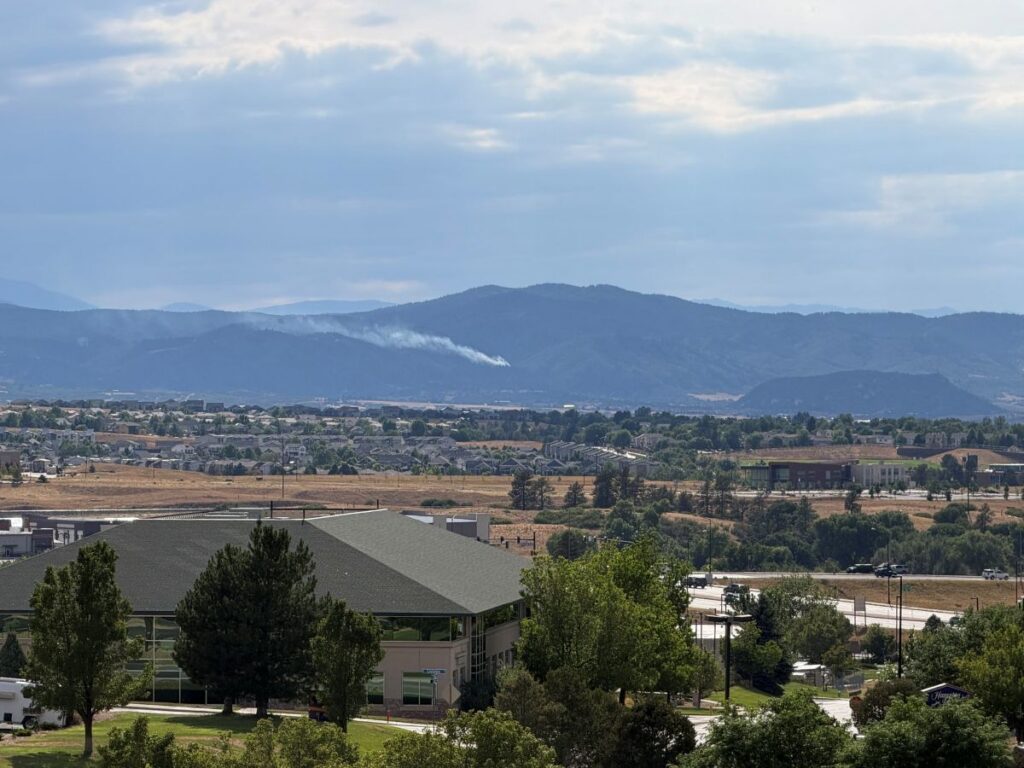
Emergency crews are responding to a forest fire burning west of Sedalia, prompting evacuation orders for nearby residents Sunday afternoon. At about 5 p.m. Sunday, the Douglas County Sheriff’s Office issued an evacuation order for residents within a 2-mile radius...
Airstrikes have paused and talks are pressing forward. But can the US and Iran take the off-ramp?
The Associated Press
the-associated-press@coloradopolitics.com
Updated 20 hours ago
WASHINGTON (AP) — The U.S. military has paused its airstrikes on Iran after nearly two weeks of intensifying bombing, while diplomatic efforts have pushed forward to try to avert a return to all-out war. But it remains to be seen...
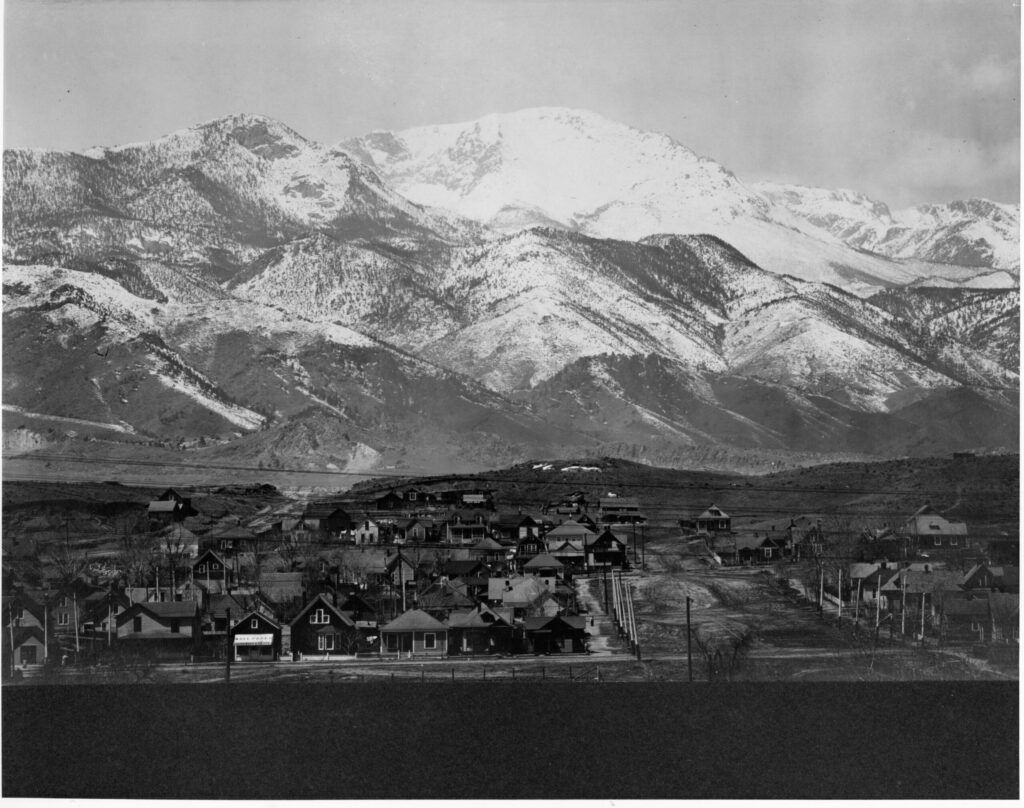
Penrose fortune paved the way for Colorado Springs to be a military, space and sports town
Mary Shinn
mary-shinn@coloradopolitics.com
Updated 20 hours ago
Colorado Springs is always working to catch the next big economic wave. “We’re always trying to figure out what the next thing is going to be,” explained Matt Mayberry, director of the Colorado Springs Pioneers Museum. In the early days,...
Colorado Politics Calendar July 27-Aug. 2
Rachael Wright, Special to Colorado Politics
rachael.wright@coloradopolitics.com
Updated 6 days ago
CoPo’s weekly political calendar will help you find political and public-policy events throughout Colorado. It includes candidate and issue campaign events, public policy meetings, court hearings, state and local party conventions, assemblies, debates, rallies, parades, speaking engagements, traveling dignitary appearances,...
PREV
PREVIOUS
Gardner updates NOCO business leaders on coronavirus, outdoors funding
Colorado’s U.S. Sen. Cory Gardner told northern Colorado business leaders Wednesday afternoon that additional support is on the way to recover from the pandemic, but leaders in both parties will have to work together. Congress is trying to shape the next recovery package, but Washington being Washington, the two sides seem far apart this election […]

Report: Federal prison bureau falling behind on evaluating drug treatment programs
The U.S. Bureau of Prisons is falling behind on the plan to evaluate its drug treatment programs and is missing key logistical elements for a medication-assisted treatment initiative, a federal auditing office has found. The report from the U.S. Government Accountability Office stemmed from a request that a bipartisan group of senators made in 2018 […]