

Penrose fortune paved the way for Colorado Springs to be a military, space and sports town
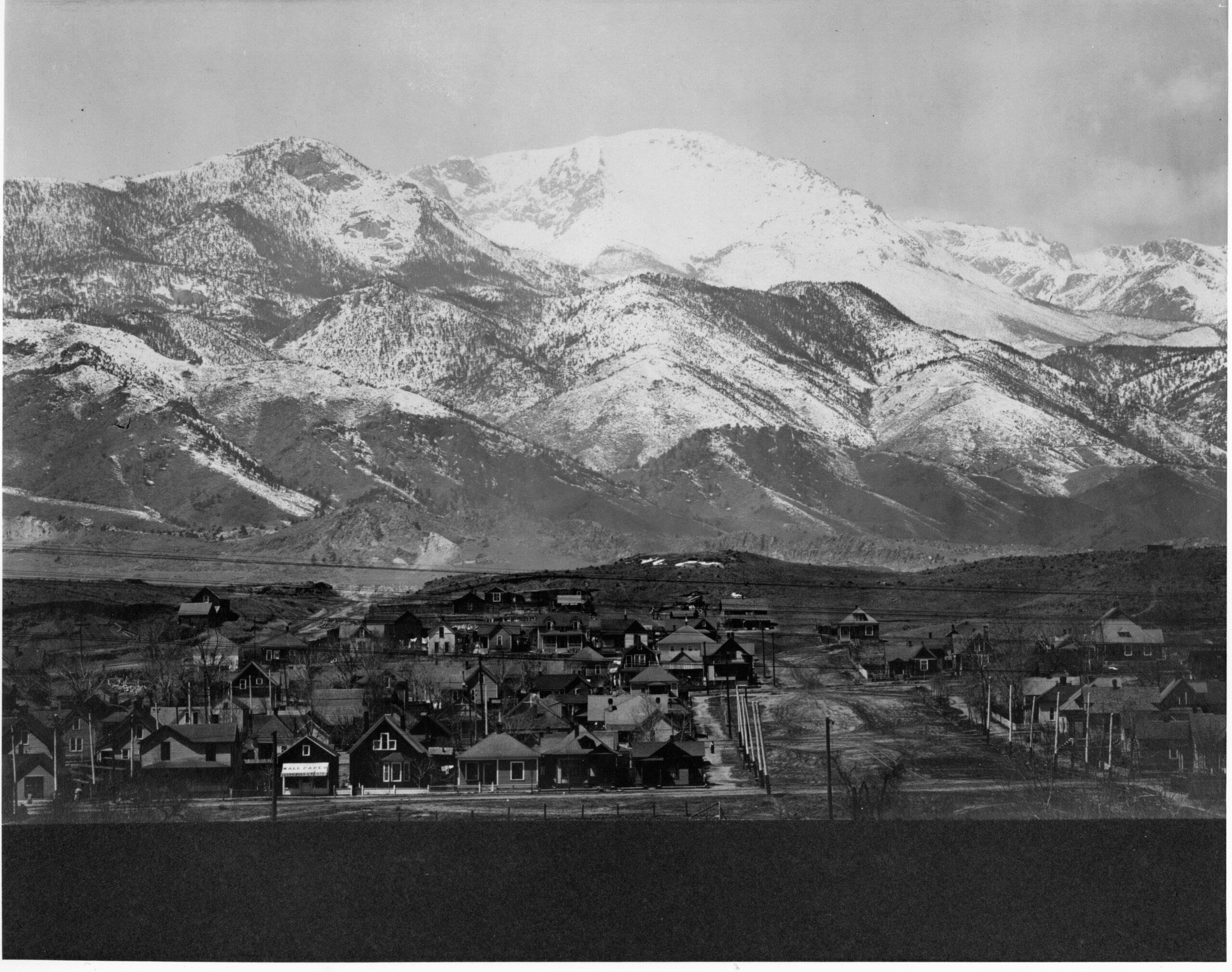
Colorado Springs is always working to catch the next big economic wave.
“We’re always trying to figure out what the next thing is going to be,” explained Matt Mayberry, director of the Colorado Springs Pioneers Museum.
In the early days, the search for gold and health brought wealth to the town that was founded in 1871, more than five years before Colorado became the nation’s 38th state.
In the late 1800s, tuberculosis patients flocked to town seeking out the dry mountain air and the sunshine that could ease their symptoms. Tourists still come seeking some of those charms amid the stunning views.
Other industries that helped build the city’s economic foundations and modern identity — military, Olympic and Paralympic sports and an abundance of Christian ministries — came later.
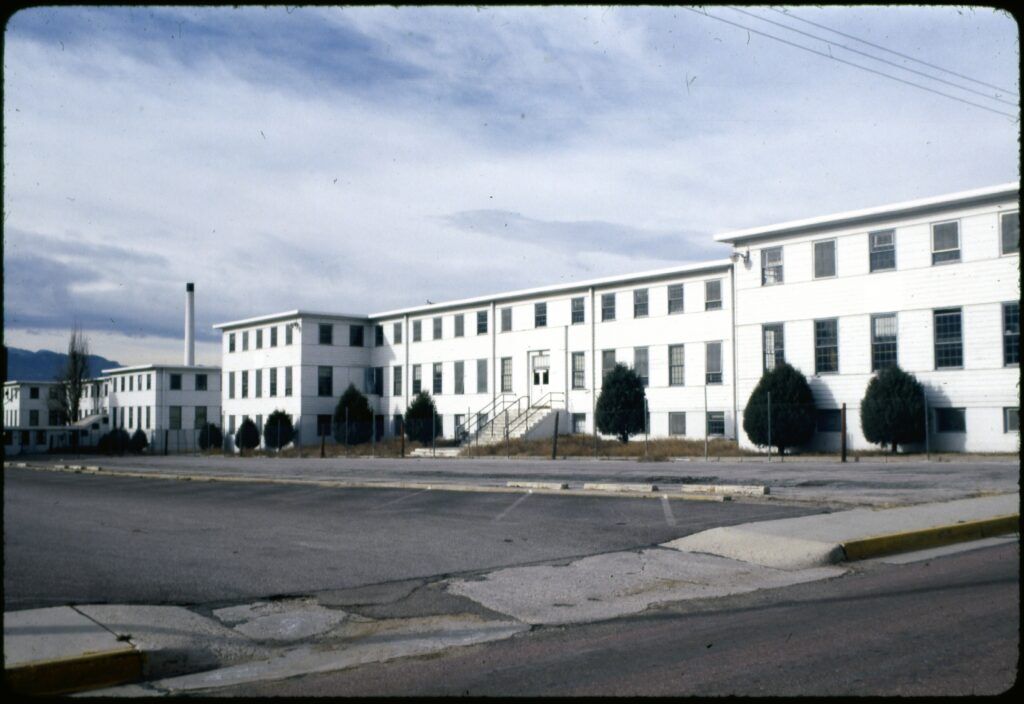
“We reinvent ourselves almost to the day every 20 years,” Mayberry said, with each new layer of economic growth building upon the last. The Methodist Sanatorium complex on Boulder Street and Union Boulevard, built to treat tuberculosis patients, was repurposed during World War II as a home for the Second Air Force. Then in the 1970s, the Olympic Training Center moved in.
It’s perhaps the best corner in town to understand Colorado Springs’ history, Mayberry explained.
Penrose and Tutt
In those layers of economic development, the legacy of two best friends and their good fortunes is reflected.
During the first wave of wealth, Spencer Penrose and his best friend Charles “Chas” Leaming Tutt Sr., made a fortune during the 1890s from the Cash on Delivery gold mine in Cripple Creek. They went on to make far more money on the Bingham Canyon Copper Mine in Utah. Then Penrose financed The Broadmoor with the wealth from the mine.
When Penrose died childless, his fortune was set aside to promote the well-being of the people of Colorado through the El Pomar Foundation and Charles “Charlie” L. Tutt Jr. took over leadership of the iconic hotel after spending time as Penrose’s protégé.
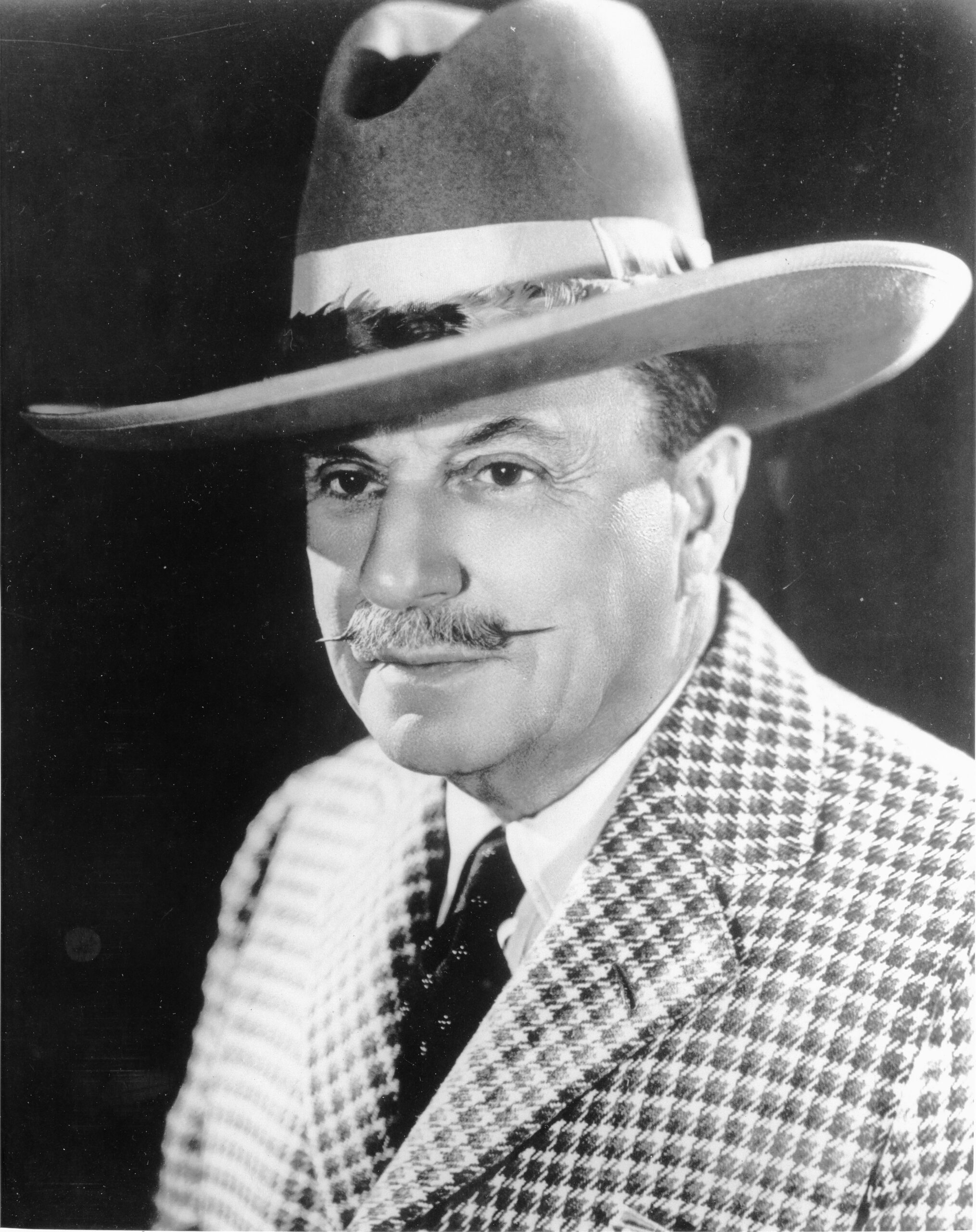
The foundation owned The Broadmoor hotel up until 1988, when 80% of it was sold to Oklahoma Publishing Co. to comply with tax laws.
In the ensuing decades, the foundation supported key economic endeavors, including attracting the Air Force Academy and the U.S. Olympic Committee to Colorado Springs. The Tutt family helped guide the foundation through the years as board members.
“We feel very honored to be able to come alongside the community at so many critical junctures,” said Kyle Hybl, president and CEO of El Pomar.
Bringing the military to town
As the community was coming out of the Great Depression in 1940, 1,500 homes in town sat vacant and the economy, which had been highly dependent on tourism, looked bleak, according to a history published by Fort Carson.
So the city of Colorado Springs bought Cheyenne Valley Ranch, a 5,533-acre property south of town, for $36,500 to offer to the military as an Army base. Tutt, along with other community leaders worked hard to sell the area to the Army, it said.
After discovering a huge population of rattlesnakes, Army engineers nearly declared the project unsuitable. But someone observed the snakes move out when men moved in and the community remained competitive, the history said.
In January 1942, the Army selected the site south of Colorado Springs for Camp Carson and in a flurry of construction about 1,600 structures went up in about six months. Soldiers with the 89th Infantry Division began to arrive in June of that same year.
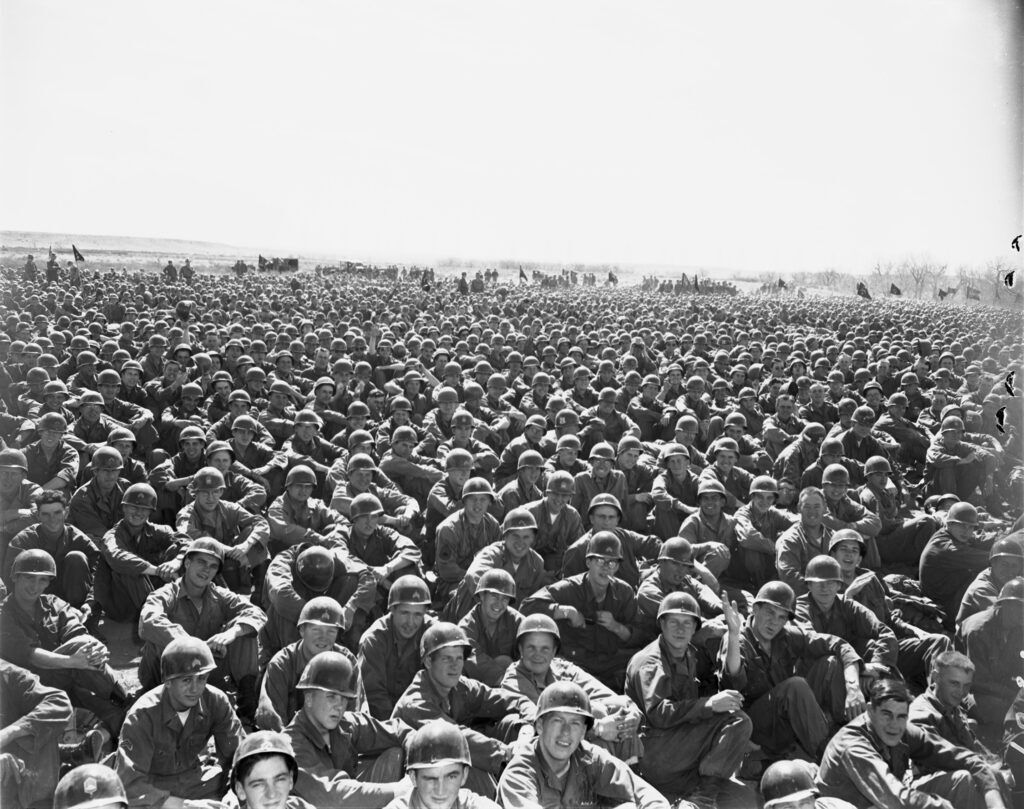
Peterson Air Field and Ent Air Base were also established during World War II, with the Army leasing the established city airport to train pilots.
Despite a devastating fire that swept across Fort Carson in January 1950, destroying 92 buildings, killing nine and causing $3.5 million in damage, the site was made a permanent Army fort in 1954.
Part of the appeal for the military was the remote location, Mayberry said.
“It’s safe. It’s insular, and so it’s not on the Pacific coast or the Atlantic coast, which were seen as more vulnerable,” he said.
The community went out to recruit an additional military base, the Air Force Academy, after the Air Force was established in 1947.
Colorado Springs competed with 580 other proposed sites across the country for the Academy.
The community created large books with photos of the scenic area to spark interest in the site, said Brian Laslie, historian at the Air Force Academy.
The campaign for the academy included buy-in at the state level as well, recalled Bill Tutt, the grandson of Charles Tutt, who was too young to play a role but spoke to his family’s contribution.
“We put together an extraordinary piece of property for them,” Tutt said.
A visit by Charles Lindbergh, the first man to fly nonstop across the Atlantic Ocean, helped overcome concerns that weather near the mountains and associated air currents would hurt training.
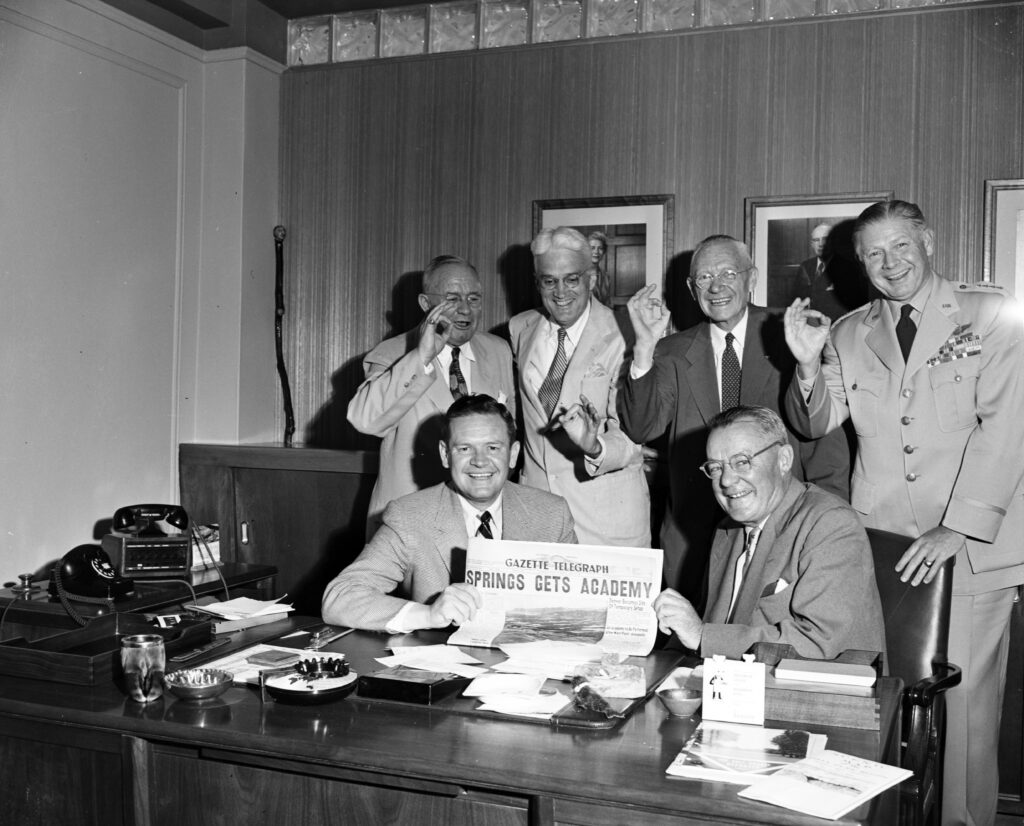
“He basically said ‘This is good flying weather,’” Laslie said of Lindbergh’s visit.
The Air Force Academy in Colorado Springs opened its doors to cadets at the start of the fall semester in 1958.
El Pomar supported the endeavor by fostering and supporting the Air Force Academy Foundation, helping to build a golf course, a stadium, the original visitors center and activities on base, Hybl said.
Olympic City USA
After successfully competing for the Air Force Academy, community leaders decided it would be easier to lure large organizations to town, Tutt explained.
“In the good ‘ole days, it was easier to steal things than it was to compete for them,” he said.
So, Tutt, a hotelier like others in his family, set out to lead the charge to bring the U.S. Olympic Committee to town from New York City in the 1970s.
“Who wouldn’t want to have the Olympic Committee?” he said.
The Broadmoor and the Tutt family already had leadership roles and deep roots in figure skating and ice hockey.
Penrose got the idea for what became The Broadmoor Ice Palace after seeing Sonja Henie, an Olympian and movie star, skate in Chicago. It opened in 1938 with pink walls and blue arches and hosted Colorado College hockey and the numerous figure skating events, including six U.S. Championships and five World Championships, according to U.S. Figure Skating.
![Long view of the Broadmoor Ice Arena [first Broadmoor World Arena] across Broadmoor Lake, with the building and mountains behind reflected in the water. Two automobiles from the late 1940s and the early 1930s are parked on the left. Research indicates that the first Broadmoor World Arena was a skating rink and hockey arena located at the Broadmoor Resort. Originally an outdoor equestrian center and riding academy, a building was constructed over the area and converted into an ice arena which opened in January 1938. Photo Courtesy Margaretta M Boas photo collection Regional History & Genealogy, Pikes Peak Library District 001-3553](https://www.coloradopolitics.com/wp-content/uploads/2026/07/BroadmoorIceArena-1024x800.jpg)
William Thayer Tutt, Bill Tutt’s father, also played a key role in the hockey world, serving as the president of the International Ice Hockey Federation and helping to launch the NCAA hockey tournament, among other roles.
“Thayer was really the catalyst for developing Colorado Springs as a destination for ice sports,” said Dave Ogrean, who led USA Hockey for a stint in the 1990s and from 2005 to 2019.
Both Thayer Tutt and Bill Tutt were deeply involved in Olympic ice sports at a time when the Olympic Committee, then housed in New York, was in trouble financially.
So Bill Tutt helped put together a deal. The city of Colorado Springs traded the abandoned Ent Air Force Base for property adjacent to what was then Peterson Air Force Base to give the Ent campus to the Olympic Committee to serve as a new training center and headquarters that opened in 1978, The Gazette reported at the time.
The state chipped in $125,000 for a feasibility study and El Pomar gave $1 million to the effort.
After the Olympic Committee came to town, 59 national and international sports organizations and 23 national governing bodies followed, El Pomar said.
When Ogrean came to town to work for the Amateur Hockey Association of the United States, now USA Hockey, his offices were in The Broadmoor, he recalled, under Thayer Tutt’s office. The office moved from Minnesota to be closer to the U.S. Olympic Committee — the “mother ship,” he recalled.
“I have never had an office as good as my first one,” he said.
The ice arena was “a great old barn” with wooden seats that made the performers or players feel like the crowd was right on top of them, he said.
In one of the broom closets, a small piece of history was made when legendary ice hockey coach Herb Brooks gave Ogrean the names of the players that would go on to beat the Soviets during the famed Miracle on Ice game during the 1980 Olympics, he said.
Brooks had picked 26 players in the summer of 1979 at the end of the National Sports Festival held in Colorado Springs. The list was culled further ahead of the games.
The festival hosted in Colorado Springs gave athletes an experience meant to imitate the Olympics in many ways, Ogrean said. The annual festival lasted until 1995 and was hosted in cities across the U.S.
“When it began, it was a blast,” he said.
Space is the place
El Pomar was among the initial funders of the Space Foundation, founded in the Springs in the early 1980s to set a “grand strategy for space,” as well as to educate and inspire future leaders, The Gazette reported at the time.
The organization was a perfect fit for Colorado Springs, particularly with all the Air Force units focused on space at the time, said Tutt, who was involved in establishing the foundation along with Rep. Ken Kramer, and a former North American Aerospace Defense commander.
“Why not be in on the ground floor of space?” Tutt said.
The foundation’s annual symposium also helped fill rooms at The Broadmoor in the winter, when visitation was low, he said.

More than 40 years after the start of the Symposium, some of those early topics still ring familiar: Experts called for space-based defense systems and visionaries called for moon colonies and trips to Mars.
In 1983, one expert called for the creation of space service to signal to the Soviet Union that the United States was serious about its space programs, Gazette reporting said.
That dream was realized in 2019 when President Donald Trump established the Space Force, now a critical part of the city’s economy.
At first, it was tough to get traction for the symposium from folks outside the military, but it helped when Tutt used his ice hockey connections to get a commitment from members of the Soviet Union to attend. The commitment drew needed publicity, he said.
Since those days, the Space Symposium has also grown in importance, attracting about 11,000 people in 2026, with leaders from around the world, well above the 600 in attendance back in 1987.
Tutt said he expected it would continue to grow exponentially because technology in space has created a foundation for much of everyday life. GPS satellites provide real-time mapping software and prevent fraud in financial transactions.
Building economic diversity
Colorado Springs is now a hub for defense and space contractors, sports organizations, as well as large Christian ministries, such as Focus on the Family, which largely arrived in the 1990s as part of an economic development push.
The military and related defense contractors are by far the largest portion of the local economy, although the government-collected data does not provide an exact percentage.
In 2024, those in the armed forces accounted for about 8.8% of local employment, the third highest level of military employment among metro areas with more than 500,000 people, said Bill Craighead, program director of the University of Colorado Colorado Springs Economic Forum.
It’s also a prosperous community, with a median household income of about $90,760 in 2024 compared with a national median of $81,604, he said.
While employment fell a bit in 2025, the unemployment rate has remained low, he noted.
A drop-off in immigration nationally is keeping the number of working-age people stable, rather than growing, he said, so the region doesn’t need to see steep job growth.
To keep the community on track, vigilance and effort are necessary, Hybl and Tutt said.
In Tutt’s eyes, the community’s been discovered, as evidenced by steep population growth.
But it’s going to take work to maintain it.
“If you sit back, fat, dumb and happy, you are going to lose what you have,” he said.


‘The smell of jet fuel lingered for years’: Colorado veterans recall 9/11
Deborah Grigsby
deborah.smith@denvergazette.com
Updated 2 days ago
For many years after the Sept. 11 attacks in Washington, D.C., Mark Schoenrock said he could still smell the burning jet fuel from American Airlines Flight 77. “It was just such an overpowering sensation,” Schoenrock, a former Lone Tree resident...

Denver sues Trump to block armed ICE agents from polling sites
Deborah Grigsby
deborah.smith@denvergazette.com
Updated 2 days ago
The city of Denver, along with several groups, sued the Trump administration Thursday, seeking to block U.S. Immigration and Customs Enforcement officers who are armed from polling sites during the upcoming midterm elections. In fact, there are no official orders...
Evergreen High School marks one year since shooting on campus
Kyla Pearce
kyla.pearce@gazette.com
Updated 2 days ago
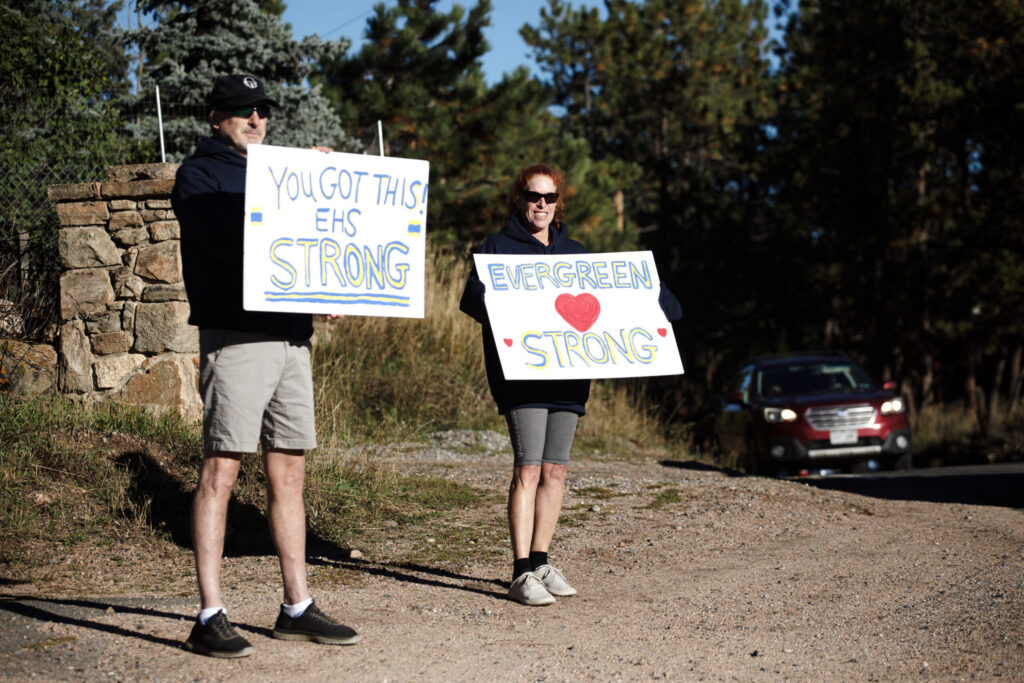
Thursday marks one year since the Evergreen High School shooting that injured two students and left the shooter dead. On Sept. 10, 2025, Desmond Holly, 16, entered the school armed with a Smith & Wesson .38 revolver and opened fire...
Denver mayor unveils 2027 budget after weeks of warning of tough choices
Nico Brambila
nico.brambila@denvergazette.com
Updated 2 days ago
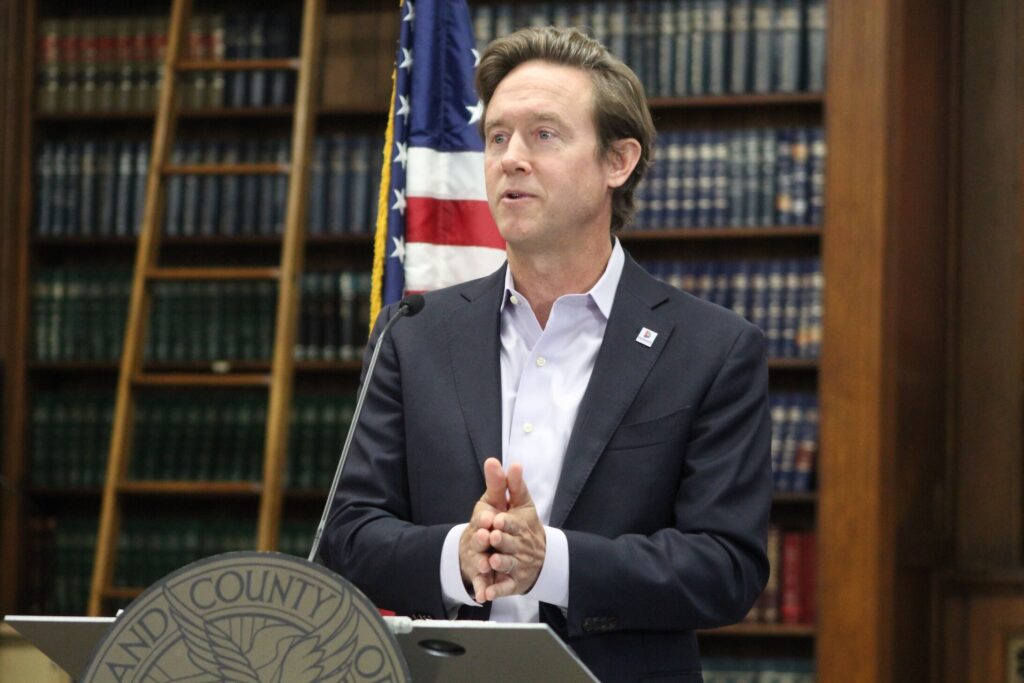
Denver Mayor Mike Johnston unveiled his proposed 2027 budget Thursday after weeks of warning that the city is entering a tighter financial era despite stronger-than-expected revenue collections this year. The projected general fund revenue for 2027 is $1.684 billion, the...

Lawsuit challenges Douglas County commissioners’ ballot actions
Nicholas Fogleman
nicholas.fogleman@denvergazette.com
Updated 2 days ago
A new lawsuit against Douglas County commissioners seeks to invalidate the board’s intervention in efforts to expand the commission from three members to five and restore the original ballot language approved by more than 20,000 petition signers. The suit marks...

United abruptly cancels flyover marking 9/11 anniversary after ‘concerns in the community’
Mark Samuelson Special to The Denver Gazette
mark.samuelson@denvergazette.com
Updated 1 day ago
United Airlines had planned a dramatic flyover in Denver on Friday to mark the 25th anniversary of the 9/11 attacks, when it lost two of the four U.S. passenger jetliners hijacked by terrorists. But the airline abruptly cancelled plans late...

Denver Water proposes 6% rate increase for 2027
Nico Brambila
nico.brambila@denvergazette.com
Updated 2 days ago
Water could be more expensive for Denver residents next year. Denver Water commissioners received a staff proposal for rate increases Wednesday expected to generate about 6% more revenue in 2027. What individual customers pay would depend on where they live...

$806M project to add express lane to I-270 approved
Kyla Pearce
kyla.pearce@gazette.com
Updated 2 days ago
Transportation officials have approved an $806 million project to add an express lane to I-270 after years of studying proposed solutions to congestion and deterioration of the interstate. The Federal Highway Administration and Colorado Department of Transportation have been weighing...

Colorado joins lawsuit challenging changes to Endangered Species Act
Marissa Ventrelli
marissa.ventrelli@coloradopolitics.com
Updated 3 days ago
Colorado once more joined a coalition of states challenging the Trump administration — this time on proposed rules regarding the Endangered Species Act. The pair of lawsuits challenge new rules made under Interior Secretary Doug Burgum, who earlier said the...

Colorado congressman asks DOJ to investigate violent student ICE walkout
Nico Brambila
nico.brambila@denvergazette.com
Updated 3 days ago
U.S. Rep. Jeff Crank is asking the Justice Department to investigate violence at last week’s anti-ICE student walkout in Denver, including whether outside organizations helped organize, fund, or influence the demonstration. Crank sent a letter Tuesday requesting the investigation to...
PREV
PREVIOUS

Colorado Politics Calendar July 27-Aug. 2
CoPo’s weekly political calendar will help you find political and public-policy events throughout Colorado. It includes candidate and issue campaign events, public policy meetings, court hearings, state and local party conventions, assemblies, debates, rallies, parades, speaking engagements, traveling dignitary appearances, water meetings, book signings, county commission hearings, city council meetings and more. As a subscriber, […]

Airstrikes have paused and talks are pressing forward. But can the US and Iran take the off-ramp?
WASHINGTON (AP) — The U.S. military has paused its airstrikes on Iran after nearly two weeks of intensifying bombing, while diplomatic efforts have pushed forward to try to avert a return to all-out war. But it remains to be seen whether the U.S. and Iran are at an inflection point in a mercurial conflict that […]