

SONDERMANN | Governor’s true test on COVID still lies ahead


As we take the next step of the viral response, from staying at home to staying at home with multiple asterisks, let’s turn to more mundane concerns. In keeping with the title of this publication, it’s time to assess the Colorado political landscape in the context and eventually the aftermath of this historic disruption.
That will be the focus of my column this week and next. We will start with a look at Colorado’s radically changed fiscal picture and what that means for Jared Polis’ governorship. In the second installment, we’ll discuss what this portends for the upcoming conclusion of the legislative session as well as for ballot issues this fall and Colorado’s targeted U.S. Senate race.
At the end of April, as we begin to emerge from an imposed hibernation, we awake to a brave, new political world. A state defined just a couple of months ago by optimism, growth and a markedly liberal agenda now suddenly finds itself in a dramatically darker mood and an economic downturn with few precedents.
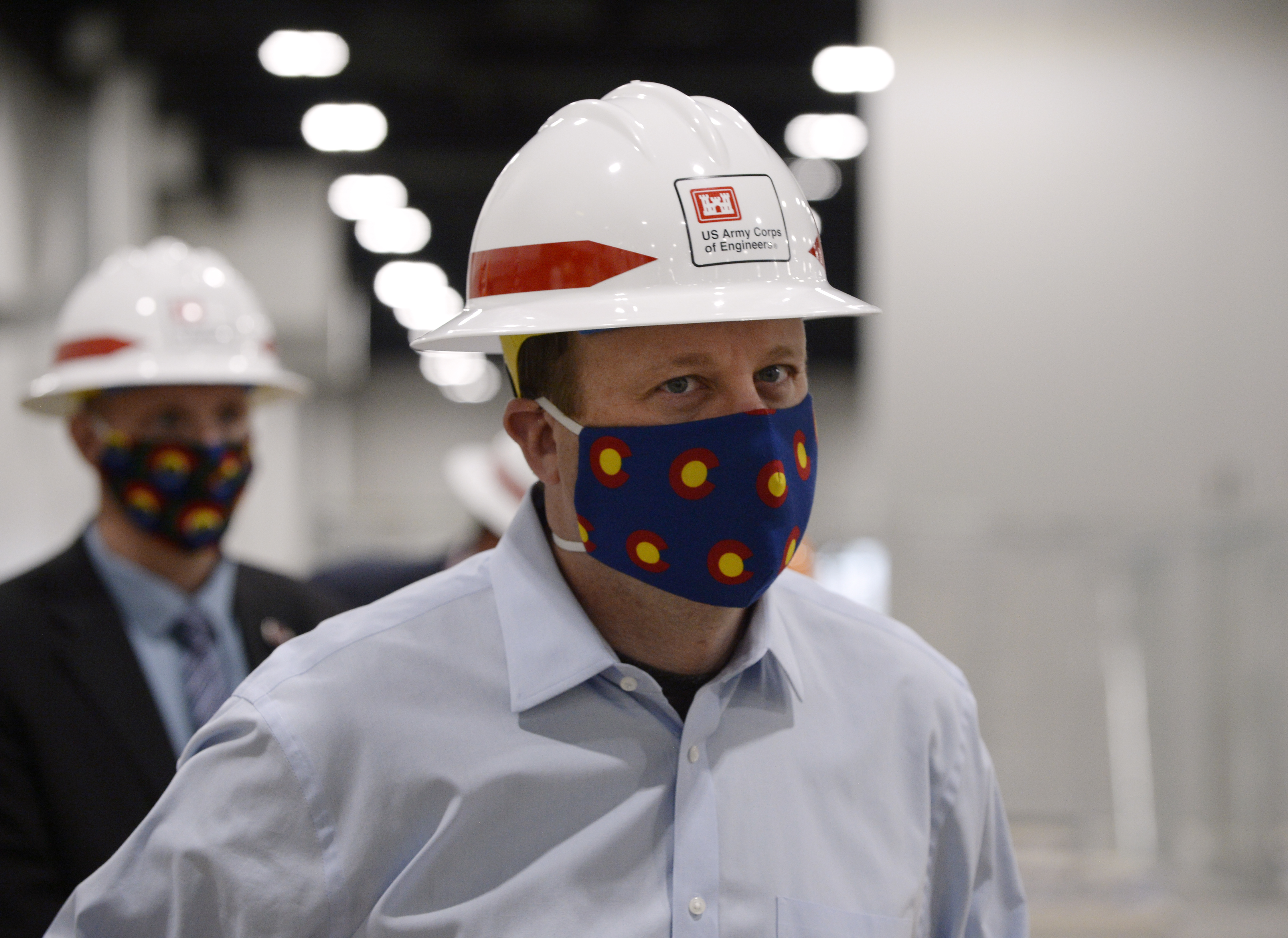
Polis, of course, occupies center stage. Not unlike 49 other governors in their states, he has been the dominant figure throughout the crisis.
Previous Colorado governors have dealt with fire, floods and all manner of other disasters, both natural and man-caused. But such instances were limited by time and geography. This is a calamity that entails every corner of the state with a rather open-ended time horizon.
As opposed to the chief executive in the White House, governors have tended to thrive politically with broad public support for their COVID response. Without being privy to polling, my suspicion is that is true for Polis as well and that his approval numbers are currently robust.
Those ratings mostly reflect his intense, all-in, take-charge response to the immediate crisis. Without at all diminishing that, his real test lies still ahead.
Polis took office 15 months ago with big goals, many carrying hefty dollar signs. His priorities formed a quartet – full-day kindergarten and a major build-out of early childhood education; ambitious state-level health care reform; a shift to 100 percent renewable energy; and wholesale tax reform.
His story is a classic case of a political vision crashing headlong into an altered political reality. A governor with an expansive mindset and agenda will now be required to lead Colorado through a period of pronounced contraction.
Colorado has weathered two significant economic declines since the millennial turn. Those being the one that started on 9/11 and the so-called Great Recession of 2008 and beyond.
What confronts us now and what lies ahead can make both of those look like child’s play.
Some around the state Capitol able to do basic math anticipate that the recessionary impact on state and local governments could be two to three times that of those two recent experiences.
The governor’s budget office as well as the legislative Joint Budget Committee are still refining their latest forecasts. But the hole in this year’s state budget could be as large as $3.2 billion. That’s out of a general fund budget of roughly $13 billion and total state expenditures over $30 billion. As a percentage, it constitutes a huge bite.
The gap in the coming year or two could be even worse.
Yes, the federal relief package can partially offset the impact in this fiscal year. But only partially. Moreover, no wise person would bet on such assistance continuing in years ahead. There is a limit to how much money even the federal government can print.
Further complicating the picture is the fact that the state employed many of the fiscal maneuvers at its disposal the last time out. Remember the intense debate over the hospital provider fee. Perhaps some budget wizard has another such trick up her sleeve. But the numbers become more difficult by the day.
The wisest person in my circle when it comes to the state budget soberly noted, “The recovery always takes a lot longer than the event.”
So the biggest variable confronting Colorado and every other state relates to the longevity of the plunge and how quick the bounce-back. Of course, that is dictated by the virus and people’s reaction to it. How fast does the “reopening” proceed and how well does it work? How confident are consumers and when do they again start to spend money? How soon do we return to some semblance of normalcy? Or does it go the other way with the virus again gaining the upper hand, requiring a second round of shutdown and isolation?
On all of these questions and more, Polis along with legislators and other policymakers are mostly in a mode of response and reaction. Their ability to control the key economic levers is vastly constrained.
Think of the vital functions of state government. Medicaid is largely a pass-through of federal dollars and demand is only going to ramp up. The prison population is not that elastic; nor would most Coloradans favor wholesale releases.
That leaves three big-ticket items: Roads and transportation; public K-12 education and higher education. For most Coloradans, these represent the last categories where they would want to dial back. Yet, it is inevitable that they will take the brunt of the budget cuts – no, make that slashes and evisceration – that lie ahead.
Everything about Jared Polis’s governorship prior to COVID was preamble. His legacy will be determined by his response to the epidemic (very passing grades so far) and how he manages the delivery of vital state services in a coming, unforeseen but prolonged period of sweeping austerity.
Polis may have bought his way into the Governor’s Office. At the moment, many Coloradans are quite OK with that fact. But even with all his money, he cannot buy his way out of his newfound predicament.
Part two coming next week. See you then.
Eric Sondermann is a Colorado-based independent political commentator. His column appears regularly on Sundays in ColoradoPolitics. Reach him at EWS@EricSondermann.com; follow him at @EricSondermann

Democratic ballots outpace Republicans’ as Colorado’s primary vote starts to trickle in
Ernest Luning
ernest.luning@coloradopolitics.com
Updated 8 hours ago
With less than two weeks left before ballots are due in Colorado’s primary election, election officials have logged in ballots from just under 6% of the state’s 4 million active, registered voters, the Colorado Secretary of State’s Office said Thursday....
Colorado court upholds murder conviction despite jury disobeying instructions
Michael Karlik
michael.karlik@coloradopolitics.com
Updated 12 hours ago
Colorado’s second-highest court upheld an Arapahoe County defendant’s murder conviction last month, even though jurors found he was not the one who shot the victim and the evidence suggested he was not present for the shooting. A three-judge Court of...

July 1 brings new Colorado rules on ammunition purchases, wildfire‑risk scoring and wildlife enforcement
Marissa Ventrelli
marissa.ventrelli@coloradopolitics.com
Updated 15 hours ago
Colorado will usher in a new set of laws on July 1 that touch everything from ammunition sales to insurance transparency and wildlife trafficking enforcement Here is a look at some of the state’s new laws: Ammunition sales Sponsored by...
Divided appeals court reverses conviction after judge declined to define ‘bludgeon’
Michael Karlik
michael.karlik@coloradopolitics.com
Updated 17 hours ago
Colorado’s second-highest court reversed a Jefferson County defendant’s felony menacing conviction on Thursday, concluding that the trial judge’s failure to define “bludgeon” for jurors may have affected the outcome. A three-judge Court of Appeals panel divided in unusual ways in...

Poll finds majority believe US military action against Iran was a mistake
Brady Knox, Washington Examiner
brady.knox.washington.examiner@gazetteedit.wpenginepowered.com
Updated 16 hours ago
A poll found a wide majority of U.S. voters believed the decision to launch military action against Iran was a mistake. The Beacon Research and Shaw & Company Research poll for Fox News was conducted from June 12-15, meaning many...

For Vance, Iran deal presents opportunity and risk
W. James Antle III Washington Examiner
wjamesantleiiiwashingtonexaminer@wpstage.coloradopolitics.com
Updated 19 hours ago
Vice President JD Vance has a lot riding on the deal to end the war in Iran. The memorandum of understanding between the United States and Iran came together at the outset of Vance’s book tour, but that’s not the...
10th Circuit dismisses Tina Peters’ challenge to confinement as moot
Michael Karlik
michael.karlik@coloradopolitics.com
Updated 8 hours ago
The Denver-based federal appeals court granted the state’s unopposed request on Wednesday to dismiss former Mesa County clerk Tina Peters’ challenge to her confinement as moot. Although Peters received a commutation of her prison sentence last month from Gov. Jared...
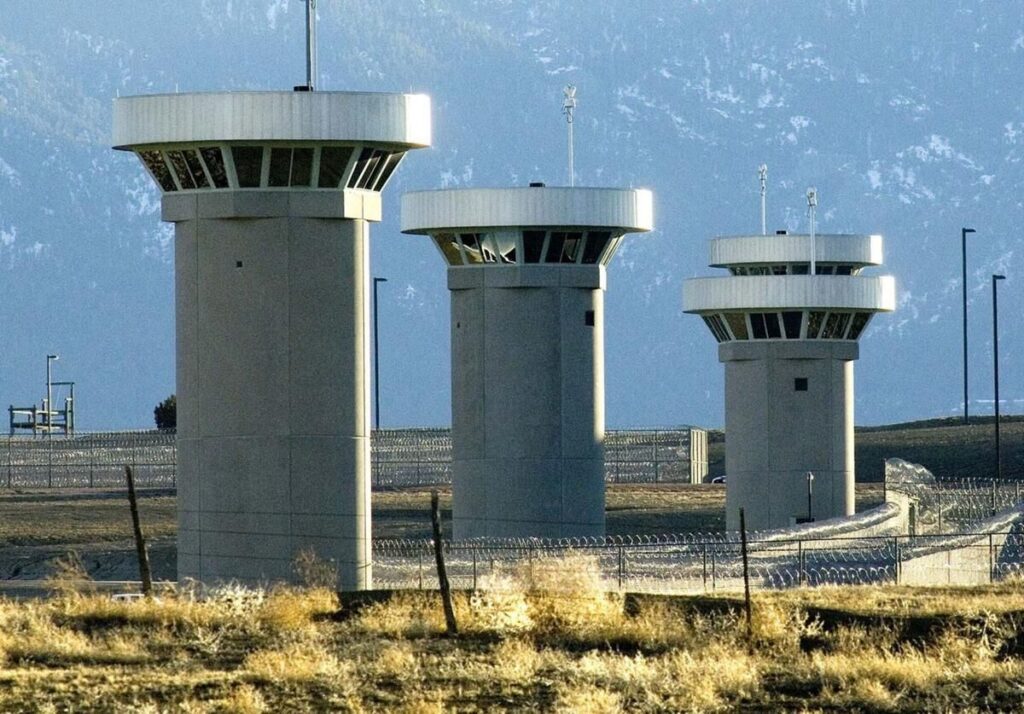
Federal judge declines to recuse from death penalty case after Supermax visit
Michael Karlik
michael.karlik@coloradopolitics.com
Updated 10 hours ago
A federal judge declined to recuse herself last month from a death penalty case arising out of Colorado’s “Supermax” prison, finding that her tour of the facility earlier this year did not bias her decision-making. U.S. District Court Judge Charlotte...
Amid public pressure, Colorado candidates tackle social media regulations for minors
Bethany Johnson
bethany.johnson@denvergazette.com
Updated 18 hours ago
Following the accidental overdose of her daughter in 2020, Patti Lujan pursued a lawsuit against Snapchat, the social media platform that, she claimed, connected her daughter with a drug dealer. In a news release announcing the lawsuit, Lujan alleged that...

Denver gets more time to answer FAA questions in probe regarding Key Lime lease denial
Deborah Grigsby
deborah.smith@denvergazette.com
Updated 17 hours ago
The City of Denver has asked the Federal Aviation Administration for additional time to gather information and prepare its response to the federal agency’s investigation of the city’s 2025 denial of a Denver International Airport ground lease expansion for Key...
PREV
PREVIOUS

Denver's domestic violence shelters anticipate ‘dramatic spike’ in calls for help as lockdown lifts
Denver’s domestic violence support centers are reporting a decrease in call volume amid the coronavirus, but not because fewer incidents are occurring, they say. Before Denver’s stay-at-home order went into effect March 24, people experiencing domestic violence could seek support while abusers were out of the house or while children were at school, said Abby Hansen, […]

POINT/COUNTERPOINT: Should Colorado jails release convicts due to COVID-19?
Point: Bill Elder Bill Elder As COVID-19 continues to spread in our communities, there is a movement across the nation pushing county jails and prisons to release inmates and convicts in an attempt to lower populations as quickly as possible. I agree that COVID-19 could ravage a jail population and spread like a wildfire, but […]