

POINT/COUNTERPOINT: Should Colorado jails release convicts due to COVID-19?

Point: Bill Elder

As COVID-19 continues to spread in our communities, there is a movement across the nation pushing county jails and prisons to release inmates and convicts in an attempt to lower populations as quickly as possible. I agree that COVID-19 could ravage a jail population and spread like a wildfire, but there are ways to lower a jail’s population without recklessly releasing dangerous criminals into the community.
During my five and a half years as sheriff, I have struggled with an ever-increasing jail population, which reached an all-time high of 1,835 in August 2018. I asked staff to implement strategic changes to lower that number to avoid the need for a jail expansion. For two years now, I have focused on a strategic goal to relieve the crowding and lessen the impact on jail staff. Never could I have predicted that a pandemic would put our efforts into overdrive and lower the population to numbers not seen in decades. Today we sit at 1,000 inmates.
How did we do it? Not by releasing convicted criminals!
It is important to lower the population of a county jail during a pandemic. Knowing the contagion factor for COVID-19, one inmate positive for the virus could spread it to 50% of the inmates in any given ward in no time. The sickest would overwhelm jail medical staff capabilities and need to be cared for in a hospital, using up precious resources. The fewer inmates in a ward, the better we create social distancing. With average ward sizes of 70 to 100 inmates, you can imagine the chances of the virus spreading.
About 75% of the inmates in the El Paso County Jail are pre-trial. They have not been convicted of a crime, but either cannot make bond or have a no-bond due to the severity of their crime. Sentenced inmates make up the remaining 25%. They are inmates serving out their sentences in jail or waiting for bed space in the Department of Corrections. Those sentences were given for a reason, and our community expects that they be finished in their entirety. Many of those serving out those sentences have victims of their crimes who expect to see the criminal serve out their time.
I chose to attack the jail population numbers through several measures put in place in early March. Through collaborative efforts between local law enforcement agencies, the District Attorney’s Office and the courts, we refuse acceptance of pre-trial defendants accused of low-level offenses. They don’t need to come to jail; they just need to appear for their court appearance. We do not accept persons who have warrants based on a failure to appear or failure to comply; we now reset the defendant’s court date. We shut down work release and are increasing the use of personal recognizance bonds through cooperation with the courts.
To ensure the safety of our inmates and our staff, I implemented a process to screen incoming inmates and jail personnel before they enter the facility. I have increased lockdown periods in wards to lessen the interaction between inmates, and I have cleared wards in preparation of the need to isolate inmates who have tested positive for the virus. Procedures were implemented to address sanitization of the facility multiple times each day.
There is no reason to shorten sentences or release anyone convicted, sentenced and doing time in a county jail. Measures are in place to keep low-level defendants out and keep those who are exhibiting symptoms away. I will continue to work with partner agencies to keep our community safe, and all without a single positive case among our inmates so far.
Counterpoint: Emma Kerr

During this pandemic, everyone is asking: “How can we keep most people safe?” Widely accepted best practices show us the answer is to free people from jails – for everyone’s well-being.
Jails are a uniquely dangerous breeding ground for COVID-19. The CDC explains why: those incarcerated do everything in shared environments. Staff and outsiders enter and leave constantly. Options for isolation are nearly impossible. Inmates are responsible for cooking and cleaning duties, without supplies like alcohol-based disinfectants, which are prohibited.
Medical professionals across the country are demanding decarceration. Their warnings have materialized: Illinois’ Cook County Jail was the nation’s largest origin point for coronavirus infections, until an Ohio prison surpassed it on April 20. Four of the 10 largest-known sources of infection in the U.S. are correctional facilities.
COVID-19 spreads from jails to our communities via new intakes, staff, and visitors. The national jail population turnover is 54% each week. People are held in jail short-term for pretrial (often because they cannot afford bail), short sentences, and technical parole violations. After a deputy working at El Paso County jail died from COVID-19 complications, 40% of the jail population was released. Yet, there are still many inmates who could spread the virus further and become severely ill or die.
With an economy nearing the worst recession in almost a century, we should prioritize common sense over fear. It costs $98.83 a day to detain someone in a Colorado jail. With this money, we could provide health care and economic relief to those impacted by COVID-19. True safety means investing in hospitals, housing, and jobs, not punishment.
Decarceration advocates have long championed alternative justice systems that are proven to work. COVID-19 makes these options all the more urgent and possible.
According to the Bureau of Justice Statistics, 35% of people in jails are serving a sentence – typically lasting under a year. Roughly 75,000 people in jail are within three months of release. Besides freeing those held pretrial (which would cut the jail population in half) or those with technical parole violations, experts suggest we also release convicts who are elderly, medically vulnerable, approved for parole, or held for offenses that wouldn’t result in detention if committed today.
Prison Policy Initiative outlines previous large-scale releases that resulted in no crime increase. A Notre Dame Law Review study showed that of 7,000 people ages 55-plus convicted for violent offenses, fewer than 1% were re-incarcerated. The Vera Institute states, “Since 2000, the increased use of incarceration accounted for nearly zero percent of the overall reduction in crime.”
If 94% of Colorado’s jail population will be out within a year, and if keeping them incarcerated risks another outbreak, why not release people now?
Proven alternatives to incarceration should be implemented. Restorative justice – a community-involved process which focuses on rehabilitation and reconciliation – is one option. When given the choice between this or incarceration, 90% of victims choose restorative justice. True safety is having the resources to address harm in ways that survivors prefer. It means investment in solutions like drug treatment, schools, and the economy, which support healthy communities.
Instead of spending nearly $100 a day per person to inflict further violence on incarcerated people, we could provide socioeconomic relief.
COVID-19 shows us our potential to do things differently. We have been given the unique opportunity to do better, and we should carry these decarceration practices into a future beyond pandemic. Unless the sheriff and other justice-system officials release more people, the worsening of El Paso County’s health crisis will rest on their shoulders.
Bill Elder is the El Paso County sheriff. Emma Kerr is an advocate for decarceration in Colorado Springs and was a leader in the organization Prison Project while a student at Colorado College.



Federal judge hears arguments about Colorado’s 3-day gun purchase waiting period
Michael Karlik
michael.karlik@coloradopolitics.com
Updated 2 hours ago
A federal judge heard arguments on Monday about the constitutionality of a 2023 Colorado law that generally imposes a three-day waiting period on firearm purchases after the initiation of a background check. The test that the U.S. Supreme Court created...

U.S. Supreme Court clears way for Trump mail voting order in advance of midterms
Wire Services
wire-services@coloradopolitics.com
Updated 3 hours ago
WASHINGTON • The U.S. Supreme Court on Monday cleared the way for President Donald Trump to move ahead with an executive order that seeks to restrict the mailing of ballots to American citizens in an eligible voters list. The executive...
Colorado Supreme Court intervenes in Weld County prosecution dismissed due to Missy Woods misconduct
Michael Karlik
michael.karlik@coloradopolitics.com
Updated 3 hours ago
The Colorado Supreme Court ordered a Weld County trial judge last week to respond to the district attorney’s claim that he improperly dismissed a criminal case because of “outrageous” conduct by the Colorado Bureau of Investigation. Daniel Lee Eatinger stood...

Trump opens ‘economic D-Day’ offensive against Iran as war nears six-month mark
Christian Datoc
christian-datoc@coloradopolitics.com
Updated 8 hours ago
President Donald Trump is seeking to increase the financial pressure on Iran with new secondary sanctions on nations and foreign actors propping up the regime’s economy as the war between the United States and Tehran nears the six-month mark. Treasury...

Trump announces 50% tariffs on Canadian cars, auto parts, and steel
Naomi Lim
naomi-lim@coloradopolitics.com
Updated 8 hours ago
President Donald Trump escalated the trade war with Canada after talks collapsed last week, announcing Monday that the United States would impose 50% tariffs on cars, trucks, automotive components, and steel starting Jan. 1, 2027. “Canada has been ripping off...

Iran puts out propaganda video tracking Barron Trump’s location, offering $10 million for his assassination
Timothy Nerozzi
timothy-nerozzi@coloradopolitics.com
Updated 9 hours ago
The Islamic Revolutionary Guard Corps is putting a hit out on President Donald Trump’s son, Barron Trump, with an inflammatory video claiming to track his location. State-run television in Iran is broadcasting a propaganda video claiming to show the locations...

Nevada sues Trump administration over Colorado River cuts
Marianne Goodland
marianne.goodland@coloradopolitics.com
Updated 1 hour ago
On Monday, the state of Nevada filed a lawsuit against the Trump administration and Interior Secretary Doug Burgum, seeking to block the Colorado River management plan. On Friday, Burgum released a “record of decision” that would reduce water allocations to...

Healthcare Freefall: Longer drives, fewer options for maternity care in Colorado
Thelma Grimes
thelma.grimes@coloradopolitics.com
Updated 12 hours ago
Editor’s Note: Colorado’s healthcare system is entering a period of accelerating instability — a “tsunami,” as multiple leaders describe it — driven by collapsing hospital finances, shrinking Medicaid reimbursements, disappearing services and a political fight over who is responsible for...
Polis requests federal disaster declaration for Colorado wildfires and floods
9News
9news@coloradopolitics.com
Updated 5 hours ago
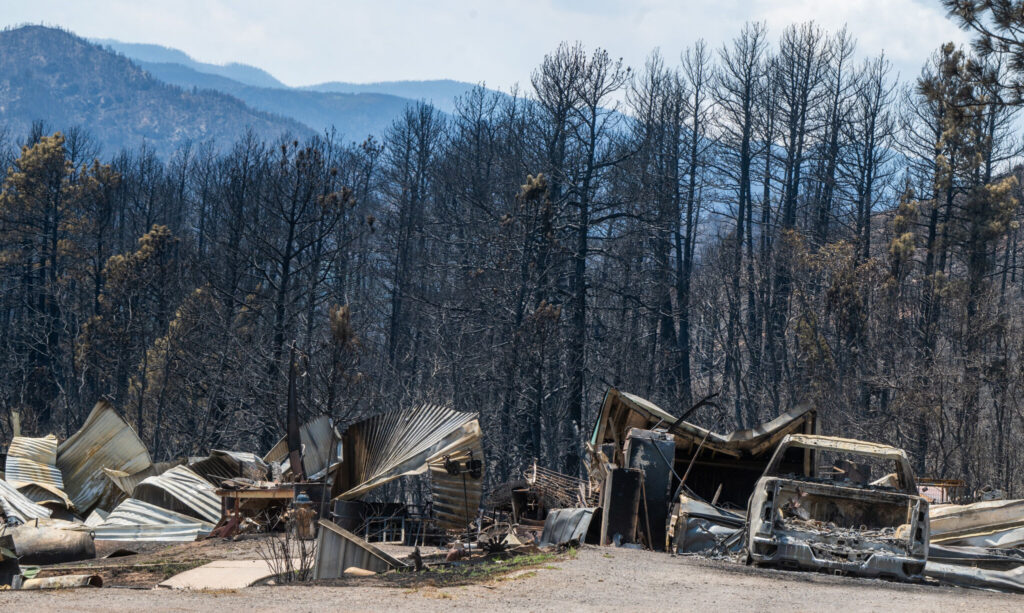
On Sunday, Gov. Jared Polis officially requested a Major Disaster Declaration from President Donald Trump and the Federal Emergency Management Agency to support recovery from two wildfires and the subsequent flooding and debris flows on both burn scars. Polis requested a declaration...

US strikes another boat in eastern Pacific, killing two, Pentagon says
The Associated Press
the-associated-press@coloradopolitics.com
Updated 12 hours ago
U.S. forces have struck another vessel in the eastern Pacific, killing two people the Pentagon says were trafficking drugs. The U.S. Southern Command announced the strike in a social media post early Monday. The death toll from the Trump administration’s...
PREV
PREVIOUS

SONDERMANN | Governor's true test on COVID still lies ahead
Eric Sondermann As we take the next step of the viral response, from staying at home to staying at home with multiple asterisks, let’s turn to more mundane concerns. In keeping with the title of this publication, it’s time to assess the Colorado political landscape in the context and eventually the aftermath of this historic […]

OUT WEST ROUNDUP | Coronavirus assails coal industry; rural bankers expect outbreak to cause recession
WYOMING Coronavirus accelerates decline of slumping coal industry CHEYENNE – Travis Deti, whose group represents companies that produce about 40% of the nation’s coal, has been working the phones to try to get government support for the U.S. coal industry during the coronavirus pandemic. But aid remains stubbornly clogged for an industry whose already rapid […]