

Gov. Jared Polis addresses testing and containment issues as state prepares to come out of stay-at-home order
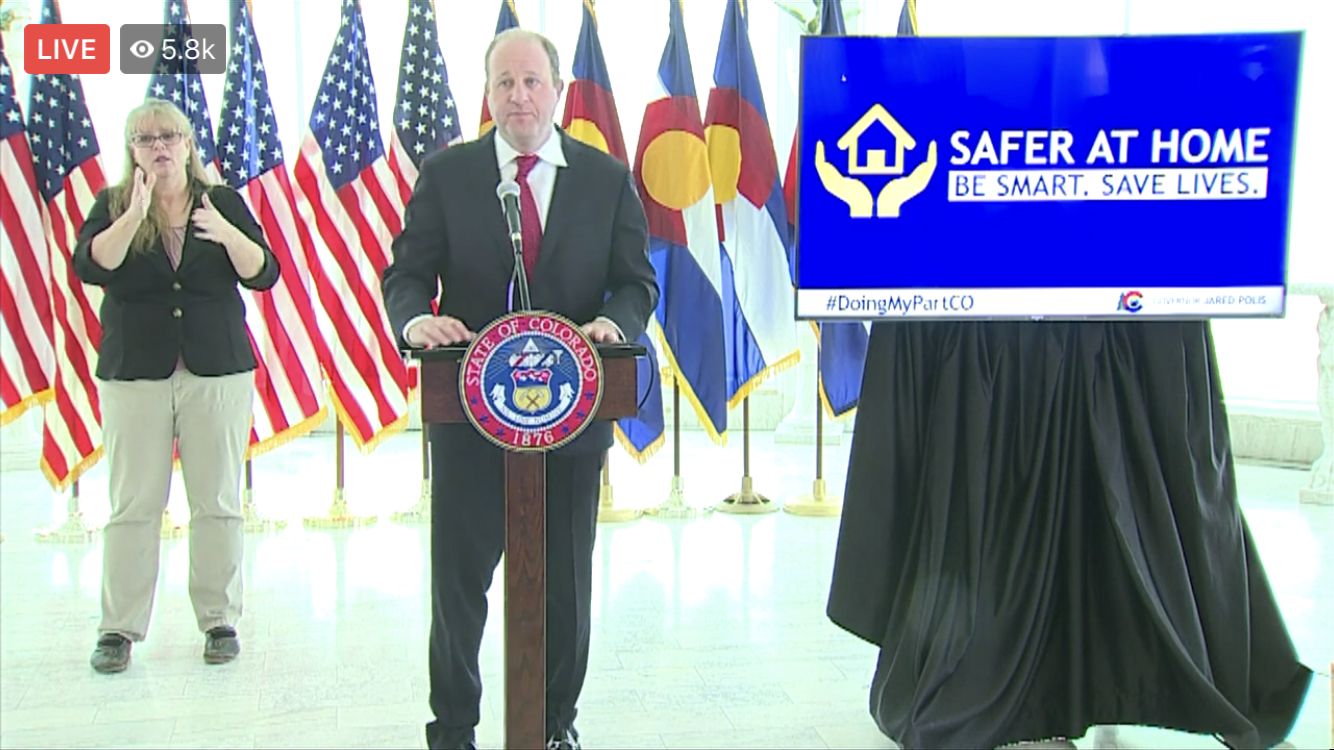
Gov. Jared Polis reiterated the steps Coloradans will begin to take next Monday, when the state’s stay at home order expires and Colorado moves into a “safer at home” regiment.
“This is not the way we lived in January or February,” Polis said in a Wednesday news conference.
As the state moves toward reopening businesses, “our success as a state is about personal responsibility and doing what’s best for our communities,” he said. That means continuing to take extreme precautions, wearing masks – which he described as a “mask culture,” and continuing to limit social interactions.
If Coloradans don’t succeed in the “safer at home” phase it means going back to further restrictions, he warned.
The governor also gave an update – which he said will be discussed in greater detail next week – on testing for COVID-19, who gets tested and how much the state will test as well as conduct contact tracing, which investigates who’s been in contact with a person who tests positive for COVID-19.
The state expects 150,000 test kits from South Korea in mid-May, the governor said. That will allow the state to increase testing capacity by about 5% per week. It’s been difficult to predict when Colorado would get testing supplies, Polis explained. Sometimes the Federal Emergency Management Agency will buy up kits, or others will offer twice as much for the kits.
“Testing and containment is a critical and indispensable part of the equation,” although he also said he hoped the questions on testing are not just “this week’s news cycle.”
He added that “while testing is important tool, it’s not a panacea. It doesn’t solve this. We can’t just test and trace our way out of this in any model that I’ve seen that’s credible,” he said. Even the most aggressive level of testing and containment would not be enough to keep hospitals and intensive care unit beds from being overwhelmed.
“I wish we had 50,000 tests a day being done,” the governor said, but that’s not the reality.
That said, Polis reserved his biggest concerns Wednesday for the most vulnerable, those who are in the state’s non-hospital health care facilities, such as nursing homes, assisted living and rehab centers. He ordered the Colorado National Guard last week to conduct testing in some of the state’s largest nursing homes that have yet to report outbreaks. Wednesday, he said some of the early tests (two of the three were to be completed by Tuesday) show positive cases among the staff. “That shows the impact of a targeted approach on testing resources for the most vulnerable,” Polis said.
But Polis also got testy with reporters who continued to ask about the testing issue. “You’re obsessed with testing. I wish you’d ask about masks,” he said.
Monday, Polis outlined the steps for the next one- to two-month phase of the state’s efforts to reopen businesses, known as “safer at home.”
Under that plan, Coloradans would still need to maintain social distancing at the 60% to 65% level, meaning 60% to 65% of Coloradans would still need to practice the most stringent social distancing measures (wearing masks, maintaining at least 6 feet of distance apart, for example). Retail businesses could reopen for curbside delivery on Sunday, and phase-in public openings on May 1 with strict precautions.
Gyms, restaurants and bars are still on the list of businesses that won’t reopen anytime soon. Polis said he’ll have a proposal for how that will work in mid-May, although his spokesman, Conor Cahill, told Colorado Politics yesterday that personal trainers could start doing one-on-one sessions on Monday.
For the real estate industry, which has been banned from providing home buyers with in-person home showings and even banned – as recently as April 16 – by the attorney general’s office from taking photographs or videos of homes that could have been used in virtual showings, in-person showings can restart on April 27. Non-critical businesses should still encourage telecommuting as much as possible, or stagger work shifts, the governor said.
Gatherings will still be limited to 10 people or less, Polis said Wednesday, and schools will be closed for the rest of the school year. He explained that rolling out social distancing guidelines so close to the end of the year wouldn’t be possible. And non-critical businesses will reopen on May 4, but will be expected to continue to encourage employees to telecommute as much as possible. The suggested level is 50% when a business is able to operate remotely.
And Polis said that will be enforced. If businesses try to jam people in, it will be reported, and county public health officials will have the authority to deal with that through county health orders, he said. “We expect” businesses to comply, he said.


Gazette family of papers rakes in 64 awards at 2025 Colorado Press Association Better News Contest
Elizabeth Pond
elizabeth.pond@denvergazette.com
Updated 16 hours ago
The Gazette family of newspapers won 64 awards in the Colorado Press Association’s annual Better News Contest — a whopping 36 more than the three papers collectively won last year. Colorado Politics raked in 27, The Colorado Springs Gazette took...

What courageous citizenship really looks like | Vince Bzdek
Vince Bzdek
vince.bzdek@gazette.com
Updated 2 days ago
By Vince Bzdek What exactly is courage? Ernest Hemingway famously called it grace under pressure. Mark Twain wrote that “courage is resistance to fear, mastery of fear — not absence of fear.” C.S. Lewis refined that even more: “Courage is...
The coming election and mischief in the making | SONDERMANN
Eric Sondermann
eric-sondermann@coloradopolitics.com
Updated 5 days ago
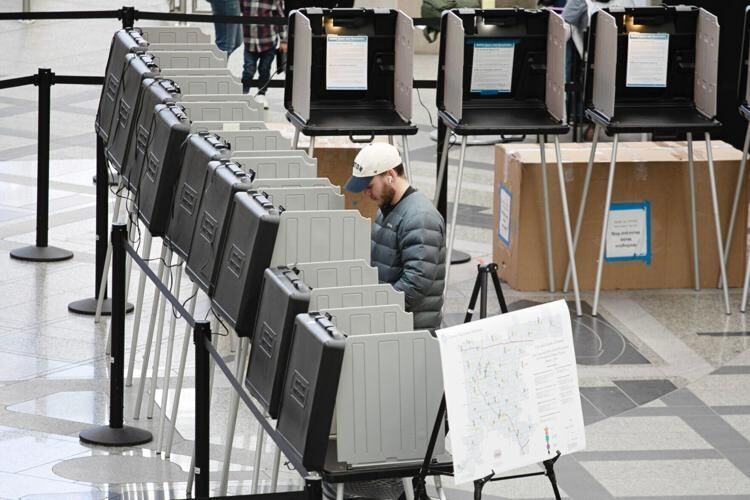
America’s tribalism is such these days that we struggle to even agree on the basic rules. Elections have always been hotly contested. As the saying goes, “Politics ain’t beanbag.” The process has long involved elements of nastiness and underhanded conduct....

Colorado Politics Calendar Aug. 31-Sept. 6
Rachael Wright, Special to Colorado Politics
rachael.wright@coloradopolitics.com
Updated 5 days ago
CoPo’s weekly political calendar will help you find political and public-policy events throughout Colorado. It includes candidate and issue campaign events, public policy meetings, court hearings, state and local party conventions, assemblies, debates, rallies, parades, speaking engagements, traveling dignitary appearances,...
Tancredo in Running for Dept. of Ed. Position | A LOOK BACK
Rachael Wright, Special to Colorado Politics
rachael.wright@coloradopolitics.com
Updated 5 days ago
Forty-five years ago this week: “I know that my name has been placed before the Secretary of Education, and I know that I’m one of three or four being considered for the Department of Education’s Region 8,” said state Rep....
Colorado measure adding ID checks to mail-in voting qualifies for ballot
Marissa Ventrelli
marissa.ventrelli@coloradopolitics.com
Updated 3 days ago
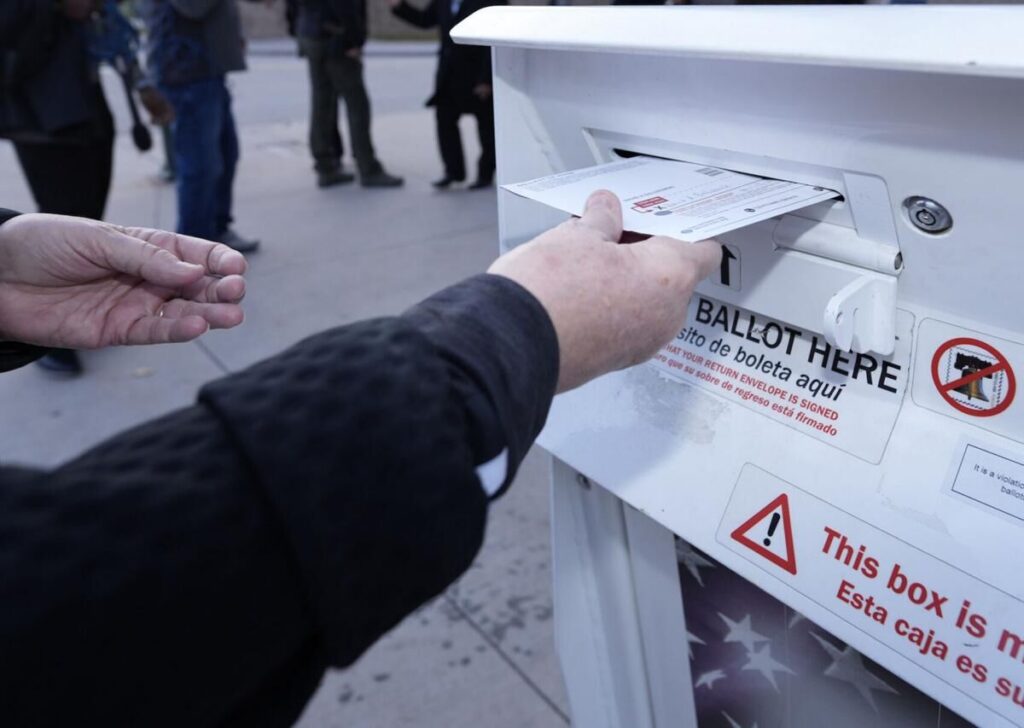
A ballot initiative that would require voters to include additional information on mail-in ballots has qualified for the November election, according to the Secretary of State’s Office. Backed by El Paso County Treasurer Chuck Broerman and former Deputy Secretary of...
Colorado election website error exposes personal data of confidential voters
Marissa Ventrelli
marissa.ventrelli@coloradopolitics.com
Updated 3 days ago
A system update accidentally lifted protections on confidential records in Colorado, exposing dozens of voters’ personal information, according to the Secretary of State’s Office. The limit that normally blocks access to confidential voter profiles was inadvertently disabled during an update...

PUC adds weekly comment after killing private talks
Scott Weiser
scott.weiser@gazette.com
Updated 3 days ago
The Colorado Public Utilities Commission will take public comment at the start of every commissioner’s weekly meeting beginning Sept. 9 as part of its new transparency mandate, the commission announced, expanding a slot previously limited to the second Wednesday of...
10th Circuit overturns framework for sentencing probation violators by 11-1
Michael Karlik
michael.karlik@coloradopolitics.com
Updated 2 days ago
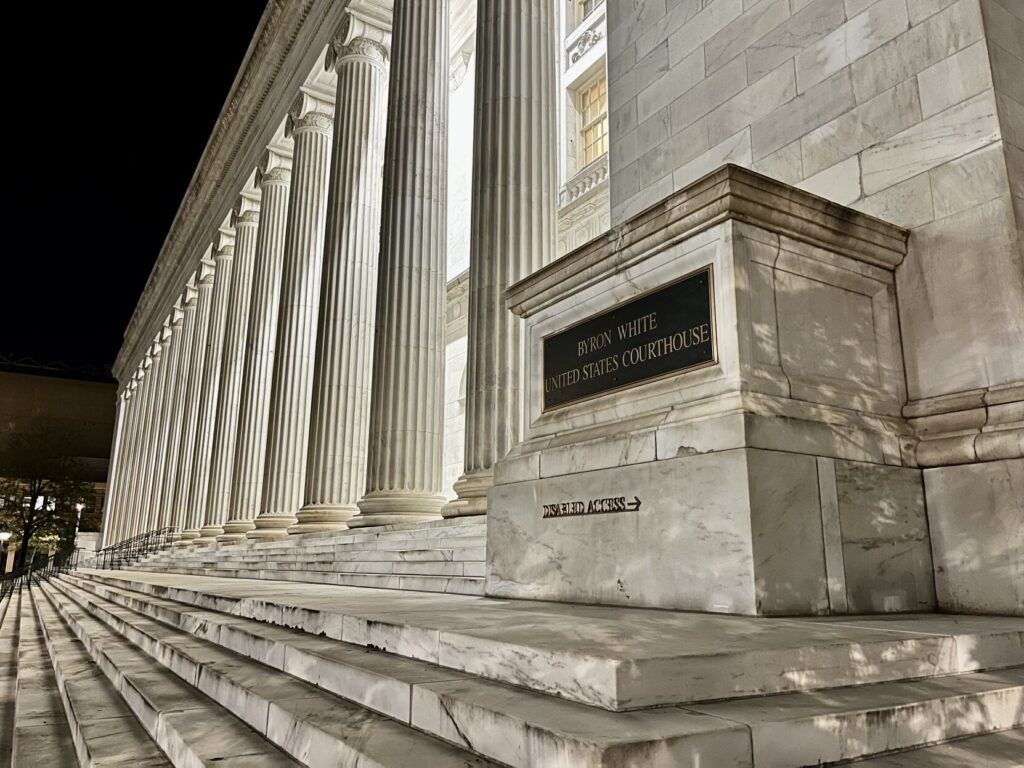
In a rare decision by all 12 of its full-time judges, the Denver-based federal appeals court ruled in a lopsided vote on Friday that one of its members created a sentencing process for probation violators that was out of step...
Federal judge dismisses excessive force lawsuit against Colorado Springs, officer
Michael Karlik
michael.karlik@coloradopolitics.com
Updated 2 days ago
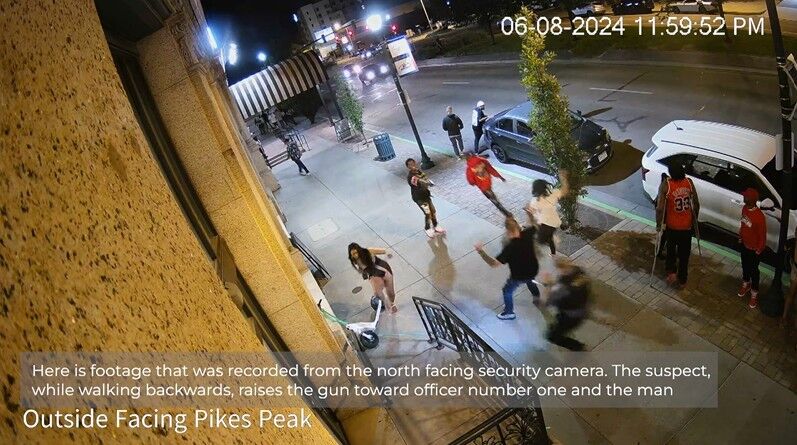
A federal judge concluded last week that a Colorado Springs police officer could not be held liable for shooting a suspect three times after the man menaced two victims with a gun and fled the scene. Al’morion Germany was involved...
PREV
PREVIOUS

Denver city leaders make social media videos calling for input on climate action recommendations
Denver city leaders are seeking public input for a newly released draft of climate action recommendations that could impact local environmental policies for generations to come. The recommendations were made by the Denver Climate Action Task Force, which planned to gather community input through a series of public meetings but has since had to move […]

On renter protections during pandemic, Colorado ranks low
The organization that tracks evictions in the United States has found that Colorado has enacted few protections for renters during the COVID-19 pandemic in contrast to other states where action has been more robust. “Colorado’s governor has directed actors like landlords, banks, and sheriffs to avoid evictions, but no statewide orders in Colorado expressly limit […]