

10th Circuit affirms no constitutional right to parole

The U.S. Court of Appeals for the Tenth Circuit decided on Thursday that because no constitutional right to parole exists, an inmate cannot challenge the calculation of his parole-eligibility under the U.S. Constitution.
Raymond Lee Fetzer is serving time in the Colorado Department of Corrections from convictions dating to 1988. He claimed that CDOC is failing to comply with Colorado law in calculating his sentences as one single, continuous sentence for setting his parole eligibility date. Under that formula, Fetzer would have been eligible for parole years earlier than the state determined.
After a state court decided CDOC should reexamine Fetzer’s eligibility date, he then alleged in federal district court that the department miscalculated his mandatory release date again, and in doing so violated his Fourteenth Amendment rights to equal protection under the law and to due process. He asked for monetary damages.
“The court explained that the grant of parole is a privilege, not a right,” circuit Judge Paul J. Kelly, Jr. wrote, in summarizing the federal district court’s decision. Even if Fetzer had a right to correctly-calculated parole-eligibility, “the Colorado Parole Board has unlimited discretion whether to grant or deny parole. Therefore, the court concluded, Fetzer did not have a liberty interest in a particular PED, and the claim was legally frivolous.”
The circuit court cited precedent that parole in lieu of serving one’s entire sentence is not a right, and disagreed with Fetzer that Colorado law creates a right to parole by providing guidance for the application of the parole-eligibility formula. If there is no constitutional right to the outcome, therefore, there is no constitutional claim about the process.
“What Fetzer ultimately seeks is parole, but as he properly concedes, he has no ‘legitimate claim of entitlement’ to parole,” Kelly wrote. “He therefore has no subsidiary liberty interest in the process used to determine his PED, even if that process involves a nondiscretionary calculation.”
The court reaffirmed that an inmate must seek a state remedy even if, in Fetzer’s case, a state allegedly repeatedly misapplies the parole-eligible calculation.
The case is Raymond Lee Fetzer v. Rick Raemisch, et al.



Colorado Politics Calendar June 15-21
Rachael Wright, Special to Colorado Politics
rachael.wright@coloradopolitics.com
Updated 3 days ago
CoPo’s weekly political calendar helps you find political and public policy events throughout Colorado. It includes candidate and issue campaign events, public policy meetings, court hearings, state and local party conventions, assemblies, debates, rallies, parades, speaking engagements, traveling dignitary appearances,...

A primary brings out primal instincts | SONDERMANN
Eric Sondermann
eric-sondermann@coloradopolitics.com
Updated 2 days ago
There are no Stanley Cup finals or NBA title showdowns involving local teams this June. In their place, we are inundated with primary election campaign ads. Coloradans can be excused for missing the diversion and alternate programming. But life can...

Dem-GOP tension dominates 1,000-bill legislative session | A LOOK BACK
Rachael Wright, Special to Colorado Politics
rachael.wright@coloradopolitics.com
Updated 2 days ago
Forty-Five Years Ago This Week: “I can honestly say that until now, we got along well with the governor’s office,” said House Minority Leader Federico Peña, D-Denver. “We visited frequently with the staff. And you didn’t see certain legislators speaking...

Hickenlooper lands endorsements from Elizabeth Warren, Ministerial Alliance in US Senate primary
Ernest Luning
ernest.luning@coloradopolitics.com
Updated 12 hours ago
U.S. Sen. John Hickenlooper won endorsements this week from a progressive Democratic colleague and a coalition of metro-area African American faith leaders as voting began in Colorado’s primary election. U.S. Sen. Elizabeth Warren of Massachusetts and the Greater Metro Denver...
Colorado justices say insurers may access policyholders’ medical info in denied-benefits litigation
Michael Karlik
michael.karlik@coloradopolitics.com
Updated 14 hours ago
The Colorado Supreme Court declined on Monday to expand its narrow prohibition on insurance companies accessing policyholders’ medical information, clarifying that a dispute over an insurer’s bad-faith decision to deny benefits is the only situation where a company is limited...

House District 14: Businesswoman, consultant square off in GOP primary
Mary Shinn
mary-shinn@coloradopolitics.com
Updated 15 hours ago
Firearms training company owner Ava Flanell will face Troy Vanderhule, the chief fundraising officer for Dobson Philanthropic, in the June 30 Republican primary for state House District 14, an area in northern Colorado Springs. Flanell was appointed to the seat...
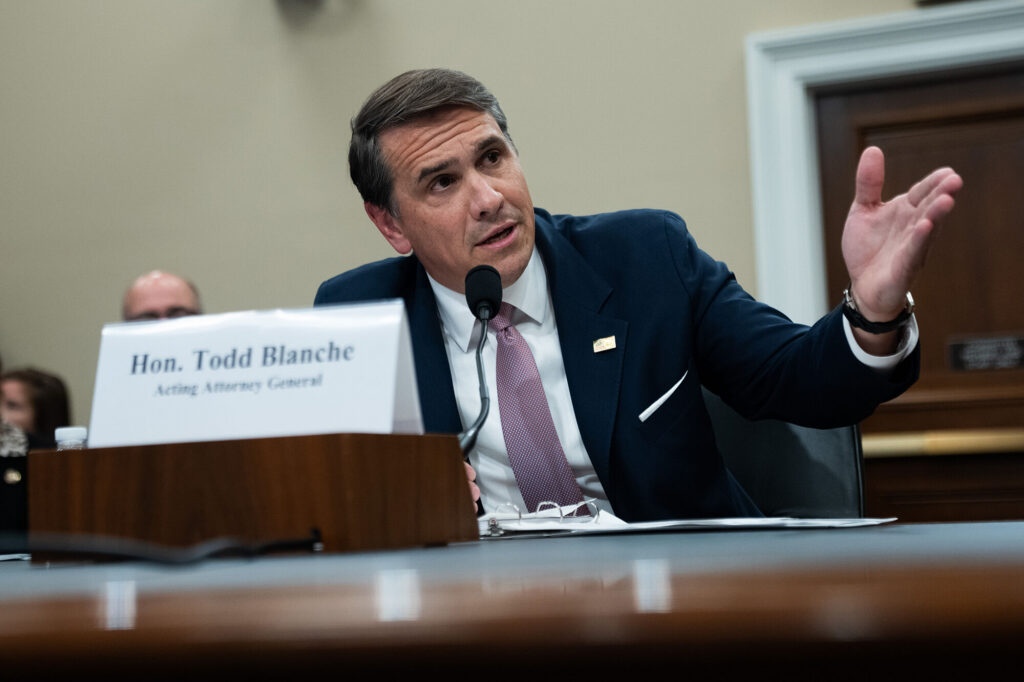
Federal judge wants Todd Blanche to swear in writing anti-weaponization fund won’t be revived
Jack Birle, Washington Examiner
jack.birle.washington.examiner@gazetteedit.wpenginepowered.com
Updated 13 hours ago
A federal judge maintained a block on the Department of Justice’s $1.776 billion anti-weaponization fund Friday, despite the DOJ claiming they have abandoned the planned fund aimed at compensating allies of President Donald Trump and others who say they were politically targeted by...

Colorado Supreme Court declines to loosen requirements for insurance company defendants
Michael Karlik
michael.karlik@coloradopolitics.com
Updated 8 hours ago
The Colorado Supreme Court declined last week to reconsider its longstanding expectations for insurance company defendants, and agreed that an insurer failed to properly raise its defenses against a policyholder’s breach-of-contract lawsuit. When an insured driver has an accident with...

Teen defendant properly transferred from youth detention to jail, Colorado justices conclude
Michael Karlik
michael.karlik@coloradopolitics.com
Updated 18 hours ago
Colorado law required the transfer of a teenage murder suspect from youth detention to the county jail when he turned 18, the state Supreme Court ruled last week. Prosecutors have accused Issac James Lawrence of killing a younger boy and attempting to...

US is escorting 20 tankers a night through Strait of Hormuz, Burgum says, easing oil strain
Maydeen Merino, Washington Examiner
maydeen.merino.washington.examiner@gazetteedit.wpenginepowered.com
Updated 16 hours ago
The U.S. Navy is escorting ships through the Strait of Hormuz despite the threat from Iran, guiding more than 20 crude oil carriers on some nights, Interior Secretary Doug Burgum said. Some are ultra-large tankers that hold 2 million barrels...
PREV
PREVIOUS

Denver Mayor Hancock makes statement on pit bull ban, pending final decision
Denver Mayor Michael Hancock on Friday afternoon released his first public statement on the ordinance to allow pit bulls within city limits, which was passed by Denver City Council earlier this week. Hancock is currently weighing whether to sign the law into effect, a decision he is expected to make today, although he has until […]

Buck introduces bill penalizing states for 'sanctuary city,' driver’s license policies
U.S. Rep. Ken Buck has introduced legislation to revoke federal funding to states that issue driver’s licenses to undocumented immigrants and fail to cooperate with the U.S. Department of Homeland Security on immigration matters. “Just last year in my home state of Colorado, Sean Buchanan, a loving father of five, was struck and killed by […]