

Gardner: ‘Low potential’ that Fort Carson will be used to house coronavirus evacuees

The Colorado Army National Guard facility on Fort Carson that’s been tapped to potentially house coronavirus evacuees will likely end up not being needed, U.S. Sen. Cory Gardner told The Gazette on Friday.
“That could change, but they (Fort Carson officials) feel they are a very low-potential site at this point,” said Gardner, who visited the post Thursday and toured the facility.
The post has been selected by the Department of Defense to house as many as 250 evacuees from areas with the virus, according to a Feb. 1 news release from Fort Carson officials. The post will provide an update if any people who may have been exposed to the virus are assigned to it, officials said Monday.
Evacuees would be housed at the Guard’s training center, in a remote area on the southwest side of the operational area of post. The facility includes an operations center, dining facility, auditorium, conference rooms, classrooms and living accommodations, according to a Guard spokesman.
Fort Carson soldiers and personnel would not be in direct contact with evacuees. Health and Human Services workers would be responsible for the care, transportation and security of those in quarantine, according the post’s news release.
HHS officials have not returned repeated calls from The Gazette requesting additional information on logistics, should evacuees be assigned to Fort Carson.
Gardner was unaware on Friday of any additional sites in Colorado tapped to potentially house virus evacuees.
When asked to address concerns regarding the risk of introducing the virus to the Colorado Springs area, Gardner said he was confident that federal health officials are ensuring “every safeguard is put in place.”
Evacuees sent to Fort Carson would be “extremely isolated” and “under the strictest of medical supervision,” he said.
“These are people who have been screened multiple times,” he said. “They’ve been tested before they left, tested when they first arrived, tested again. These are people who just need to wait out that 14-day period and are very unlikely to have anything.”
As to living conditions, Gardner said rooms at the Guard facility on Fort Carson, while “perhaps not as nice as a fancy hotel,” were “probably even better than a college dorm room.”
Any evacuees housed at Fort Carson would be assigned cellphones so they could connect with friends and family. A fence would be built around an outdoor track, allowing them recreation opportunities, he added.
Gardner said he had just completed a visit to a U.S. Center for Disease Control lab in Fort Collins. Among his takeaways: The 2019 novel coronavirus is “maybe two or three times more transmissible than the flu.”
The U.S. Centers for Disease Control “won’t be able to catch every infected person, but they’ll be able to contain it,” he said.
On Thursday, Gardner wrote a letter expressing his concern over the virus and requesting “robust funding” for outbreak response. That letter was addressed to the chairman and vice chairman of the Senate Committee on Appropriations and the chairman and ranking member of the Labor, Health and Human Services, and Education, and Related Agencies Subcommittee.
On Friday, Gardner – chairman of the Senate Foreign Relations Subcommittee on East Asia, the Pacific and International Cybersecurity Policy – authored another letter, this one to World Health Organization Director-General Tedros Adhanom Ghebreyesus regarding Taiwan’s exclusion from the World Health Organization. In the letter he urged the organization to grant Taiwan observer status at its meetings.
The organization, which declared the virus a world health emergency on Thursday, “has not permitted Taiwan to attend any emergency briefings despite Taiwan having nine confirmed cases of the Wuhan coronavirus,” according to a Friday press release from Gardner’s office.
The letter was also signed by Republican Sens. Tom Cotton of Arkansas, Marco Rubio of Florida, John Cornyn of Texas, Jim Inhofe of Oklahoma, Mitt Romney of Utah and Ted Cruz of Texas.
Fort Carson is one of four military facilities approved as possible quarantine sites by the Pentagon. Americans returning from Hubei province in China, the center of the outbreak, will be subject to up to 14 days of mandatory quarantine under an order signed Jan. 31 by President Donald Trump.
As of Wednesday afternoon, there were no confirmed cases of coronavirus in Colorado, with four tests pending, according to the state health department’s website. The department updates virus-related numbers each Wednesday. A call to the department for updated numbers was not immediately returned.
Hundreds of Americans being evacuated from China over the virus will be quarantined in Texas and Nebraska, officials said Thursday, stressing that it was unlikely that anyone will arrive there with signs of illness.
The new virus is in the coronavirus family that includes Middle East respiratory syndrome, or MERS, and severe acute respiratory syndrome, or SARS. It causes fever, cough, shortness of breath and, in severe cases, pneumonia.
Globally, more than 31,400 people are infected, and the death toll has climbed past 630. The overwhelming majority of cases are in China, but more than 310 people with the illness have been reported in over two dozen other countries.
The Associated Press contributed to this report.


10th Circuit grants immunity to officers for fatal Manitou Springs shooting
Michael Karlik
michael.karlik@coloradopolitics.com
Updated 15 hours ago
The Denver-based federal appeals court ruled on Wednesday that responding officers from Manitou Springs and El Paso County cannot be held constitutionally liable for shooting and killing a man after a 20-minute standoff. Wilford Deweese allegedly pulled out a gun...
10th Circuit rejects invitation for full-court review of tax-avoidance case
Michael Karlik
michael.karlik@coloradopolitics.com
Updated 12 hours ago
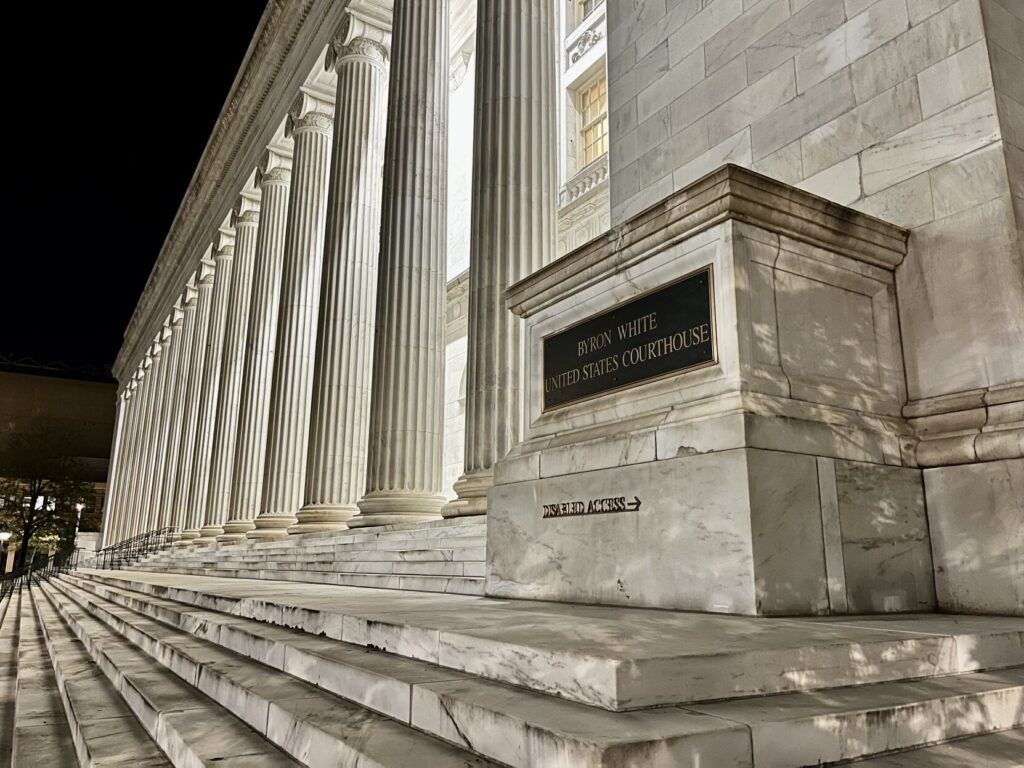
The Denver-based federal appeals court declined to reconsider the standards for holding entities liable for their tax-avoidance schemes, with a majority of judges voting against full-court review on Monday. In April, a three-judge panel of the U.S. Court of Appeals...
GOP gubernatorial candidate Victor Marx pushes aggressive water-storage expansion at Colorado Water Congress
Marianne Goodland
marianne.goodland@coloradopolitics.com
Updated 16 hours ago
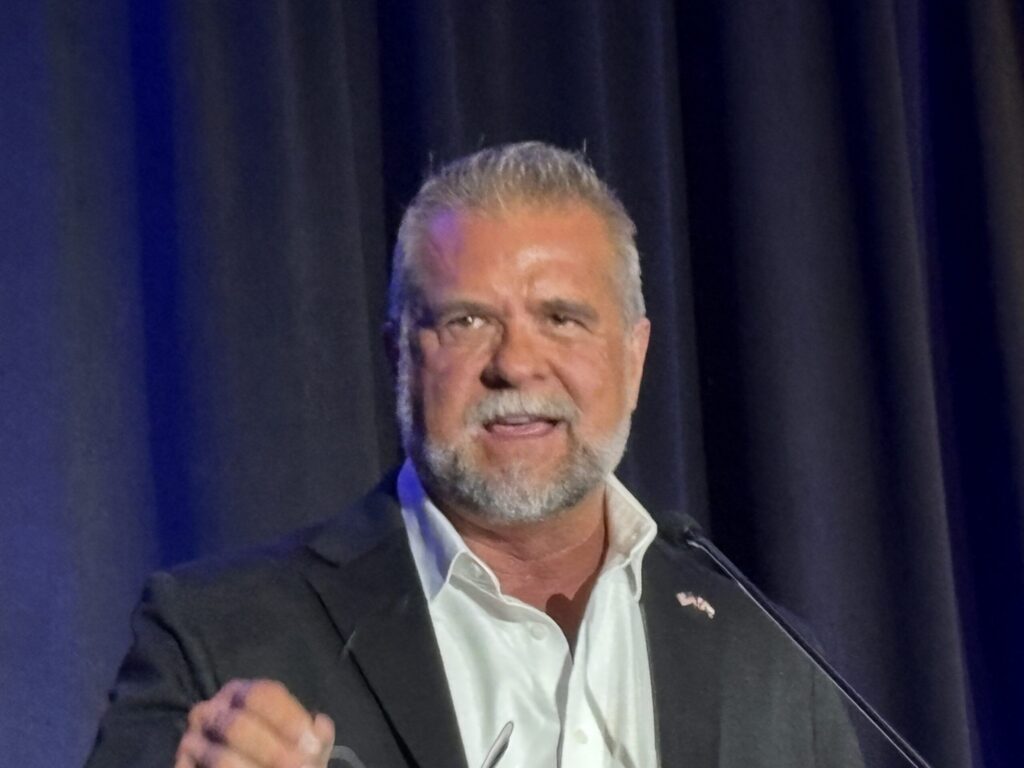
Victor Marx, the Republican nominee for governor, took the spotlight Wednesday during the opening day of the Colorado Water Congress, laying out how he says the state should approach its water future. Marx told the standing-room-only audience in Steamboat Springs...

Colorado AG sues GEO Group over noncompliance with tuberculosis investigation
Kyla Pearce
kyla.pearce@gazette.com
Updated 14 hours ago
The Colorado Attorney General’s Office on Wednesday filed a lawsuit against GEO Group, which operates the Aurora ICE Processing Center, alleging the company failed to comply with a state tuberculosis investigation. Weiser’s lawsuit demands that GEO provide “critical information” needed...

U.S. Rep. Lauren Boebert stresses storage, forest health and Upper Basin rights at Colorado Water Congress
Marianne Goodland
marianne.goodland@coloradopolitics.com
Updated 15 hours ago
Republican U.S. Rep. Lauren Boebert used her brief Wednesday appearance at Colorado Water Congress to tout her record on delivering water projects for the state and her district. Boebert, who is running for her second term representing Colorado’s 4th Congressional...
Trump has a 96% endorsement success rate. Here are the Republicans he’s backed who have lost
Mabinty Quarshie
mabinty-quarshie@coloradopolitics.com
Updated 18 hours ago
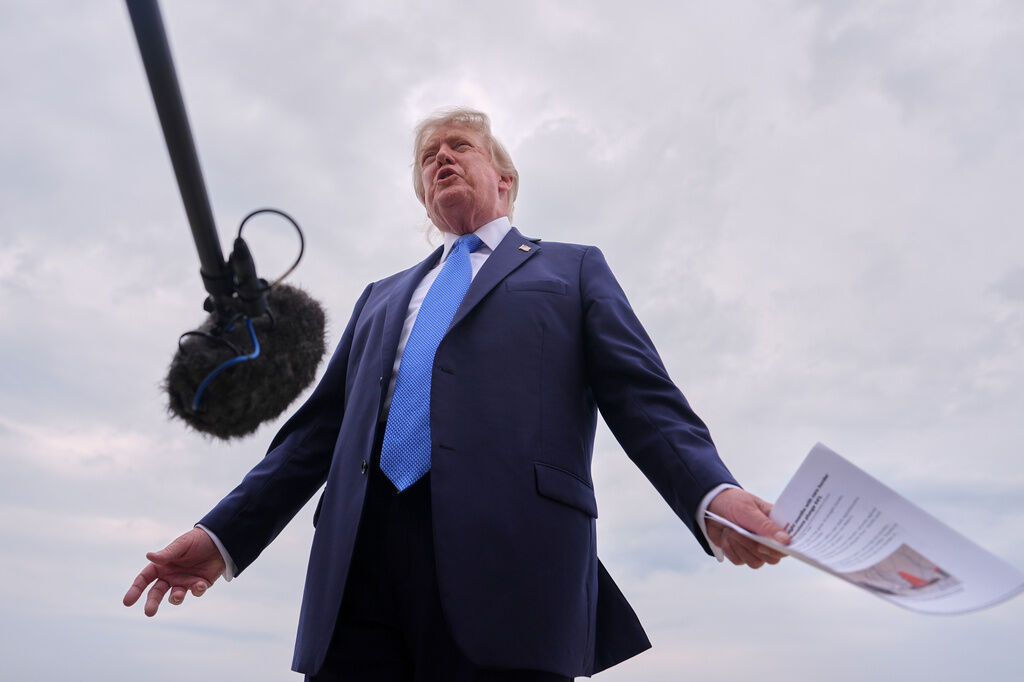
President Donald Trump’s 2026 primary endorsement success rate remains staggeringly high, but the president has seen a growing number of losses stack up in recent weeks. According to Ballotpedia, Trump has endorsed in 313 U.S. Senate, U.S. House, and state...
Colorado judge blasts state forensics lab in dismissing child sex case
Jenny Deam
jenny.deam@gazette.com
Updated 12 hours ago
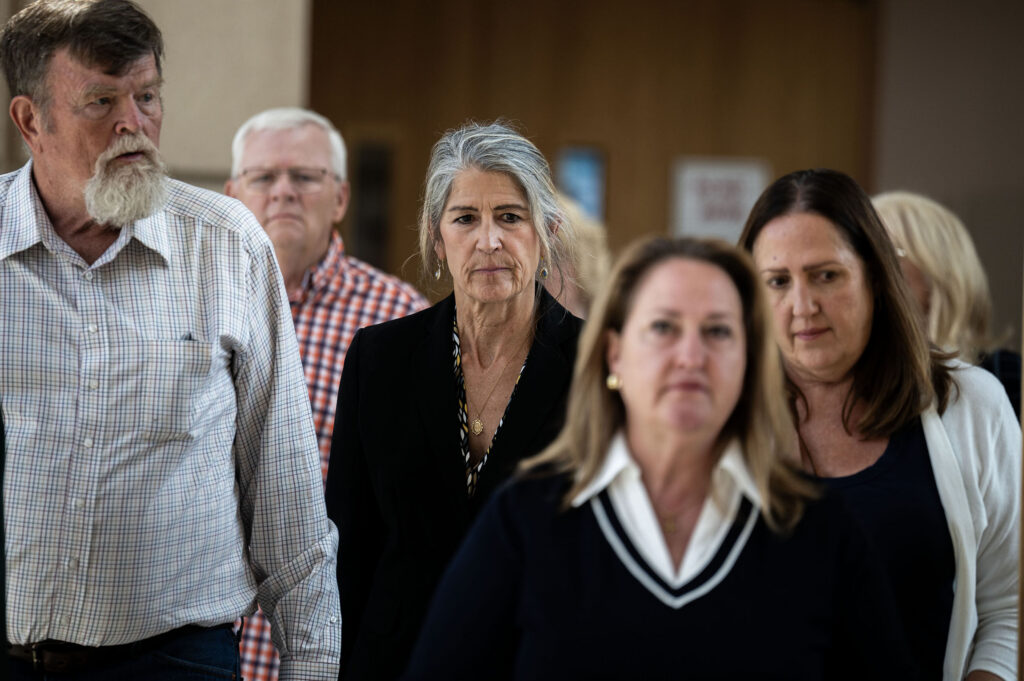
In a potentially widely consequential action, a Weld County district judge dismissed a child sexual assault case, citing the ongoing scandal at the Colorado Bureau of Investigation’s forensic lab that “has left a dark mark on the history of Colorado...

Colorado officials urge stronger water safety after 8 drownings and multiple Front Range rescues
Elizabeth Pond
elizabeth.pond@denvergazette.com
Updated 2 hours ago
At least eight people have drowned in Front Range waters since mid-March, including two at Eleven Mile Reservoir, three at Cherry Creek Reservoir, one at Rockbridge Lake and two at Lake Pueblo State Park. In the wake of these deaths,...

Vehicle registration crackdown across Front Range starts next week
Nick Smith
nick-smith@coloradopolitics.com
Updated 20 hours ago
Colorado drivers with expired tags or unregistered vehicles still have time to get registered before a scheduled enforcement crackdown starts next week. According to an announcement from the Colorado Springs Police Department, a multi-agency enforcement effort will happen across the...

Aurora grapples with affordable housing needs, deficits
Kyla Pearce
kyla.pearce@gazette.com
Updated 20 hours ago
Aurora is grappling with affordable housing needs as demand for project funding increases and the state cuts grant money. Currently, the city needs about 12,000 affordable housing units, Martin Petrov at Aurora Housing Authority told members of the Housing, Neighborhood...
PREV
PREVIOUS

Safe2Tell bill making changes to call flow, info disclosure clears House committee
On Thursday, a House committee signed off on changes to the Safe2Tell program at a time when the state’s school safety tip line is receiving record numbers of reports. House Bill 20-1005 is the product of the School Safety Committee, which forwarded five proposals in October to the legislative session. This measure would route all Safe2Tell […]

Electronic Crimes Task Force meets to discuss vulnerabilities, responses to hacking
“Cybercrime and cybersecurity is not a ‘me’ problem. It’s not a ‘you’ problem…It’s an ‘us’ problem.” That was the message federal, state and local cybersecurity professionals conveyed on Friday as the Colorado Electronic Crimes Task Force met at the Judicial Center in downtown Denver to discuss the threat of data manipulation. The U.S. Secret Service […]