

Study to examine exposure levels of toxic chemicals in southern El Paso County

An upcoming federal study aims to answer a question lingering over the lives of tens of thousands of Security, Widefield and Fountain residents:
Exactly how saturated are the toxic firefighting chemicals floating around in their bloodstreams?
The federal Agency for Toxic Substances and Disease Registry plans to soon begin recruiting southern El Paso County residents for a study aiming to finally understand the exposure levels that residents face from toxic perfluorinated compounds that have fouled their groundwater for years.
Researchers plan to begin mailing notices to randomly selected residents requesting their participation in April. If people don’t answer, researchers will go door-to-door to ask residents to take part. Testing would likely take place in June.
The goal is to better understand exposure levels across the community — a feat that can only be accomplished by randomly selecting participants, said Christopher Reh, associate director of ATSDR. The agency is part of the U.S. Centers for Disease Control and Prevention.
Reh added that there’s good reason for residents to say “yes” to those researchers.
“It’s a national issue, and only through participation we can better understand the scope and extent of this issue,” Reh said. “And what we learn from a given community can help inform us for other communities.”
The chemicals in question have been used for decades in household items, as well as in a firefighting foam at nearby Peterson Air Force Base, the Air Force Academy and hundreds of other military installations across the world. They have been linked to health ailments, including cancers, liver disease and high cholesterol.
Thousands of types of perfluorinated compounds exist, and a growing number of them have raised red flags for the dangers they present. Government agencies also have referred to them with the more inclusive term of per- and polyfluoroalkyl substances — or PFAS.
The upcoming study is the first of two planned in the coming years for people living in water districts that have relied, in part, on the contaminated Widefield aquifer. The underground waterway stretches along Interstate 25 from South Academy Boulevard to Fountain.
The first study will only examine exposure levels in the area — in other words, determining to what degree the chemicals exist in a typical resident’s bloodstream. Fourteen to 17 different types of perfluorinated compounds are expected to be examined.
The second study — which kicks into gear in fall 2020 — seeks to answer two more difficult questions:
• Whether or not chemical levels in someone’s blood or urine will make them sick now or later in life;
• And whether a current health condition is caused by exposure to the chemicals.
“We have a lot more animal data than we do human data for this,” Reh said. “But the animal data tells you where to look and how to look. It’s really the human data you need in order to determine what’s the risk to people.
“With something like cholesterol, we know that if your level of cholesterol is 212, a doctor can tell you with fairly good confidence what’s your chance of having a heart attack. We’re not even near that with this” batch of chemicals.
For that second health-focused study, 1,000 adults and 300 children will be asked to give blood samples and provide health information so that researchers can better understand which conditions are caused by the chemicals. Admission requirements for that study will be different, and people will generally be allowed to volunteer themselves to participate, rather than being randomly selected.
That health study will examine several ailments, but cancer won’t be one of them, Reh said. That’s because not enough people will be enrolled to analyze for that disease.
It will be led by the Colorado School of Public Health and a professor there — John Adgate.
Southern El Paso County is one of only two areas in the nation where both federal studies will be conducted. Eight communities will be included in the exposure study, and seven are part of the health study.
Both studies come on the heels of another Adgate-led study, which offered the first glimpse of exposure levels in residents’ bloodstreams.
The 220-person study found extremely high levels of toxic chemicals in study participants’ bloodstreams compared with other Americans. The results, released in December 2018, showed elevated levels of two perfluorinated compounds that are included in an Environmental Protection Agency health advisory. But the most prevalent variety — known as PFHxS — is not covered by EPA health advisories.
Perfluorinated chemicals are not regulated by the agency in the same way as lead, arsenic or other dangerous chemicals.
Residents’ exposure to the chemicals appears to have changed in recent years. Water districts in the area shut off access to the aquifer three to four years ago, and they say they now remove the chemicals to non-detectable levels before sending it to residents’ houses.
But the chemicals are made of remarkably strong molecular bonds, and they remain in the human body for years upon years — hence their nickname as “forever chemicals.”
There are several differences between Adgate’s previous study and the two upcoming federal studies.
The results released by Adgate in 2018 did not include any analysis that could hint at the health effects of the chemicals.
And, in a major difference from the upcoming April study, Adgate’s previous study sought volunteers to participate. The upcoming exposure study this spring will randomly select participants.
The exposure study this spring also will test dust in residents’ houses for the chemicals, since they are commonly found in nonstick household items such as Teflon products and carpet cleaners.
“They have a lot of the characteristics of chemicals that cause us — as environmental health professionals — a lot of concern,” Reh said.
Colorado Politics Must-Reads:


Democrats and their big roll of the dice | SONDERMANN
Eric Sondermann
eric-sondermann@coloradopolitics.com
Updated 3 days ago
For Republicans on the ballot this fall, the hand they are forced to play is rather set. Even if so many of them had not so meekly submitted to President Donald Trump’s agenda, they would still be largely tethered to...

Reagan’s PATCO Showdown ignited Colorado labor backlash | A LOOK BACK
Rachael Wright, Special to Colorado Politics
rachael.wright@coloradopolitics.com
Updated 2 days ago
Forty-five years ago this week: “It’s the old Nixon reaction as far as I’m concerned. He thinks he’s the Great God Almighty and can do no wrong … in the eyes of the public,” said Zelda Bransted, spokesman of the...
Federal judge green-lights excessive force, retaliation claims for trial against Fort Collins officers
Michael Karlik
michael.karlik@coloradopolitics.com
Updated 19 hours ago
A federal judge green-lit a jury trial last week against multiple Fort Collins police officers on claims that they used excessive force on one man who was standing unarmed in his underwear, and retaliated against another man for exercising his...
Jeff Crank, Jessica Killin set to face off in 2 debates in Colorado’s 5th Congressional District
Ernest Luning
ernest.luning@coloradopolitics.com
Updated 18 hours ago
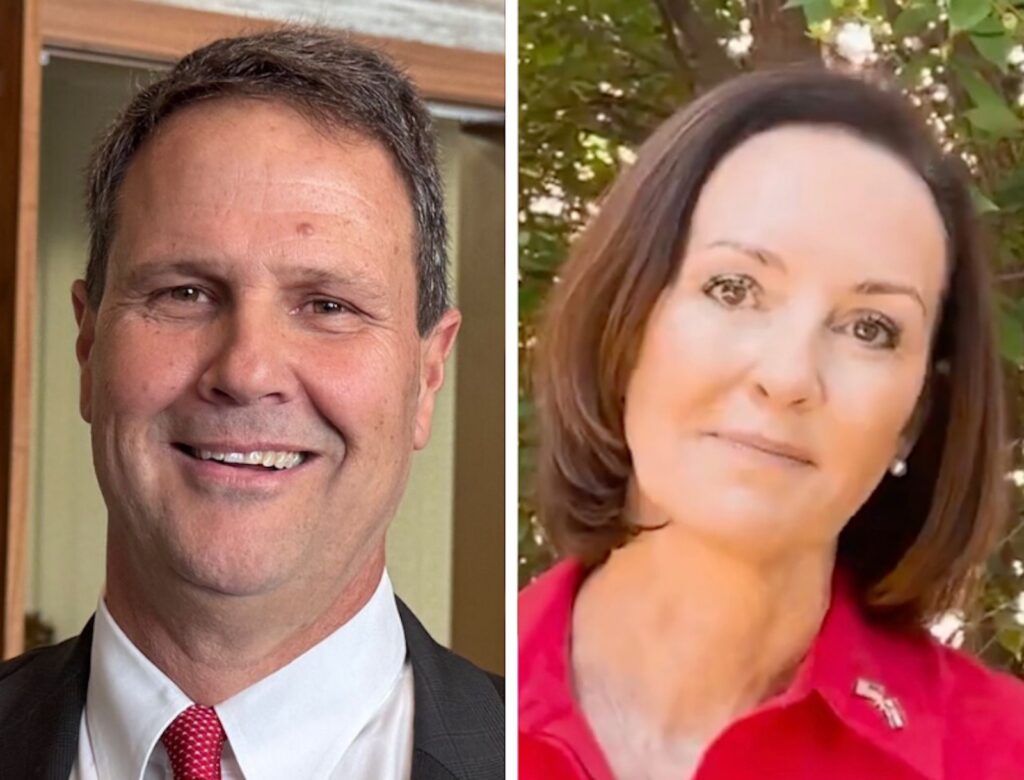
Republican U.S. Rep. Jeff Crank and Jessica Killin, his Democratic challenger, have agreed to debate twice in the weeks leading up to the general election in Colorado’s 5th Congressional District, their campaigns have said. Crank is seeking a second term...

CSI study reviews impacts of Colorado’s mandatory sex‑trafficking sentencing measure
Marissa Ventrelli
marissa.ventrelli@coloradopolitics.com
Updated 19 hours ago
A new report by the think-tank Common Sense Institute examines what could happen if Colorado voters approve Initiative 108, which establishes mandatory life sentences for offenders convicted of sexual trafficking of a minor. The measure is backed by Protect Kids...

Luigi Mangione pleads guilty in UnitedHealthcare CEO Brian Thompson murder case
Kaelan Deese
kaelan-deese@coloradopolitics.com
Updated 22 hours ago
Luigi Mangione pleaded guilty Friday to two federal stalking charges connected to the 2024 killing of UnitedHealthcare CEO Brian Thompson, a major development that could complicate New York prosecutors’ separate murder case against him. Mangione, 28, not only pleaded guilty in Manhattan federal court...

French court blocks Macron’s social media ban for children under 15
Emily Hallas
emily-hallas@coloradopolitics.com
Updated 22 hours ago
France’s top court struck down on Friday a law championed by President Emmanuel Macron that would have made it illegal for children to have social media accounts. The law, approved by lawmakers in July, was set to take effect at...

10th Circuit revives wage violation lawsuit against Papa John’s operator
Michael Karlik
michael.karlik@coloradopolitics.com
Updated 15 hours ago
The Denver-based federal appeals court on Tuesday reinstated a former Papa John’s delivery driver’s lawsuit alleging violations of federal and state wage law. Steve Mighell worked for one month at a Denver Papa John’s location in summer 2023. He alleged...

Golden fire chief fired days after city manager as city investigates ‘racist incident’
Matt Kyle
matt.kyle@denvergazette.com
Updated 19 hours ago
The City of Golden has terminated its fire chief days after terminating the city manager due to a “racist incident” earlier this year at a city fire station. City officials said that in March, a “Snoop on a Stoop” doll,...

Ikon Pass company cuts jobs in Denver and beyond amid several changes
Bernadette Berdychowski
bernadette.berdychowski@denvergazette.com
Updated 20 hours ago
As the ski resort company behind the Ikon Pass and the operator of Steamboat Springs, Arapahoe Basin and Winter Park Resort is going through a phase of changes, the Denver-based company is now cutting jobs. Alterra Mountain Co. has laid...
PREV
PREVIOUS

Denver public safety director Troy Riggs leaving for private sector position
Troy Riggs, who as Denver’s public safety director put in place a data-driven approach that reformed the city’s police, sheriff and fire departments, is resigning to take a job in the private sector. During his nearly two-year tenure, he played a large role in shaping public safety policies in Denver, overhauling the system for investigating misconduct at […]

Legislators draft college loan forgiveness bill
Democratic Sen. Steve Fenberg and Democratic Reps. Leslie Herod and Julie McCluskie plan to introduce a bill that would enable the state to repay student loan debt for the first two years after an individual graduates from college in Colorado and stays in Colorado. As reported in The Denver Post, the concept, known as “get […]