

State Supreme Court rules in search-and-seizure case

The Colorado Supreme Court on Monday decided that police did not violate a Fort Collins man’s Fourth Amendment right against unlawful search and seizure when his wife admitted the officers into their home.
Leonora Williams, the wife of Kirk Thomas Williams, found drugs and paraphernalia in his travel bag, and she hid them in their home. She met with a Fort Collins police officer and asked him to remove the contraband.
She subsequently permitted the officer and two others to enter while Kirk Williams was home, in order to take possession of methamphetamine and a glass pipe. At some point, Kirk Williams objected to the officers’ presence.
Williams was placed under arrest. One officer estimated that the encounter was over “in five minutes.”
The court found Williams’s statement to the officer to leave did not constitute a timely enough objection legally.
“Had Mr. Williams stood at the door and said ‘stay out’ or otherwise objected to the officers’ entry, we would find that the Randolph exception applies,” Justice Carlos Samour wrote for the court.
In the 2006 Georgia v. Randolph case, the U.S. Supreme Court found that while consent by one of the shared occupants of a premises is sufficient to allow a warrantless search, another resident being physically present and objecting to the search in that moment would be sufficient to halt it.
In the Colorado case, the Randolph exception was inapplicable, the court said, because Williams was not present at the time his wife granted a search of the premises.
If Williams’s contention that an objection by one party at any point could end the search, Samour wrote, “would the proposed rule cause officers to rush and to be less cautious while conducting consent searches for fear that a co-occupant could show up at any moment and revoke the consent provided?”
The case is Kirk Thomas Williams v. The People of Colorado.
Colorado Politics Must-Reads:

Federal judge declines to end Denver sheriff employee’s sex discrimination suit
Michael Karlik
michael.karlik@coloradopolitics.com
Updated 12 hours ago
A federal judge tentatively green-lit a former Denver Sheriff Department sergeant’s sex discrimination lawsuit for trial last month, based upon allegations that three female employees were promoted ahead of him despite his qualifications. U.S. District Court Judge Nina Y. Wang...
Selling dogs, cats in pet stores now banned in Colorado
Marissa Ventrelli
marissa.ventrelli@coloradopolitics.com
Updated 12 hours ago
Gov. Jared Polis signed a bill into law on Wednesday prohibiting pet stores from selling dogs and cats, which sponsors have nicknamed the “Pistol the Pomeranian Protection Act.” House Bill 1011, sponsored by House Majority Leader Monica Duran, D-Wheat Ridge,...
Colorado bill allowing THC beverages to be sold at grocery stores, restaurants pulled by sponsor
Marissa Ventrelli
marissa.ventrelli@coloradopolitics.com
Updated 12 hours ago
A Denver Democrat decided on Tuesday to pull a proposal that would have allowed beverages with tetrahydrocannabinol or THC to be sold at locations like grocery stores, restaurants, and entertainment venues. THC is the psychoactive substance in cannabis, the chemical...
Democrats ready to fight after Supreme Court strikes down voting rights case
Lauren Green and Mabinty Quarshie, Washington Examiner
lauren.green.and.mabinty.quarshie.washington.examiner@gazetteedit.wpenginepowered.com
Updated 12 hours ago
The 2026 House map has been flipped upside down by a massive Supreme Court decision Wednesday to overturn the parts of the Voting Rights Act, as Democrats remain ready to fight. The Supreme Court dealt a blow to race-based redistricting,...

Blanche says Trump did not direct DOJ to indict Comey a second time
David Zimmermann Washington Examiner
davidzimmermannwashingtonexaminer@wpstage.coloradopolitics.com
Updated 12 hours ago
Acting Attorney General Todd Blanche on Wednesday denied that President Donald Trump directed the Justice Department to indict former FBI Director James Comey for a second time, saying the investigation has been ongoing for almost a year. The two-count indictment...
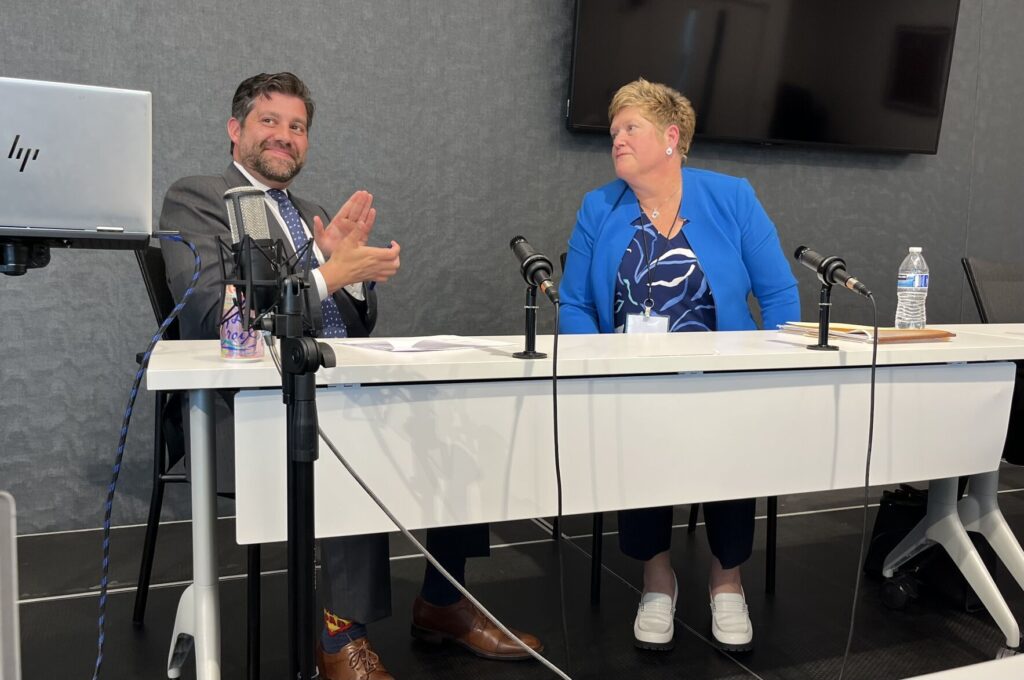
Corrections officials may be sued for employee’s alleged abuse of detainee, federal judge rules
Michael Karlik
michael.karlik@coloradopolitics.com
Updated 15 hours ago
High-level corrections officials may be sued for their own alleged failures to prevent or respond to an employee’s sexual misconduct toward a detainee, a federal judge decided last month. Rajae Bouhamidi was incarcerated at the Denver Women’s Correctional Facility. In...
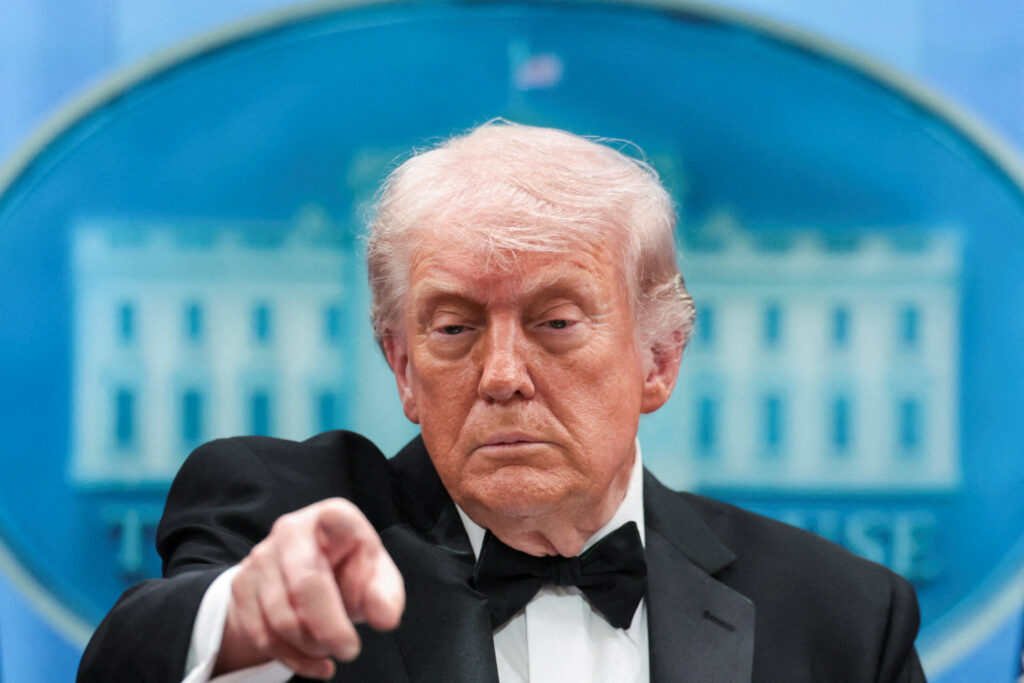
Supreme Court justices to hear arguments on ending legal protections for Haitian, Syrian migrants
Associated Press
associated-press@coloradopolitics.com
Updated 15 hours ago
The Supreme Court will weigh arguments Wednesday over the Trump administration’s push to end legal protections for Haitians and Syrians as migrants fleeing war and natural disaster. Haitians and Syrians were among those from 17 countries with Temporary Protected Status, which allows migrants already...
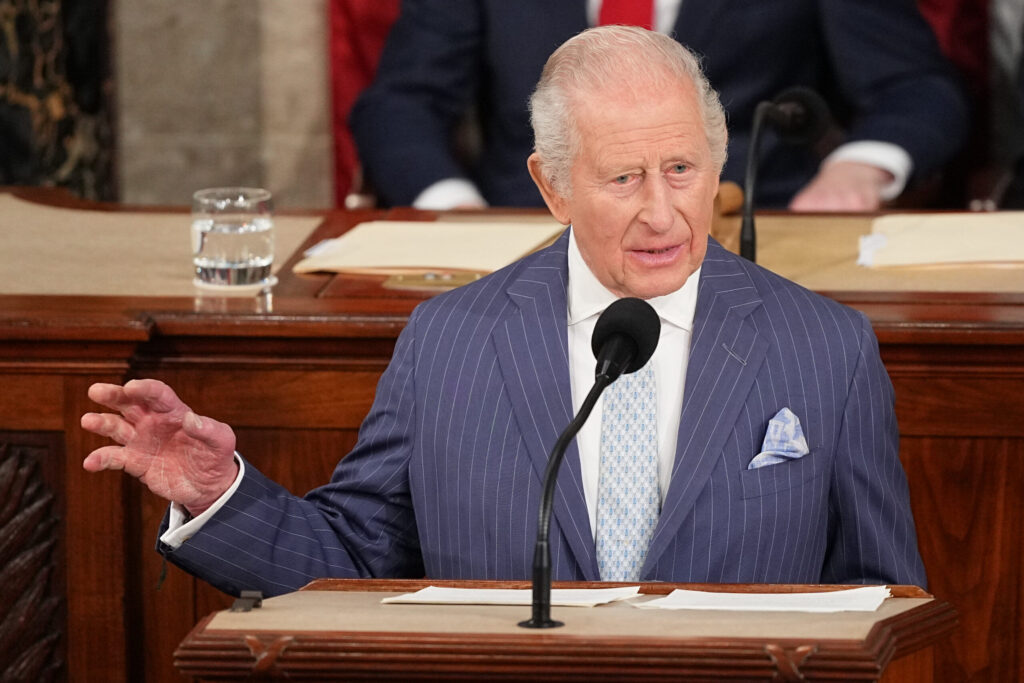
King Charles gifts Trump bell from British submarine namesake during state dinner
David Zimmermann Washington Examiner
davidzimmermannwashingtonexaminer@wpstage.coloradopolitics.com
Updated 13 hours ago
King Charles III bestowed a historical gift upon President Donald Trump during the White House state dinner on Tuesday night. The British royal gifted Trump a bell from a World War II British submarine named the HMS Trump. The vessel...

Proposal exempting some IT equipment from Colorado’s ‘right to repair’ law fails
Marissa Ventrelli
marissa.ventrelli@coloradopolitics.com
Updated 20 hours ago
A bill proposing an exemption to Colorado’s “right to repair” laws for “critical infrastructure” failed to pass its first committee in the House after clearing the Senate. Senate Bill 090 would have exempted information technology equipment considered “critical infrastructure” —...
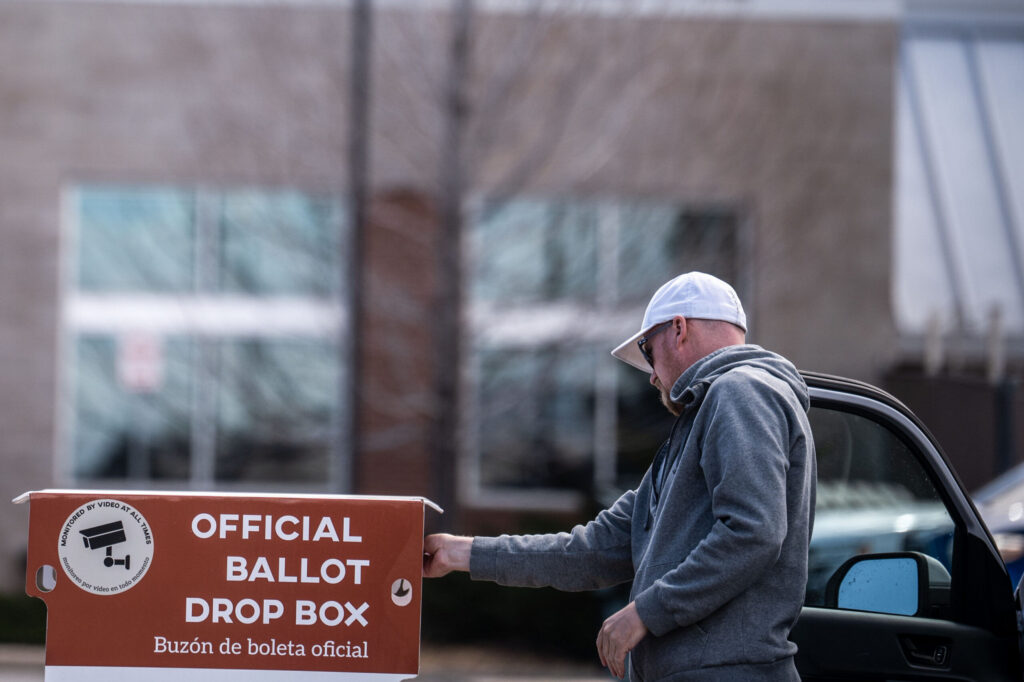
Colorado GOP request to block unaffiliated voters from receiving Republican primary ballots denied by judge
Ernest Luning
ernest.luning@coloradopolitics.com
Updated 1 day ago
A federal judge on Tuesday denied the Colorado Republican Party’s request for an emergency injunction barring unaffiliated voters from participating in the state’s upcoming Republican primary election. U.S. District Court Judge Philip A. Brimmer said that preventing unaffiliated voters from...
PREV
PREVIOUS

Advocacy group mails warning signs to marijuana stores ahead of new rule
Smart Colorado, a group that advocates against youth marijuana consumption, announced on Monday that it will mail signs to all 774 marijuana retail stores in the state that warn pregnant and breastfeeding mothers about the risks the drug poses to them. “We determined that the state was not providing signage to help Colorado’s marijuana businesses […]

Tenth Circuit sides with prisoner, overturns lower court’s declaration of “frivolous" lawsuit
A prisoner claiming that his constitutional rights were violated as a result of prison overcrowding and a lack of private showers will have his case heard, after the U.S. Court of Appeals for the 10th Circuit on Monday reversed a lower court’s opinion that the lawsuit was frivolous. Larry Allen Thompson is an inmate at […]