

PERA will need higher employer and employee contributions in 2020, officials say
Those who pay into the Public Employees’ Retirement Association – both employers and employees – are going to be kicking in even more money beginning next July.
The reported investment losses of $1.8 billion in 2018 means automatic contribution increases for employers and employees, allowed under Senate Bill 18-200.
On Monday, PERA officials said employer contributions will go up 0.50%, from a previously planned increase of 0.25%. For employees, who were already slated to contribute 0.75% more of their pay, beginning July 1, 2020, the increase will be 1.25%.
PERA retirees will see smaller increases in their cost of living adjustments as well, at 1.25% instead of 1.5%. PERA retirees had not received a cost of living increase for two years; the 1.5% was to be the first in three years under the changes mandated by SB 200.
PERA Executive Director Ron Baker told members of the Joint Budget Committee on Monday that with those automatic adjustments, all divisions, except for the largest, the school division, will be back under the 30-year window for bringing the pension plan to full funding. Pension plans set 30 years as the standard for paying off pension obligations.
Baker said Monday that the school division, based on current projections, will need 34 years to pay its obligations, but are hopeful that its timeline for full funding will drop to around 28 years by next year.
PERA officials pointed to a market downturn at the end of 2018 for the investment losses, as well as “demographic” losses. It created a “perfect storm” that resulted in the need to implement automatic adjustments, Baker said. “We aren’t seeing growth in headcount, and that has an effect on paying a benefit 30 years down the road.”
In one of the last battles of the 2018 session, lawmakers came up with the second plan in eight years to shore up PERA’s unfunded liability, at that time around $32 billion. Under SB 200, the state pumps $225 million into the pension plan.
The bill also increased the retirement age for full benefits from 58 years old to 64 years old for employees hired after Jan. 1, 2020, in the school and state divisions, and required employees to contribute 2% more of their income, rolled out over three years.
State employees are slated for a 2% across-the-board pay increase beginning July 1, 2020, based on the budget request submitted by Gov. Jared Polis last month. With the PERA contribution increase, that leaves a net pay increase of 0.75%.
That pay increase doesn’t apply to those who work in the state’s 178 school districts, whose pay is determined by local school boards.
Amie Baca-Oehlert, president of the Colorado Education Association, told Colorado Politics that while districts and teacher groups won’t go to the bargaining table until the spring, a recent State of Education report released by the CEA pointed out a “dire reality, especially around pay.” The report said Colorado ranks 47th in the nation on starting pay for teachers.
Last year, when teachers were able to negotiate salary increases, those increases were virtually negated by increases for health insurance and PERA, Baca-Oehlert said. The 1.25% increase in PERA’s contributions beginning next July will exacerbate that, leading to situations “where people are living in their cars, or hold two to three jobs” to make ends meet.
The CEA’s top legislative priority for the 2020 legislative session is on the issue of teacher pay, she said. While the state has historically not set teacher pay, the report suggested legislative action to create a minimum base salary for educators and a base minimum wage for education support professionals, both based on the cost of living in a school district.
They also want to see more efforts to reduce the Budget Stabilization Factor, the debt to public schools that started in 2009-10 and which reached a high of more than $1 billion in 2011-12.
Polis has recommended paying down that debt, currently at around $572 million, by $52 million, the lowest payment to the debt in the last three fiscal years.
This story has been updated with this clarification: While the fiscal note for SB200 said the amount of the state contribution would increase annually, PERA officials say it has remained static at $225 million per year.


Iran and Oman come to agreement to open Strait of Hormuz, but await US buy-in
Claire Carter
claire.carter@washingtonexaminer.com
Updated 22 minutes ago
Iran and Oman reached an understanding on a temporary shipping corridor through the Strait of Hormuz, clearing a major hurdle to reopening the critical waterway, but Tehran says implementation depends on the United States meeting a series of demands. The...
Trump faces warning signs among women ahead of midterm elections: Poll
Rena Rowe
rena.rowe@washingtonexaminer.com
Updated 30 minutes ago
President Donald Trump is facing significant challenges among women voters heading into the 2026 midterm elections, with a new survey showing low approval of his job performance and broad opposition to key policies in his administration’s agenda. A national survey...

Colorado gubernatorial candidates Phil Weiser, Greg Lopez to face off Thursday in televised debate
Ernest Luning
ernest.luning@coloradopolitics.com
Updated 1 hour ago
Two of the candidates for governor of Colorado are set to square off in a televised debate for the first time Thursday night, when Attorney General Phil Weiser, the Democratic nominee, and former U.S. Rep. Greg Lopez, an unaffiliated candidate,...
Republican US Rep. Jeff Crank, Democratic challenger Jessica Killin set to debate in Colorado’s 5th CD
Ernest Luning
ernest.luning@coloradopolitics.com
Updated 2 hours ago
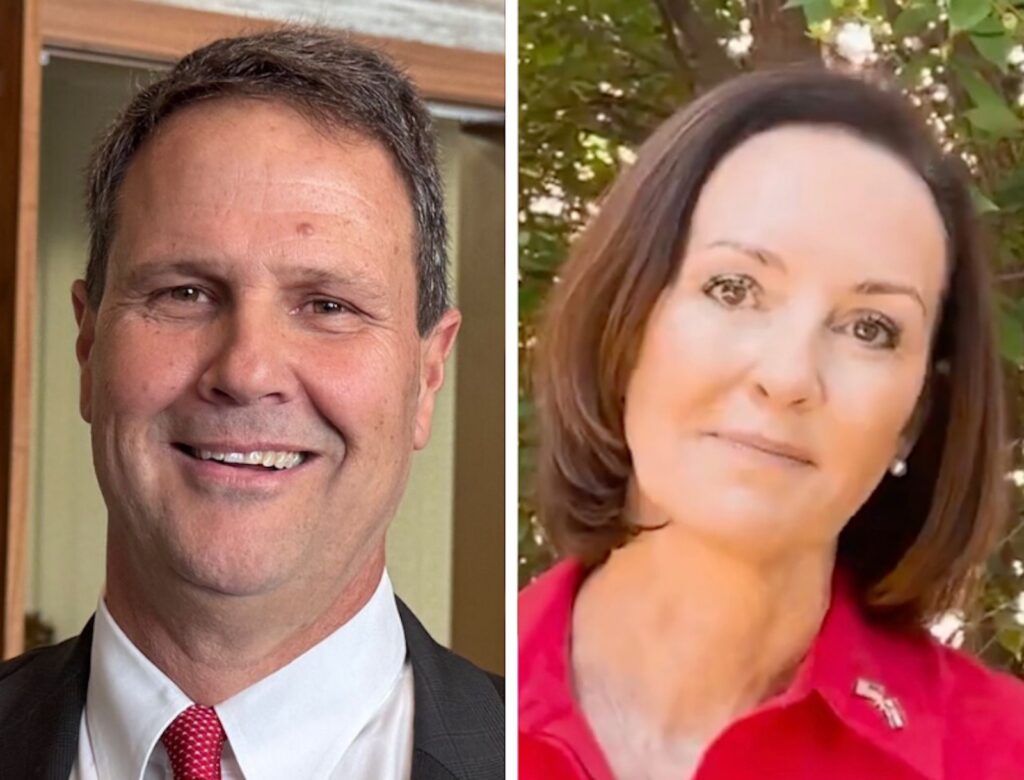
Republican U.S. Rep. Jeff Crank and Jessica Killin, his Democratic challenger, are scheduled to meet for a televised debate in the race to represent Colorado’s 5th Congressional District on Thursday night. The candidates are set to take the stage at...
Wrongfully deported man to be returned to U.S., Colorado federal judge orders
Michael Karlik
michael.karlik@coloradopolitics.com
Updated 3 hours ago
Colorado’s chief federal judge took the extraordinary step of directing the government on Tuesday to do everything it can to return a man it deported in violation of his order. At the same time, Colorado’s chief magistrate judge has set...

Colorado to get $615M from Meta child safety settlement
Thelma Grimes
thelma.grimes@coloradopolitics.com
Updated 1 hour ago
The parent company of Facebook and Instagram will pay hundreds of millions of dollars to Colorado, part of an $18 billion multistate deal, in which the company also agreed to adopt extensive child-safety changes to its operations. The settlement ended...
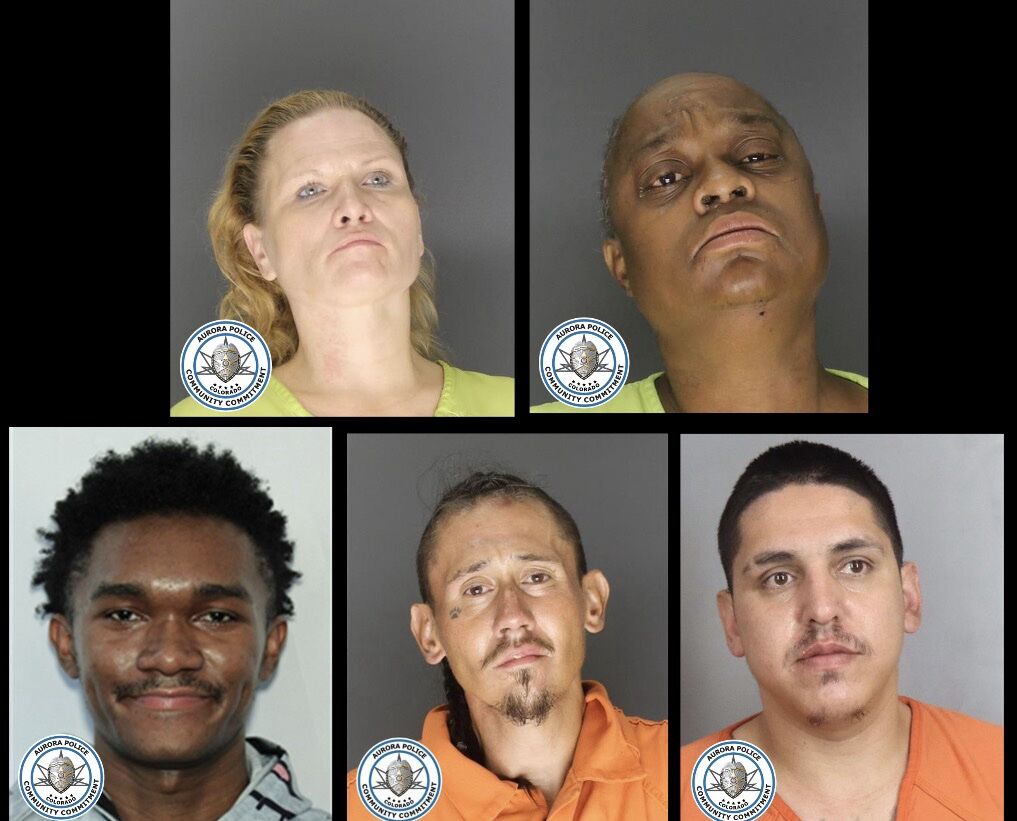
Aurora police warn businesses of 5 shoplifters involved in 139 crimes
Kyla Pearce
kyla.pearce@gazette.com
Updated 2 hours ago
Aurora police are warning business owners to look out for five shoplifters involved in 139 crimes with some $60,000 in stolen merchandise. Four of the five shoplifters are wanted on active Aurora Police Department warrants, according to a news release...

Counties warn CPW that new comment limits sideline local governments
Marianne Goodland
marianne.goodland@coloradopolitics.com
Updated 17 hours ago
The September meeting of the Colorado Parks and Wildlife Commission will feature newly revised public‑comment rules — changes introduced by chair Jay Tutchton of Bent County, who announced them without first discussing the revisions publicly with the rest of the...

Controversial two-bag furbearer limit heads to CPW meeting under legal threat
Marianne Goodland
marianne.goodland@coloradopolitics.com
Updated 17 hours ago
Next week’s Colorado Parks and Wildlife Commission meeting in La Junta is likely to open under the cloud of threatened legal action. Safari Club International and the Sportsmen’s Alliance Foundation warned the commission this month that its July vote imposing...
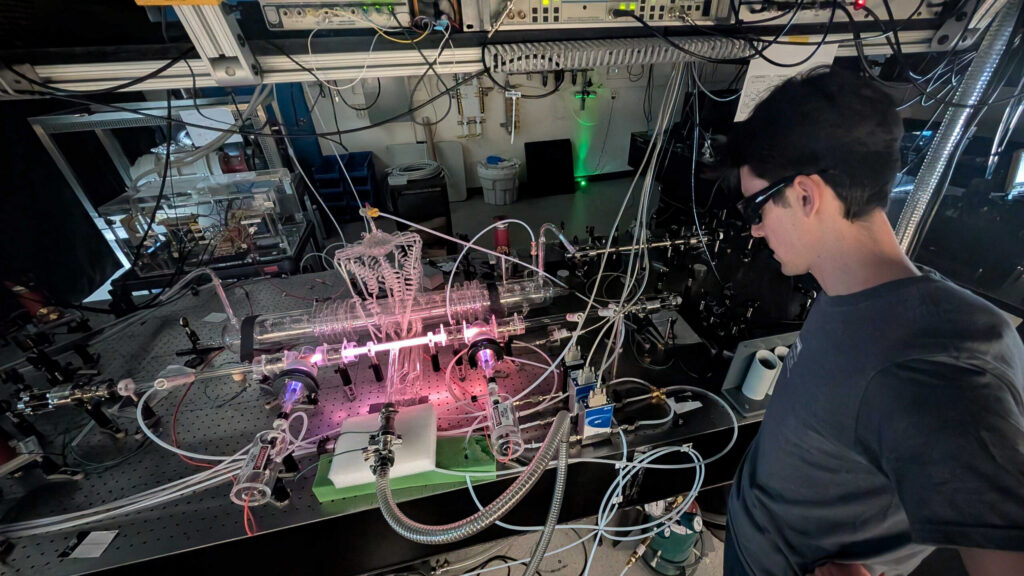
Federal science agency gives CU Boulder $37.5M to supercharge its quantum studies
Bernadette Berdychowski
bernadette.berdychowski@denvergazette.com
Updated 2 hours ago
The University of Colorado Boulder was awarded $37.5 million from a federal research agency to propel its quantum research, the U.S. National Science Foundation announced Tuesday. The school was one of eight academic institutions to receive a total of $290...
PREV
PREVIOUS

Q&A with Kevin Ross | In politics, 'be a servant first'
Is there a growing divide between rural and urban Colorado? The question arises often enough on our pages – and we put it to Eaton Mayor Kevin Ross in this week’s Q&A. Raised in agriculture and now serving as the top elected official in his rapidly growing Weld County farm community, Ross is steeped in […]

Colorado Springs-based Veterans Trauma Court marks 10th anniversary
Colorado’s first Veterans Trauma Court is celebrating its 10th anniversary this month, catering to service members with trauma spectrum or substance abuse disorders who want an alternative to incarceration. The 4th Judicial District, which covers El Paso and Teller counties, was one of the early VTC programs nationwide to work with veterans charged with lower-level […]