

American Farm Bureau chief talks trade, immigration, peaches
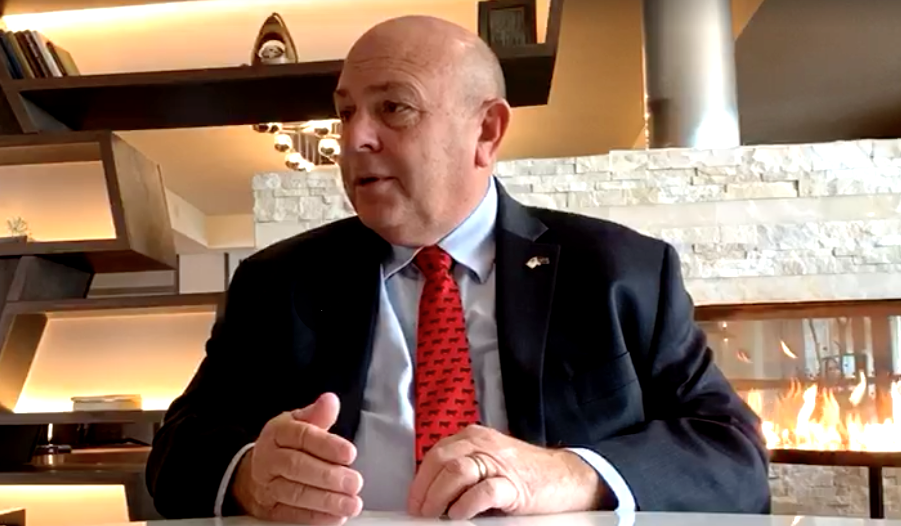
A trade deal with China could mean $40 billion for U.S. agriculture, well above the $16 billion in exports that went to China prior to the start of President Trump’s trade war with Beijing.
That’s according to Zippy Duvall, president of American Farm Bureau, who spoke Friday at Colorado Farm Bureau’s annual meeting in Denver.
On the other hand, approval of the U.S.-Mexico-Canada Agreement, the update to the North American Free Trade Agreement, is unlikely before the first of the year. Whether that agreement gets approved anytime soon is up to Congress, and as Duvall sees it, up to those in the agriculture community who he said need to put pressure on Congress to act, especially the House.
Friday, President Trump told “Fox and Friends” that Speaker of the House Nancy Pelosi, D-Calif., is refusing to bring the USMCA for a vote because of union pressure, specifically from the AFL-CIO, a claim denied by AFL-CIO chief Richard Trumka.
A negotiating session between the Trump administration and House Democrats over the USMCA took place Thursday but without an agreement reached over environmental and labor issues.
Pelosi said Thursday that a vote on USMCA is increasingly unlikely before the end of 2019.
Duvall told reporters Friday that progress is being made on the USMCA, with the U.S. Trade Representative back and forth to Capitol Hill to work with Pelosi on the agreement. “I think they’ve done a lot of work” on the USMCA and that the votes are there to pass it.
More importantly, though, Duvall, said, is that the measure pass with strong bipartisan support in the House, which will send a sign to the world that Trump can negotiate with its neighbors and that Congress is behind the American farmer.
What’s needed right now, Duvall said, is pressure on Congress from the grassroots in agriculture and from constituents to get the agreement completed and passed. If that happens, he said, the speaker “won’t be able to overlook that pressure.”
Everything is riding on the House bringing the USMCA to a vote, Duvall said. Once passed in the House, he said the Senate will act quickly.
While better trade deals have been worked out for agriculture with Korea and Japan, the U.S. is “really close” on a phase one deal with China, Duvall said, based on conversations he’s had with Secretary of Agriculture Sonny Perdue, a fellow Georgian.
Should that deal come to fruition, there are big numbers possible, even in a phase one deal, Duvall explained. At the highest point before the trade war, China was importing $16 billion to $19 billion worth of American agricultural products. “The numbers we’re hearing are in excess of $40 billion,” more than the TransPacific Partnership was worth, he said.
That does bring with it some risk, to put so many “marbles in one basket,” but “we’d love to have the opportunity to be in that position,” he said.
In the meantime, Duvall, said, through the USDA’s market facilitation program (MFP), which is providing $16 billion in payments to farmers and ranchers hurt by the trade war with China, “this president has lived up to his commitment to support rural farmers and ranchers.”
The MFP “gives us an opportunity to survive until the next crop or the next calf,” and that applies to financial institutions that hold loans to farmers and ranchers. As long as they know the payments are coming, they can hold on until the next season, too, he said.
Agriculture faces far more challenges than just trade, however. Big issues include immigration and labor, given that much of American agriculture depends so much on undocumented labor. This isn’t a new problem, Duvall said, of new people coming across the border in the last three years. Many undocumented residents who work in ag have done so for decades, he said.
One solution, albeit temporary, is an increase in agricultural guest visas, known as H2A. The Department of Labor reported that the number of those visas had reached a record high of 242,000 in 2018.
One issue is that among the tools being discussed for immigration is more stringent enforcement of E-verify. That was contained in the Immigration and Control and Reform Act of 1986, and requires employers to obtain documentation on the worker’s identity and work authorization.
However, questioning the authenticity of those documents isn’t allowed under the law and someone who questions those documents could be sued by the job applicant and the Department of Justice. The USDA even warns farmers that they must accept the documents presented by workers.
Discussions of immigration reform have included mandatory E-verify. But without a solid guest worker program in place, that’s not a solution for ag. “We need some kind of status for [undocumented workers] to stay in the U.S. and work. An America that keeps them in the shadows is not the America I grew up in,” Duvall said.
A mandatory E-verify now would strip 60% of the workforce off the farm, he said. And a recent study from American Farm Bureau said that a mandatory E-verify program would cause agricultural production to drop by $60 billion and result in price increases of 5 to 6%.
Duvall would not weigh in on which is the better – the Pueblo chile or the Hatch chile – or whether Georgia’s peaches are better than those from Palisade. “Peaches are wonderful!” he said, laughing.

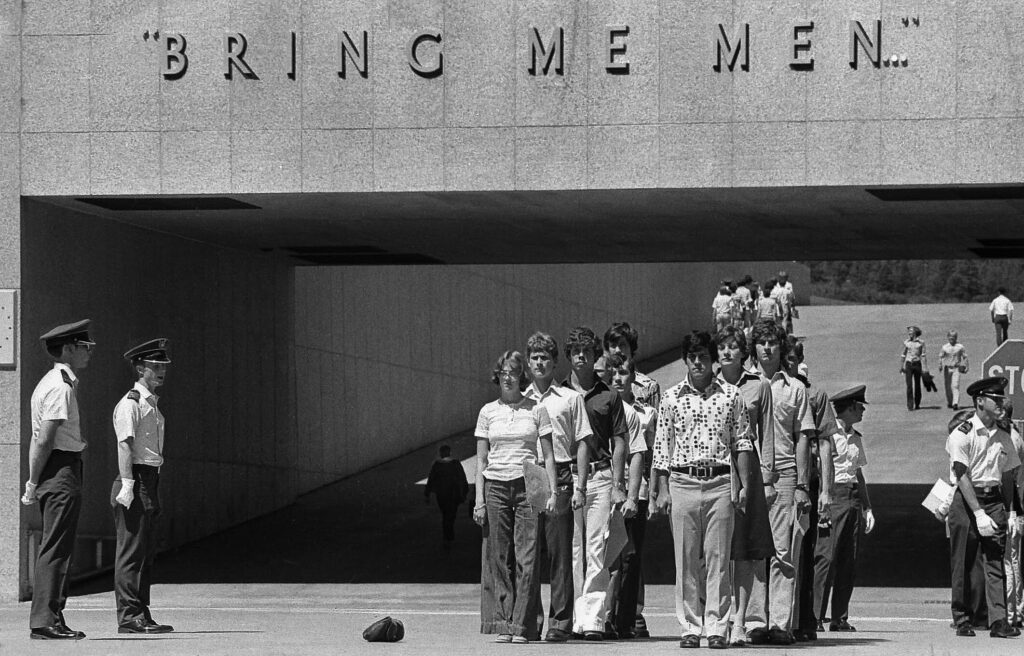
Fifty years later, women reflect on first coed class at the Air Force Academy, struggle for equality
Mary Shinn
mary-shinn@coloradopolitics.com
Updated 19 hours ago
When the first female Air Force Academy cadets arrived 50 years ago this summer, they stood in front of an enormous sign on campus that read “Bring me men.” In the shadow of that sign, Kathleen Utley Kornahrens, one of...

As Lake Powell shrinks, marinas are having to adapt to dwindling water levels | OUT WEST ROUNDUP
The Associated Press
the-associated-press@coloradopolitics.com
Updated 4 days ago
ARIZONA Reservoirs near record lows PAGE — The Colorado River’s Lake Powell, the second largest reservoir in the U.S., is shrinking. A record-dry winter and extreme heat — as well as decades of overuse, chronic drought and climate change —...

A new day? Colorado’s troubled guardianship office pursues ‘cultural reset’
Marianne Goodland
marianne.goodland@coloradopolitics.com
Updated 3 days ago
Colorado’s guardianship program, long criticized for mismanagement and high staff attrition, is undergoing a “cultural reset,” as its new director works to repair partnerships and prepare for a major expansion under recent legislation. Created by lawmakers in 2017, the Office...
U.S. Senate OKs funding bill to avoid government shutdown
Wire Services
wire-services@coloradopolitics.com
Updated 24 hours ago
Hemp provision became point of contention WASHINGTON • The U.S. Senate in an overnight vote Saturday approved a short-term measure to fund federal agencies into early December and avoid a government shutdown during the middle of campaign season. The late-summer...
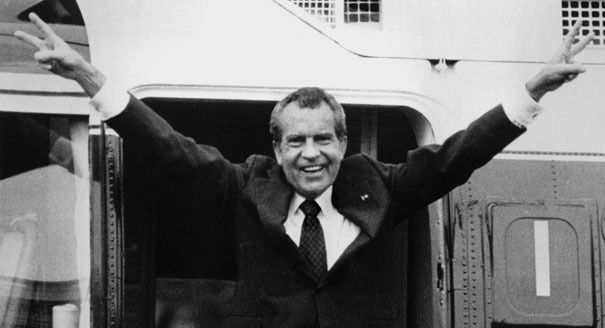
The relevance of Watergate more than a half-century later | SONDERMANN
By Eric Sondermann
by-eric-sondermann@coloradopolitics.com
Updated 4 days ago
It was the scandal for which all other scandals are now named. In June 1972, a small group of Cuban burglars with high-level connections broke into the headquarters of the Democratic National Committee. Those headquarters were located in the Watergate...
Wirth downplays Social Security disaster talk | A LOOK BACK
Rachael Wright, Special to Colorado Politics
rachael.wright@coloradopolitics.com
Updated 3 days ago
Forty-five years ago this week: “As time goes on,” said Democratic U.S. Rep. Tim Wirth, of the 2nd Congressional District, “we are finding that the safety net, which was proposed earlier this year, has some very large holes in it,”...
Colorado Politics Calendar Aug. 10-16
Rachael Wright, Special to Colorado Politics
rachael.wright@coloradopolitics.com
Updated 3 days ago
CoPo’s weekly political calendar will help you find political and public-policy events throughout Colorado. It includes candidate and issue campaign events, public policy meetings, court hearings, state and local party conventions, assemblies, debates, rallies, parades, speaking engagements, traveling dignitary appearances,...

Democratic group aims Spanish-language TV ad at Gabe Evans in Colorado’s battleground 8th CD
Ernest Luning
ernest.luning@coloradopolitics.com
Updated 2 days ago
A national group tied to House Democratic leadership launched a six-figure Spanish-language TV ad in Colorado this week targeting Republican U.S. Rep. Gabe Evans and the GOP’s signature budget legislation. The 30-second spot is part of $15 million in new...

Colorado School of Mines lands major share in Trump’s $100M mining-education plan
Thelma Grimes
thelma.grimes@coloradopolitics.com
Updated 2 days ago
President Donald Trump on Friday named the Colorado School of Mines among roughly a dozen institutions that will share in a $100 million commitment “to train the next generation of American miners.” Paul Johnson, the university’s president, said he is...
Local party leaders, incoming judge among members of judicial performance commission that violated law
Michael Karlik
michael.karlik@coloradopolitics.com
Updated 18 hours ago
A local Democratic leader and 2024 presidential elector. A legislative aide and leader in the Young Republicans. An incoming county court judge freshly appointed by the governor. They are among the eight members of the northeastern Colorado judicial performance commission...
PREV
PREVIOUS

Across borders, through detention, and into Colorado classrooms: The journey of solo children
At 15, he made the long, frightening trek across Central America and the U.S.-Mexico border with a smuggler. Then he continued on an even longer journey, in search of his father in Colorado. But what sent William into despair, and depression that pushed him to cut himself, happened in a U.S. holding center for migrant […]

Colorado congressmen ask baseball commissioner to keep minor league teams
Six of Colorado’s congressmen have written to the commissioner of Major League Baseball expressing their opposition to the proposed elimination of 42 of the 160 minor league teams. “Having access to minor league teams not only has unmatched economic benefits to the areas [outside of Denver], but they allow for families to enjoy professional baseball […]