

How do school funding and student readiness match up in Colorado?

K-12 funding in Colorado is at an all-time high, but still more than one-third of students entering higher education are ill-prepared.
Moreover, the way the state allocates tax dollars means some wealthier districts get more state dollars than schools in poorer areas.
Teachers in metro Denver earned an average of $56,621 in 2017, which is a 39% advantage over the average of $38,157 earned by teachers in southeast Colorado. Teacher turnover, however, remains among the lowest of any profession in the state: 17% compared to 48%.
Those are among the findings in a study released Wednesday called “Dollars and Data: A Look at K-12 Education Funding in Colorado” by the Common Sense Policy Roundtable, the coalition of business leaders and organizations that examine the state’s economic challenges.
The study’s authors – Dr. Brenda Bausch Dickhoner, CSPR’s education fellow, and Chris Brown, the think tank’s director of policy and research – examined trends from a decade on teach pay and funding differences across the state.
“Without a quality education, opportunity is stifled, employers can’t hire an adequate workforce, and our economy suffers,” Kristin Strohm, the roundtable’s president and CEO, said in a statement. “Unfortunately, in communities across Colorado, public schools are failing to provide the kind of quality education that prepares students to be productive members of the workforce.”
To read the full study, click here.
The report offers a foundation for a debate on educational funding issues.
“We hope this study fills a significant gap in the debate on public education,” Dickhoner said in a statement Wednesday. “By providing a clear picture of the facts, we have set the stage for an honest conversation about how we as a state can improve our education system.”
The study notes that from 2007 to 2017, the share of spending on pay for instructional staff in Colorado declined 3.5 percentage points, while spending on benefits increased by 1.5% as the state increased funding as the Public Employees Retirement Association faced a dire shortfall.



Hickenlooper lands endorsements from Elizabeth Warren, Ministerial Alliance in US Senate primary
Ernest Luning
ernest.luning@coloradopolitics.com
Updated 5 hours ago
U.S. Sen. John Hickenlooper won endorsements this week from a progressive Democratic colleague and a coalition of metro-area African American faith leaders as voting began in Colorado’s primary election. U.S. Sen. Elizabeth Warren of Massachusetts and the Greater Metro Denver...
Colorado justices say insurers may access policyholders’ medical info in denied-benefits litigation
Michael Karlik
michael.karlik@coloradopolitics.com
Updated 6 hours ago
The Colorado Supreme Court declined on Monday to expand its narrow prohibition on insurance companies accessing policyholders’ medical information, clarifying that a dispute over an insurer’s bad-faith decision to deny benefits is the only situation where a company is limited...

House District 14: Businesswoman, consultant square off in GOP primary
Mary Shinn
mary-shinn@coloradopolitics.com
Updated 8 hours ago
Firearms training company owner Ava Flanell will face Troy Vanderhule, the chief fundraising officer for Dobson Philanthropic, in the June 30 Republican primary for state House District 14, an area in northern Colorado Springs. Flanell was appointed to the seat...
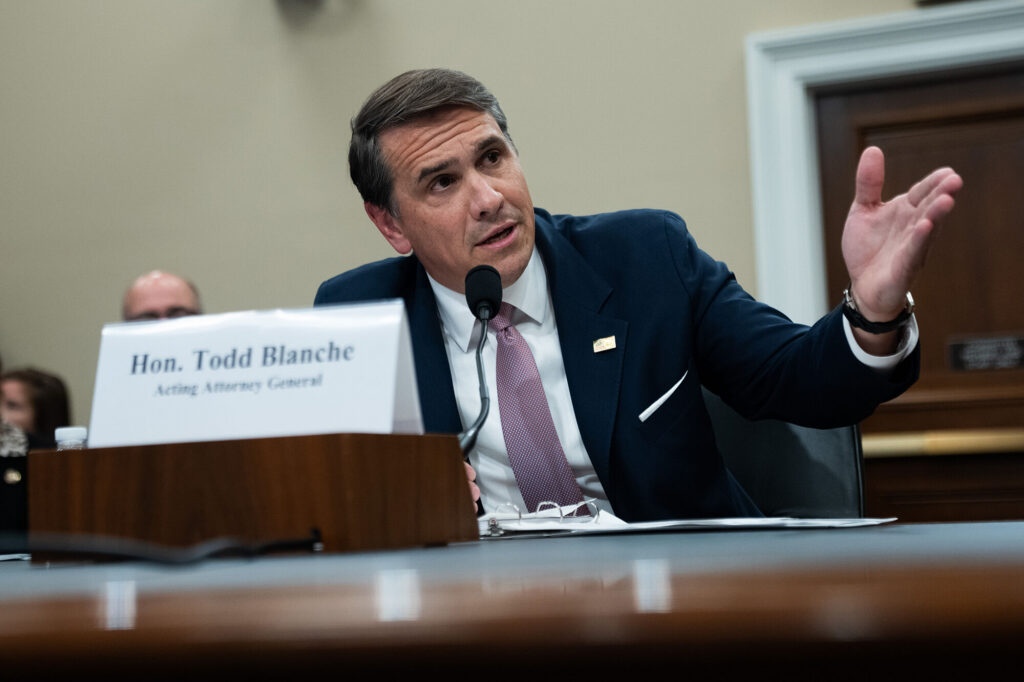
Federal judge wants Todd Blanche to swear in writing anti-weaponization fund won’t be revived
Jack Birle, Washington Examiner
jack.birle.washington.examiner@gazetteedit.wpenginepowered.com
Updated 6 hours ago
A federal judge maintained a block on the Department of Justice’s $1.776 billion anti-weaponization fund Friday, despite the DOJ claiming they have abandoned the planned fund aimed at compensating allies of President Donald Trump and others who say they were politically targeted by...

Colorado Supreme Court declines to loosen requirements for insurance company defendants
Michael Karlik
michael.karlik@coloradopolitics.com
Updated 49 minutes ago
The Colorado Supreme Court declined last week to reconsider its longstanding expectations for insurance company defendants, and agreed that an insurer failed to properly raise its defenses against a policyholder’s breach-of-contract lawsuit. When an insured driver has an accident with...

Teen defendant properly transferred from youth detention to jail, Colorado justices conclude
Michael Karlik
michael.karlik@coloradopolitics.com
Updated 11 hours ago
Colorado law required the transfer of a teenage murder suspect from youth detention to the county jail when he turned 18, the state Supreme Court ruled last week. Prosecutors have accused Issac James Lawrence of killing a younger boy and attempting to...

US is escorting 20 tankers a night through Strait of Hormuz, Burgum says, easing oil strain
Maydeen Merino, Washington Examiner
maydeen.merino.washington.examiner@gazetteedit.wpenginepowered.com
Updated 8 hours ago
The U.S. Navy is escorting ships through the Strait of Hormuz despite the threat from Iran, guiding more than 20 crude oil carriers on some nights, Interior Secretary Doug Burgum said. Some are ultra-large tankers that hold 2 million barrels...

Trump fumes over ‘fake’ peace deal terms leaked by Iran
Christian Datoc, Washington Examiner
christian.datoc.washington.examiner@gazetteedit.wpenginepowered.com
Updated 9 hours ago
President Donald Trump claimed that the ceasefire terms reported by Iranian state media on Friday were “fake news” and denied offering any monetary compensation to Tehran to secure their cooperation in ending the war. Iranian state media began circulating a...
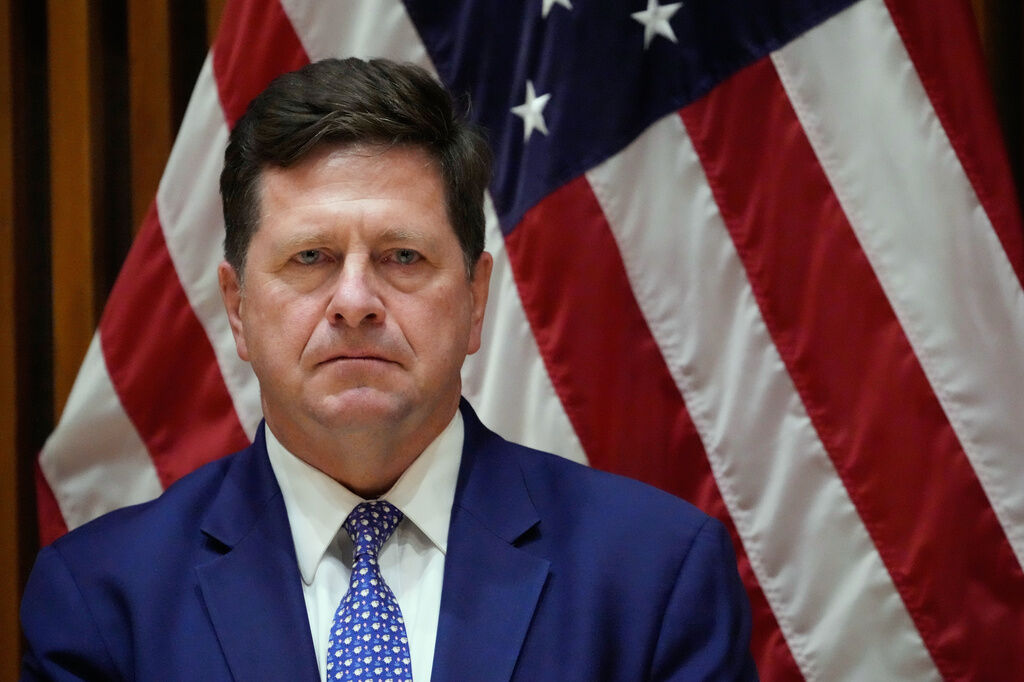
Republicans race to confirm Trump DNI pick Jay Clayton to break spy program gridlock
Hailey Bullis and Lauren Green, Washington Examiner
hailey.bullis.and.lauren.green.washington.examiner@gazetteedit.wpenginepowered.com
Updated 9 hours ago
Senate Republicans are moving quickly to vote on President Donald Trump’s pick to run the country’s intelligence agencies, underscoring the level of anxiety in Washington over a temporary lapse in the federal government’s spy powers. The Senate Intelligence Committee scheduled...

Douglas County moves to tighten rules on electric scooters, off-road vehicles
Nicholas Fogleman
nicholas.fogleman@denvergazette.com
Updated 8 hours ago
Douglas County commissioners advanced an ordinance Tuesday that would significantly expand regulation of electric scooters and off-highway vehicles, citing safety concerns and gaps in state law. The proposed measure, introduced by the Douglas County Sheriff’s Office, would raise fines for...
PREV
PREVIOUS

Window to qualify for next debate closing quickly on Bennet, other Dems
WASHINGTON – Struggling Democratic presidential candidates braced for bad news Wednesday with the window to qualify for the next debate set to close at midnight, a near impossible deadline for many to make that could doom their campaigns. Billionaire climate change activist Tom Steyer, Montana Gov. Steve Bullock, New York Sen. Kirsten Gillibrand and self-help […]

Junior Livestock Sale sets record at Colorado State Fair
Tuesday’s Junior Livestock Sale set a new record for the bid on a grand champion market steer, the Colorado State Fair announced Wednesday. Tuesday’s auction featured sales of 146 animals: rabbits, chickens, lambs, hogs, steer and goats. The top bid of $66,000 for the grand champion steer was a record, according to a statement Wednesday from […]