

Could gas-price surge spark a coal comeback in Colorado?
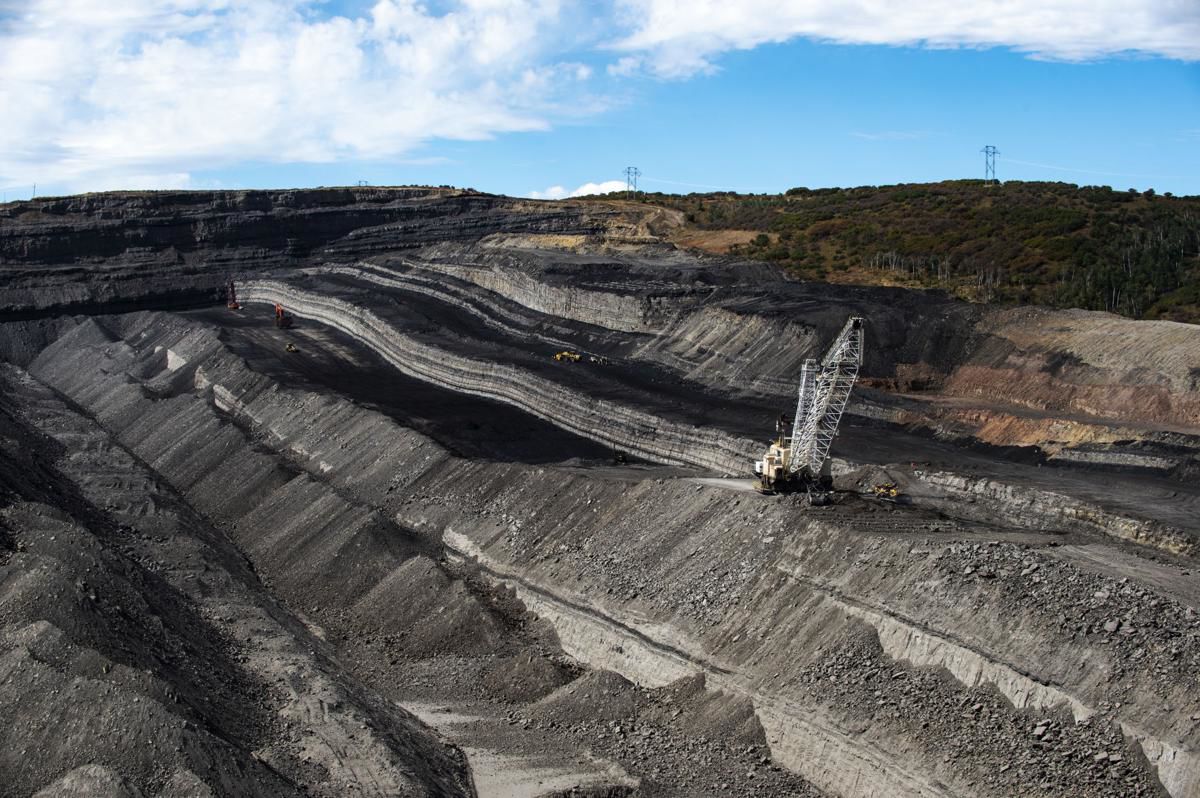
There are no new coal plants under construction or planned in the United States today, as utilities instead look to natural gas, wind, and solar. But that could change if natural gas prices rise significantly, the Trump administration argues.
Steven Winberg, the Energy Department’s assistant secretary for fossil energy, told the Washington Examiner that coal could compete in wholesale power markets that reward the lowest cost resource if gas prices more than double in the future, from their current level of below $3 per million British thermal units, or BTU.
“Looking through a crystal ball is always a dangerous thing to do, but it is our job at DOE to look out over the horizon and say, ‘What if?'” Winberg said. “What happens if natural gas prices go back up to the $6 or $7 per million [BTU] range, where they have been off and on for the last 40 years? Coal might compete handily in that market, where if the price is down around $3, coal won’t compete.”
The question has significance in Colorado, whose mines produced 15.2 million short tons of coal in 2017, the Colorado Division of Reclamation, Mining and Safety reports. It ranks 10th among the states for coal production, the U.S. Energy Information Administration says.
About half of Colorado’s coal is shipped out of state. As of October 2018, the state had six producing coal mines employing 1,153 workers.
But Colorado coal production has declined by nearly two-thirds since 2005, the Colorado Energy Office says, largely because of competition from cheap natural gas, environmental regulations, costs associated with producing coal and growing consumer demand for clean energy. Colorado-based Westmoreland Coal Co., one of the nation’s oldest coal producers, filed for bankruptcy protection last October.
Coal remains an important fuel for power production in Colorado; it accounted for 55 percent of the state’s electricity generation in 2016, the Energy Office says. But Xcel Energy, Colorado’s largest power utility, has been steadily reducing its use of coal at power plants in Colorado and elsewhere, and has announced a commitment to deliver 100 percent carbon-free energy by 2050.
Colorado ranks fifth in the nation for production of natural gas. And new Gov. Jared Polis has set a goal of producing 100 percent of Colorado’s electricity from renewable sources — wind and solar — by 2040.
In any event, energy experts and research agencies, not to mention utilities themselves, consider the prospect of significantly higher gas prices unlikely, with the shale boom showing no signs of slowing and gas now America’s top electricity source.
Utilities planning futures without coal are unconvinced by the Energy Department’s latest argument, which is part of the Trump administration’s multi-pronged effort to help the fading fuel source.
Candidate Donald Trump won big in coal states in 2016 with his pledge to end the federal “war on coal.”
But utilities increasingly prefer natural gas and renewables, not only because they are cheaper, but also because they are easier to approve as the public demands cleaner energy.
“There would have to be a very significant change in the long-term outlook for natural gas – supply or price – to support construction of new coal-fueled generation,” Melissa McHenry, a spokeswoman for Ohio-based American Electric Power, one of the nation’s largest utilities, told the Washington Examiner.
Southwestern Electric Power Co., a subsidiary of American Electric Power, built the last new coal plant in the U.S., which went online in 2012.
The 600-megawatt Turk Plant, based in Fulton, Ark., is the first “ultra-super-critical” coal plant in the U.S., meaning it runs more efficiently and uses less energy, producing fewer emissions.
But McHenry said American Electric Power has “no current plans” to build any future coal plants.
Other utilities besides Xcel are planning without coal.
Asked about the outlook for coal if natural gas prices rise, Schuyler Baehman, a spokesman for Atlanta-based utility Southern Company, touted a recent proposal by one of its subsidiaries, Georgia Power, to shut down one gigawatt of coal generation, swapping it out with a more than equal amount of renewable energy.
“The pathway for new coal construction is difficult to make out,” Scott Segal, an attorney with the firm Bracewell who represents utilities that run coal plants, told the Washington Examiner.
Still, the Energy Department’s warning that gas prices could soar cannot be totally discounted.
The Energy Information Administration, in its annual outlook released last month, projected that gas prices will rise slowly due to increased domestic demand and new export markets for liquefied natural gas.
However, the projected rise is modest, with EIA predicting prices will remain lower than $4 per million BTU through 2035 and less than $5 per million BTU through 2050 because of a continued increase in U.S. production, especially in the Permian Basin, which straddles Texas and New Mexico.
The price stability of natural gas was demonstrated during the deep freeze that overtook the Midwest and East Coast in late January. Despite record demand for natural gas during the cold stretch, prices stayed low.
“There is no feasible constraint to the amount of natural gas available in the market,” Dean Foreman, chief economist of the American Petroleum Institute, told the Washington Examiner. “That has taken the air out of arguments against gas’ resilience.”
There is a higher potential for gas prices to rise in areas such as the Northeast, where there is a shortage of pipelines to deliver it, experts say. But politicians in those regions, especially Democrats in New York, are hostile to fossil fuels – having moved to block pipelines – and unlikely to support new coal development.
“There is no reason to believe that, having opposed gas pipelines largely for environmental reasons, politics in those places would be in any respect more open to coal,” said Travis Kavulla, director of energy and environment at R Street Institute.
Some in the energy market worry about a different risk, that the booming demand for natural gas abroad could increase domestic prices.
The Industrial Energy Consumers of America, which represents electricity users such as DuPont and Dow Chemical, released a report in January warning that liquified natural gas (LNG) exports will double in a year. LNG is the chilled, liquid form to which gas must be converted for shipment in giant tanker vessels across the sea.
Investment in U.S. LNG export terminals has skyrocketed in recent years, with more than a dozen proposed facilities slated to be reviewed by the Federal Energy Regulatory Commission.
“LNG exports create winners and losers,” the Industrial Energy Consumers of America report said. “The winners are the producers and exporters of natural gas. The losers are consumers and the economy.”
Foreman of the American Petroleum Institute argues the U.S. is producing so much gas it can’t consume it all alone.
“Everyone is sensitive to that argument, but the gas being exported is new, incremental production that is not needed domestically,” he said. “That is not cannibalizing the domestic market.”
The Trump administration is not leaving it to markets to revive coal.
Trump’s Environmental Protection Agency has moved to weaken regulations on emissions of existing and new coal plants, reducing burdens to keep old plants running and lowering the costs to build new ones.
The Energy Department is funding research into a “next generation” of coal plants that would be smaller and more efficient. It is supporting technology to capture and store carbon emissions from coal plants, aiming to help reduce its cost.
The administration has also pushed for reforms in energy markets so resources such as coal and nuclear can be paid more, and kept alive, because of their ability to store fuel on site, which the administration sees as crucial backup for disruptive extreme weather events because gas is dependent on pipelines and wind and solar vary depending on how windy and sunny conditions are.
The coal industry is more hopeful about electricity market reforms than rising natural gas prices.
“If there was a floor on how many fuel-secure resources a market must have, that would dictate the reason to build a new coal plant more so than natural gas prices,” Michelle Bloodworth, president and CEO of American Coalition for Clean Coal Electricity, told the Washington Examiner.
“The decision to build a coal plant could change in the future because of these discussions around reliability, resilience, and fuel security,” she said.
Colorado Politics contributed.


Colorado to participate in Great American State Fair in Washington
Marissa Ventrelli
marissa.ventrelli@coloradopolitics.com
Updated 17 hours ago
Visitors to Washington, D.C., for the country’s 250th anniversary will have the opportunity to learn about Colorado’s natural beauty and culture during the Great American State Fair, a World’s Fair-style event that opened Thursday at the National Mall. While all...
Colorado health officials say federal budget adds pressure to already stressed system
Marissa Ventrelli
marissa.ventrelli@coloradopolitics.com
Updated 17 hours ago
As the first anniversary of H.R. 1 approaches, Colorado Democrats and hospital executives say the law’s Medicaid reductions and eligibility rules are accelerating financial stress in a system where many facilities were already operating on the brink. Signed by President...

Phil Weiser leading Michael Bennet in Colorado’s Democratic gubernatorial primary, internal poll finds
Ernest Luning
ernest.luning@coloradopolitics.com
Updated 12 hours ago
Attorney General Phil Weiser holds a lead over U.S. Sen. Michael Bennet among likely voters less than a week before ballots are due in Colorado’s Democratic gubernatorial primary, according to a new poll released Thursday by a group backing Weiser....

Colorado justices suggest father entitled to appeal of custody decision
Michael Karlik
michael.karlik@coloradopolitics.com
Updated 19 hours ago
Members of the Colorado Supreme Court signaled strongly on Tuesday that a father deserved some avenue for challenging a temporary child custody order that no lower court believed it could review due to the unusual circumstances of the case. Because...

Court snuffs out challenge to Denver’s flavored tobacco ban
Deborah Grigsby
deborah.smith@denvergazette.com
Updated 3 minutes ago
The smoke finally cleared in Denver’s battle over a citywide ban on flavored tobacco products when a Denver court dismissed a challenge from local vape shop owners seeking to declare the ordinance unconstitutional and block its enforcement. On Wednesday, Denver...
Colorado justices agree fraud claims belong in corporate dispute
Michael Karlik
michael.karlik@coloradopolitics.com
Updated 21 hours ago
The Colorado Supreme Court decided on Tuesday that a corporate plaintiff validly pursued fraud claims over conduct that was not covered by a contract or by a set of interrelated business agreements leading up to the contract. Previously, the Court...

Colorado Supreme Court says intimate messages irrelevant to assault case
Michael Karlik
michael.karlik@coloradopolitics.com
Updated 23 hours ago
The Colorado Supreme Court decided on Tuesday that a Douglas County judge acted reasonably by blocking evidence of a defendant’s BDSM-related conversations with the victim in his trial for assault and false imprisonment. While the Court of Appeals believed that...

Postmaster general spars with Senate Democrats over mail-in ballot restrictions
Molly Parks
molly.parks@washingtonexaminer.com
Updated 23 hours ago
Senate Democrats sparred with Postmaster General David Steiner on Wednesday over the U.S. Postal Service’s move to stop delivering mail-in ballots in states that don’t hand over their voter rolls to the federal government. Steiner, who has stayed out of...
Douglas County water plan entering public review phase
Nicholas Fogleman
nicholas.fogleman@denvergazette.com
Updated 21 hours ago
After more than two years of formal work, Douglas County officials are moving into the public review phase of a countywide water plan they say will help guide future development and water resources through 2050. The Douglas County Water Commission...

Douglas County cracks down on illegal scooter, off-road vehicle use
Nicholas Fogleman
nicholas.fogleman@denvergazette.com
Updated 21 hours ago
Douglas County joined a growing list of local governments regulating electric scooters and motorcycles, setting standards and penalties for misuse. County commissioners approved an ordinance Tuesday regulating off-highway vehicles and low-powered scooters following broad community support and a presentation from...
PREV
PREVIOUS

Colorado Senate committee OKs rules on driver cellphone use
A bill that will require motorists to keep their hands on the wheel and not on their cellphone won unanimous approval from the Colorado Senate Transportation and Energy Committee on Thursday. Democratic Sen. Lois Court of Denver rewrote Senate Bill 12 in between its first committee hearing on Jan. 24 and its final committee vote […]

Colorado AG Weiser won't oppose $1.9M exoneration claim
Colorado’s attorney general will not fight a claim for $1.9 million in compensation filed by a man who spent 28 years in prison for a rape conviction that was later overturned. Attorney General Phil Weiser announced his decision Thursday. Clarence Moses-EL is seeking the compensation under Colorado’s Exoneration Act. The law provides $70,000 for each […]