

Safe-haven bill on newborns gets new life from Colorado Senate ‘kill’ committee

A bill that originally required that schools provide “safe haven” information on dealing with unwanted newborns as part of the state’s comprehensive sex education program won a reprieve late Wednesday from the Senate State, Veterans and Military Affairs Committee.
Senate Bill 25 is sponsored by Republican Sen. Jim Smallwood of Parker. As introduced, the bill would require that public schools provide information on the state’s safe-haven law. That law, which has been in place since 2000, allows a parent to relinquish a newborn of 72 hours old or less to an employee of a hospital or fire station.
But the bill got tangled up in the state affairs committee last week over a request by the committee’s chair, Democratic Sen. Mike Foote of Lafayette. The hold up was whether the safe-haven information would be part of another bill, awaiting its first hearing in the House, that also deals with the state’s comprehensive sex education program.
But Wednesday night, the safe haven bill won a rare 5-0 vote from the state affairs committee, normally the Senate’s “kill” committee.
Between the bill’s first hearing last week and Wednesday, the issue was resolved and Smallwood asked that the information be added to the public school’s general health education curriculum.
If it winds up in sex education and general health education, that’s fine, Smallwood told Colorado Politics.
Despite claims by Republicans both inside and outside the Capitol that Democrats were opposed to safe-haven information, Democratic lawmakers in both chambers have told Colorado Politics that they never objected to including it wherever appropriate.
In the House, Democratic Rep. Susan Lontine of Denver has said she plans to amend her bill — which deals with changes to the state’s comprehensive sex education curriculum — to include the safe-haven information.
RELATED: Bill would ban abstinence-only education in Colorado schools
Wednesday, Senate Bill 25 was amended to put the safe-haven information into general health education curriculum, along with a caveat that the information does not have to be presented twice in schools that offer both general health education and the comprehensive sex education curriculum.
Both programs are voluntary and not required by the state.
Lontine’s bill — House Bill 1032 — is scheduled for its first hearing on Jan. 30 in the House Health & Insurance Committee, which Lontine chairs.



Trump lowers flags to half-staff for Dolly Parton: ‘The World loves you’
Naomi Lim
naomi-lim@coloradopolitics.com
Updated 2 hours ago
President Donald Trump is honoring the life of country music legend and philanthropist Dolly Parton by ordering federal buildings across the country to lower flags to half-staff for a week. “Very sad to report that Dolly Parton, one of the...
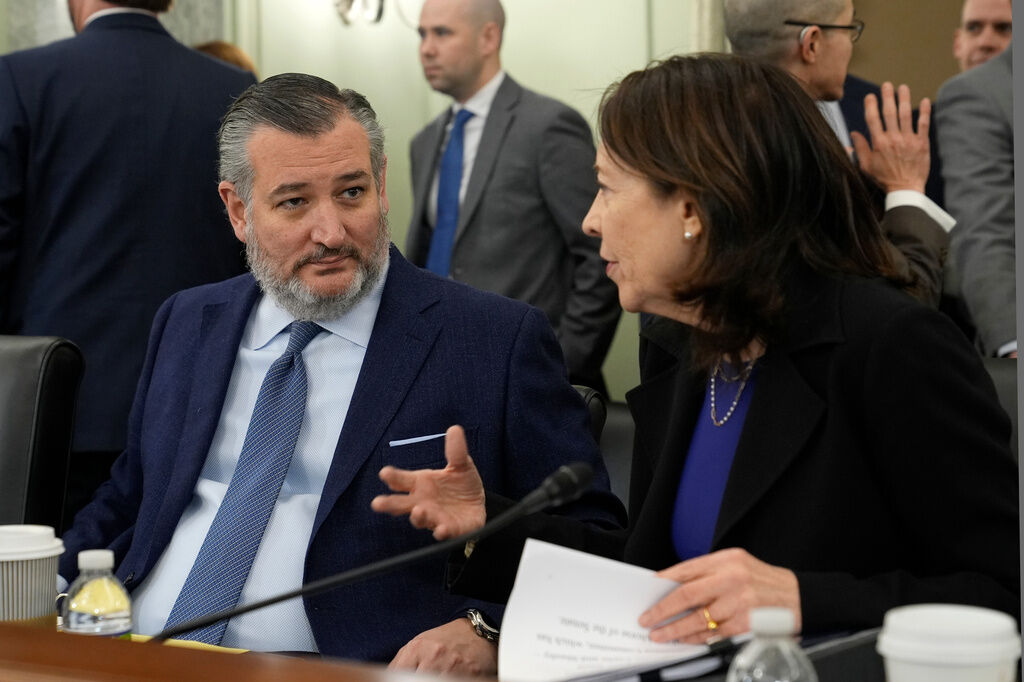
Ted Cruz suggests GOP realignment coming after Trump leaves office
Emily Hallas
emily-hallas@coloradopolitics.com
Updated 2 hours ago
Sen. Ted Cruz (R-TX) on Monday suggested the Republican Party could embrace a directional shift after President Donald Trump leaves office, a transition that promises to leave a gaping hole in the GOP. Cruz is known as a critical ally...
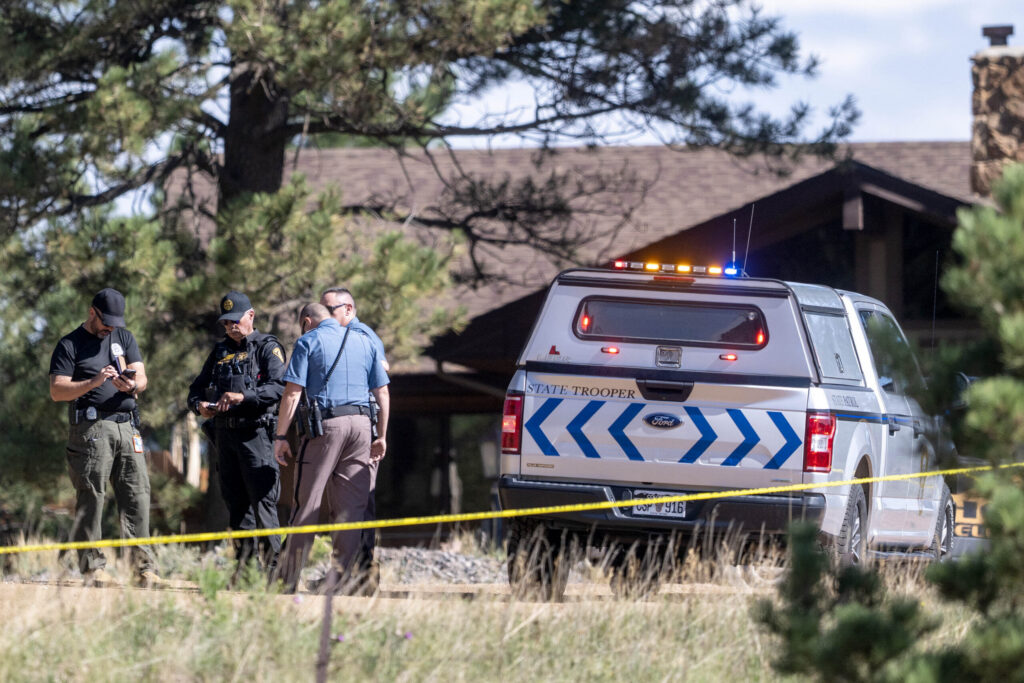
2 Colorado State troopers shot near Woodland Park; suspect killed
DEBBIE KELLEY
debbie-kelley@coloradopolitics.com
Updated 2 hours ago
Two Colorado State Patrol troopers were hospitalized, and a suspect is dead after a shooting during a traffic stop Tuesday. The initial incident happened at about 7:15 a.m., when a resident reported suspicious activity in the area near milepost 286...

Aurora moves forward with data center regulations
Kyla Pearce
kyla.pearce@gazette.com
Updated 2 hours ago
The Aurora City Council approved moving forward with two new regulations on data centers and directed staff to come back at the next study session with others. At a council meeting in early August, council members directed city management to...

Aurora City Council considers stricter food truck regulations
Kyla Pearce
kyla.pearce@gazette.com
Updated 2 hours ago
The Aurora City Council is considering passing laws to limit the number of food trucks on properties in the city and how and when they operate. Councilmember Angela Lawson, who sponsored the ordinance, said she understands the importance of food...
Denver murder conviction reversed for incomplete self-defense instruction
Michael Karlik
michael.karlik@coloradopolitics.com
Updated 39 seconds ago
Colorado’s second-highest court reversed a defendant’s murder conviction last week because a Denver judge gave an incomplete instruction to the jury about the man’s right to self-defense. Donald R. Gonzales and Gary McLaughlin met up in a Capitol Hill parking...
Colorado lawmaker, House leaders named in workplace-retaliation lawsuit
Marianne Goodland
marianne.goodland@coloradopolitics.com
Updated 3 hours ago
A former legislative aide has filed a lawsuit alleging she was mistreated, illegally directed to perform campaign work and harmed by a House leadership structure she charged was fragmented, politicized and ineffective at protecting employees. The lawsuit, filed by Jennifer...

Secret Service confirms awareness of Iranian state media video threatening Barron Trump’s life
The Associated Press
the-associated-press@coloradopolitics.com
Updated 8 hours ago
WASHINGTON (AP) — The U.S. Secret Service has confirmed it is aware that Iranian state media has aired a video that appears to threaten the life of Barron Trump, President Donald Trump’s youngest son. “The U.S. Secret Service is aware...

Federal judge hears arguments about Colorado’s 3-day gun purchase waiting period
Michael Karlik
michael.karlik@coloradopolitics.com
Updated 7 hours ago
A federal judge heard arguments on Monday about the constitutionality of a 2023 Colorado law that generally imposes a three-day waiting period on firearm purchases after the initiation of a background check. The test that the U.S. Supreme Court created...

Denver auditor finds oversight failures in $175.6M 16th Street project
Nico Brambila
nico.brambila@denvergazette.com
Updated 2 hours ago
Surprise historic sewer discovery delayed completion a year, cost $18M The Denver Auditor recently found significant oversight and contracting problems with the $175.6 million 16th Street Improvement Project, including an $18 million contract increase and a nearly one-year extension that...
PREV
PREVIOUS

Fight over bid to strip school-choice provision from foster-kids bus law
Senate Republicans Wednesday mounted a furious effort to amend a bill that would strip out what’s viewed as school-choice language from a 2018 law that pays for foster children to be transported to their original schools when they’re uprooted from one home to another. Update: Thursday, the Senate voted 19-16 along party lines to advance […]

Colorado House panel OKs bill to treat autism with medical marijuana
A bill that would allow autism to be treated with medical marijuana, similar to the one vetoed last year by then-Gov. John Hickenlooper, is one step closer to the desk of Gov. Jared Polis, who has promised to sign it. House Bill 19-1028, sponsored by Democratic Rep. Edie Hooton of Boulder and Republican Rep. Kim […]