

Q&A with Dick Wadhams | The political grand master channels Walt Klein: ‘Voters have to like you before they’ll listen to you’

For once, Dick Wadhams had a wound that wasn’t inflicted by his adversaries. The legendary Republican political strategist, two-time Colorado GOP state chair, decades-long veteran of campaign combat and, when needed, bare-knuckled brawler was taking his usual walk along a lake near his house the other day when he slipped on some ice. He fell and broke his arm.
Plenty of longtime Democratic operatives may have wished they could take credit, as Wadhams acknowledged with a chuckle. But the weather was the only culprit.
It didn’t even hurt all that much: “The only real problem is my hand is so swollen, I can’t type.” So, he’d need a little help with today’s Q&A – usually conducted via email – and we were happy to oblige by taking dictation.
Wadhams, of course, has myriad devoted fans, too, especially in Republican ranks. Count among them Republican former U.S. Sen. Wayne Allard and Republican former Gov. Bill Owens – the most recent member of the GOP to hold that post and the only one to do so since 1975 – both of whom owe some of their success to Wadhams. And that’s just in Colorado. Among his victories elsewhere in the country was the 2004 upset victory of South Dakota Republican John Thune over that state’s Democratic U.S. Sen. Tom Daschle, who was the U.S. Senate’s minority leader at the time.
But even those who may be less enamored of Wadhams – and still have battle scars from the blows his campaigns dealt them – will acknowledge he has a lot of insight to share about the realities of the ground game in Colorado. Some of the sobering advice he offers – about what makes for a successful campaign and a winning candidate – doesn’t necessarily square with the sensibilities of even some fellow Republicans. Then again, Wadhams didn’t get into the business to flatter politicos or make them comfortable; he got in to win or go down fighting.
Colorado Politics: Q&A periodically asks its subjects whether Colorado is trending from purple to blue and when, or if, it’ll swing red again. But you threw a wrench in the political pendulum not too long ago when you observed, in remarks at a GOP gathering, “…this has never been a Republican bastion … When a Republican wins election in Colorado … it’s a game of inches.” Is that troubling or reassuring for your party – or both – and what does it portend for Republicans over the long haul?
Dick Wadhams: Colorado always has been a very dynamic state with a lot of people moving here. All you have to do is look back at statewide elections for governor and U.S. senator to show how competitive Colorado has been. It really has been competitive going back for decades. In 2007, when Dems were awarded the Democratic National Convention (in Denver), the national media said the Democrats were finally coming back and were going to make Colorado a competitive state again. I wondered which state they were talking about.
From 1960 to 1970, Republicans won every election for U.S. senator and governor. It was truly a Republican era in Colorado. But then in 1972 a three-term Republican U.S. senator, Gordon Allott, was upset for re-eelection. In 1974 the bottom fell out with the resignation of Richard Nixon. It was really an annihilation. That’s when Colorado truly became a competitive state. Democrats ever since then actually have been better at winning elections for U.S. senator and governor, except from 1996 to 2002, when Republicans won all five elections for U.S. senator and governor. Starting in 2004 and up to the present time, it has been a very Democratic period. There have been eight races for governor and senator, and we’ve only won one.
Dick Wadhams
Only Bill Armstrong’s re-election in 1984 was over before it started. The Democrats never even put up a serious candidate. (The same was true of) 2002, when Gov.. Owens was so popular going into re-election. Those were the only two elections since 1972 that I can say were foregone conclusions for Republicans.
Republican candidates should take a hard looks at people like Sen. Allard, Gov. Owens and (current Republican U.S.) Sen. Cory Gardner for how to win a statewide race and win in Colorado. They ran campaigns with very clear agendas that could not only win a primary but also could win a general election. Owens ran to cut taxes, reform education, and to improve transportation. Owens always talked about how African-American and Hispanic kids are the ones who really were getting shortchanged by mediocre schools. He talked about the education opportunities he wanted to provide minority children. That defined an issue that really goes into the state’s Hispanic community. He got the endorsement of three Democratic legislators. We’ve seen how you win and how you lose as a Republican in Colorado. Cory Gardner ran a positive, upbeat campaign.
(2016 Republican U.S. Senate candidate and El Paso County Commissioner) Darryl Glenn ran as an in-your-face, constitutional Christian conservative – and the moment he won the primary, he was done. There’s no way he was going to win on that platform in a competitive state like Colorado.
CP: Colorado recently lost Republican former state state Sen. Ken Kester of Las Animas, an old friend of yours who was much loved on both sides of the aisle. He was a political centrist but maybe more to the point, he was always kind and often very funny. Your successful candidate and sometime boss, Republican former U.S. Sen. Wayne Allard was a similarly nice guy – a veterinarian who loved animals! – who was roundly liked in the state even though in his case his politics was decidedly conservative. Is success in a place like Colorado, with its huge bloc of unaffiliated voters, as much about a candidate’s affable personality as his or her politics?
Wadhams: One of the first things I learned from (longtime Colorado Republican political consultant) Walt Klein is Colorado voters need to like you before they’ll listen to you. Wayne Allard was so naturally likable. He seemed like the guy you’d like to have as your neighbor or your friend. So when they attacked him as anti-woman, it just wasn’t believeable. I think Owens conveyed the same thing. Likewise Cory Gardner.
I also think Republicans too often look at the media as our enemy. I’ve always appreciated and respected the fact that reporters and campaigns have an adversarial relationship because it’s not reporters’ job to elect candidates. I think Republicans who have been successful have had a good relationship with the media and know how to talk to the media. Republicans who have won over the years have gotten a fair shake. I’ve enjoyed working with reporters and have had my wars with reporters when I thought they were being unfair, but it’s a mistake to treat them as the enemy.
CP: To the extent that policy does matter, what tough policy choices does the Republican Party have to make on divisive issues – on immigration? On race and culture? On trade? On social issues? – to stay viable.
Wadhams: I think there is an increasing anxiety among all voters about sanctuary cities – yet the face of the GOP over the last 15 years on this issue was Tom Tancredo, who took such a hard line on Hispanic immigrants. When he talked about what motivated him to get into the governor’s race (last year) was the cancellation of the VDARE gathering in Colorado Springs – it’s a white supremacist organization – that’s the kind of stuff that taints Republicans.
Sure, Democrats have their own problems. This notion that the federal government has no role in immigration in a state is ridiculous. But Republicans have to take a much more responsible position than just shutting down immigration. It’s responsible to say we oppose chain migration, but to want to deport kids who grew up here, that’s a loser. I think Cory Gardner is taking the right course with his work (in shaping up legislation in the U.S. Senate) on DACA.
On abortion, Owens, Allard and Gardner all were very clear about their stance – but they also made it clear that’s not why they were running. I do not think pro-life Republcians should abandon their prinsiples. It’s more a matter of how they talk about it. We’ve shown pro-life Republicans can be elected in Colorado.
That was the problem with Darryl Glenn; he came across as threatening to pro-choice women who wanted to vote Republican.
Republicans have to take a much more responsible position than just shutting down immigration. It’s responsible to say we oppose chain migration, but to want to deport kids who grew up here, that’s a loser.
CP: Who’s the most effective candidate you ever ran? What was your most challenging race?
Wadhams: Owens, Allard and Sen. John Thune in South Dakota. Thune got up off the mat after losing (a previous race) and decided to challenge Sen. Daschle. Just to watch him have the courage to run – there were very few people who thought he could win.
The standard by which I judge is my late, great friend and mentor (Colorado U.S. Sen.) Bill Armstrong. He was the epitome of showing how a Republican could win. He unseated a Democratic incumbent in 1978. You could not find a more conservative Republican, but he conveyed it in such a Main Street Colorado way. He was a great speaker. He was very personable. But it was the way he took national issues – cutting taxes, national defense – and made them Main Street Colorado issues voters could relate to. I think that’s what made him different from what we’d seen before that. You can see vestiges of Armstrong in Cory Gardner.
CP: If you had a time machine, what race would you run differently – or opt not to run at all?
Wadhams: I’ve never had a regret about running a campaign in terms of those that were not successful. You try to make the best decisions. One of the campaigns of which I’m most proud – and it was one that was not successful – was for Terry Considerine in the 1992 U.S Senate race. When the first polls came out early that September, Terry was 35 points behind. We put together a campaign looking at (then Democratic, later Republican) Congressman (Ben Nighthorse) Campbells’ voting record, and we closed that gap to a tie. 1992 was a bad year for Republicans, yet Terry was a great candidate. He never blinked. We pulled off almost a miracle. Terry would have been a great senator.
I got to be good friends with Sen. Campbell. I was glad when he became a Republican.
CP: You have been vilified and savaged; tarred, feathered and burned in effigy by assorted critics of every stripe who’ve accused you (fairly or otherwise) of wide-ranging diabolical tactics. Heck, you’re even friends with Karl Rove! Yet, behind the scenes among the press corps – for the most part – you have been among the best-liked, most sought out sources on Colorado’s political scene for a very long time. Which is the real Dick Wadhams, or is it a Jekyll-and-Hyde thing?
Wadhams: I believe in running campaigns with very sharp contrasts, but they’ve also been very open. There are no secrets. We just try to provide the clearest contrast possible with Democratic opponents. Democrats have run some pretty tough campaigns over the years, as well. I always felt that when Republicans started hitting back as hard as they hit, (Democrats) didn’t like it. I have no apologies to make about the campaigns we ran for Owens, or Allard or whomever. Those were tough races with tough oppoents. You need to give voters a clear choice.
When I was state chair after running all those races, it was at a very tumultuous time. That was the era the Tea Party. Republicans had lost control of the state Senate and House; there was the loss of the U.S. Senate seat to (Ken) Salazar. Still, in 2010, we were able to unseat two Democratic candidates for Congress, and we also won the Colorado House of Representatives that year. We lost the governor’s race and the U.S. Senate seat, but there was a lot down-ballot that we won.
CP: Care to handicap the Democratic field at this point in the 2018 guv’s race?
Wadhams: I still think (Democratic 2nd Congressional District U.S. Rep.) Jared Polis is the frontrunner; he’s where the Democratic Party is at. But there have been signs that (former state Treasurer Cary) Kennedy and (former state Sen. Michael) Johnston are very formidable as well. The Democratic primary is going to be more interesting than I thought a few months ago. I still think Polis is the odds-on favorite to win the Democratic nomination, but he’s also going to be the toughest for the Dems to elect in the general. He’s too far to the left.

Colorado Politics Calendar Aug. 3-9
Rachael Wright, Special to Colorado Politics
rachael.wright@coloradopolitics.com
Updated 3 days ago
CoPo’s weekly political calendar will help you find political and public-policy events throughout Colorado. It includes candidate and issue campaign events, public policy meetings, court hearings, state and local party conventions, assemblies, debates, rallies, parades, speaking engagements, traveling dignitary appearances,...
The primary political reform and precondition for all others | SONDERMANN
Eric Sondermann
eric-sondermann@coloradopolitics.com
Updated 3 days ago
In its current state, the American political system has no end of ailments. Far too many factors accelerate polarization and work against moderation and narrowing the differences. Media, and the way so many citizens limit themselves to agreeable, reinforcing sources,...
Susemihl wins surprise victory to replace Steve Durham as Colorado Springs state senator | A LOOK BACK
Rachael Wright, Special to Colorado Politics
rachael.wright@coloradopolitics.com
Updated 3 days ago
Forty-five years ago this week: In a closed session, the vacancy committee for Colorado’s Senate District 12 selected attorney Peter Susemihl to complete Sen. Steve Durham’s, R-Colorado Springs, term. Durham resigned his seat to become Region 8 Director of the...

10th Circuit partially revives lawsuit over 2020 Denver protest injuries
Michael Karlik
michael.karlik@coloradopolitics.com
Updated 1 day ago
The Colorado-based federal appeals court revived a man’s claims against Denver on Friday after concluding a trial judge resolved the case in the city’s favor without analyzing two of the three instances of alleged excessive force and other constitutional violations....
At conservative summit, Colorado Republican leaders concede Democrats’ election edge
Marissa Ventrelli
marissa.ventrelli@coloradopolitics.com
Updated 8 hours ago
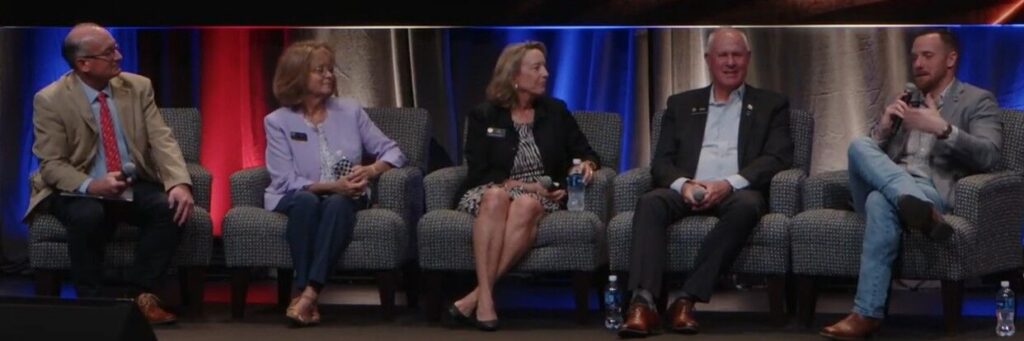
Four Republican state lawmakers told attendees at a gathering of conservative leaders on Friday they doubt their party can win statewide races, noting that Colorado’s electorate has been shifting toward Democrats but adding they see an opening in several pockets....
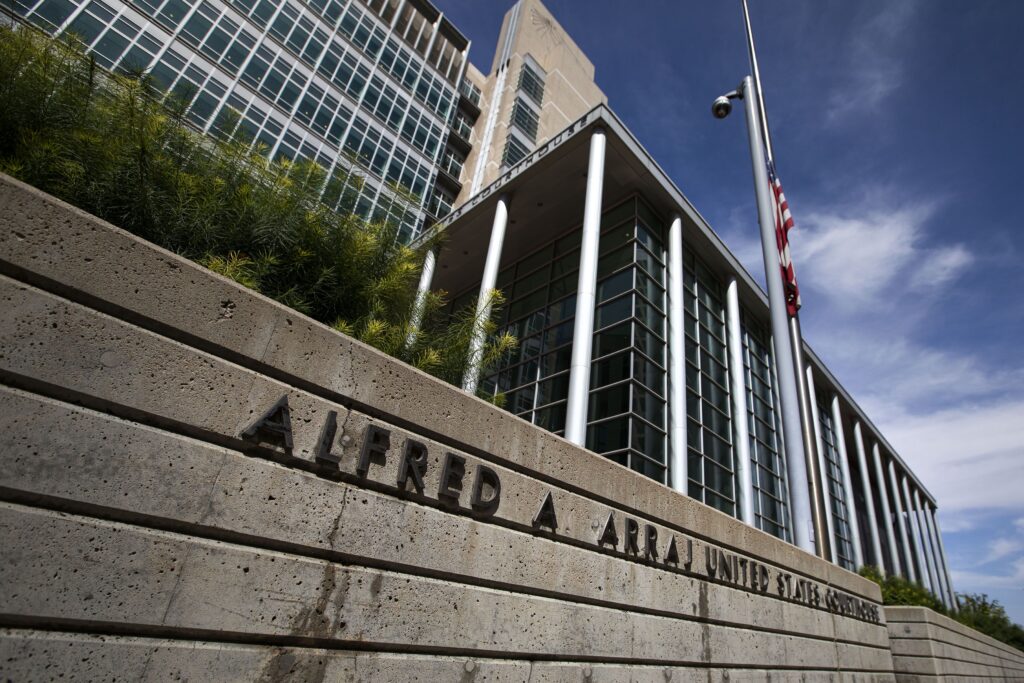
Federal judges find Colorado immigration judge violated several orders
Michael Karlik
michael.karlik@coloradopolitics.com
Updated 1 hour ago
Multiple federal judges in Colorado have freed people from immigration custody after determining that one immigration judge violated their directives for properly conducting bond hearings. For nearly a year, Colorado’s U.S. District Court has faced a flood of habeas corpus petitions...
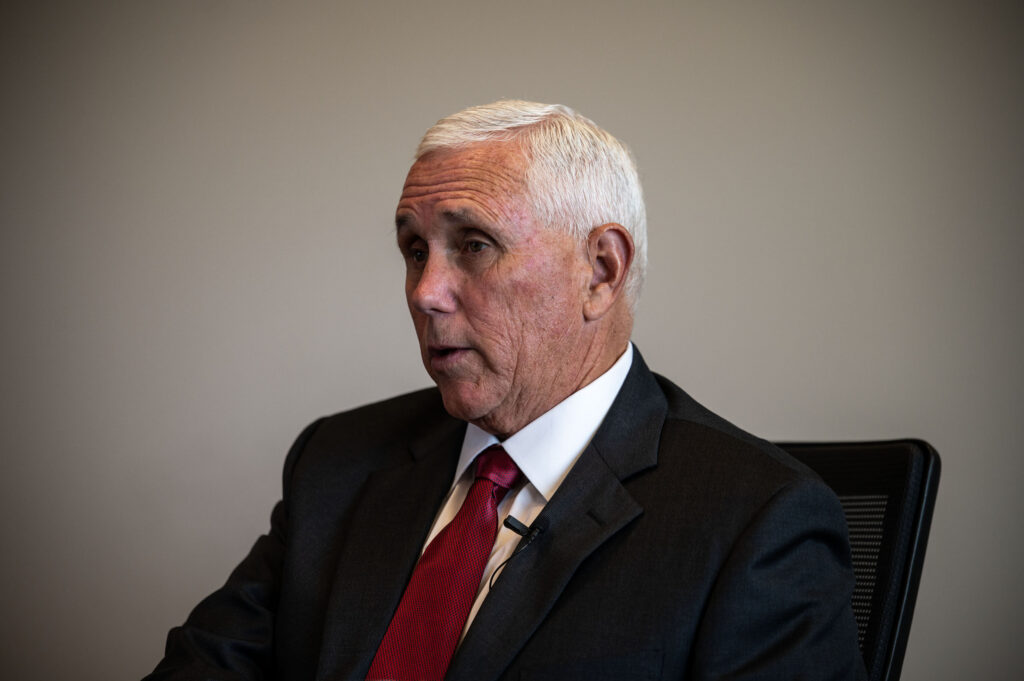
Q&A with Mike Pence | Former vice president says GOP’s populist turn from conservatism isn’t permanent
Ernest Luning
ernest.luning@coloradopolitics.com
Updated 5 hours ago
Former Vice President Mike Pence says he’s concerned that the Republican Party has taken a populist turn away from bedrock conservative principles during President Donald Trump’s second term, but he believes the party will return to its roots when Trump...
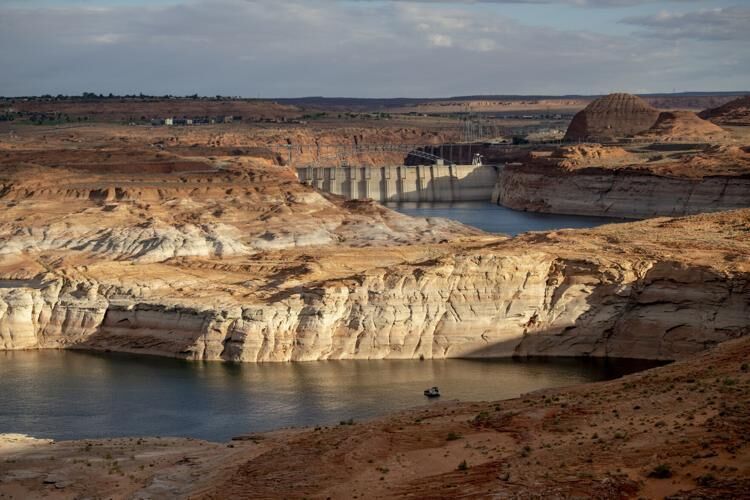
New federal plan sets short-term rules for Colorado River management
Marianne Goodland
marianne.goodland@coloradopolitics.com
Updated 1 day ago
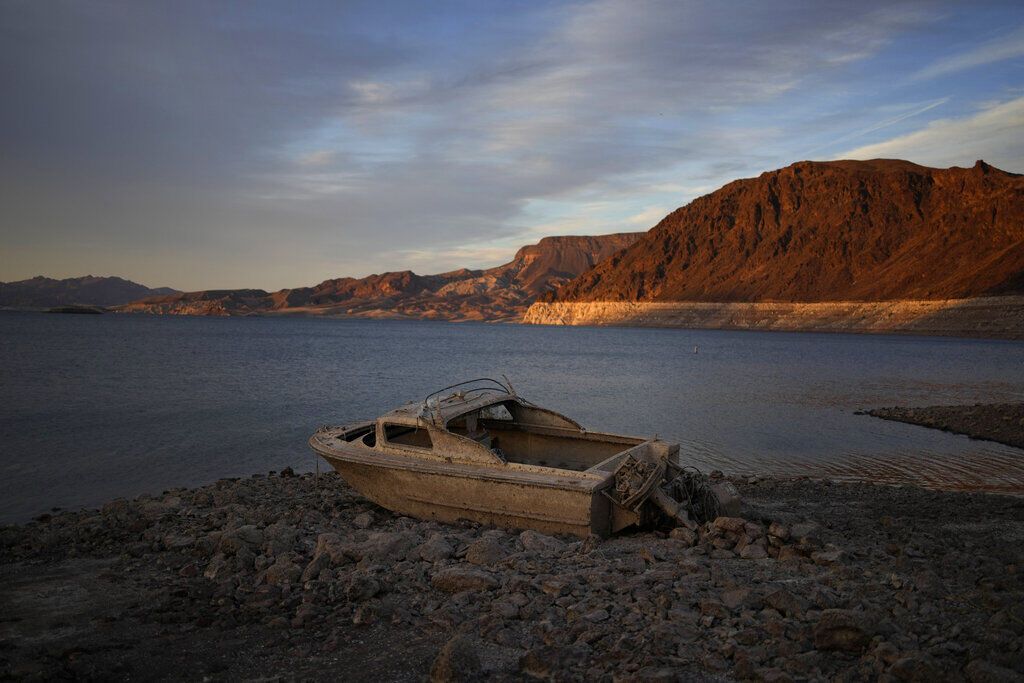
Interior Department’s plan spares Colorado from mandatory cuts for now After years of stalled negotiations among the seven states that rely on the Colorado River, the federal government on Friday released its own plan for managing the drought-strained system. Calling...
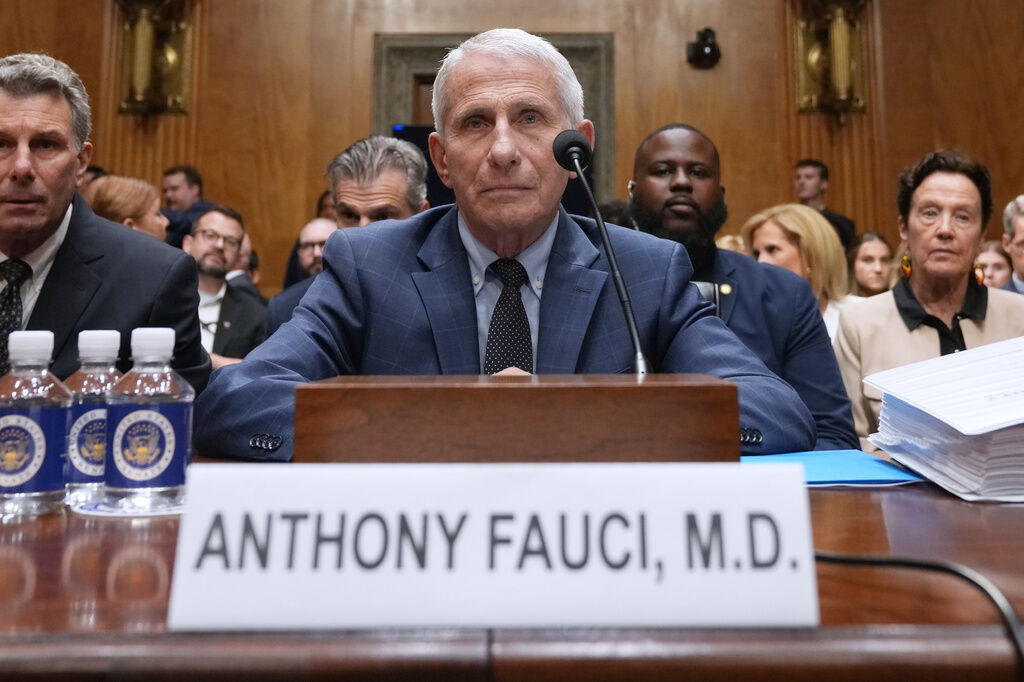
Fauci’s diary details blooming outrage toward ‘far right,’ softness toward Biden and China
Hudson Crozier
hudson.crozier@washingtonexaminer.com
Updated 1 day ago
Dr. Anthony Fauci increasingly railed against “far right” critics of his approach to COVID-19 issues while describing strong support from the Biden White House in his pandemic-era diary, which was recently released by Congress. The former National Institute of Allergy...
Colorado is spared mandatory cuts under federal Colorado River proposal
The Associated Press
the-associated-press@coloradopolitics.com
Updated 1 day ago
California, Arizona and Nevada to take less water under plan While Colorado has been spared from mandatory reductions, Arizona, California and Nevada would take less water from the Colorado River under a proposal announced Friday by the federal government to...
PREV
PREVIOUS

Rebecca Cranston upsets Ralph Trenary in closely watched Colorado Senate race
DENVER – Ralph Trenary turned to the older Democrat sitting next to him at the Larimer County Assembly Saturday and said, “Well, the show’s over.” The increasingly watched race in Colorado Senate District 15 took another sharp turn when political newbie Rebecca Cranston upset the former Loveland city councilman and community do-gooder. And she didn’t […]

Book tour for Bunny of the United States stops at Fort Carson
FORT CARSON – One of the world’s most famous rabbits was absent at his own book signing Sunday at Fort Carson. But whether Marlon Bundo is around or not, what he does for the Trump administration continues to turn heads. His stardom rose after Vice President Mike Pence’s daughter, Charlotte, penned a children’s book called […]