

IN RESPONSE: Farm bill is an investment in rural Colorado’s economy
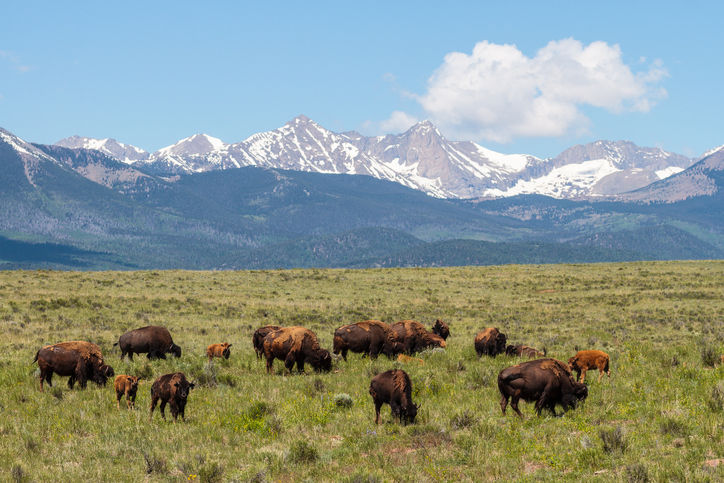
Farms and ranches are the lifeblood of Colorado’s rural economies and communities, utilizing local suppliers, paying local labor, generating income that is spent in local stores and growing healthy and affordable food for Colorado and the world.
Right now, Colorado’s agricultural industry is also facing its most difficult economic outlook in years. Nationally, net farm income is down 52 percent from only five years ago and is headed toward a 12-year low.
The challenges facing Colorado’s farms and ranches are reflected in the disparity in economic growth between rural Colorado and the Front Range. Many of the state’s rural counties are looking for ways create more economic prosperity in their communities.
Part of the response to these challenging times seems simple. The more we can do to support the vitality of Colorado’s farmers and ranchers, the stronger the state’s rural economies will be.
Since the Dust Bowl, farm bill conservation programs have served as a critical source of support. Funding from farm bill conservation programs goes directly into the hands of Colorado’s farmers and ranchers. It helps them make improvements that sustain the overall health of their lands and strengthen their businesses. The funding often results in long-term cost savings and improved efficiency.
The total impact of the conservation funding can be multiplied several times over. As discussed above, stronger farms and ranches mean stronger rural communities. Moreover, improved conservation efforts on family farms and ranches sustain the natural beauty and wildlife of the entire state, supporting the resources that draw people in to participate in the state’s growing outdoor recreation economy. Federal conservation funding also draws matching funds from local governments, non-profits and other groups – all interested in protecting the long-term sustainability of agricultural lands and rural economies. And, communities can use the funding from farm bill conservation programs to avoid unnecessary government regulation by proactively engaging in efforts to protect land, water and wildlife habitat.
In 2016 alone, the federal government allocated over $100 million to Colorado’s farms and ranches through farm bill conservation programs. Around two-thirds of this funding, or around $68 million, was spent on improvements to working farms and ranchers throughout the state.
Congress is now in the process of reauthorizing the farm bill and its conservation programs. It is essential that in doing so, Congress protect funding for these programs that not only represent an essential and significant investment in Colorado’s farms and ranches, but an investment directly into the heart of rural communities.
Lesli AllisonExecutive director, Western Landowners Alliance Santa Fe, New Mexico
Send us your feedback: opinion@ColoradoPolitics.com

The primary political reform and precondition for all others | SONDERMANN
Eric Sondermann
eric-sondermann@coloradopolitics.com
Updated 3 days ago
In its current state, the American political system has no end of ailments. Far too many factors accelerate polarization and work against moderation and narrowing the differences. Media, and the way so many citizens limit themselves to agreeable, reinforcing sources,...

Pueblo mayor, council concoct Trumpian Texas Two-Step | Dennis Maes
Dennis Maes
dennis-maes@coloradopolitics.com
Updated 2 days ago
Several weeks ago, an article was published positing Pueblo Mayor Heather Graham is a disciple of the calamitous Donald Trump school of governance — specifically as it related to questionable ethical practices and the misuse of public funds. Recently, Graham...

Colorado can’t afford to turn its back on proven public safety technology | GUEST COLUMN
Colorado Politics
colorado-politics@coloradopolitics.com
Updated 2 days ago
By Samuel G. Michael I recently saw a report that said Colorado is leading the way in artificial intelligence adoption for businesses. Across our state, more business owners and employees than ever before use AI for their everyday functions —...

As education conflicts abound across Colorado, who puts the kids first? | Paula Noonan
Paula Noonan
paula-noonan@coloradopolitics.com
Updated 3 days ago
Elected school boards and the Colorado Department of Education (CDE) have hit the headlines with fired superintendents, superintendent resignations, failures of oversight, and misdirected dollars. Cherry Creek School District’s superintendent was fired. Jefferson County Schools’ superintendent found a less stressful...

Clock is ticking on Colorado’s new AI rules | PODIUM
Colorado Politics
colorado-politics@coloradopolitics.com
Updated 3 days ago
By Aashis Luitel On Jan. 1, organizations using covered automated systems must begin complying with Senate Bill 26-189, Colorado’s new Automated Decision-Making Technology Act. They can identify those systems and start building the processes the statute clearly requires. What they...

Meghan Shay on recovery, responsibility and second chances | The OpEdge Podcast
Tony Olivero
tony.olivero@gazette.com
Updated 4 days ago
Step Denver and Step Springs CEO Meghan Shay joins The OpEdge to explore addiction recovery, homelessness, and the role of accountability in lasting change. Shay tells host and investigative columnist Jimmy Sengenberger why she believes recovery is built on personal...

The outrages mount | Hal Bidlack
Hal Bidlack
hal-bidlack@coloradopolitics.com
Updated 4 days ago
My kindly and forgiving editors understand that, from time to time, I can’t help myself from leaping atop my rickety soapbox to vent. And, like many other political commentators have already done, I could easily fill this entire missive with...

Rural Colorado deserves a tax holiday | GUEST COLUMN
Eric Mulder
jstooksberry@gmail.com
Updated 5 days ago
Spend enough time in Colorado’s Eastern Plains, the San Luis Valley, or the Western Slope, and you’ll see boarded-up storefronts, schools consolidating classrooms, and small rural communities stretching every dollar to keep basic services afloat. Once the backbone of Colorado’s...

Weiser’s leadership crucial for rural win-win | Rachel Gabel
Rachel Gabel
rachel-gabel@coloradopolitics.com
Updated 1 week ago
Attorney General Phil Weiser is going to win the gubernatorial election. That said, Colorado agriculture and rural communities have a 30-year track record of finding the win-win be it for species or industries or habitat. Former Governor Roy Romer possessed...

A Colorado history lesson for Victor Marx | Dick Wadhams
Dick Wadhams
dick-wadhams@coloradopolitics.com
Updated 1 week ago
Victor Marx, who narrowly won the Republican nomination for governor by one half 1% after boasting of a massive 44-point lead, is just as misguided on Colorado political history. During the primary, Marx made a clumsy attempt to denigrate his...
PREV
PREVIOUS

NOONAN: Renewables can transform the state's regulatory environment
Renewable energy disruption may bring regulatory relief to Coloradans if Xcel pursues wind/solar energy bids to replace two coal-fired power plants. Xcel brought the bids to the Public Utilities Commission recently, showing that wind and solar are now more than competitive with oil and gas for electricity production. The economics of switching to renewables will […]

THE PODIUM: Assault-weapons bans won't work; only gun permits will
A law banning assault rifles, such as the federal ban adopted in 1994, is feel-good legislation, giving the appearance that something is being done to address the problem, when the truth of the matter is that it will not. The first problem is that an assault rifle cannot be defined. Previous attempts to ban assault […]