

THE PODIUM: Assault-weapons bans won’t work; only gun permits will

A law banning assault rifles, such as the federal ban adopted in 1994, is feel-good legislation, giving the appearance that something is being done to address the problem, when the truth of the matter is that it will not.
The first problem is that an assault rifle cannot be defined. Previous attempts to ban assault rifles describe them in terms of appearances. But, what makes them so deadly is functionality, not how they look. The essential functions of the so-called assault rifle and pistol are shared with most firearms that exist.
Second, even if effective, a ban of assault weapons (assault rifles, assault pistols and large capacity ammunition magazines), which involve up to 25 percent of the shooting incidents, does not address the much larger problem of death and injuries resulting from an array of semi-automatic weaponry, ranging from small caliber “Saturday Night Specials” to rifles and pistols with the same firepower as the military grade assault rifle and pistol. Thus, if action is taken to ban assault weapons and, even if the ban is effective, it will not affect the other 75 percent of the picture.
Third, an assault-weapons ban does not affect the millions of assault weapons already on the street. And, as before, the manufacturers will merely step around the ban with compliant “after ban” assault weapons for sale.
The background check system, although needing some improvements, largely works as it was intended. But, the NICs database was not designed to capture disqualifying attributes which, in hindsight, everyone agrees were “red flags.” If the system of background checks, which employ a database of objective criteria (e.g., arrest for violent crime, convictions of certain felonies, mental health adjudications), is amped up to include “red flags,” the system would be too draconian to be either accepted or effective.
Missing from the current set of laws is that there isn’t anyone, with responsibility for public safety coupled with authority, to exercise judgment as to whether a person going through a background check should be able to buy, possess and carry a gun, and to buy ammunition. Some basic questions are presented:
Assuming affirmative answers to the above, here is what can and should be done at the state level:
Colorado has a statute providing that the sheriff “shall” issue a permit to carry a concealed weapon, provided an applicant has some rudimentary training and passes a background check. This statute should be amended with the following supplementary provisions:
The gun lobby’s slogan is, “Guns don’t kill people; people kill people.” Unless these are just words, signifying nothing, why not apply the spirit of them, together with a little common sense, to construct a reasonable mechanism to limit the unqualified and unfit from their heretofore unfettered access to guns?
Read The Podium weekly; it’s where prominent players in Colorado politics address the big issues of the day.


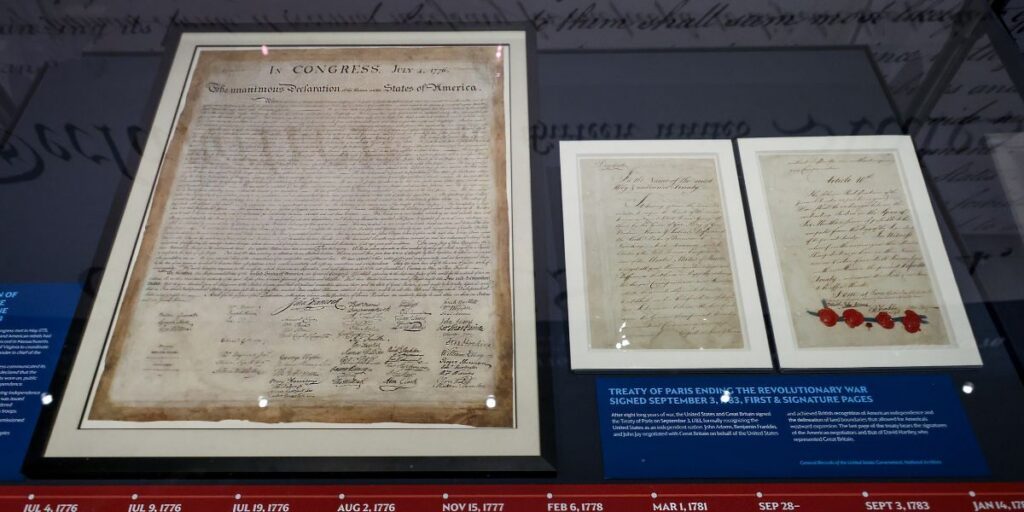
Founding documents reconnect us to our shared American roots – and rebelliousness | Vince Bzdek
Vince Bzdek
vince.bzdek@gazette.com
Updated 13 hours ago
When you first lay eyes on the actual founding documents of our country that, for the first time in history, have traveled together from their gilded cages in Washington to visit us out here in the hinterlands, you’re struck not...

Attorney General Phil Weiser’s underdog campaign for Colorado governor| Cronin and Loevy
Tom Cronin Bob Loevy
tom-cronin-bob-loevy@coloradopolitics.com
Updated 5 hours ago
Phil Weiser, 58, Colorado’s attorney general, is in a heated race against U.S. Sen. Michael Bennet, 61, for the Democratic nomination for governor. They are friends and share mostly similar progressive, Democratic policy views. Primary election day is June 30....

Would you hire Jena Griswold to handle your case? | SONDERMANN
By Eric Sondermann
by-eric-sondermann@coloradopolitics.com
Updated 4 days ago
If you were in a child custody dispute with a former spouse, would you hire an attorney with experience in family law or would you trust your case to an operative with virtually zero mastery? If you were getting ready...

Trends to track as Colorado’s in precarious position pre-gubernatorial primaries | Paula Noonan
Paula Noonan
paula-noonan@coloradopolitics.com
Updated 3 days ago
As they say on Colorado Public Radio’s Marketplace, let’s do the numbers. April 2026 voter registrations continued a long-term Colorado trend with a large majority of new or changed voter registrations joining the unaffiliated cohort. Total registrations of Democrats, Republicans...

High-potency hemp products are hurting Colorado kids | GUEST COLUMN
Colorado Politics
colorado-politics@coloradopolitics.com
Updated 3 days ago
By Heidi Lawrence Six years ago, my daughter, by most metrics, was a typical overachieving teenager. She was a straight-A, pre-professional ballet dancer. She loved school and art, had lots of friends, and above all else, she was kind, funny...
Michael Fields reviews Colorado’s 2026 legislative session | The OpEdge Podcast
Tony Olivero
tony.olivero@gazette.com
Updated 4 days ago
Michael Fields, executive director of Advance Colorado, joins OpEdge host and investigative columnist Jimmy Sengenberger to assess the good, the bad and the ugly of the Colorado General Assembly’s 2026 legislative session. Reflecting on the 120 bills passed in 120...
From secret huddles to Zebulon — the high cost of the Dougco BOCC’s shady governance | PODIUM
Colorado Politics
colorado-politics@coloradopolitics.com
Updated 4 days ago
By Bob Marshall, Lora Thomas and Julie Gooden In Douglas County, a new and dangerous standard of governance has taken root: if the public doesn’t like your plan, simply stop letting the public in the room. During the last year,...

Election must be decided on issues of combating public corruption, restoring integrity in government | FEEDBACK
Colorado Politics
colorado-politics@coloradopolitics.com
Updated 4 days ago
There has been considerable press and outrage regarding Gov. Jared Polis’ commutation of former Mesa County Clerk and Recorder Tina Peters’s remaining prison sentence. The outrage is reinforced by President Donald J. Trump’s creation of a $1.776 billion compensation fund...

Is the ‘penumbra of privacy’ going, going, gone in Colorado? | Hal Bidlack
Hal Bidlack
hal-bidlack@coloradopolitics.com
Updated 5 days ago
Once again, there are too many things in Colorado Politics that are newsworthy and should be written about. Unless my kindly editor will allow me to write a book-length column this week? (Ed: not so much…) First up, I’d like...

Quiet at the state Capitol doesn’t mean silence on energy policy | GUEST COLUMN
Colorado Politics
colorado-politics@coloradopolitics.com
Updated 5 days ago
By Carly West By many accounts, Colorado’s 2026 legislative session was unusually quiet on oil-and-natural-gas policy. There was no sweeping new oil-and-natural-gas package. No major new production restrictions. After years of contentious energy debates dominating the Capitol, the relative quiet...
PREV
PREVIOUS

IN RESPONSE: Farm bill is an investment in rural Colorado's economy
Farms and ranches are the lifeblood of Colorado’s rural economies and communities, utilizing local suppliers, paying local labor, generating income that is spent in local stores and growing healthy and affordable food for Colorado and the world. Right now, Colorado’s agricultural industry is also facing its most difficult economic outlook in years. Nationally, net farm income […]

Don't let Congress undermine students' ability to pay for higher ed
Just as the nation’s attention to underserved communities and sexual assault victims has increased, the U.S. House of Representatives has – acting purely along partisan lines – taken steps that have the potential to significantly harm these groups. The House is currently considering a bill, inaptly named the “PROSPER Act,” that would drastically limit the […]