

Audit: Trust of Lyft and Uber could be costing Denver airport money

Parking is the second-largest revenue driver for Denver International Airport, but according to City Auditor Timothy O’Brien, lax oversight with Lyft and Uber could be letting money slip through the cracks.
In a report released Thursday, O’Brien found the airport charges Lyft and Uber $2.60 for each pickup and drop off at DIA. But the report noted the monthly bill is calculated by data provided by the rideshare companies and isn’t independently verified by the airport.
With nearly $5 million in fees at stake, should DIA trust those numbers? Other airports don’t.
San Francisco International Airport began using an independent tracking system in 2015 and found rideshare companies under-reported in nine out of 24 months, according to O’Brien’s report. San Francisco was able to recoup over $150,000 in additional fees with the new system in place.
You can read the audit by clicking here.
There are several tracking systems available, but they all work by setting up digital boundaries, known as a geo-fence. When a driver with their Lyft or Uber app open crosses the boundary, the ride would be counted and billed.
Creating a geo-fence at Denver’s airport, which is one of the largest in the country, may not be as easy as in San Francisco. DIA covers over 33,000 acres, whereas the Bay Area’s airport covers just over 5,000 acres.
Not all of Denver’s acreage would need to be geo-fenced to capture rideshare drivers, but with over 300 lane miles of roads going into and out of the airport, it would be a bigger lift.
“One of those challenges is working with a vendor to find a system that works with our unique requirements as a facility.” Heath Montgomery, a spokesman for Denver International Airport said by phone Thursday. “We are in discussion with various companies that provide those systems.”
As those discussions get underway, cost will need to be taken into consideration. The three most popular tracking systems all take a portion of the revenue tracked. Denver’s airport has seen a sharp rise in rideshare revenue, going from $1.2 million in 2015 to $4.5 million in 2017 (and that was only data collected through September). San Francisco negotiated caps on how much they would give their tracking company, and may need to be considered here to help mitigate revenue loss.
“We are committed to working with various vendors to find software that works for us,” Montgomery said. “If there is a technology that’s proven to be accurate and appropriate, we will pursue that.”


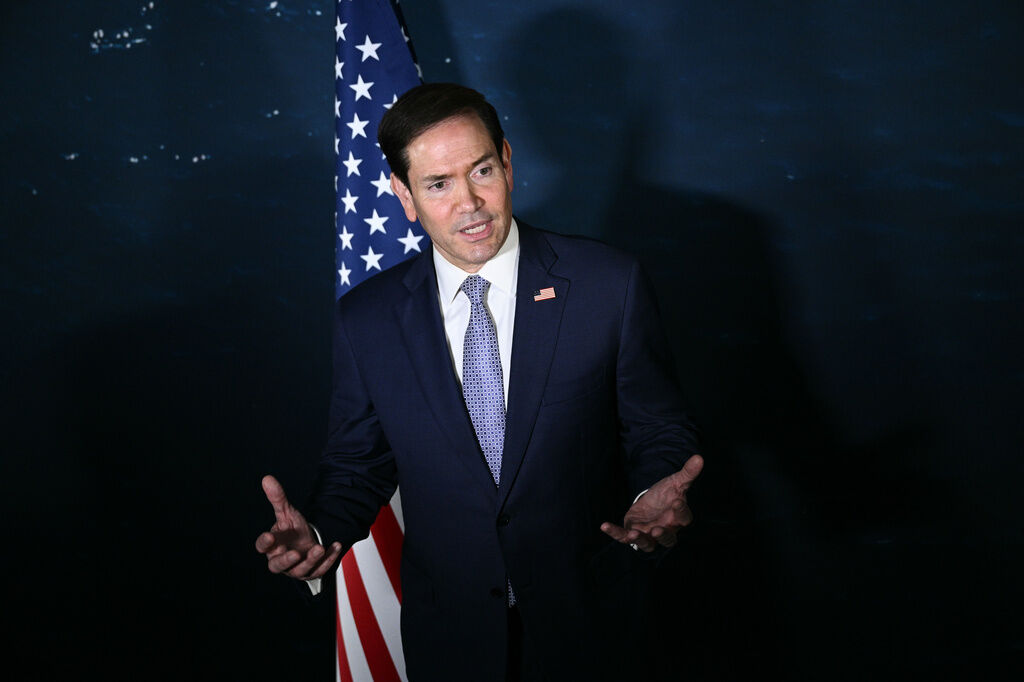
Rubio crushes Vance in Western Conservative Summit 2028 straw poll
Kiara Moore
kiara.moore@washingtonexaminer.com
Updated 26 seconds ago
Secretary of State Marco Rubio came out on top in this past weekend’s nonpartisan straw poll at the Western Conservative Summit, outpacing a packed field of would-be 2028 presidential hopefuls. Hosted by the Centennial Institute, Colorado Christian University’s public policy...

New Colorado laws going into effect cover AI disclosures, medical marijuana access and gambling limits
Marissa Ventrelli
marissa.ventrelli@coloradopolitics.com
Updated 39 minutes ago
More than 100 new Colorado laws take effect Aug. 12, bringing changes to chatbot safety rules, psychedelic research, campus wellness checks and sports betting restrictions. Here is a look at some of those laws set to take effect. The law:...

National House Democrats add Colorado seats held by Lauren Boebert, Jeff Hurd to target list
Ernest Luning
ernest.luning@coloradopolitics.com
Updated 52 minutes ago
The national House Democrats’ campaign arm on Wednesday added the Colorado congressional district held by Republican U.S. Reps. Jeff Hurd and Lauren Boebert to the list of targeted seats the party believes are vulnerable in this year’s midterms. The Democratic...
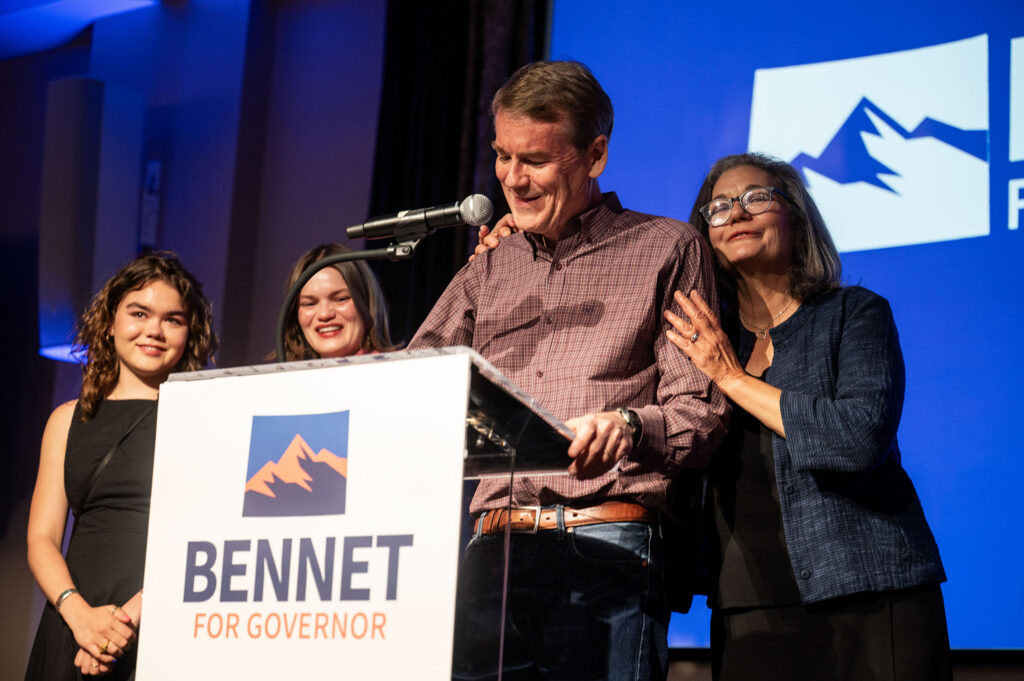
U.S. Sen. Michael Bennet settles campaign finance complaints, admits violating state law
Marianne Goodland
marianne.goodland@coloradopolitics.com
Updated 2 hours ago
U.S. Sen. Michael Bennet’s gubernatorial campaign has agreed to pay a $7,433 fine for using his U.S. Senate campaign account to pay for gubernatorial travel expenses. The July 31 settlement includes an admission by Bennet and his campaign that they...

Colorado to implement new laws on jail standards, safe haven rules, and agricultural labeling
Marissa Ventrelli
marissa.ventrelli@coloradopolitics.com
Updated 2 hours ago
In mid-August every year, a slew of recently passed laws in Colorado go into effect 90 days after the end of the legislative session. This year, all bills without a specified effective date or safety clause — a provision stating...
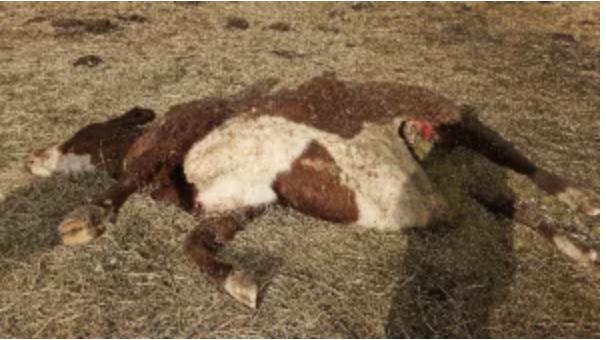
Colorado records 17th wolf death as CPW kills yearling tied to livestock losses
Marianne Goodland
marianne.goodland@coloradopolitics.com
Updated 3 hours ago
A yearling male wolf in Grand County has become the 17th wolf to die in Colorado in the past two years. Colorado Parks and Wildlife announced the wolf was killed by staff on Aug. 4, because it was believed responsible...
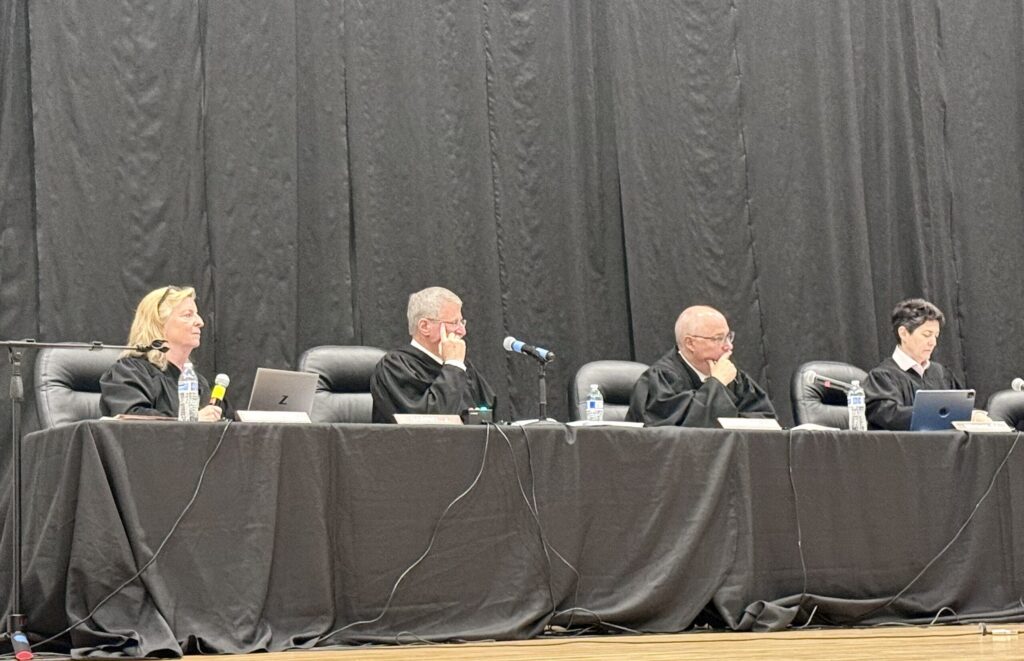
Parole, appeals deadlines and restitution: Colorado justices accept cases
Michael Karlik
michael.karlik@coloradopolitics.com
Updated 18 hours ago
The Colorado Supreme Court announced on Monday that it will determine how a defendant’s parole-eligibility date should be calculated in instances where a new trial results in a sentence being imposed retroactively to the date of the original, since-overturned sentence....

Douglas County approves $7.5 million for Gold Crown Field House in Castle Rock
Nicholas Fogleman
nicholas.fogleman@denvergazette.com
Updated 4 hours ago
The Douglas County Board of Commissioners approved a $7.5 million funding agreement Tuesday to help build a new indoor sports facility in Castle Rock. The facility is the result of a partnership between the county, the Town of Castle Rock...
Federal judge rejects DOJ bid to force Colorado to hand over voter information
Marissa Ventrelli
marissa.ventrelli@coloradopolitics.com
Updated 23 hours ago
A U.S. district court judge has dismissed a lawsuit filed by the U.S. Department of Justice against Colorado Secretary of State Jena Griswold for refusing to provide the agency with personal voter information. Last December, the DOJ’s Civil Rights Division asked...
Democratic states warn Supreme Court that Trump mail ballot order would cause chaos ahead of midterm elections
Jack Birle
jack-birle@coloradopolitics.com
Updated 1 day ago
A coalition of Democrat-led states warned the Supreme Court this week that lifting a block on President Donald Trump’s mail-voting executive order would cause “extreme” changes as states prepare to send out ballots for the midterm elections. The group of...
PREV
PREVIOUS

With bipartisan bill on gun theft, George Brauchler says it's time to talk more
A Republican going before the House State, Veterans, and Military Affairs Committee with any legislation – let alone a gun bill – doesn’t usually leave happy. They don’t call it the kill committee for nothing, and Democrats have a 6-3 supermajority. But Rep. Larry Liston, a Republican from Colorado Springs, pulled off that rare feat […]

Denver school board pledges to ‘stand shoulder-to-shoulder’ with undocumented immigrants
The Denver school board took a stand Thursday in support of young undocumented immigrants, urging Congress to save the Deferred Action for Childhood Arrivals program and pledging to provide opportunities for Denver educators to teach students about immigrant rights. “You have accomplices and luchadores in us,” said board member Angela Cobián. Cobián, who represents the […]