

Senate Republicans to governor: no to severance taxes for water plan

Senate Republican leaders Monday put the kibosh on any efforts to increase severance tax dollars to pay for the state water plan, an idea floated by Gov. John Hickenlooper last week at the Colorado Water Congress.
The state water plan carries a price tag estimated at $20 billion or more. While water providers are expected to carry much of that cost, the state’s share is estimated at $3 billion, with a hope to start that funding at $100 million per year for 30 years, starting in 2020.
Last week, Hickenlooper told the Colorado Water Congress that he could envision the state’s share coming out of severance taxes, although that would require some kind of structural change to raise those kinds of dollars.
Severance taxes have long been used for water projects, but those dollars have been dwindling. There are at least a couple of reasons for the decline: lower prices for oil and natural gas, although there’s been some recovery in that market. The second is a lawsuit from oil giant BP two years ago that used severance tax dollars to pay back personal property taxes that the Colorado Supreme Court said oil and gas companies were owed.
Another factor is that the General Assembly has not been shy to tap severance tax dollars to balance the budget in down times. That’s happened in the last two recessions, to the tune of $322 million.
The water plan has received severance tax dollars in the last two years to fund initial implementation in areas such as alternative transfers of water in agriculture, conservation and water efficiency.
Hickenlooper said a structural change to severance taxes would have to come from the General Assembly, and most likely through a ballot measure. He also said he’s hoping for a bipartisan solution to funding the water plan. One suggestion would be to change how severance taxes are charged, which currently ebb and flow with the changes in oil and gas prices.
Increasing* severance taxes for the water went over like a lead balloon with Senate GOP leaders Monday. “Absolutely not,” said Senate President Pro tem Jerry Sonnenberg of Sterling. “I’m happy with the way we do it now,” he told reporters.
Sonnenberg said the state’s system for severance taxes works well, by charging more when the oil and gas companies make more. “There’s no appetite” among his caucus for changing that system.
Sonnenberg also disputed a claim by Hickenlooper that oil and gas CEOs wouldn’t object to changing the structure, since Colorado has some of the lowest severance tax rates in the nation. The lawmaker said that is not what he’s hearing from the industry.
Sonnenberg has said in recent days that he’s considering a bill after the March 20 revenue forecast comes out that would begin to pay back some of the $322 million borrowed from the severance tax funds. He would need permission from both the Senate President and Senate Majority Leader for a bill that late in the session, and he jokingly said he would beg for that permission.
He may have to. His severance tax bill would be paid for through some of the $1 billion surplus in state revenues that was reported in the December revenue forecasts from state economists. Those dollars are drawing a lot of interest from Senate Republicans, who have already introduced two bills designed to use up a substantial portion of those dollars.
Senate Republicans have made the top priority of the 2018 session a bill to use $300 million in existing state funds to begin to take care of some of the state’s $9 billion wish list for road and bridge repairs across the state. The first payment would come from that surplus revenue.
Sonnenberg and Senate President Kevin Grantham of Cañon City also sponsor a bill to reduce the state’s corporate and individual income tax rates by two-tenths of one-percent, which would take another $365 million out of the state’s revenues in 2018-19 and more in future years.
Clarification: clarified that Sonnenberg opposes an increase in severance taxes, not the use of severance taxes itself, which is already being used to pay for initial implementation of the water plan.



Assisted-living facility in Colorado faced minimal fine after death of 73-year-old man
Jenny Deam
jenny-deam@coloradopolitics.com
Updated 20 hours ago
On Jan. 6, just after 8:30 p.m., Robert Dutkevitch rolled his wheelchair onto the smoking patio outside The Argyle assisted-living facility in Denver. Minutes later, the 73-year-old suddenly slumped in his chair, his head lolling to the side. He then...

Governor OK’s funding for summer food assistance for Wyoming kids | OUT WEST ROUNDUP
The Associated Press
the-associated-press@coloradopolitics.com
Updated 3 days ago
WYOMING Governor funds kids’ summer meals Gov. Mark Gordon secured funding for a summer food assistance program for kids and directed its implementation through an executive order. After the Wyoming legislature declined to fund the SUN Bucks program—designed to provide...

Trump says suspect was armed with multiple weapons at White House correspondents’ dinner
Alanna Durkin Richer
alanna.durkin.richer@associatedpress.com
Updated 15 hours ago
WASHINGTON (AP) — President Donald Trump is addressing reporters at the White House after he and other top leaders of the United States were evacuated from an annual dinner of White House correspondents on Saturday night after a shooting incident...
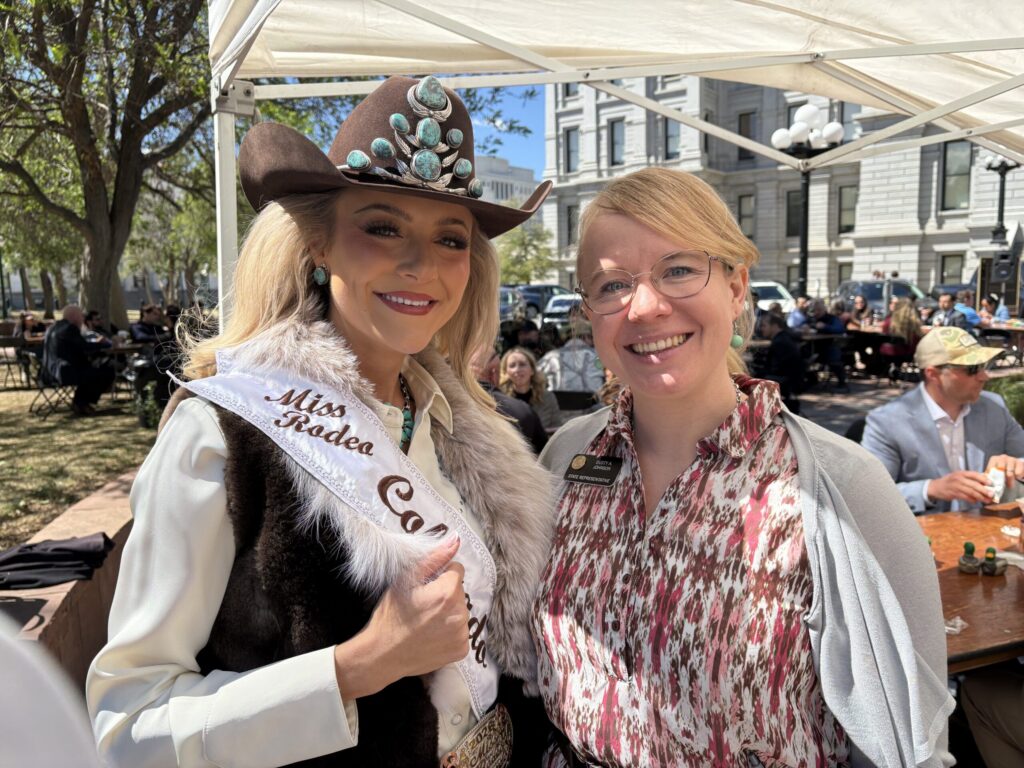
Mountain Lion/Pheasant Green Chile a hit! | Capitol M | Week of April 25, 2026
Marianne Goodland
marianne.goodland@coloradopolitics.com
Updated 15 hours ago
The lighter side of the state Capitol, although if you were eating at the barbecue Thursday, you are probably not any “lighter.” With the arrival of spring comes outdoor barbecues at the state Capitol, and the most unusual is the...

Domestic violence rises in Colorado, state rep. seeks to fight back | A LOOK BACK
Rachael Wright, Special to Colorado Politics
rachael.wright@coloradopolitics.com
Updated 3 days ago
Forty-Five Years Ago This Week: A bill sponsored by Rep. Jeanne Faatz’, R-Denver, House Bill 81-1336, was the final compromise bill intended to counteract the rising tide of domestic violence in Colorado. According to FBI figures, 40,000 women in 1980...

Passenger train service from Denver to Fort Collins? | Cronin and Loevy
Tom Cronin Bob Loevy
tom-cronin-bob-loevy@coloradopolitics.com
Updated 12 hours ago
A “Joint Service” plan is being developed that would bring passenger rail service from Denver north to Fort Collins by 2029. The passenger trains would be paid for with existing funds from the Denver Regional Transportation District (RTD) and other...

The applicability of Hungary’s election to our politics | SONDERMANN
By Eric Sondermann
by-eric-sondermann@coloradopolitics.com
Updated 5 days ago
American conservatives, largely synonymous these days with MAGA save for a few lonely voices of courage and dissent, have plenty to lament. Their domination of the political landscape is waning. Various special elections hither and yon have presented bright, flashing...

Colorado Politics Calendar Apr. 27-May 3
Rachael Wright, Special to Colorado Politics
rachael.wright@coloradopolitics.com
Updated 4 days ago
CoPo’s weekly political calendar will help you find political and public-policy events throughout Colorado. It includes candidate and issue campaign events, public policy meetings, court hearings, state and local party conventions, assemblies, debates, rallies, parades, speaking engagements, traveling dignitary appearances,...

Colorado candidates square off up and down the ballot ahead of primary election
Ernest Luning
ernest.luning@coloradopolitics.com
Updated 2 days ago
With just over two months to go until ballots are counted in Colorado’s primary, candidates are squaring off in high-stakes contests for their party’s nominations in statewide and congressional races approaching the midterm election. For the first time in memory,...
Federal judge tosses class-action lawsuit over poor Vail Resorts experience during strike
Michael Karlik
michael.karlik@coloradopolitics.com
Updated 2 days ago
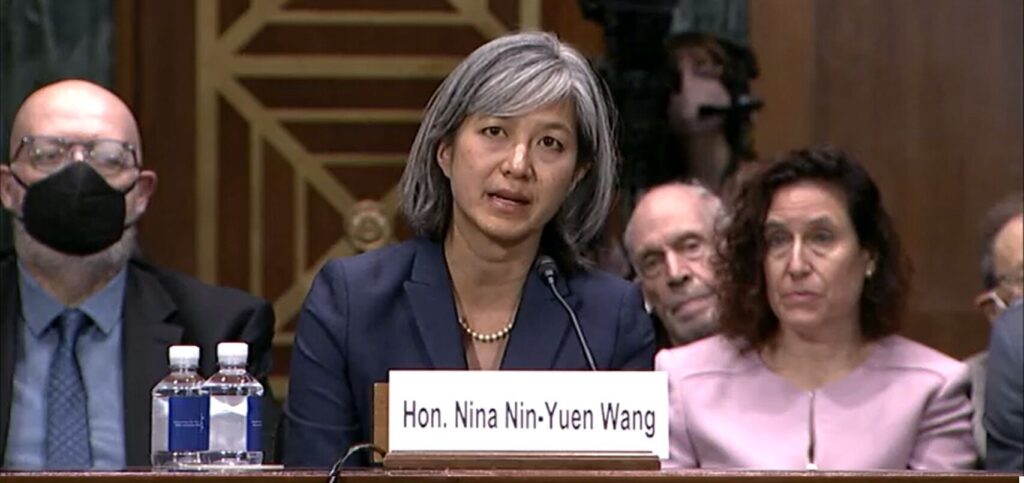
A federal judge dismissed a plaintiff’s proposed class-action lawsuit last month that sought compensation from Vail Resorts after a ski patrol strike turned a family vacation into a “colossal disaster.” U.S. District Court Judge Nina Y. Wang concluded plaintiff Christopher...
PREV
PREVIOUS
The Grand Junction Daily Sentinel: Public lands policy can't change on a whim
For much of the past week, Colorado’s stance toward public lands has been parsed as a potential bellwether for upcoming elections. It all has to do with the Outdoor Retailer + Snow Show which Denver hosted for the first time. It’s one in a series of giant trade shows for manufacturers of outdoor recreation gear, […]

Rep. Mike Coffman and the Problem Solvers roll out budget-for-DACA proposal
The Problem Solvers Caucus, the bipartisan group 48 members of Congress, including Republican Rep. Mike Coffman of Aurora, put out its own budget proposal Monday, including a fix for the Deferred Action for Childhood Arrivals program. President Trump signed an executive ordered in September phasing out the program for immigrants brought to the U.S. as […]