

Updated: Could Colorado House and Senate flip in ’18? Yes, says Ballotpedia
Here’s something I bet you haven’t heard anywhere else: The Colorado House and Senate each could flip next year.
OK, maybe you’ve heard half that. The Republicans hold just a one-seat edge in the 35-member Senate, which will see 17 seats on the ballot next year.
But the House? Democrats enjoy a nine-seat majority in a chamber that, at best, has five competitive districts out of 65. Republicans would have to run the table or notch some surprises.
So what does Ballotpedia know about 2018 that the rest of us who follow the Colorado statehouse don’t? Math.
Democrats hold seven seats in the House that they won by less than 10 percent last year. Republicans had two. And that equals five, which is how many the GOP would have to win to take the majority.
The analysts also looked at the number of overall elected officials statewide, which tilts heavily to the right in down-ballot statewide offices and even farther to the right in offices elected outside the Democrat- and population-heavy Front Range.
But there are other factors, including a general national trend of voters preferring that Republicans run state government. During Barack Obama’s presidency, Democrats lost more than 1,000 legislative seats across the country.
With Donald Trump in the White House, it’s possible if not likely that Democrats will be energized next year, as Republicans were in 2010 and 2018.
Ballotpedia didn’t factor in historical voter turnout in midterms by the parties for this report, but analyst Rob Oldham said that his been a problem for Colorado Democrats in recent elections.
The Denver-based polling first of Magellan Strategies looked at that in an analysis last January:
“Midterm elections are crucial here, because that’s when elections for our statewide offices are held,” Magellan reported. “In the past two midterm elections, Republicans have been able to win seven out of the 10 elections for statewide office, the only losses being the elusive governor’s office (twice) and Sen. Michael Bennet’s election in 2010. The seven wins include Sen. Cory Gardner in 2014, and then a 6-0 sweep in the contests for secretary of state, state treasurer and attorney general. Republicans, going back at least half a century, have historically dominated those three offices.
“… Still, it’s not as though Republican candidates are winning these elections by wide margins. The average Republican share of the vote in those seven wins from 2010 and 2014 is only 50.5 percent, and that’s including the re-election of Attorney General John Suthers in 2010, which at 56.3 percent is something of an outlier.”
Democrats built a big House majority last year by picking up three seats last November, when Barbara McLachlin beat J. Paul Brown in southwest Colorado, Tony Exum won back his seat in Colorado Springs from Kit Roupe and Dafna Michaelson Jenet unseated JoAnn Windholz in Commerce City.
Michaelson Jenet and Exum both won by 8 points last year, and in the state’s most competitive House district, McLachlan took it with half a percentage point – just 325 votes.
In the 2016 election, the one-seat majority in the Senate held.
Republican Sen. Laura Woods lost to Rachel Zenzinger in District 19 in Arvada, but former Rep. Kevin Priola of Severance took the District 25 seat previously occupied by Democrat Mary Hodge of Brighton.
There were nine open seats in the state Senate last year, but three of the newcomers (two Democrats and one Republican) ran unchallenged in the general election.
If the minority party wins the battle in both chambers, that would put Republicans in charge of the House and Democrats over the Senate. That means the same partisans battles and bill-killing would continue unabated.
Ballotpedia is predicting competition in 15 chambers. Besides the Colorado House and Senate:


Immigration reporting measure fuels debate over Colorado’s role with ICE
Marissa Ventrelli
marissa.ventrelli@coloradopolitics.com
Updated 4 hours ago
A coalition of advocacy groups and several district attorneys rallied outside the Colorado Capitol on Thursday to oppose a ballot measure that, if approved by voters in November, would require state and local law enforcement to cooperate with federal immigration...

Colorado Politics Calendar Sept. 14-20
Rachael Wright, Special to Colorado Politics
rachael.wright@coloradopolitics.com
Updated 3 days ago
CoPo’s weekly political calendar will help you find political and public-policy events throughout Colorado. It includes candidate and issue campaign events, public policy meetings, court hearings, state and local party conventions, assemblies, debates, rallies, parades, speaking engagements, traveling dignitary appearances,...
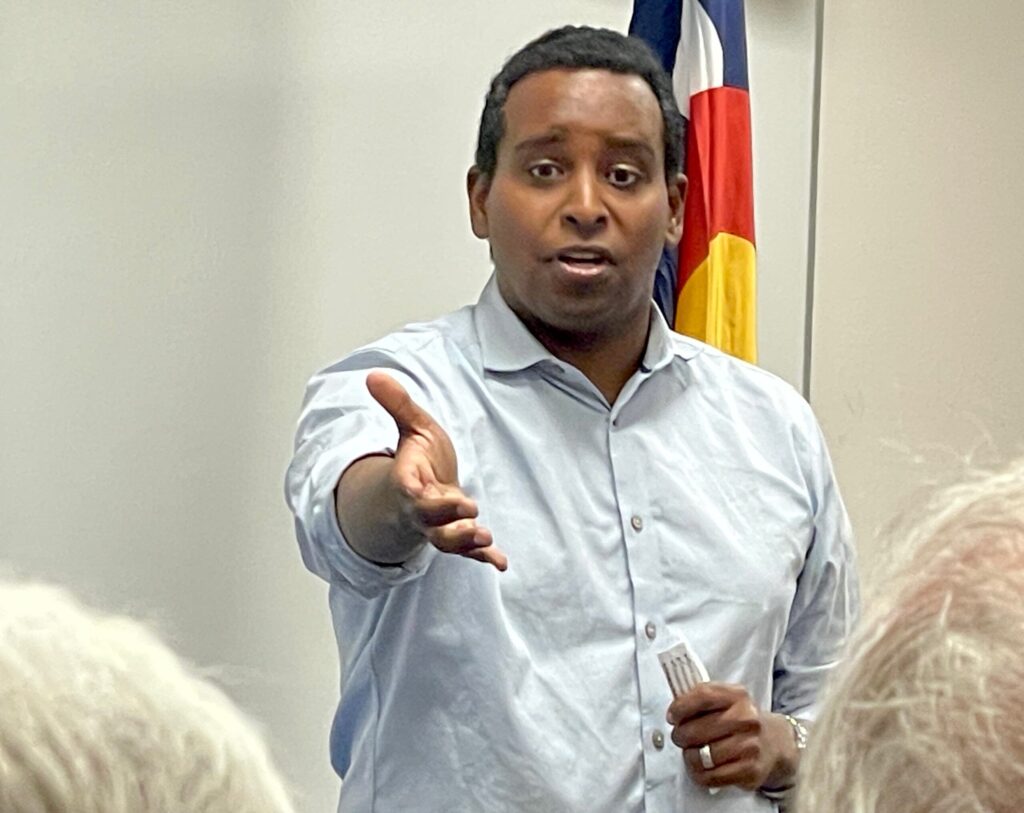
The African roots of three Colorado leaders | SONDERMANN
Eric Sondermann
eric-sondermann@coloradopolitics.com
Updated 3 days ago
Colorado’s political transformation is measured in many ways. A once reliably red state (with asterisks) became purple and is now a rather deep blue. For better or worse, probably the latter, power is ever more consolidated along the Front Range...
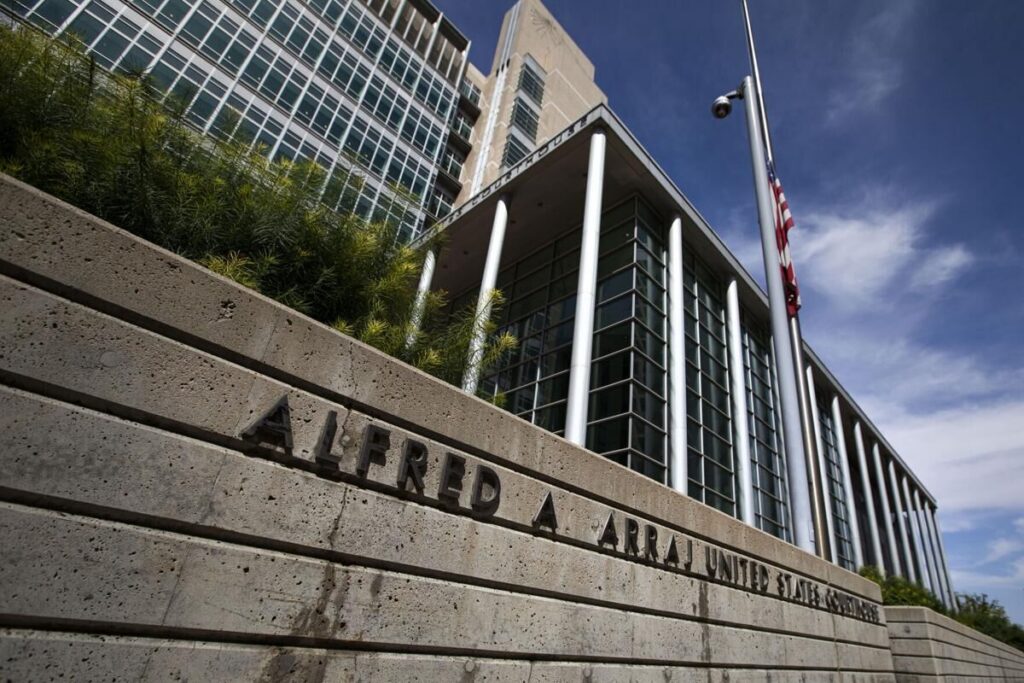
Federal judge green-lights civil trial against ex-Fort Collins DUI officer
Michael Karlik
michael.karlik@coloradopolitics.com
Updated 1 day ago
A federal judge ruled on Thursday that Fort Collins’ former “DUI officer” will face a civil trial for allegedly investigating a motorist for impaired driving without any reasonable suspicion to do so. In recent years, several people arrested by Officer...

Denver police reopen 13 sex assault cases after retesting Missy Woods’ CBI work
Jenny Deam
jenny.deam@gazette.com
Updated 1 day ago
Thirteen previously closed Denver sexual assault cases have been reopened after the city’s crime lab retested DNA evidence once analyzed by former Colorado Bureau of Investigation forensic analyst Yvonne Woods. A police spokesperson told The Denver Gazette the once-closed cases...

Ballot measure aims to shift Colorado sporting goods tax revenue to land, water and wildfire projects
Marissa Ventrelli
marissa.ventrelli@coloradopolitics.com
Updated 4 hours ago
Colorado voters this November will decide whether to direct a share of sales tax revenue from sporting goods — including bicycles and skiing equipment — toward land and water conservation, wildfire prevention and expanding outdoor recreation. Supporters say the measure...

Colorado Supreme Court suspends Mesa County judge pending misconduct investigation
Michael Karlik
michael.karlik@coloradopolitics.com
Updated 6 hours ago
The Colorado Supreme Court suspended Mesa County Court Judge Michael J. Grattan on Thursday amid a misconduct investigation. The court’s Sept. 10 order gave Grattan 21 days to explain why his paid suspension should not continue through the end of...

Trump honors the fallen of the 9/11 terrorist attacks during Pentagon speech
Mabinty Quarshie
mabinty-quarshie@coloradopolitics.com
Updated 1 day ago
President Donald Trump and first lady Melania Trump honored the roughly 3,000 Americans killed during the Sept. 11, 2001, terrorist attacks during a ceremony at the Pentagon. The event marking the 25th anniversary of the deadliest attack on American soil...
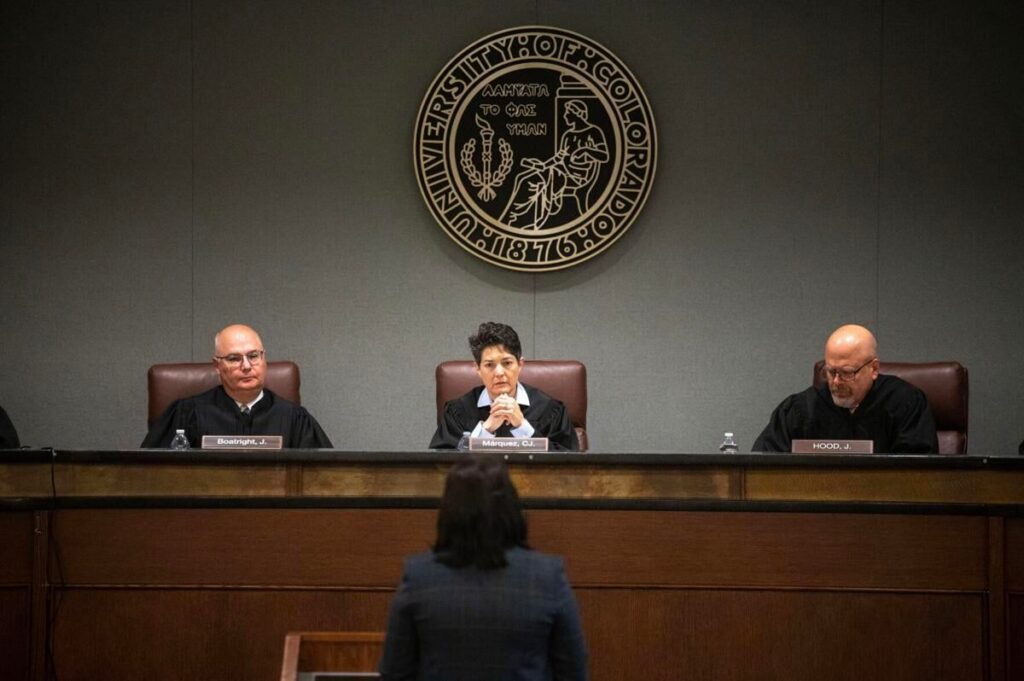
Colorado Supreme Court changes course, dismisses case about special district bonds
Michael Karlik
michael.karlik@coloradopolitics.com
Updated 6 hours ago
The Colorado Supreme Court declined on Friday to decide a dispute between a large-scale Commerce City development and the various districts financing it, after initially showing interest in the ongoing case. Colorado has roughly 2,800 special districts, which are local...

Colorado leaders express outrage and pain following 9/11 attacks | A LOOK BACK
Rachael Wright, Special to Colorado Politics
rachael.wright@coloradopolitics.com
Updated 2 days ago
Twenty-Five Years Ago This Week: “Responding to the 9/11 terrorist attacks, Colorado Gov. Bill Owens told reporters in a statement, “I join all Coloradans in expressing outrage and horror at the senseless terrorist bombings in New York and Washington D.C....