

Insights: Public documents still tell the story of Colorado’s racist past
Estes Park historian John Meissner wasn’t looking to start a ruckus. He was looking up information about Metropolitan Opera singer Georgia Graves, who owned a home in Stanley Heights, carved from the estate of F.O. Stanley, the wealthy inventor and the most beloved historical figure in town.
But as he leafed through the pages of her deed in the Larimer County Clerk and Recorder’s Office, Meissner stumbled upon an unpleasant chapter from Colorado’s past:
“None of said buildings or any part thereof shall at any time be used or occupied by, or sold, leased or given to any person or persons of any race other than the white race, but this restriction shall not prohibit any of the occupants from having employees who are not of the white race,” states the sixth of six rules.
Meissner was appalled, he told me. “This was the 1940s, not antebellum Colorado territory,” he said.
Stanley, or his people, reached the terms of the deal to sell the first 3-acre lot in the 215-acre subdivision to Graves and her husband on Aug. 31, 1940, according to the deed. Stanley died about five weeks later at 91 years old in Massachusetts.
Meissner has found no record that rule was ever formally removed as a condition to live in Stanley Heights, something that would dictate a court filing. He said that’s no reflection on the values of the people who live there today, and the rule would be totally unenforceable under today’s laws. But that’s not the point. History needs a record of removing it.
Meissner has found no one at all interested in doing that or making the deed part of the town’s record of its most famous resident.
“It’s been difficult,” Meissner said. “I thought I could bring it to the public’s attention, and this would be something they would want to address as part of our history.”

As Estes Park celebrates its 100th year as a town this summer, Stanley is, rightfully, bigger than ever, Meissner said. Without him, the historic tourist town would not be what it is today, a mix of mountain culture and carnival kitsch, Hollywood and history.
Besides the steam car and the other inventions that made him rich, and besides his famous hotel that would later inspire Stephen King’s “The Shining” and stand in as Aspen for “Dumb and Dumber,” Stanley was a philanthropist who was good to his adopted community. The way Estes Park got electricity is because Stanley brought it there to power his hotel. He helped provide a road through Big Thompson Canyon. He provided the town with Stanley Park and its fairgrounds. He was the driver behind the creation of Rocky Mountain National Park.
He and his heirs lived in their times. That doesn’t make them unique. It makes them human, flawed in eyes of history.
Beyond even business documents, many states, cities and counties still have archaic, unenforced Jim Crow provisions on their books, though they are made moot by other laws.
Technically, the Alabama constitution still allows school segregation.
Most Coloradans, myself included, had no idea before last year that our state constitution, penned in 1876, still allows slavery – for those in prison. We more commonly call it inmate labor now.
A bill to ask voters last November to make slavery officially unconstitutional in Colorado passed the legislature unanimously, then died on Election Day. The reason, most likely, was because the wording on the ballot was so confusing many people, myself included, couldn’t tell for sure if we were voting for slavery or against it. Amendment T lost by16,409 votes out of nearly 2.6 million ballots. So slavery remains.
For that matter, it remains in the U.S. Constitution, too, in the 13th Amendment: “Neither slavery nor involuntary servitude, except as a punishment for crime whereof the party shall have been duly convicted, shall exist within the United States, or any place subject to their jurisdiction.”
State Rep. Joe Salazar, a civil rights lawyer who is running for attorney general, helped fight the losing the cause on taking out slavery, surmised he lack of interest in Estes Park isn’t racism but unfortunate apathy.
“My family goes to Estes Park every year,” he said. “It’s a cool place, and we have never, ever felt disrespected or treated unpleasantly in any way. That kind of thinking doesn’t exist there anymore, I don’t believe.”
But writing a new chapter into history is about what this generation leaves behind, not what the older ones did, Salazar said.
“We have an obligation to future generations to address these things, so they know who we were and what we stood for,” he said.


Michael Dougherty is literally running for attorney general in Colorado Democrat’s 1st TV ad
Ernest Luning
ernest.luning@coloradopolitics.com
Updated 15 hours ago
Democratic attorney general candidate Michael Dougherty, the Boulder County district attorney, runs laps around the judicial complex in Denver that houses the office he’s seeking in a TV ad released Friday that includes a subtle dig at one of his...

Group aims to add right to hunt and fish to Colorado Constitution
Marissa Ventrelli
marissa.ventrelli@coloradopolitics.com
Updated 12 hours ago
A group is seeking to make Colorado the 25th state in the nation with an established constitutional right to hunting and fishing through a proposed ballot initiative. Backed by the International Order of T. Roosevelt, a group dedicated to preserving...

Colorado Politics Calendar June 15-21
Rachael Wright, Special to Colorado Politics
rachael.wright@coloradopolitics.com
Updated 4 days ago
CoPo’s weekly political calendar helps you find political and public policy events throughout Colorado. It includes candidate and issue campaign events, public policy meetings, court hearings, state and local party conventions, assemblies, debates, rallies, parades, speaking engagements, traveling dignitary appearances,...

A primary brings out primal instincts | SONDERMANN
Eric Sondermann
eric-sondermann@coloradopolitics.com
Updated 3 days ago
There are no Stanley Cup finals or NBA title showdowns involving local teams this June. In their place, we are inundated with primary election campaign ads. Coloradans can be excused for missing the diversion and alternate programming. But life can...

Dem-GOP tension dominates 1,000-bill legislative session | A LOOK BACK
Rachael Wright, Special to Colorado Politics
rachael.wright@coloradopolitics.com
Updated 3 days ago
Forty-Five Years Ago This Week: “I can honestly say that until now, we got along well with the governor’s office,” said House Minority Leader Federico Peña, D-Denver. “We visited frequently with the staff. And you didn’t see certain legislators speaking...
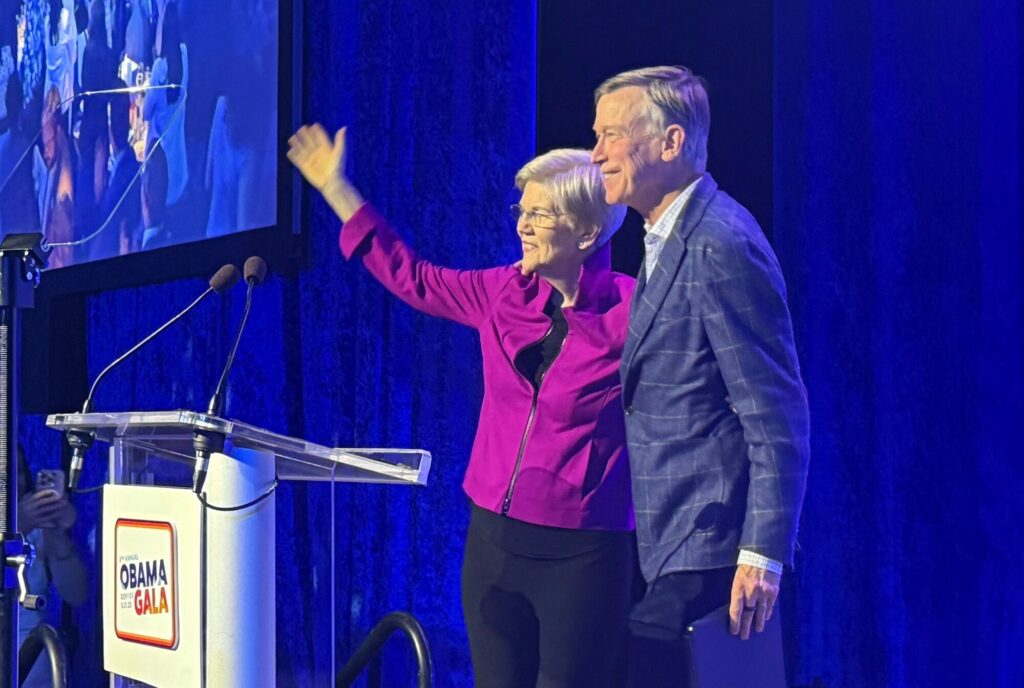
Hickenlooper lands endorsements from Elizabeth Warren, Ministerial Alliance in US Senate primary
Ernest Luning
ernest.luning@coloradopolitics.com
Updated 1 day ago
U.S. Sen. John Hickenlooper won endorsements this week from a progressive Democratic colleague and a coalition of metro-area African American faith leaders as voting began in Colorado’s primary election. U.S. Sen. Elizabeth Warren of Massachusetts and the Greater Metro Denver...
Colorado justices say insurers may access policyholders’ medical info in denied-benefits litigation
Michael Karlik
michael.karlik@coloradopolitics.com
Updated 2 days ago
The Colorado Supreme Court declined on Monday to expand its narrow prohibition on insurance companies accessing policyholders’ medical information, clarifying that a dispute over an insurer’s bad-faith decision to deny benefits is the only situation where a company is limited...

House District 14: Businesswoman, consultant square off in GOP primary
Mary Shinn
mary-shinn@coloradopolitics.com
Updated 2 days ago
Firearms training company owner Ava Flanell will face Troy Vanderhule, the chief fundraising officer for Dobson Philanthropic, in the June 30 Republican primary for state House District 14, an area in northern Colorado Springs. Flanell was appointed to the seat...
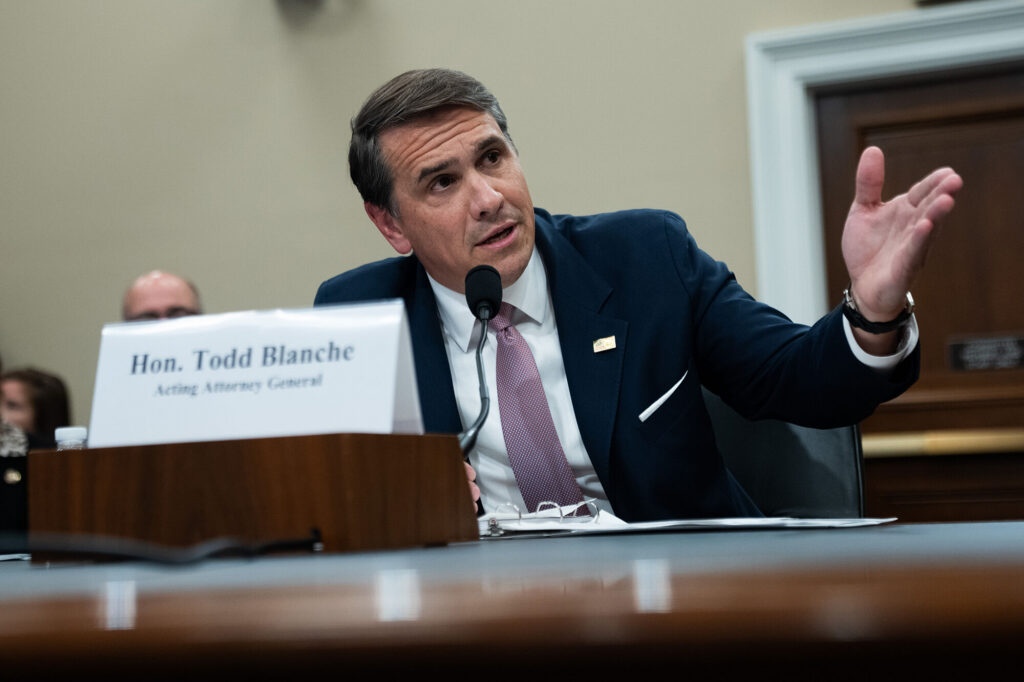
Federal judge wants Todd Blanche to swear in writing anti-weaponization fund won’t be revived
Jack Birle, Washington Examiner
jack.birle.washington.examiner@gazetteedit.wpenginepowered.com
Updated 2 days ago
A federal judge maintained a block on the Department of Justice’s $1.776 billion anti-weaponization fund Friday, despite the DOJ claiming they have abandoned the planned fund aimed at compensating allies of President Donald Trump and others who say they were politically targeted by...

Colorado Supreme Court declines to loosen requirements for insurance company defendants
Michael Karlik
michael.karlik@coloradopolitics.com
Updated 12 hours ago
The Colorado Supreme Court declined last week to reconsider its longstanding expectations for insurance company defendants, and agreed that an insurer failed to properly raise its defenses against a policyholder’s breach-of-contract lawsuit. When an insured driver has an accident with...