

Fearing deportation, Denver Latinos face higher property taxes
As Cinco de Mayo approaches, fear of deportation is prevalent among Denver’s Latino community, as it is across the country, due to the federal government’s tough stance on immigration and President Donald Trump’s actions, such as proposing a wall along the U.S.-Mexico border.
That was part of the preliminary findings from the Denver Latino Commission in its 2016 report to Denver City Council members. The commission was also asked to help the Council decide how to help residents respond to likely sharp property tax hikes in low-income, mostly Latino, communities.
Tariana Navas-Nieves and Vicki Lovato, Latino Commission co-chairs, recently presented the report to the Council’s Business, Arts, Workforce & Aeronautical Services Committee.
Lovato said a series of listening sessions and phone interviews with Latino leaders were conducted last year. From those, the commission tentatively identified some of the top challenges to the Latino community: Affordable housing, workforce training, transportation and mistrust with the federal government and Trump administration in Washington, D.C.
“It’s not easy for many to separate federal, state and city government,” Lovato noted, “so if one is seen as negative, it’s applied to all of them. How to separate that fear is tough.”
Most fears involved immigration, she added.
“There is confusion and many people are afraid they won’t be safe at school or at church,” Lovato said. “Denver has taken great strides to be a safe place, but the scary stories of someone being deported is what stands out.”
Navas-Nieves said one commission member is a professor at Metro State University and told others they he had not seen as many students who were afraid to travel home for Christmas as last December, “Because they didn’t know if they would be allowed back” into the U.S.
She said it’s hoped the commission can become a “trusted outsider” between the federal government and the Denver Latino community.
Lovato added the commission hopes to do a better job of letting Latino community members know when they can “have a seat at the table.”
Canary struggling for breath
Councilman Kevin Flynn suggested the commission take on a policy role for affordable housing, noting that Council districts 2, 3 and 11 — where many Latinos and low-income families live — were most affected by recent property value reassessments.
“They’re faced with potentially enormous property tax hikes when the bills are mailed out in January,” he said. “It sounds to me like the canary is struggling for breath in the coal mine.”
Flynn said the three districts could see an “onslaught” of people forced out or priced out of their homes because they can’t afford to pay higher property taxes.
“Maybe you have people with skills in taxes or real estate and they could give us some advice on what this Council might do to help people stay in their homes,” he said. “These are homes built in the 1940s and 50s and they’ve been well cared for. I’d hate to see people forced out by economic forces.”
Councilwoman Stacie Gilmore said financial literacy should also be addressed.
“There’s a possibility that property values in the districts Councilman Flynn mentioned might increase by up to 50 percent,” she said. “We need to use our networks to help educate people how assessments work. Tax bills won’t be mailed until January 2018, so we have a window of opportunity to talk to whatever groups and people we can reach.”
Gilmore also stated the city may need a funding stream to help certain residents pay their property taxes, and invited the commission to provide feedback and assistance.
“We can’t just say we’re sorry, because there are people on fixed incomes and no savings to fall back on,” she said. “If it comes out of the general fund or wherever, how can we help? We need the commission’s help or we’ll be facing mandated displacement and gentrification in certain communities.”
Councilman Paul Lopez, a former Latino commission member, noted the areas facing the highest property tax increases are the same ones that suffered the most from home foreclosures during the Great Recession of 2008.
“I know there are many people living in these areas that survived the foreclosure crisis but are in debt and have bad credit, so they can’t access their capital in their properties,” he said. “And when you can’t get a loan to help keep your house, the first thing you do is sell it. I’d hate to see that happen here.”
Other preliminary findings in the commission’s report are a perception that the Latino community is not included in decisions that impact them and that they are underrepresented in Denver leadership. On the plus side, Latinos think the city is working to strengthen ties and improve engagement; organizations are partnering with the city to fill gaps and needs; efforts to meet community needs have increased; and more information is shared in Spanish.
Also, even though more is needed, resources are reaching the Latino community; Denver is focusing on transportation, housing, public safety and community relations; Latino pride in community and culture is strong; many community Latino leaders are young up and comers; and the community has a strong commitment to social justice.


Group submits signatures for proposed Colorado graduated income tax
Marianne Goodland
marianne.goodland@coloradopolitics.com
Updated 10 hours ago
The measure, which eliminates Colorado’s flat tax, is expected to raise $2 billion in new revenue The proposal to amend the Colorado constitution to change the state’s flat rate into a graduated income tax came in under the wire Monday,...
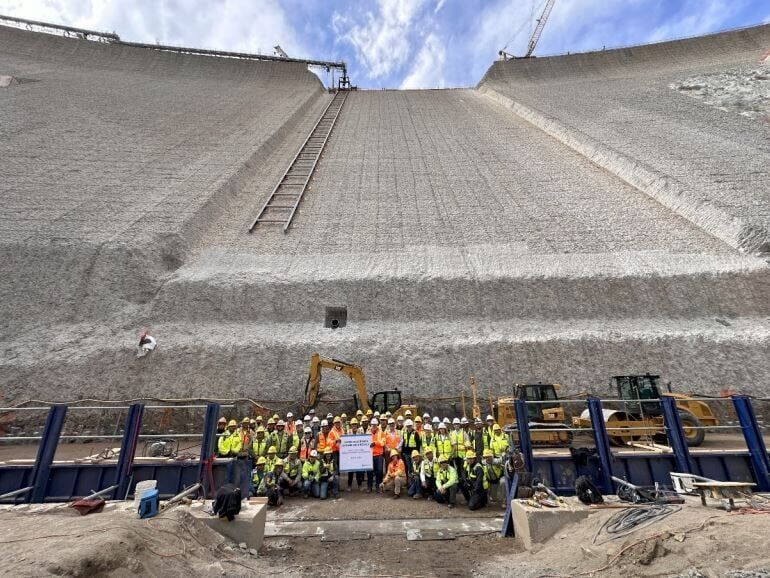
10th Circuit weighs Gross Reservoir expansion, judge’s ‘punishment’ of Denver Water
Michael Karlik
michael.karlik@coloradopolitics.com
Updated 8 hours ago
Members of the Denver-based federal appeals court considered on Friday whether they could intervene in an ongoing infrastructure project to enlarge a Boulder County dam after a trial judge deemed the underlying permit unlawful nearly two years ago. Denver Water...

Democratic group maps out path to Colorado House and Senate supermajorities
Marissa Ventrelli
marissa.ventrelli@coloradopolitics.com
Updated 11 hours ago
A national organization that works to elect Democrats to state legislatures has its sights on Colorado, unveiling a road map to establish a supermajority in both the House and Senate. Democrats have held a majority in the House since 2013...

10th Circuit upholds federal prohibition on juvenile handgun possession
Michael Karlik
michael.karlik@coloradopolitics.com
Updated 13 hours ago
The Denver-based federal appeals court concluded on Monday that Congress acted within its constitutional powers to make it a crime for juveniles to possess handguns in most instances. The decision from the U.S. Court of Appeals for the 10th Circuit...

Board of Peace demands Netanyahu cease Gaza airstrikes
The Washington Examiner
the-washington-examiner@coloradopolitics.com
Updated 14 hours ago
The Board of Peace is struggling to get Israel on board with its peace plan for Gaza as Israeli militia airstrikes continue to bombard the war-torn strip despite expectations for a ceasefire and de-escalation. Gaza City was hit repeatedly by...

Trump wants to give Iran ‘last chance’ to strike a deal before ‘decapitation’
Christian Datoc
christian-datoc@coloradopolitics.com
Updated 15 hours ago
President Donald Trump said this week’s talks with Iran will be the “last chance” for the Middle Eastern country to avoid a severe escalation in the war. Trump called off plans to strike Iran’s energy infrastructure over the weekend after...
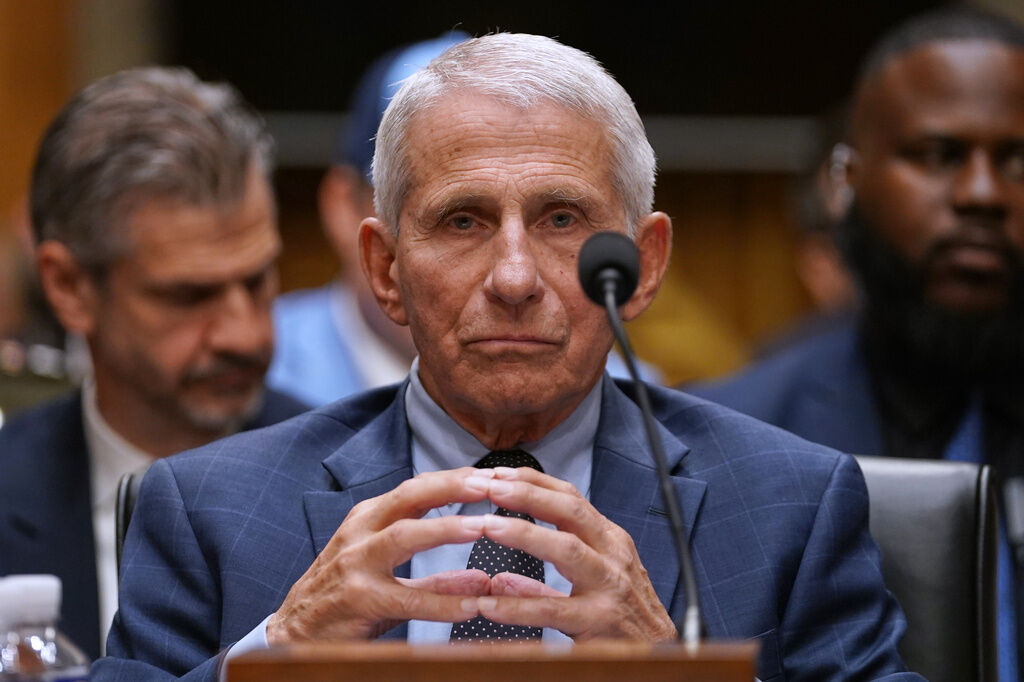
Fauci told Congress higher COVID-19 fatality rate than he calculated in diary: ‘More like 0.2-0.3%’
Mia Cathell
mia-cathell@coloradopolitics.com
Updated 15 hours ago
Dr. Anthony Fauci privately calculated that COVID-19 had a significantly lower fatality rate than what he told Congress a month later at the outset of the pandemic. On March 11, 2020, the day that the World Health Organization declared COVID-19...

Senate advances judicial nominee, Montezuma County judge agrees to discipline | COURT CRAWL
Michael Karlik
michael.karlik@coloradopolitics.com
Updated 16 hours ago
Welcome to Court Crawl, Colorado Politics’ roundup of news from the third branch of government. A U.S. Senate committee advanced a judicial nominee from Colorado, plus a Montezuma County judge agreed to receive discipline for his misconduct that stops short...

Tunnel to Towers brings 9/11 steel to Denver
Nicholas Fogleman
nicholas.fogleman@denvergazette.com
Updated 19 hours ago
A nationwide tour commemorating the 25th anniversary of 9/11 brought a piece of the World Trade Center to Denver on Saturday as the Tunnel to Towers Foundation hosted a ceremony at the Wings Over the Rockies Air & Space Museum....
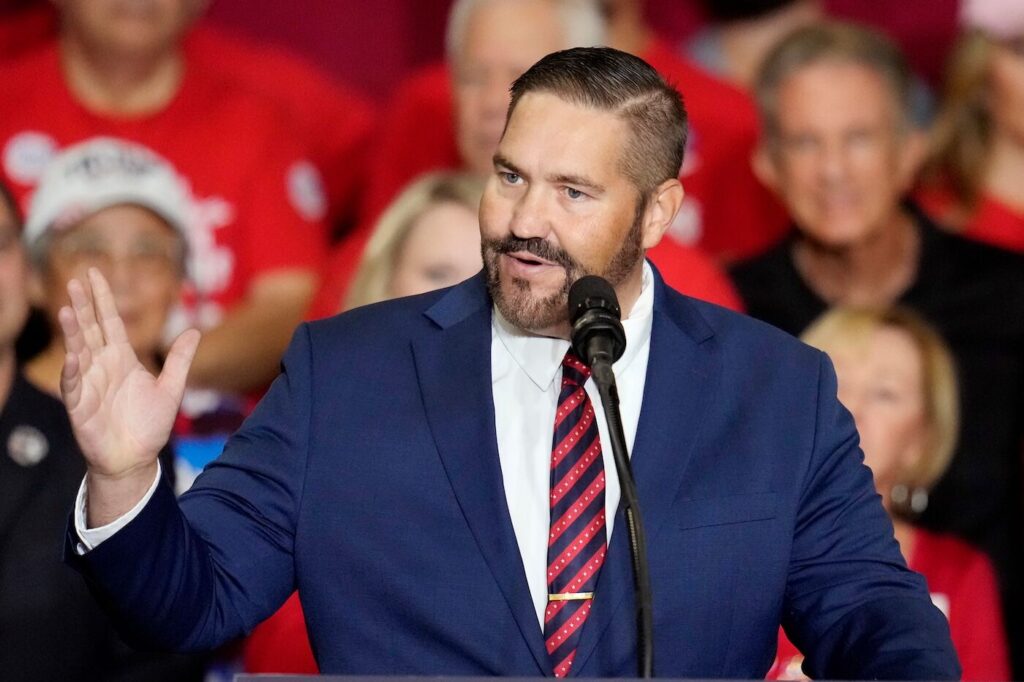
Top officials in Arizona’s Maricopa County agree on how to oversee elections | OUT WEST ROUNDUP
The Associated Press
the-associated-press@coloradopolitics.com
Updated 6 days ago
ARIZONA Officials agree on election oversight PHOENIX — Election officials in Arizona’s most populous county reached an agreement a week before the state’s July 21 primary on how to jointly oversee the vote, ending a prolonged legal battle. Republican Maricopa...