

Online sales taxes pose question of privacy versus revenue in Colorado
State Sen. Chris Holbert says Coloradans are about to feel some pain, and potentially some shame, when a 2010 law takes effect in July allowing the state to collect personal data about online purchases.
His Senate Bill 238 would waive a Colorado requirement that online retailers who don’t collect sales taxes to send the name, shipping address and amount paid for purchases to the state Department of Revenue.
The bill passed the Senate Finance Committee on a 3-2 party-line vote. If it makes out of the Senate, the Republican bill is a longshot in the Democratic-controlled House.
Without the change, however, the Colorado Department of Revenue will know how much a customer spent online in order to make sure customers pay up on purchases over $500 from retailers who do more than $100,000 in business in the state.
“If you or I spend $500 with Betty’s cakes. I don’t think anyone is going to think or wonder,” said Amy Stephens, a former House majority leader who is lobbying in support of Holbert’s bill.
“But it really does become different when it’s www.gunsamerica.com, or www.transgenderzone.com or www.crossdresser.com.”
But without verification paying the taxes would be on an honor system, which Holbert characterized as an “ancient standard of trust.”
Internet retailers also would be allowed to send e-mails instead of first-class letters to customers when sales tax isn’t charged for online sales, so customers know how much they have to pay the state on their tax returns.
Holbert said allowing the law to take effect without the change invites a bureaucratic nightmare rife with mistakes and hassles for taxpayers that lawmakers will be hearing about.
He cited the U.S. Constitution.
“The Fourth Amendment of the Constitution is thrown right out the window, because … the state of Colorado is going to subject people to what I believe is an unreasonable search of their person, their papers, their effects,” he said.
“Is that freedom? Is that liberty? You would be free to shop online, but you would no longer in Colorado be able to do it with liberty with the exemption of the heavy boot of government stepping into your life.”
The issue is a spinoff of Colorado’s battle to collect the so-called “Amazon tax” from the online giant.
After a five-year court battle with the state of Colorado, Amazon began collecting the tax last year.
In December the U.S. Supreme Court chose not to hear the online industry’s appeal of a lower court ruling that said allowing the retailers have to abide by the law passed by the Colorado legislature in 2010.
Judge Neil Gorsuch wrote in the lower court decision, “If anything, by asking us to strike down Colorado’s law, out-of-state mail order and Internet retailers don’t seek comparable treatment to their in-state, brick-and-mortar rivals, they seek more favorable treatment, a competitive advantage, a sort of judicially sponsored arbitrage opportunity or ‘tax shelter.'”
Amazon announced last week it would start collecting taxes in the last four states that has a statewide levy, Hawaii, Idaho, Maine and New Mexico. Five states have no state sales tax.
Samantha Curran of the Colorado Fiscal Institute said the bill would reverse progress the state has made in recouping sales taxes lost to online sales.
Curran said removing the notification retailers send to tax collectors means most people won’t bother to pay.
She noted that the legislative analysts estimated the bill could cost the state budget $4.7 million, “not a sum of money the state can afford to lose in a year when we’re pondering significant cuts to schools and other vital services.”
Holbert challenged whether the $4.7 million was real or a guess. He called the loss of tax revenue “a measure of pain, but I call it less pain.”
Cities and businesses hemorrhaging sales tax revenue to Amazon and other retailers also want tough enforcement, according to the Colorado Municipal League,
“Internet sales is actually one of my members’ most serious concerns, and it’s a concern that covers my entire membershipa, from small municipalities to large ones,” said Dianne Criswell, a lobbyist for the Municipal League.
Sen. Lois Court, D-Denver, also defended brick-and-mortar stores, saying she wouldn’t make it easier not to support them.
“Making it easier for people to circumvent the local businesses to go online is not what I want to do to our local businesses,” she said. “That’s not the way I want to make law in Colorado.”

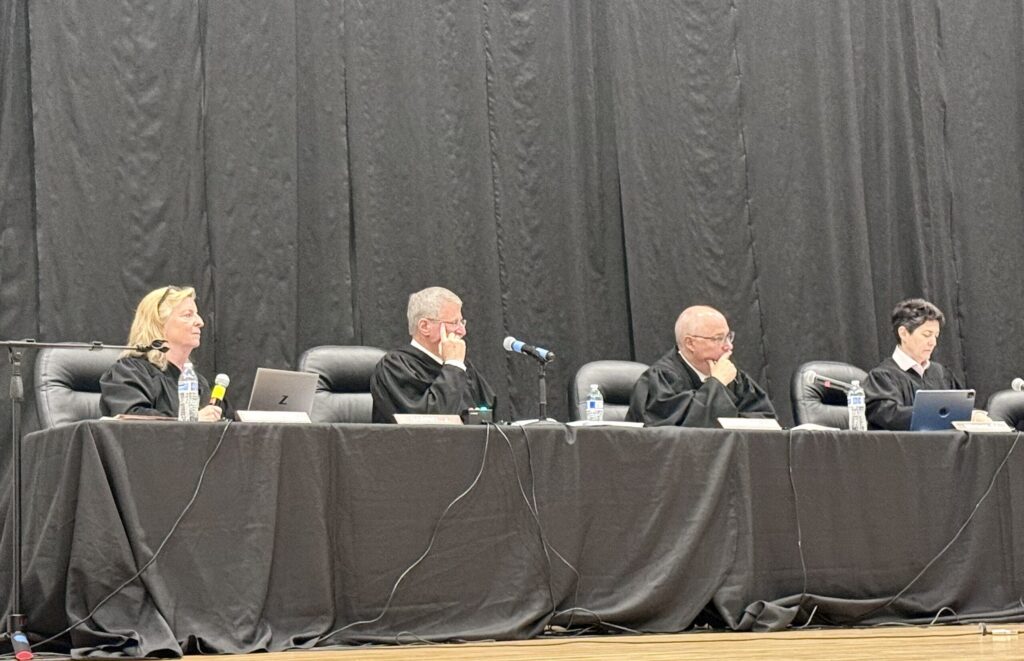
Parole, appeals deadlines and restitution: Colorado justices accept cases
Michael Karlik
michael.karlik@coloradopolitics.com
Updated 10 hours ago
The Colorado Supreme Court announced on Monday that it will determine how a defendant’s parole-eligibility date should be calculated in instances where a new trial results in a sentence being imposed retroactively to the date of the original, since-overturned sentence....

Federal judge rejects DOJ bid to force Colorado to hand over voter information
Marissa Ventrelli
marissa.ventrelli@coloradopolitics.com
Updated 14 hours ago
A U.S. district court judge has dismissed a lawsuit filed by the U.S. Department of Justice against Colorado Secretary of State Jena Griswold for refusing to provide the agency with personal voter information. Last December, the DOJ’s Civil Rights Division asked...
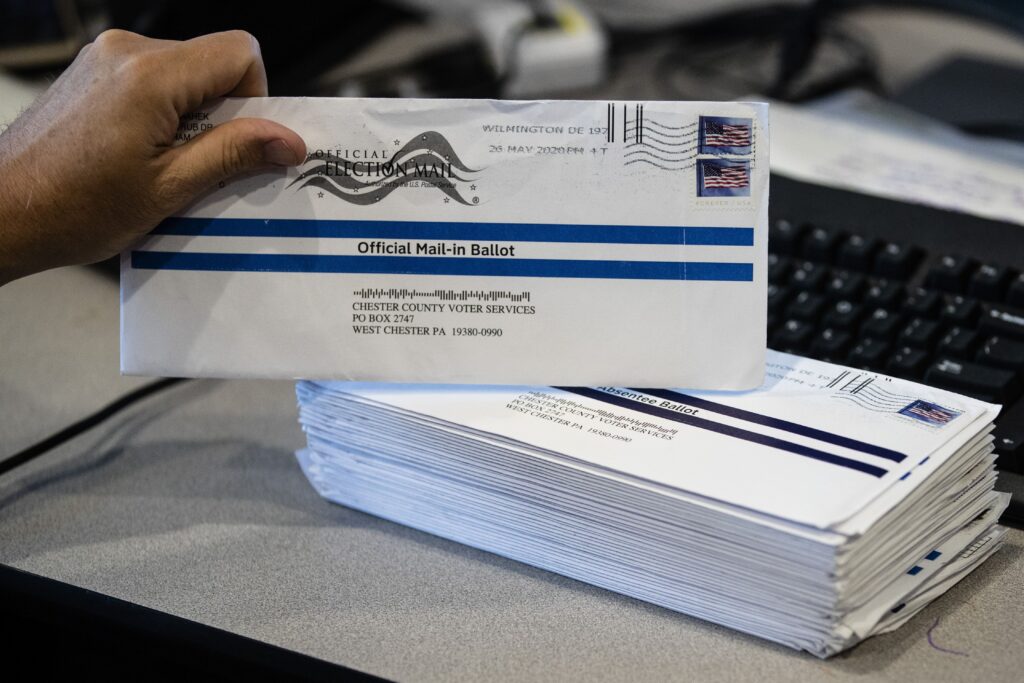
Democratic states warn Supreme Court that Trump mail ballot order would cause chaos ahead of midterm elections
Jack Birle
jack-birle@coloradopolitics.com
Updated 17 hours ago
A coalition of Democrat-led states warned the Supreme Court this week that lifting a block on President Donald Trump’s mail-voting executive order would cause “extreme” changes as states prepare to send out ballots for the midterm elections. The group of...

Trump’s lopsided losing record on ICE mandatory detention masks a closer legal fight
Kaelan Deese
kaelan-deese@coloradopolitics.com
Updated 17 hours ago
The Trump administration’s 6-2 losing record in appeals courts over its mandatory immigration detention policy looks like an overwhelming streak of losses. However, a closer examination of the judges behind those decisions suggests the policy may be less legally doomed...
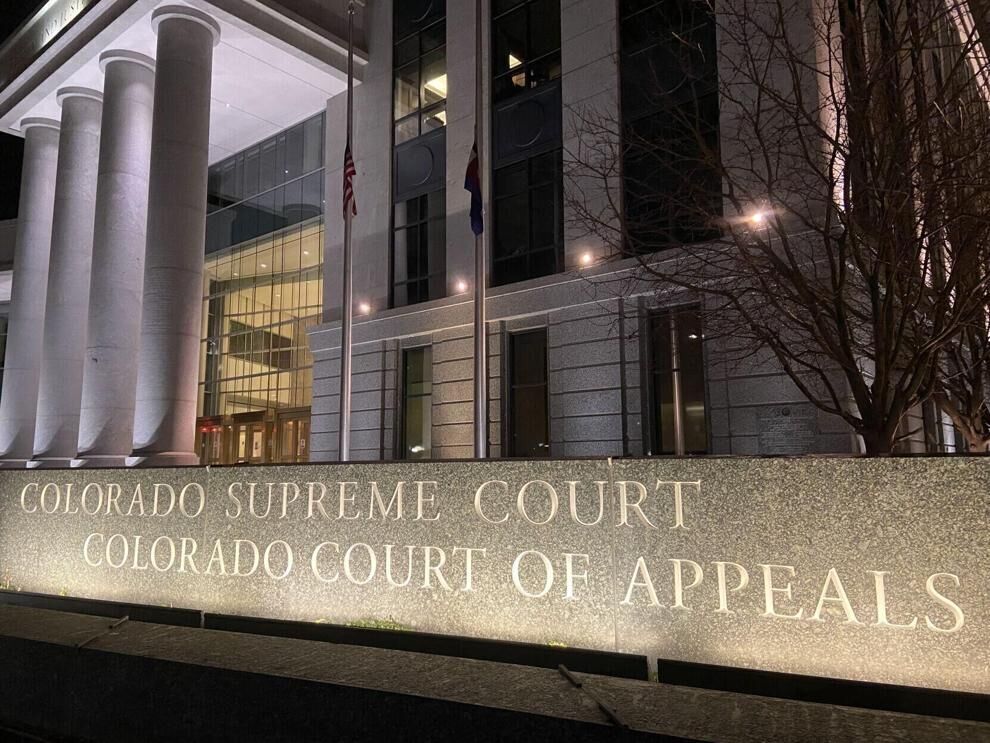
3 Colorado judges receive unfavorable retention recommendation as one performance commission violates rules
Michael Karlik
michael.karlik@coloradopolitics.com
Updated 19 hours ago
Of the 123 Colorado judges standing for retention on the November ballot, citizen-led performance commissions found that three did not meet the required performance standards. However, in an unprecedented move, the commission charged with evaluating Supreme Court and Court of...

Former Parker police sergeant pleads guilty to unlawful sexual conduct, misconduct charge
Nicholas Fogleman
nicholas.fogleman@denvergazette.com
Updated 19 hours ago
Former Parker Police Department Sgt. Troy Brienzo pleaded guilty Monday to a felony charge of unlawful sexual conduct by a police officer and first-degree official misconduct in Douglas County District Court. Brienzo entered the guilty pleas before Judge Ryan Stuart,...

U.S. News names Saint Joseph best hospital in Colorado, ending University of Colorado Hospital’s 13-year streak
Nico Brambila
nico.brambila@denvergazette.com
Updated 20 hours ago
University of Colorado Hospital is no longer Colorado’s top-ranked hospital for the first time in more than a decade, with Intermountain Health Saint Joseph Hospital taking the No. 1 spot in U.S. News & World Report’s latest rankings. Located on...

Appeals filed to send Project Taurus decision to the Colorado Springs City Council
Brennen Kauffman
brennen-kauffman@coloradopolitics.com
Updated 19 hours ago
At least one appeal has been filed over the proposed large-scale data center in Colorado Springs, sending the final decision to the Colorado Springs City Council. The filing seeks to overturn the Planning Commission’s decision on July 23 to deny...
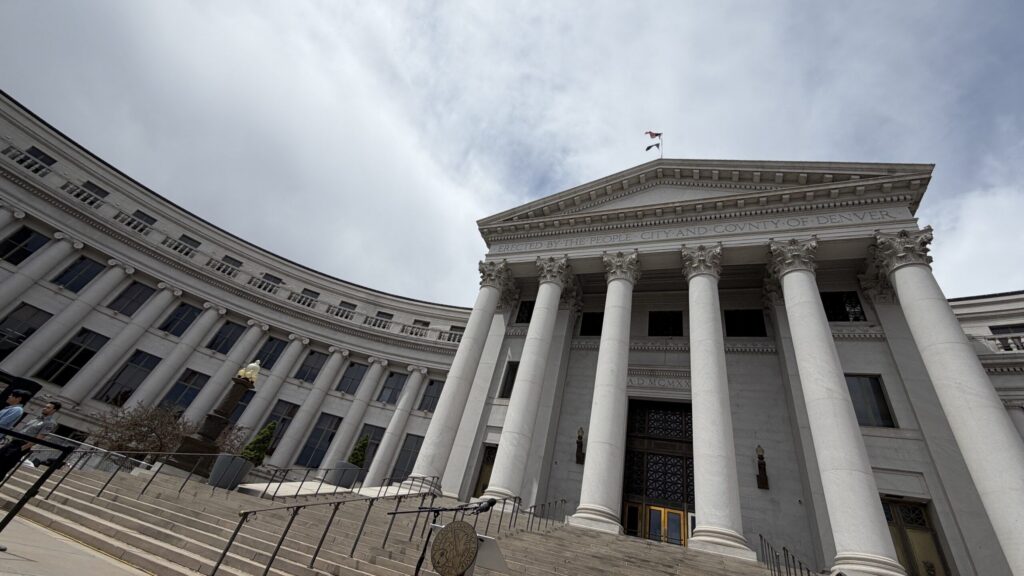
Denver City Council keeps 2 a.m. nightlife cutoff, approves $18 million for George Floyd protest claims
Deborah Grigsby
deborah.smith@denvergazette.com
Updated 20 hours ago
Nightlife establishments will not get a two-hour operating extension after the Denver City Council passed an amended version of a bill that keeps the current 2 a.m. closing time. As originally proposed, venues would have been able to keep music,...

Group submits signatures for proposed Colorado graduated income tax
Marianne Goodland
marianne.goodland@coloradopolitics.com
Updated 18 hours ago
The measure, which eliminates Colorado’s flat tax, is expected to raise $2 billion in new revenue The proposal to amend the Colorado constitution to change the state’s flat rate into a graduated income tax came in under the wire Monday,...