

Lundberg: ‘Absolutely’ it would be ‘messier’ to do away with Joint Budget Committee
State Sen. Kevin Lundberg doesn’t sound very enchanted with plans House Republicans have recently floated to change the way the Legislature writes the state’s annual budget.
The Berthoud Republican, a member of the powerful Joint Budget Committee, suggested in a recent interview with The Colorado Statesman that the six-member panel – three from each chamber and, because Republicans and Democrats split control of the General Assembly, three from each party – has opened its operations for all to see in an unprecedented manner and welcomes the involvement of any lawmaker who wants to participate.
In addition, he said, assembling Colorado’s annual budget – the budget for the next fiscal year’s General Fund, the state government’s discretionary spending, totals roughly $11 billion – already requires big last-minute tweaks in response to economic forecasts, but those adjustments could balloon by an order of magnitude if legislators spread across numerous committees were all crafting pieces of the budget, as some House Republicans have proposed.
House GOP leaders tossed out the possibility a couple weeks ago of revamping how the state formulates its annual budget, such as doing away with or vastly diminishing the role of the JBC and instead handing budget-writing authority to the various committees of reference. And then at the end of last week, state Rep. Paul Lundeen, R-Monument, said he was considering proposing even more sweeping changes on top of that, including shortening the legislative session and moving to a two-year budget process.
“I think we need to fundamentally change how we do the budget,” House Minority Leader Patrick Neville, R-Castle Rock, told reporters at a briefing.
“I think we have a problem when the JBC gets together and does a budget without having much input from the committees of reference, and much otherwise input,” he added. “It’s business as usual, the way we’ve been doing it.”
Neville said members of his caucus were coming up with ideas but probably wouldn’t introduce legislation this session, but last week Lundeen unveiled his proposal – “Shorten the session, bring the budget back to the people that represent the people,” in brief – in a video posted online. Lundeen said he’d like to see the General Assembly cut its annual 120-day session to 60 days in even-numbered years and 90 days in odd-numbered years, with lawmakers writing biennial budgets in the odd-numbered years.
Lundberg told The Statesman on Saturday that he understands the frustration lawmakers can feel when they’re presented with the state budget, known as the Long Bill, at the end of March – this year, that’s scheduled to happen next Monday, March 27 – but stresses that the JBC has made the process far more transparent.
“If you’re a legislator not on JBC, you’re pretty much presented with the final, accomplished facts,” he acknowledged. “However, several years ago, I think it really was pretty much a closed system, but the thing Sen. (Kent) Lambert” – the Colorado Springs Republican chairs the JBC – “did when he came on JBC is, he opened it up. Now the JBC publishes everything. Somebody brings a memo and the chairman, Sen. Lambert, will insist, ‘Is that on the website? And, if so, where can someone go to find it?’ Now, that’s something that’s already being done. Today, if a legislator says, ‘Well, you never told me,’ well, we did, but there’s so much info you can’t keep track of everything.”
Lundberg added that he’s made a point of soliciting input from fellow legislators at every opportunity.
“Something I’ve done is every time I’ve been in a caucus meeting or around other legislators, I’ll say, ‘We’re going to be talking about public safety, do you have any thoughts?’ And I can bring that back.”
He pointed out that the JBC spends nearly a solid four months – from the middle of November, after the governor proposes his budget at the start of that month, through the holidays with only a few days off, and into the session, the work reaching a breakneck pace as the deadline to introduce the budget looms – reviewing various budgets, weighing spending across the entirety of state government, all while keeping the various components in balance.
“We start on Nov. 14, after the election, and we have been meeting on a consistent basis – I think there was a little time off for Christmas and two days off for Thanksgiving, but other than that, it’s been day in and day out,” he said. “You dig as deep as you can, but we’ve been as transparent as we can as well.”
“Could we do it a different way?” Lundberg asked. “Sure. A lot of states do. Would it be messier? Absolutely it would be.”
Describing the massive task, Lundberg suggested that the dynamics – particularly with membership balanced between the parties – produce a stronger budget.
“There are some battles we’re fighting now on some specific things, but there are a lot of things we have kind of put to bed early, found a middle ground we can both live with,” he said. “It takes a minimum of four votes to pass anything in the JBC, so you’ve got to find four people who say, ‘Yes, I agree.’ There are some things that have come down to a 3-3 tie, and that means it dies. But you don’t exercise that too often, because, if you do, you’re going to get some tit-for-tat.”
Most of the 3-3 splits are along partisan lines “in this JBC,” he added. “But things can break down East Slope-West Slope, urban-rural. There have been a few issues where the governor wants this and, on the Republican side, we say, ‘No, that’s not a good idea.’ But you pick your battles pretty carefully when you’re on the JBC because, 95 percent of the time, you need to be in agreement with what you’re doing.”
As for scattering the budget process, even with 120 days to get through everything, once session starts, Lundberg chuckled at the prospect.
“If this were each committee of reference developing their own budget, well, the problem we’d end up with is we’d be, instead of hundreds of millions of dollars over budget, we’d be billions, and we’ve got to balance it at the end.”

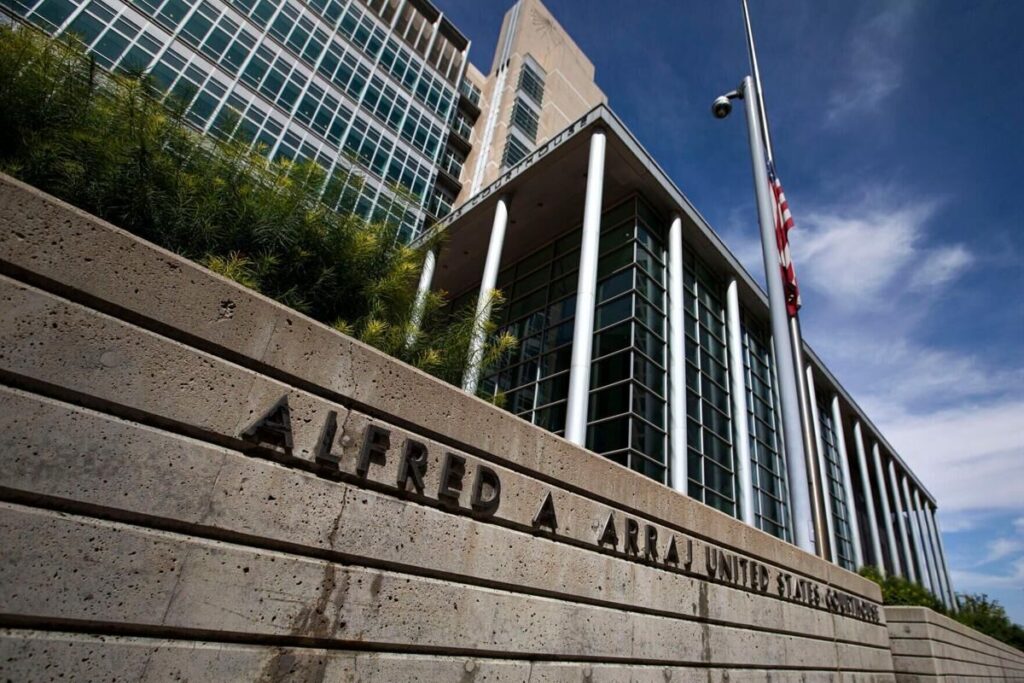
Federal judge directs plaintiff to revise complaint alleging Denver officers’ constitutional violations
Michael Karlik
michael.karlik@coloradopolitics.com
Updated 9 hours ago
A federal judge directed a plaintiff to revise his allegations on Wednesday to more precisely state what two Denver officers and the city itself allegedly did to violate his constitutional rights by facilitating his prosecution for murder until prosecutors dropped...
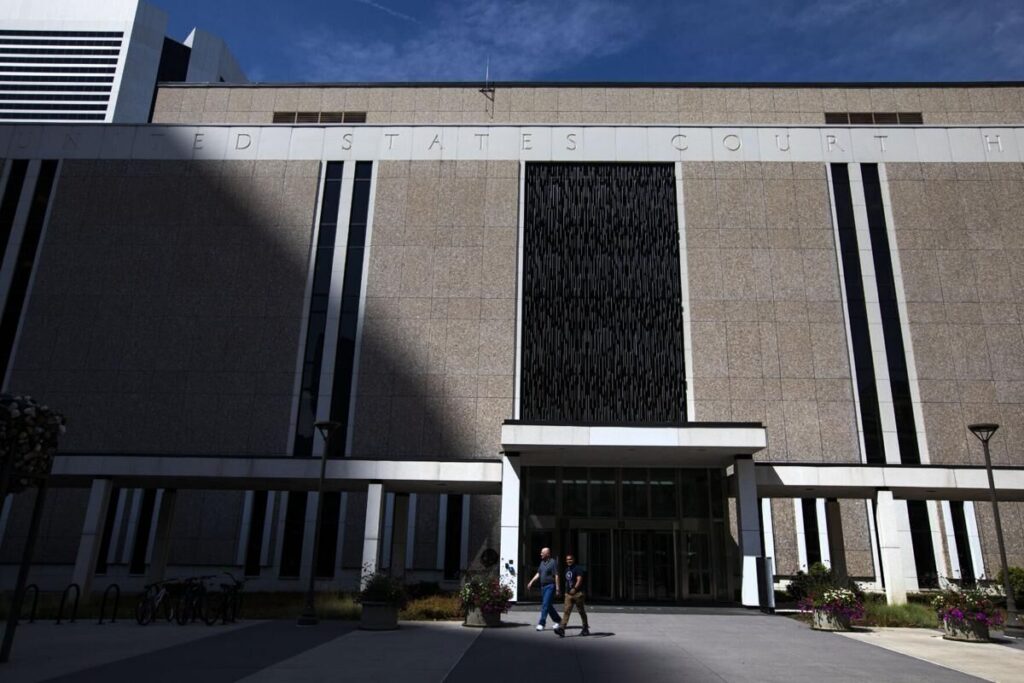
Federal judge explores new sanctions against ex-Colorado judicial discipline director
Michael Karlik
michael.karlik@coloradopolitics.com
Updated 13 hours ago
A federal judge on Wednesday directed Colorado’s former judicial discipline director, for the third time this year, to explain why she should not sanction him for his latest conduct in his litigation against the state’s judiciary. Christopher S.P. Gregory, who served...
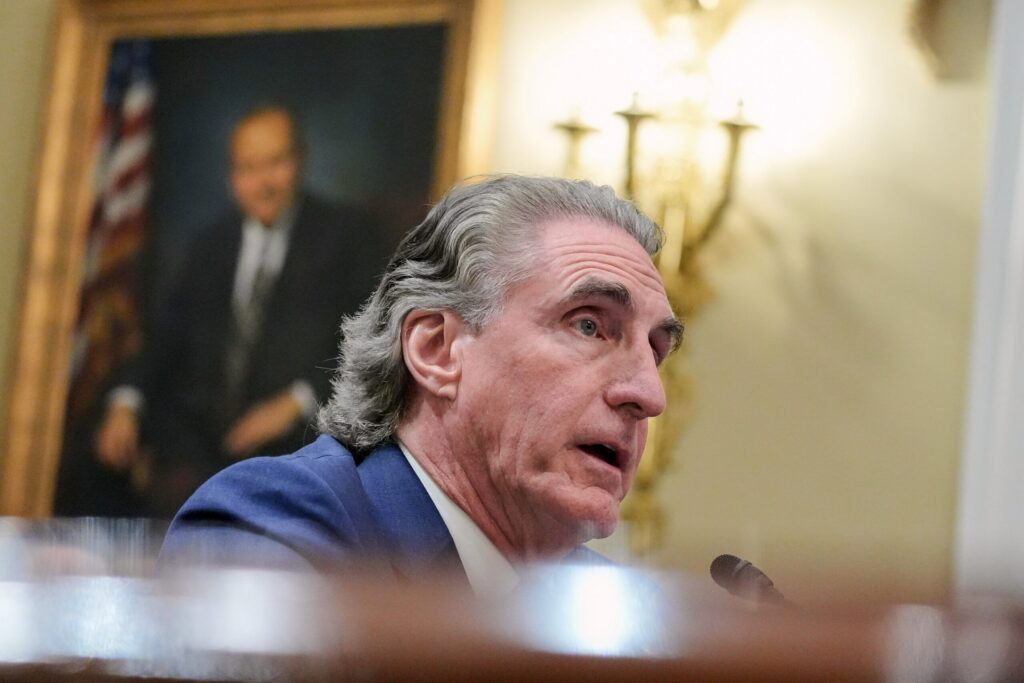
Colorado joins lawsuit challenging changes to Endangered Species Act
Marissa Ventrelli
marissa.ventrelli@coloradopolitics.com
Updated 13 hours ago
Colorado once more joined a coalition of states challenging the Trump administration — this time on proposed rules regarding the Endangered Species Act. The pair of lawsuits challenge new rules made under Interior Secretary Doug Burgum, who earlier said the...

Boebert challenger Eileen Laubacher says she’ll ‘break through the noise’ in Democrat’s 1st TV ad
Ernest Luning
ernest.luning@coloradopolitics.com
Updated 10 hours ago
Democratic congressional candidate Eileen Laubacher says she’ll take a different approach than her opponent in a campaign ad released Wednesday that opens with a cacophonous series of videos featuring Republican U.S. Rep. Lauren Boebert. “Eileen’s had enough of the noise...

Colorado congressman asks DOJ to investigate violent student ICE walkout
Nico Brambila
nico.brambila@denvergazette.com
Updated 12 hours ago
U.S. Rep. Jeff Crank is asking the Justice Department to investigate violence at last week’s anti-ICE student walkout in Denver, including whether outside organizations helped organize, fund, or influence the demonstration. Crank sent a letter Tuesday requesting the investigation to...
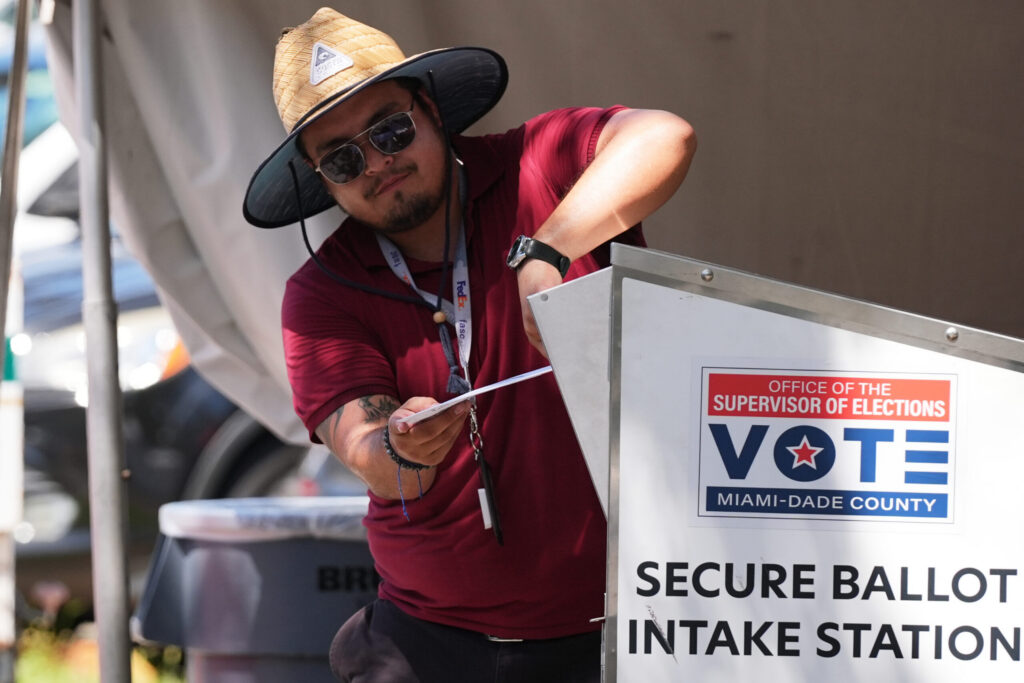
General election season is here. Where does mail-in voting stand?
David Zimmermann
david-zimmermann@coloradopolitics.com
Updated 16 hours ago
As the general election season approaches, the legal question surrounding the new U.S. Postal Service mail-in ballot requirements remains up in the air. With the case playing out in the courts, mail-in voting has not been changed substantially despite President...
10th Circuit orders second look at immunity for Kiowa County deputy over fatal vehicle crash
Michael Karlik
michael.karlik@coloradopolitics.com
Updated 11 hours ago
The Denver-based federal appeals court directed a trial judge on Tuesday to further analyze whether a Kiowa County deputy and the sheriff’s office may be sued for a fatal vehicle collision. The Colorado Governmental Immunity Act generally shields government entities and public...
Colorado justices to hear appeal in Kendrick Castillo death lawsuit, ‘fugitive’ rule
Michael Karlik
michael.karlik@coloradopolitics.com
Updated 11 hours ago
The Colorado Supreme Court announced on Tuesday that it will decide whether it was proper to dismiss a lawsuit over the 2019 shooting death of Kendrick Castillo after the defendants paid the maximum amount of damages available to Castillo’s parents,...

Two more wolves killed by Colorado wildlife staff
Marianne Goodland
marianne.goodland@coloradopolitics.com
Updated 2 days ago
Two yearling wolves from the Copper Creek and Three Creeks packs in Pitkin and Rio Blanco counties, respectively, were killed by Colorado Parks and Wildlife staff on Monday. That brings to 19 the number of wolves that have died under...
Federal judge dismisses Douglas County’s challenge to collective bargaining law
Nicholas Fogleman
nicholas.fogleman@denvergazette.com
Updated 20 hours ago
A federal judge dismissed claims brought by the Douglas County Board of Commissioners alleging that a state law granting county employees the right to organize and join labor unions violates free speech protections and conflicts with federal labor law. Douglas...