

Wyoming cuts wolf hunt in half to buoy region’s disease-depleted population | OUT WEST ROUNDUP
WYOMING
Wolf hunt cut in half
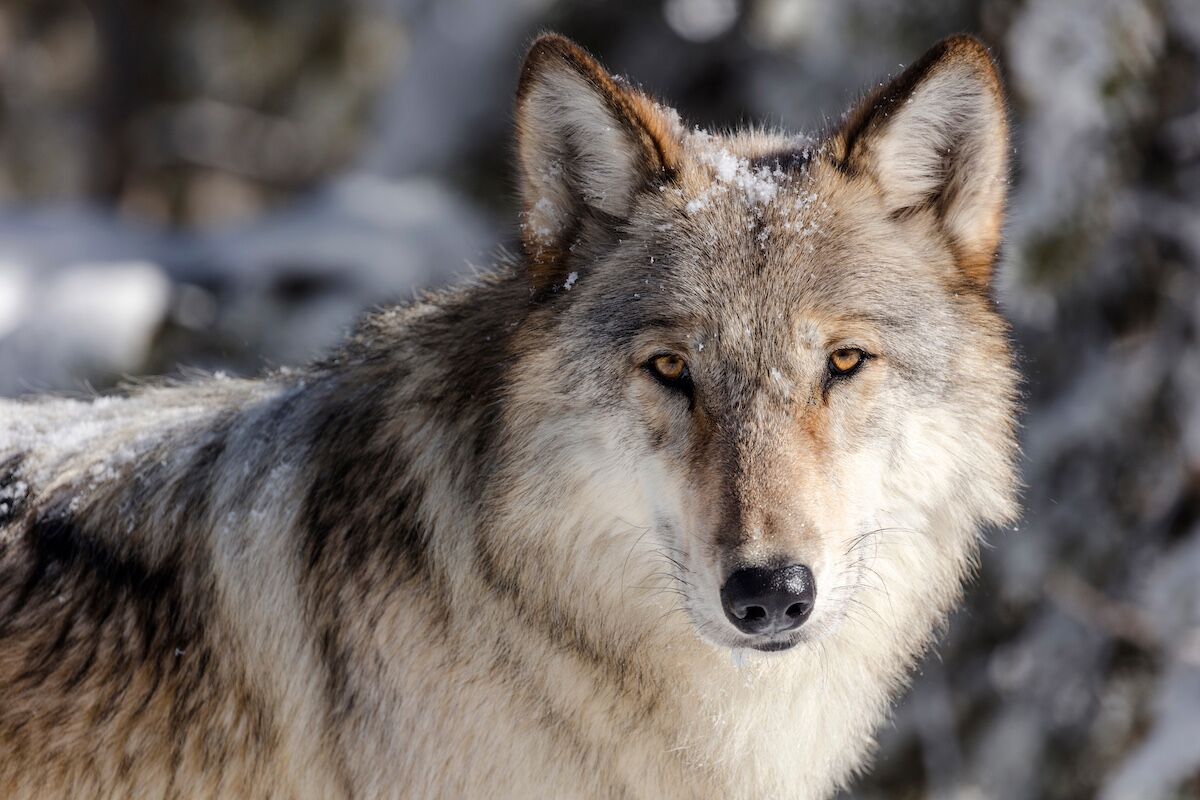
Wyoming wildlife managers plan to reduce how many wolves can be hunted by 50% following a canine distemper outbreak that has cut the state’s wolf numbers to the lowest level in two decades.
A 22-wolf cap is the fewest number of wolves available to licensed Wyoming hunters since the state began allowing wolf hunting after Endangered Species Act protections were lifted in 2012. The limit also marks a significant decrease from last fall’s wolf hunting season.
Last year, hunters could target a maximum of 44 wolves in the area around the Greater Yellowstone Ecosystem, where Wyoming classifies wolves as trophy game during the Sept. 15-Dec. 31 season. Hunters bound to Wyoming’s relatively tight regulations in that zone managed to kill 31 wolves.
It wasn’t hunting, however, that resulted in the lowest population since wolves were still being established after the 1995-96 Yellowstone National Park reintroduction. Biologists say a canine distemper outbreak is the primary culprit in the decline. The measles-like disease is especially deadly for puppies, and it was detected in 64% of the animals that Wyoming biologists handled during routine capture work last year.
As the calendar turned to 2026, state and federal biologists tallied 253 wolves and 14 breeding pairs statewide. Those are decreases, respectively, of 23% and 42% from the 330 wolves and 24 breeding pairs estimated at the end of 2024.
Court records access weighed
CHEYENNE — After years of discussions about modernizing Wyoming’s court records system to allow greater accessibility, state lawmakers are once again considering making a change.
Discussions during a May 13 Joint Judiciary Committee meeting concerned the financial and logistical challenges to potentially providing remote public access to court records, as many states across the country have already done.
While transparency advocates argued that the current system of driving to local courthouses is a relic of the past, court officials warned that electronic access does not mean easy access and pointed to potential financial challenges.
Currently, remote access in the state is largely limited to Supreme Court dockets and fee-based access for the Chancery Court. For everything else, citizens must physically visit a courthouse computer terminal.
Parker Jackson, a staff attorney with the Goldwater Institute, said that Wyoming is roughly “40 years behind where the federal government is” with its PACER system, which has provided remote access to federal court filings since the late 1980s. However, Elisa Butler, state court administrator for the Wyoming Judicial Branch, said that a single remote access system could cost anywhere from $250,000 to $600,000 just for the initial build, not including exponential increases in cloud storage costs for mirrored documents.
The committee left the door open for a potential bill draft in late 2026, provided lawmakers can find a way to fund the digital expansion without compromising the privacy of Wyoming residents.
NEW MEXICO
Diocese sued over border land
To install more border barriers, the Trump administration wants to seize 14 acres of land on an iconic mountain outside of El Paso owned by the Catholic Diocese of neighboring Las Cruces, New Mexico, that attracts thousands of people for an annual religious pilgrimage.
The land the federal government wants to take sits at the bottom of Mount Cristo Rey, a 720-foot-tall mountain with a 29-foot-tall statue of Jesus Christ at its summit, that overlooks Ciudad Juárez, El Paso and Sunland Park in New Mexico.
In May, lawyers for the Trump administration filed a lawsuit in a federal court in New Mexico against the diocese of Las Cruces, which is resisting the government’s attempt to take the land. The lawsuit argues that the federal government needs the land to install barriers and other technology “designed to help secure the United States-Mexico border.”
The administration said in court documents that it has offered the church $183,000 for the land.
The church said in court documents the Trump administration’s efforts violate its First Amendment right to religious expression.
Every fall, up to 40,000 people make a pilgrimage to the top of the mountain, where the Diocese of Las Cruces and El Paso host a mass. Some do the five-mile journey barefoot, others have crawled to the summit on their knees.
The Trump administration has said the area is a high-traffic route for human smuggling and it wants to close the gap to stop illegal immigration.
MONTANA
Groups sue over corner-crossing
Two public land access groups filed a lawsuit on May 14 challenging Montana Fish, Wildlife and Parks’ position that corner crossing is “unlawful” in Montana.
The Montana Chapter of Backcountry Hunters and Anglers and the Public Land Water Access Association raised public participation and public trust doctrine claims in their 34-page filing before the Lewis and Clark County District Court. The plaintiffs also take issue with the state’s interpretation of trespassing statutes, a central piece of the legal dispute surrounding corner crossing.
The groups are asking the court to reverse FWP’s guidance on the issue, arguing that it “is in conflict with existing legal authority, is not based on an established statute or common law precedent in this state, is an abrogation of the state’s public trust duties, and is in direct conflict with the recent adjudication of the merits of this issue” in the 10th Circuit Court of Appeals. The “public trust duties” refers to a centuries-old legal doctrine holding that state lands and natural resources such as wildlife “shall be held in trust for the people.”
Corner crossing is the act of stepping from adjoining corners of public land where alternating sections of public and private land exist in a checkerboard pattern. Corner crossing has generated increasing interest in the West after digital mapping company OnX published a 2022 report revealing 8.3 million acres of “corner-locked” land in the U.S., 871,000 of which are in Montana.
A trio of state and federal rulings siding with four Missouri hunters who crossed corners to access public land during a hunt in Wyoming accelerated interest in the topic, as did Montana Fish, Wildlife and Parks’ insistence that the practice “remains unlawful in Montana.”


Colorado Politics Calendar Sept. 7-13
Rachael Wright, Special to Colorado Politics
rachael.wright@coloradopolitics.com
Updated 5 days ago
CoPo’s weekly political calendar will help you find political and public-policy events throughout Colorado. It includes candidate and issue campaign events, public policy meetings, court hearings, state and local party conventions, assemblies, debates, rallies, parades, speaking engagements, traveling dignitary appearances,...

Blue-collar support trends highlighted GOP gains among rank‑and‑file workers | A LOOK BACK
Rachael Wright, Special to Colorado Politics
rachael.wright@coloradopolitics.com
Updated 4 days ago
Forty-five years ago this week: Kathy Oatis of the Colorado AFL-CIO’s Committee on Political Education said that organized labor had a negative image with the American voter. “I don’t think the country is against us,” said Oatis. “I think the...

The dissonance of an American Jew thinking about Israel | SONDERMANN
Eric Sondermann
eric-sondermann@coloradopolitics.com
Updated 4 days ago
The Jewish High Holidays will soon be upon us. The third anniversary of Oct. 7 will then quickly follow. Three weeks later, Israeli voters will head to the polls to elect all 120 members of its parliament, the Knesset and...

Parenting from prison: Inmates hope to be present in their children’s lives, while physically absent
Marianne Goodland
marianne.goodland@coloradopolitics.com
Updated 18 hours ago
The room was decorated with balloons, the tables sparking bright with colors as the smell of pizza and cake wafted through the air. As did music. This was, after all, a father-daughter dance. Except this was not a typical father-daughter...

Colorado House ethics committee issues ‘stern letter’ to Democrat over caucus funds mismanagement
Marianne Goodland
marianne.goodland@coloradopolitics.com
Updated 22 hours ago
The Colorado House ethics committee on Friday voted unanimously to issue a “stern letter” to Rep. Mandy Lindsay, D-Aurora, regarding her mismanagement of House Democratic caucus funds. The committee further voted to request that Lindsay resign as Democratic Caucus co-chair...
Appeals court confirms Colorado judges can compel electronic records from out of state
Michael Karlik
michael.karlik@coloradopolitics.com
Updated 22 hours ago
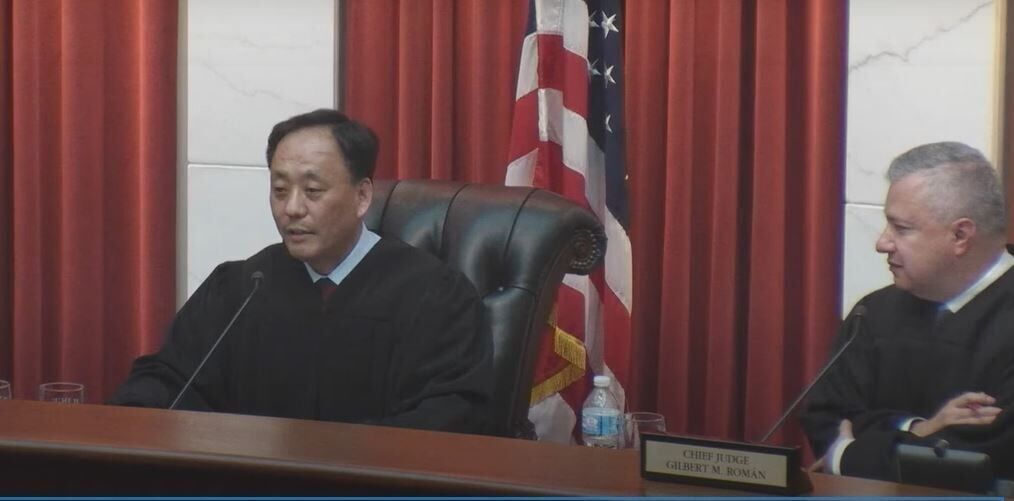
Colorado’s second-highest court clarified on Thursday that judges are empowered to compel out-of-state companies to produce electronic records under state law. El Paso County jurors convicted Mischa Jargowsky on three counts of money laundering and one violation of Colorado’s organized...
Federal judge extends block on Trump executive order seeking to limit mail voting in the midterms
The Associated Press
the-associated-press@coloradopolitics.com
Updated 3 days ago
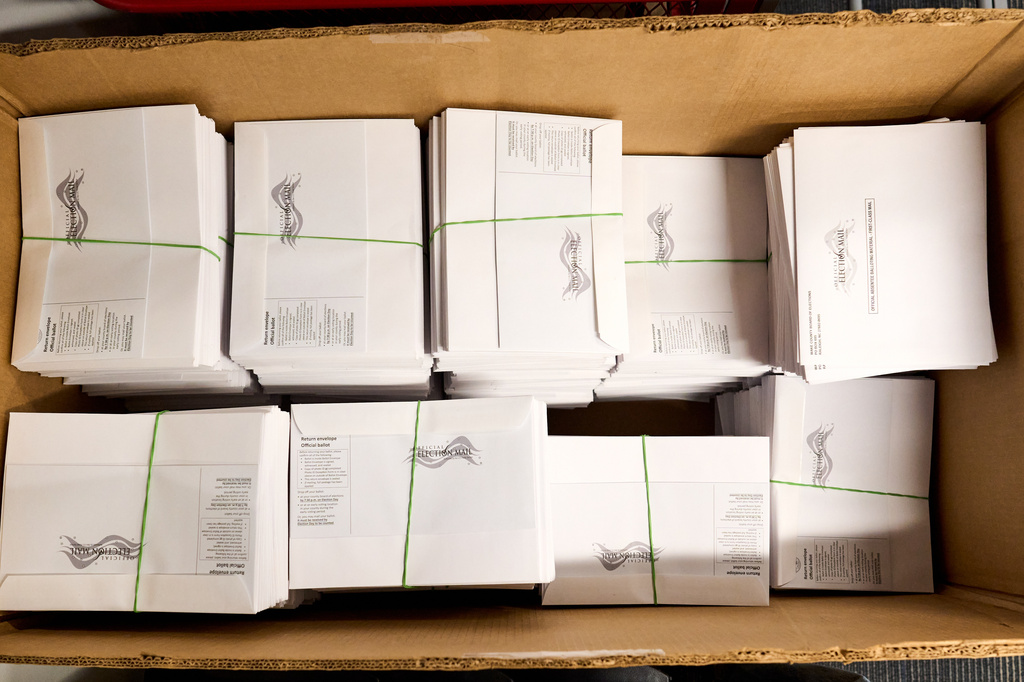
A federal judge on Friday extended her prohibition against the U.S. Postal Service implementing President Donald Trump’s executive order seeking to limit mail voting during the midterms, putting another major obstacle in the way of the administration as the first...
Mullin asks DOJ to review voter data sharing tied to Zuckerberg-funded nonprofit group
The Washington Examiner
the-washington-examiner@coloradopolitics.com
Updated 21 hours ago
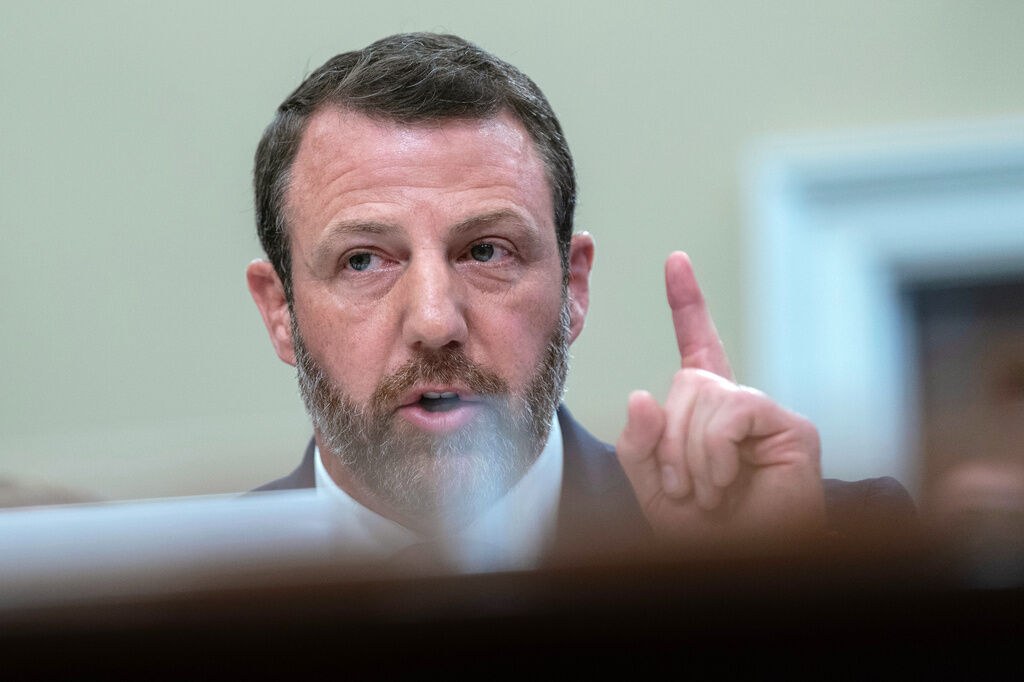
Washington Examiner Homeland Security Secretary Markwayne Mullin asked the Justice Department this week to review whether election-related nonprofit groups, some with multimillion-dollar backing from a Mark Zuckerberg-linked nonprofit, improperly received sensitive state motor vehicle and voter-registration data. In a letter...
Colorado secures FEMA support for wildfire, flooding and mudslide recovery
Marissa Ventrelli
marissa.ventrelli@coloradopolitics.com
Updated 2 days ago
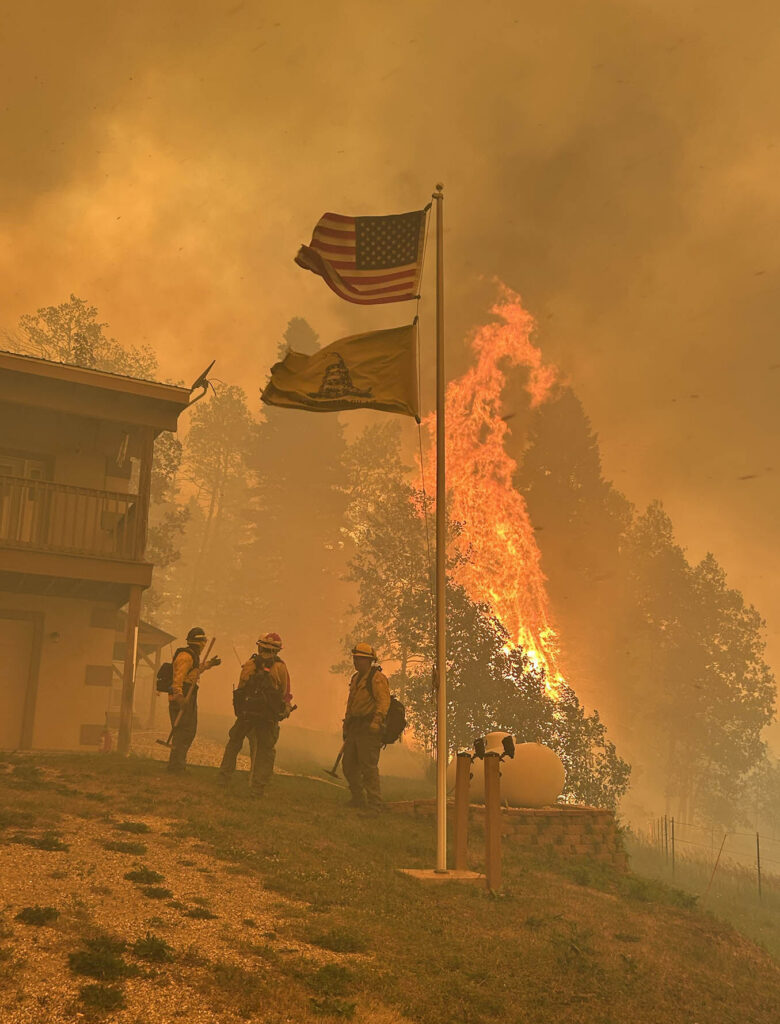
Federal authorities on Friday approved Colorado’s request for federal public assistance to help communities devastated by the Aspen Acres and Gold Mountain Fires. The Federal Emergency Management Agency did not announce how much the state would receive but confirmed that...
State seeks $50K penalty against GOP candidate Victor Marx over alleged campaign finance violations
Deborah Grigsby
deborah.smith@denvergazette.com
Updated 2 days ago
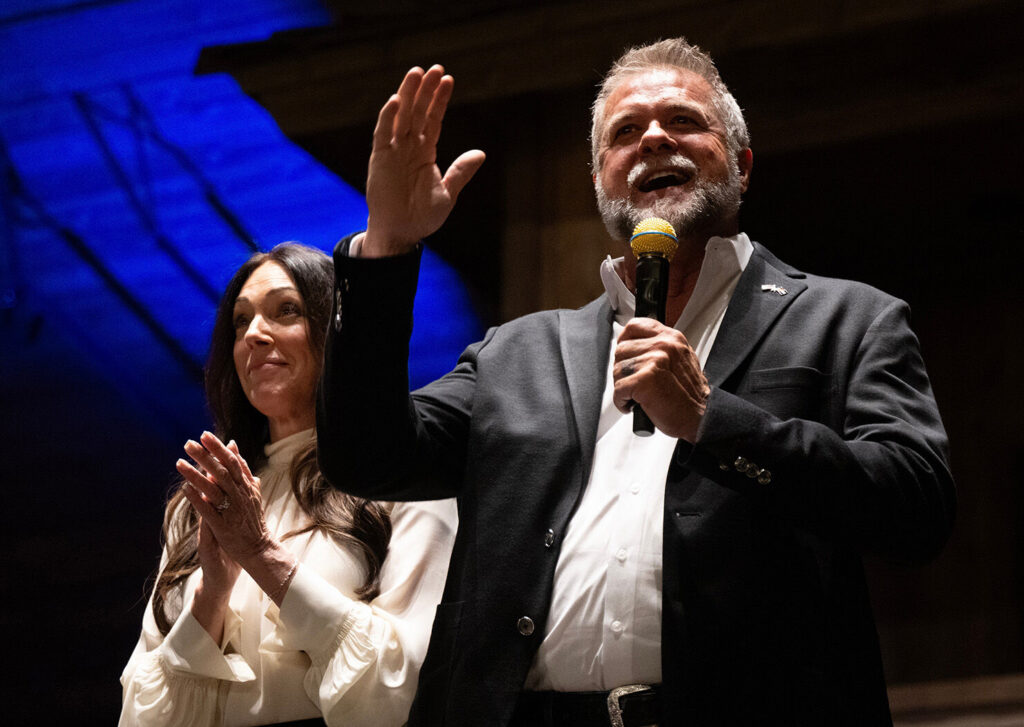
Republican gubernatorial candidate Victor Marx is looking at more than $50,000 in fines in what the Elections Division of the Office of the Secretary of State calls “unprecedented” campaign finance violations. The state has not imposed that fine yet, and...
PREV
PREVIOUS

A tale of two debates | Vince Bzdek
Ballots go out Monday as the June 30 state primary elections bear down on us. As a result, it is suddenly the season of proliferating political debates, and there have been some doozies already. I had the chance to see two very different debates in the last week, and comparing and contrasting them speaks volumes about the […]

Bennet wants to be Colorado's next governor | Cronin and Loevy
U.S. Sen. Michael Bennet is considered the front-runner in the Colorado Democratic Party primary contest for governor. His major opponent is current Colorado Attorney General Phil Weiser. The Democratic primary election is June 30. Registered Democrats and unaffiliated voters who choose to can vote in this election. Ballots are being mailed out starting Monday. Michael F. Bennet, 61, was born in New Delhi, India, where his father […]