

Compromise in the works on Hospital Provider Fee to fund rural Colorado
Senate Democratic Leader Lucia Guzman on Tuesday asked a committee to kill legislation that would have restructured the Hospital Provider Fee, saying she is working on a bipartisan fix.
Sen. Jerry Sonnenberg, R-Sterling, the president pro tem, is working with Guzman, though he declined to offer details on the proposal, which is still being crafted.
Lawmakers say they have permission to introduce legislation in the last 50 days of the session.
Stakeholders who are part of the conversation say the measure would include a compromise on restructuring the Hospital Provider Fee, a thorny issue that has plagued the legislature as lawmakers search for a way to free money for critical services and programs.
The proposal would address funding for rural hospitals, in addition to money for rural roads and schools.
It would look similar to a proposal highlighted by Sonnenberg last week when he suggested a supplement to a centerpiece transportation funding bill. Sonnenberg’s proposal would provide $100 million for projects in rural Colorado.
The major transportation funding bill – which is sponsored by legislative leaders in both the House and Senate – calls for a 20-year 0.62 percent sales tax increase to fund transportation projects, raising about $677 million per year.
The tax increase would have to be approved by voters.
The legislation also would allow for $3.5 billion in bonding, in which voters would approve a loan for transportation funding, and it would lower vehicle registration fees.
Sonnenberg said last week that his supplement for rural Colorado, which is likely to become the bipartisan bill mentioned by Guzman, would rely on Senate Bill 228 funds. Those funds were passed in 2009 as a supplement to the $200 million annual infusion from higher vehicle registration fees, which were required in 2009 by the Funding Advancements for Surface Transportation and Economic Recovery Act, or FASTER.
Senate Bill 228 is triggered when personal income rises by 5 percent, but it’s limited by refunds caused by the Taxpayers’s Bill of Rights.
Under Sonnenberg’s proposal, the $100 million per year for rural Colorado would be covered by about $1.3 billion in bonding, he said.
“I’m working on doing something without a tax increase,” Sonnenberg said last week.
The proposed legislation is also said to address entitlement spending, including Medicaid.
Hospitals, especially in rural Colorado, are concerned after Hickenlooper proposed reducing collections of the Hospital Provider Fee to balance the state budget.
Maximum allowed collections of the fee would be reduced by $195 million, thereby lowering taxpayer refunds prescribed in the Taxpayer’s Bill of Rights. The fee helps trigger refunds by contributing to TABOR spending limit calculations.
“Now more than ever, with the continued pressure on the state budget and uncertainty at the federal level, it makes sense to consider putting the hospital fees in a separate fund,” said Steven Summer, president and chief executive of the Colorado Hospital Association, which has been working with Sonnenberg.
The bill Guzman spiked on Tuesday would have restructured the Hospital Provider Fee as an enterprise fund, or government-owned business. The idea is popular with Democrats, though largely toxic within Republican circles. Some Republicans, however, have come around.
Senate President Kevin Grantham, R-Canon City, made it clear this year that the Hospital Provider Fee proposal was not going to pass the divided legislature.
The provider fee is assessed on hospitals to force a match of larger federal health care dollars, which generates about $700 million per year. Guzman’s legislation would have exempted the hospital fee from TABOR, lowering taxpayer rebates set aside in the general fund, thereby freeing money for spending.
Sonnenberg has maintained that he would support a restructuring of the provider fee if the overall base of state tax revenue is also addressed. By reducing the base, which determines the TABOR spending cap, taxpayer refunds would be protected for years to come.
“I proposed six months ago taking the Hospital Provider Fee and doing exactly what TABOR says,” Sonnenberg said. “Take the Hospital Provider Fee, move it out to an enterprise, and lower the cap by the same amount.”
Guzman said there is hope for a bipartisan compromise.
“As I stated before my colleagues in the Senate Finance Committee, I am looking forward to continued work on a solution to tackle the fiscal issues facing Colorado’s rural hospitals,” Guzman said in a statement shortly after she asked the committee to kill her bill.
“Ensuring rural hospitals have access to critical funds that increase delivery of care is of the utmost importance to their survival. With 50 days left in the legislative session, it is my hope we can achieve a bipartisan solution that will go even farther to achieve this goal, which is why I decided to shelve Senate Bill 57 in committee today, in order to move forward.”
Gov. John Hickenlooper, a Democrat who first proposed the Hospital Provider Fee change in 2015, said he is open to a compromise.
“Everyone has felt that if there’s ever going to be any progress on the HPF or transportation, that it’s going to have to be bipartisan,” Hickenlooper said. “I think this is a good sign.”

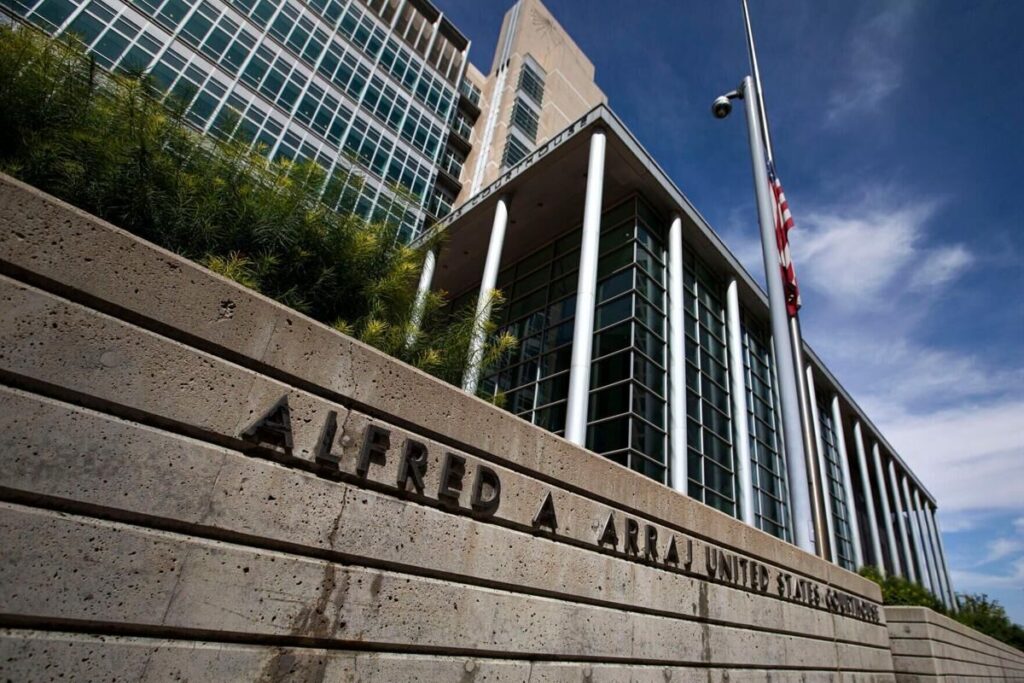
Federal judge directs plaintiff to revise complaint alleging Denver officers’ constitutional violations
Michael Karlik
michael.karlik@coloradopolitics.com
Updated 8 hours ago
A federal judge directed a plaintiff to revise his allegations on Wednesday to more precisely state what two Denver officers and the city itself allegedly did to violate his constitutional rights by facilitating his prosecution for murder until prosecutors dropped...
Federal judge explores new sanctions against ex-Colorado judicial discipline director
Michael Karlik
michael.karlik@coloradopolitics.com
Updated 12 hours ago
A federal judge on Wednesday directed Colorado’s former judicial discipline director, for the third time this year, to explain why she should not sanction him for his latest conduct in his litigation against the state’s judiciary. Christopher S.P. Gregory, who served...
Colorado joins lawsuit challenging changes to Endangered Species Act
Marissa Ventrelli
marissa.ventrelli@coloradopolitics.com
Updated 12 hours ago
Colorado once more joined a coalition of states challenging the Trump administration — this time on proposed rules regarding the Endangered Species Act. The pair of lawsuits challenge new rules made under Interior Secretary Doug Burgum, who earlier said the...

Boebert challenger Eileen Laubacher says she’ll ‘break through the noise’ in Democrat’s 1st TV ad
Ernest Luning
ernest.luning@coloradopolitics.com
Updated 9 hours ago
Democratic congressional candidate Eileen Laubacher says she’ll take a different approach than her opponent in a campaign ad released Wednesday that opens with a cacophonous series of videos featuring Republican U.S. Rep. Lauren Boebert. “Eileen’s had enough of the noise...

Colorado congressman asks DOJ to investigate violent student ICE walkout
Nico Brambila
nico.brambila@denvergazette.com
Updated 11 hours ago
U.S. Rep. Jeff Crank is asking the Justice Department to investigate violence at last week’s anti-ICE student walkout in Denver, including whether outside organizations helped organize, fund, or influence the demonstration. Crank sent a letter Tuesday requesting the investigation to...
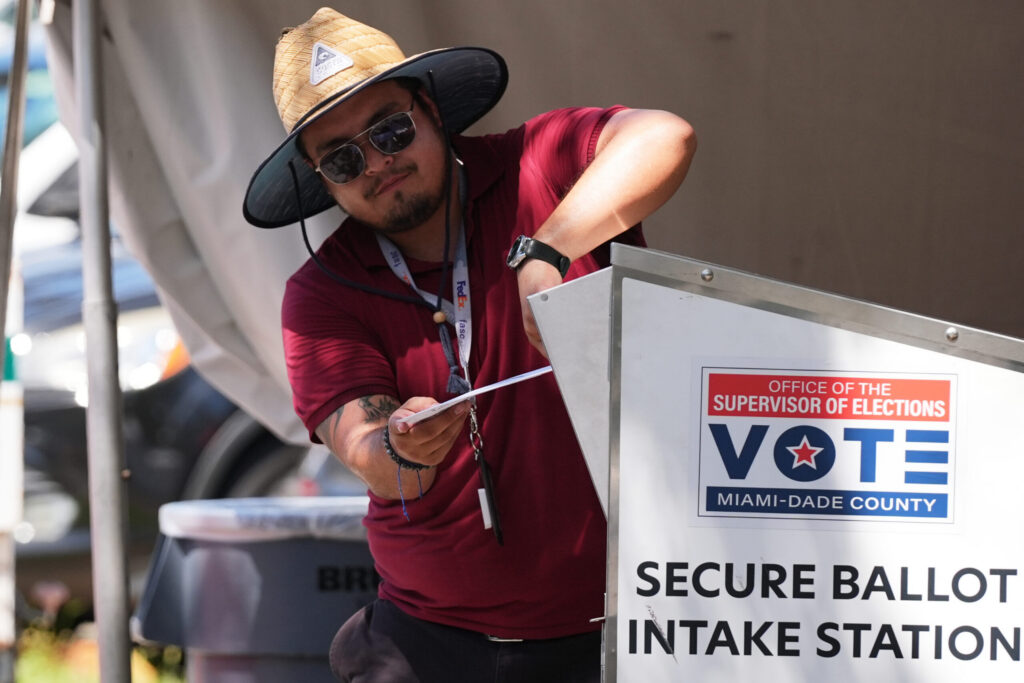
General election season is here. Where does mail-in voting stand?
David Zimmermann
david-zimmermann@coloradopolitics.com
Updated 15 hours ago
As the general election season approaches, the legal question surrounding the new U.S. Postal Service mail-in ballot requirements remains up in the air. With the case playing out in the courts, mail-in voting has not been changed substantially despite President...
10th Circuit orders second look at immunity for Kiowa County deputy over fatal vehicle crash
Michael Karlik
michael.karlik@coloradopolitics.com
Updated 10 hours ago
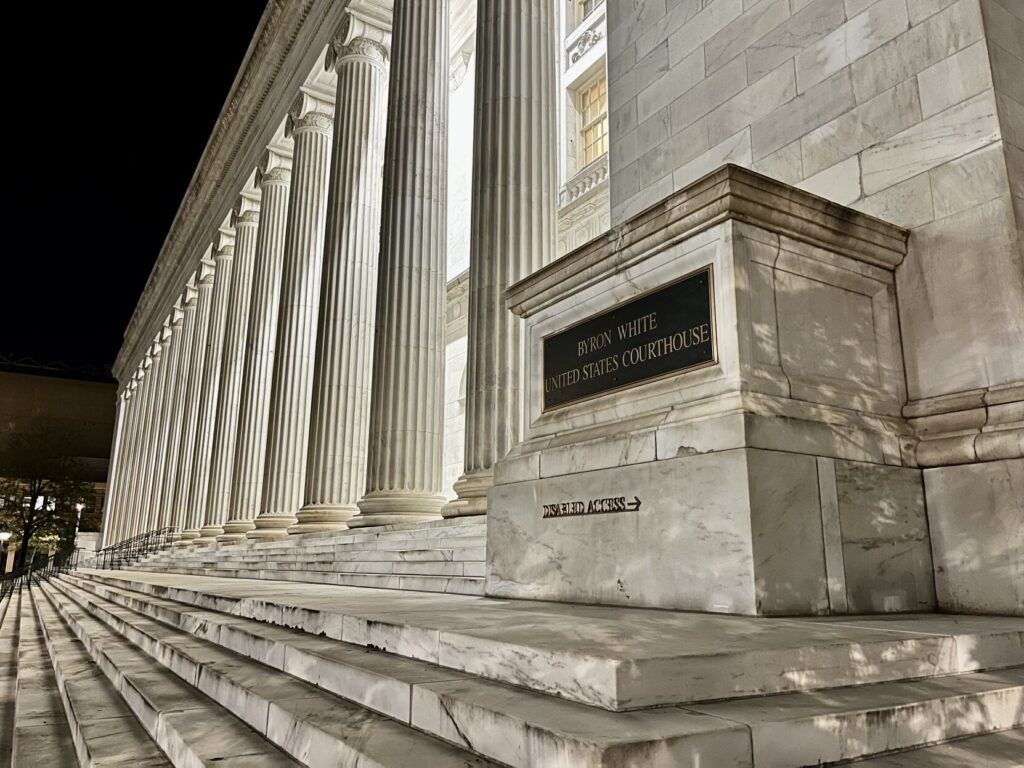
The Denver-based federal appeals court directed a trial judge on Tuesday to further analyze whether a Kiowa County deputy and the sheriff’s office may be sued for a fatal vehicle collision. The Colorado Governmental Immunity Act generally shields government entities and public...
Colorado justices to hear appeal in Kendrick Castillo death lawsuit, ‘fugitive’ rule
Michael Karlik
michael.karlik@coloradopolitics.com
Updated 10 hours ago
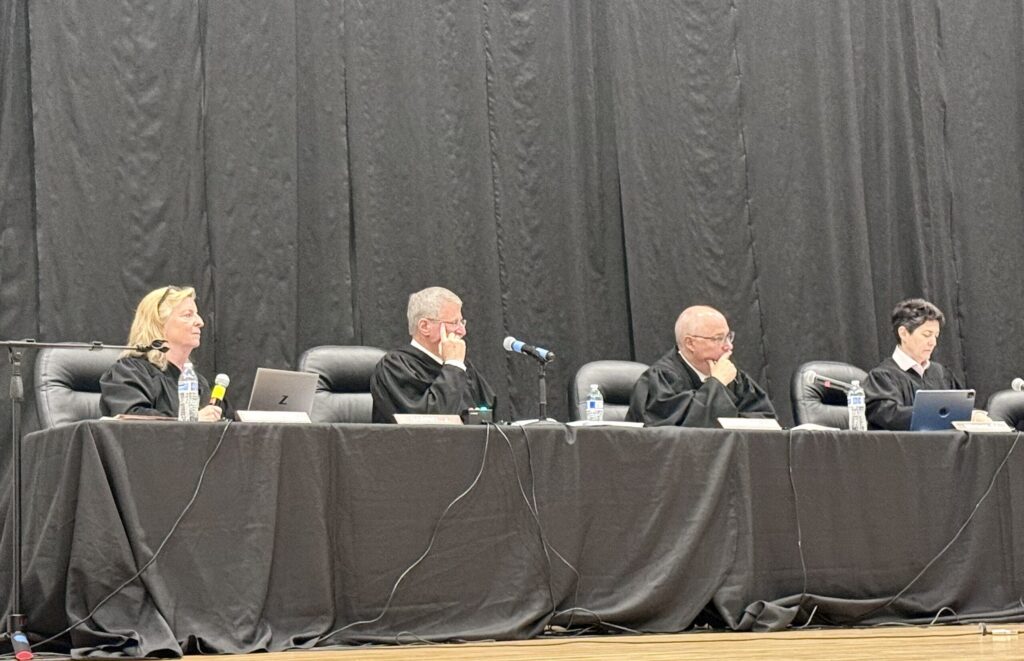
The Colorado Supreme Court announced on Tuesday that it will decide whether it was proper to dismiss a lawsuit over the 2019 shooting death of Kendrick Castillo after the defendants paid the maximum amount of damages available to Castillo’s parents,...

Two more wolves killed by Colorado wildlife staff
Marianne Goodland
marianne.goodland@coloradopolitics.com
Updated 1 day ago
Two yearling wolves from the Copper Creek and Three Creeks packs in Pitkin and Rio Blanco counties, respectively, were killed by Colorado Parks and Wildlife staff on Monday. That brings to 19 the number of wolves that have died under...

Federal judge dismisses Douglas County’s challenge to collective bargaining law
Nicholas Fogleman
nicholas.fogleman@denvergazette.com
Updated 19 hours ago
A federal judge dismissed claims brought by the Douglas County Board of Commissioners alleging that a state law granting county employees the right to organize and join labor unions violates free speech protections and conflicts with federal labor law. Douglas...