

Colorado turns a profit off undocumented residents, reports say
Colorado’s 163,000 undocumented immigrants pay plenty in taxes, according to a new report by the Institute on Taxation and Economic Policy.
The nonprofit think tank on state and federal tax policy estimates undocumented residents contributed $21.4 million in personal income taxes, $35.8 million in property taxes and $82.2 million in sales and excise taxes to the state in 2015.
That’s $139.5 million in state taxes, “dispelling myths that undocumented workers don’t pay taxes and showing the significant amount of revenue that would be impacted by hardline immigration policies,” said the Colorado Fiscal Institute, which released the report Thursday.
Undocumented Immigrants’ State & Local Tax Contributions estimates undocumented residents in the United States pay $11.74 billion annually in state and local taxes.
“On average, the nation’s estimated 11 million undocumented immigrants pay 8 percent of their incomes in state and local taxes every year,” the Institute on Taxation and Economic Policy states. “While it is unlikely to happen in the current political environment, undocumented immigrants’ state and local tax contributions could increase by up to $2.1 billion under comprehensive immigration reform, boosting their effective tax rate to 8.6 percent.”
Writing about the report Thursday, Tatiana Sanchez of the San Jose Mercury News interviewed Ira Mehlman, spokesman for the Federation for American Immigration Reform, which takes a strict view of immigration policy. He said the report is based on “flawed assumptions.”
He scoffed at the $11.74 billion in taxes, claiming state and local governments collectively spend about $84 billion a year for education, health care, public safety and other services.
The Denver-based National Conference of State Legislatures cites a 2011 report by Elena Fairley and Rich Jones of the Bell Policy Center in Denver that indicates Colorado profits, if only slightly.
The study said undocumented residents paid the state about $167.5 million a year in various local and state taxes, while using $166.6 million in services.
“Our analysis shows that FAIR’s cost data is widely inflated, while the group’s tax estimate is fairly accurate,” Fairley and Jones wrote in 2011.
Costs come mostly from education, emergency medical care and incarceration, which they estimated to be about $116.6 million a year, according to their analysis.


Group submits signatures for proposed Colorado graduated income tax
Marianne Goodland
marianne.goodland@coloradopolitics.com
Updated 13 hours ago
The measure, which eliminates Colorado’s flat tax, is expected to raise $2 billion in new revenue The proposal to amend the Colorado constitution to change the state’s flat rate into a graduated income tax came in under the wire Monday,...

10th Circuit weighs Gross Reservoir expansion, judge’s ‘punishment’ of Denver Water
Michael Karlik
michael.karlik@coloradopolitics.com
Updated 11 hours ago
Members of the Denver-based federal appeals court considered on Friday whether they could intervene in an ongoing infrastructure project to enlarge a Boulder County dam after a trial judge deemed the underlying permit unlawful nearly two years ago. Denver Water...

Democratic group maps out path to Colorado House and Senate supermajorities
Marissa Ventrelli
marissa.ventrelli@coloradopolitics.com
Updated 14 hours ago
A national organization that works to elect Democrats to state legislatures has its sights on Colorado, unveiling a road map to establish a supermajority in both the House and Senate. Democrats have held a majority in the House since 2013...

10th Circuit upholds federal prohibition on juvenile handgun possession
Michael Karlik
michael.karlik@coloradopolitics.com
Updated 16 hours ago
The Denver-based federal appeals court concluded on Monday that Congress acted within its constitutional powers to make it a crime for juveniles to possess handguns in most instances. The decision from the U.S. Court of Appeals for the 10th Circuit...

Board of Peace demands Netanyahu cease Gaza airstrikes
The Washington Examiner
the-washington-examiner@coloradopolitics.com
Updated 17 hours ago
The Board of Peace is struggling to get Israel on board with its peace plan for Gaza as Israeli militia airstrikes continue to bombard the war-torn strip despite expectations for a ceasefire and de-escalation. Gaza City was hit repeatedly by...

Trump wants to give Iran ‘last chance’ to strike a deal before ‘decapitation’
Christian Datoc
christian-datoc@coloradopolitics.com
Updated 18 hours ago
President Donald Trump said this week’s talks with Iran will be the “last chance” for the Middle Eastern country to avoid a severe escalation in the war. Trump called off plans to strike Iran’s energy infrastructure over the weekend after...
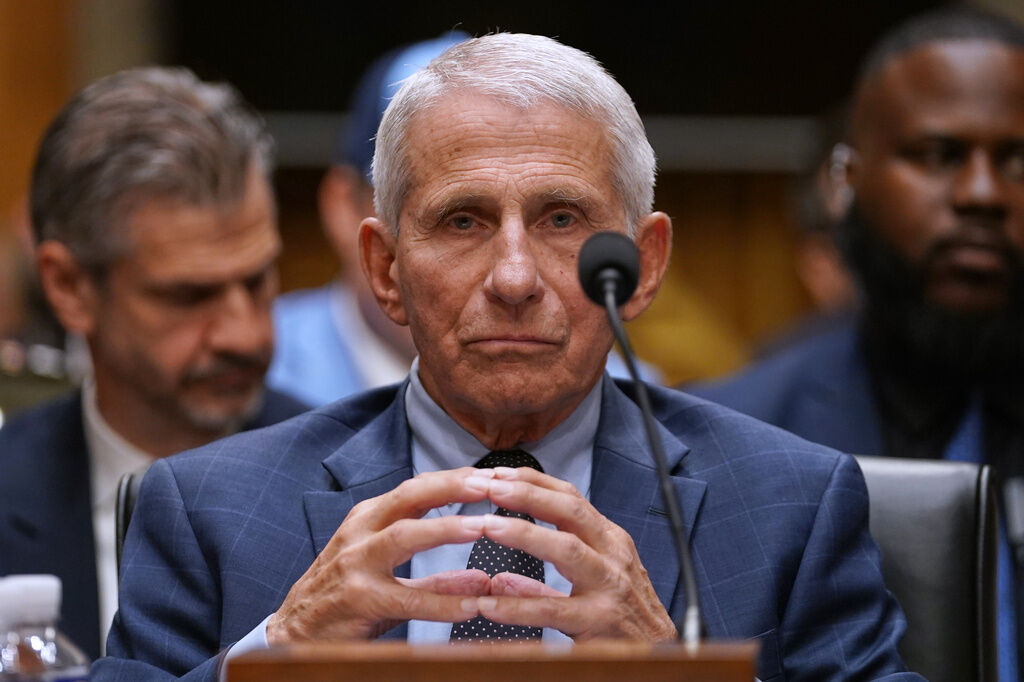
Fauci told Congress higher COVID-19 fatality rate than he calculated in diary: ‘More like 0.2-0.3%’
Mia Cathell
mia-cathell@coloradopolitics.com
Updated 18 hours ago
Dr. Anthony Fauci privately calculated that COVID-19 had a significantly lower fatality rate than what he told Congress a month later at the outset of the pandemic. On March 11, 2020, the day that the World Health Organization declared COVID-19...

Senate advances judicial nominee, Montezuma County judge agrees to discipline | COURT CRAWL
Michael Karlik
michael.karlik@coloradopolitics.com
Updated 19 hours ago
Welcome to Court Crawl, Colorado Politics’ roundup of news from the third branch of government. A U.S. Senate committee advanced a judicial nominee from Colorado, plus a Montezuma County judge agreed to receive discipline for his misconduct that stops short...

Tunnel to Towers brings 9/11 steel to Denver
Nicholas Fogleman
nicholas.fogleman@denvergazette.com
Updated 22 hours ago
A nationwide tour commemorating the 25th anniversary of 9/11 brought a piece of the World Trade Center to Denver on Saturday as the Tunnel to Towers Foundation hosted a ceremony at the Wings Over the Rockies Air & Space Museum....
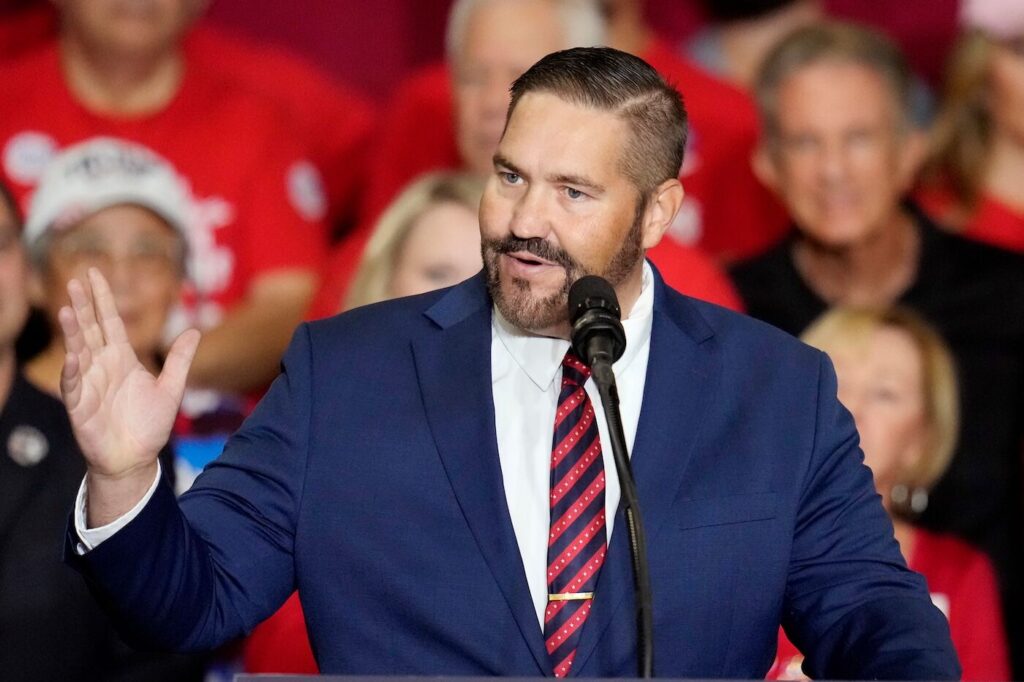
Top officials in Arizona’s Maricopa County agree on how to oversee elections | OUT WEST ROUNDUP
The Associated Press
the-associated-press@coloradopolitics.com
Updated 6 days ago
ARIZONA Officials agree on election oversight PHOENIX — Election officials in Arizona’s most populous county reached an agreement a week before the state’s July 21 primary on how to jointly oversee the vote, ending a prolonged legal battle. Republican Maricopa...