

Inmate Hepatitis C treatment costs questioned
It costs the Colorado Department of Corrections $57,000 to treat each of 32 inmates infected with Hepatitis C with expensive new drugs that have had a 100 percent success rate.
That cost did not sit well with members of the Colorado House and Senate Judiciary committees when the Joint Budget Committee presented the figures during a Tuesday, Jan. 17, Joint Rule 25 hearing. Such hearings are held to keep committees informed of agency and department developments and funding requests within their jurisdiction.
“That’s a huge amount of money,” said state Rep. Joe Salazar, D-Thornton, who sits on the House Judiciary Committee. “Are these the only drugs they can get, how can we reduce those costs?”
JBC chairman Kent Lambert, R-Colorado Springs, told Salazar that the department’s guidelines for treating inmates are different than others, and the specific drug administered also depends on each doctor’s recommendation. The costs are paid by the state, no federal money is involved, he noted.
“These two drugs are very effective in curing the virus, but there’s still a question about reinfection,” Lambert said. “There is a a hope that when these two drugs are patented, the cost might come down.”
Salazar said he hoped that would happen.
The JBC’s budget summary document presented to committee members noted there are currently an estimated 2,280 inmates infected with Hepatitis C, a virus transmitted by contact with the blood of an infected person, most commonly through intravenous drug use. The department treats about 32 of these offenders annually using new drugs, such as Solvaldi and Harvoni, at a cost of about $57,000 per treated inmate. The 32 are among the most seriously ill due to liver damage caused by Hepatitis C.
The department has had excellent results with the new drugs, the budget summary continued; 100 percent of the offenders treated to date have undetectable levels of the virus and are believed cured, though treatment does not mean they are immune against reinfection. The department is asking lawmakers to redirect $2 million of its general fund appropriation for personal services to pay for an expansion of its Hepatitis C program. Of that amount, $700,000 would come from the medical services subprogram and $1.3 million from the mental health subprogram. That would allow another 32 offenders to be treated each year.
The corrections department made other budget revision requests, JBC member Dominick Moreno, D-Westminster, explained. Those included a new mother-baby unit at La Vista Correctional Facility in Pueblo. The unit will hold mothers and their infants and toddlers as well as expectant mothers. The children will stay with mom until age 2½, when they will leave the prison to stay with a relative or someone else.
The department plans to open the unit in February 2018 and expects it to host 8 mothers and expectant mothers in the first five months of operation. In fiscal year 2018-19 and following years, the department expects the unit to host 20 mothers and expectant mothers. To fund the unit for this fiscal year, the department wants lawmakers to redirect $328,884 of general fund money from the department’s mental health program, add 0.7 FTE for social workers to staff the unit, and $10,000 in cash funds to allow the department to spend any gifts, grants, and donations the unit may receive.
House Judiciary Committee member Adrienne Benavidez, D-Commerce City, said she did not think there were a lot of “best practices” the department could use to ensure mothers and babies were given the best care.
“And I don’t think they’ve totally thought through the safety issues involved with having babies in prison,” she added.
The JBC budget summary also noted the department’s sex offender treatment and monitoring program had been unable to hire and retain the full number of staff lawmakers approved in the budget bill, so two of the department’s budget requests would redirect some of that money away from the program. One of those requests is to transfer $1.5 million from the sex offender treatment and parole program to maintenance needs in this and following fiscal years.
“This may be an acknowledgement by the department that the program will not be fully staffed for the foreseeable future,” the document added.
House Judiciary Committee member Yeulin Willet, R-Grand Junction, wondered if the state is wasting money in the sex offender treatment program, and if there are not enough vendors and services to meet the needs.
Lambert agreed that rural areas where most state prisons are located do not have a pool of qualified specialists to fill the positions.
The JBC budget summary also noted lawmakers do not have enough information to decide how Colorado’s private prisons compare to their public counterparts, despite 20 years of experience with private facilities.
“Nor does it have enough information to decide if Colorado’s private prisons have gotten better or worse over time,” the summary continued, and noted an analysis recommended the per diem for private prisons be substantially higher.
Other corrections department requests are to add three teachers to the restrictive housing unit staff at the Sterling Correctional Facility, and transfer funds to maintenance and operating, food service equipment and cover higher food costs.


Hickenlooper lands endorsements from Elizabeth Warren, Ministerial Alliance in US Senate primary
Ernest Luning
ernest.luning@coloradopolitics.com
Updated 6 hours ago
U.S. Sen. John Hickenlooper won endorsements this week from a progressive Democratic colleague and a coalition of metro-area African American faith leaders as voting began in Colorado’s primary election. U.S. Sen. Elizabeth Warren of Massachusetts and the Greater Metro Denver...
Colorado justices say insurers may access policyholders’ medical info in denied-benefits litigation
Michael Karlik
michael.karlik@coloradopolitics.com
Updated 8 hours ago
The Colorado Supreme Court declined on Monday to expand its narrow prohibition on insurance companies accessing policyholders’ medical information, clarifying that a dispute over an insurer’s bad-faith decision to deny benefits is the only situation where a company is limited...

House District 14: Businesswoman, consultant square off in GOP primary
Mary Shinn
mary-shinn@coloradopolitics.com
Updated 9 hours ago
Firearms training company owner Ava Flanell will face Troy Vanderhule, the chief fundraising officer for Dobson Philanthropic, in the June 30 Republican primary for state House District 14, an area in northern Colorado Springs. Flanell was appointed to the seat...
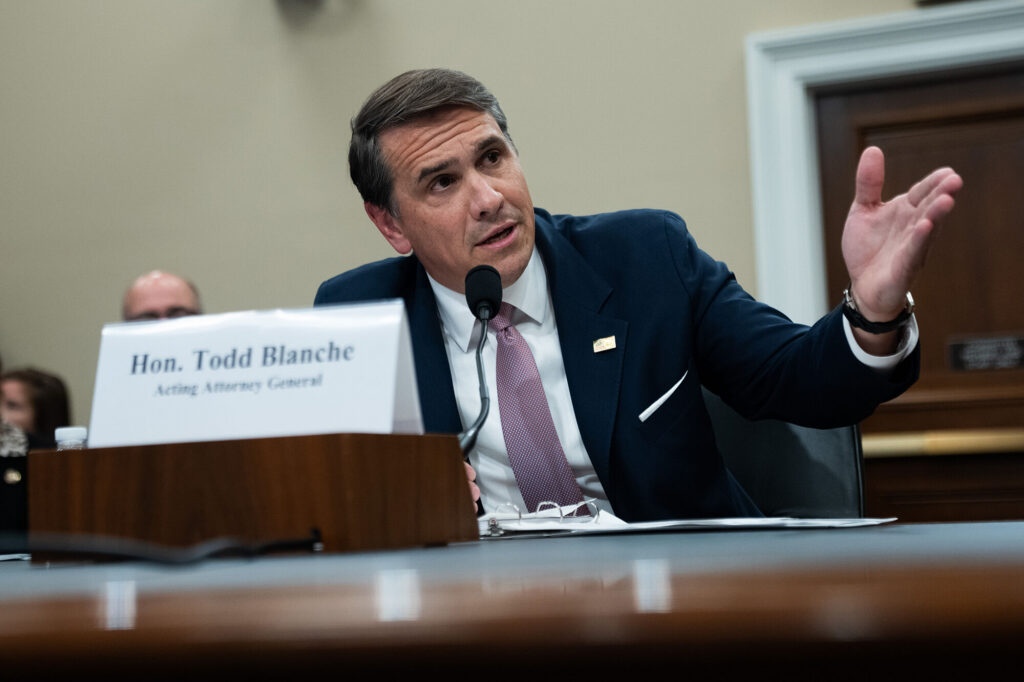
Federal judge wants Todd Blanche to swear in writing anti-weaponization fund won’t be revived
Jack Birle, Washington Examiner
jack.birle.washington.examiner@gazetteedit.wpenginepowered.com
Updated 7 hours ago
A federal judge maintained a block on the Department of Justice’s $1.776 billion anti-weaponization fund Friday, despite the DOJ claiming they have abandoned the planned fund aimed at compensating allies of President Donald Trump and others who say they were politically targeted by...

Colorado Supreme Court declines to loosen requirements for insurance company defendants
Michael Karlik
michael.karlik@coloradopolitics.com
Updated 2 hours ago
The Colorado Supreme Court declined last week to reconsider its longstanding expectations for insurance company defendants, and agreed that an insurer failed to properly raise its defenses against a policyholder’s breach-of-contract lawsuit. When an insured driver has an accident with...

Teen defendant properly transferred from youth detention to jail, Colorado justices conclude
Michael Karlik
michael.karlik@coloradopolitics.com
Updated 12 hours ago
Colorado law required the transfer of a teenage murder suspect from youth detention to the county jail when he turned 18, the state Supreme Court ruled last week. Prosecutors have accused Issac James Lawrence of killing a younger boy and attempting to...

US is escorting 20 tankers a night through Strait of Hormuz, Burgum says, easing oil strain
Maydeen Merino, Washington Examiner
maydeen.merino.washington.examiner@gazetteedit.wpenginepowered.com
Updated 10 hours ago
The U.S. Navy is escorting ships through the Strait of Hormuz despite the threat from Iran, guiding more than 20 crude oil carriers on some nights, Interior Secretary Doug Burgum said. Some are ultra-large tankers that hold 2 million barrels...

Trump fumes over ‘fake’ peace deal terms leaked by Iran
Christian Datoc, Washington Examiner
christian.datoc.washington.examiner@gazetteedit.wpenginepowered.com
Updated 10 hours ago
President Donald Trump claimed that the ceasefire terms reported by Iranian state media on Friday were “fake news” and denied offering any monetary compensation to Tehran to secure their cooperation in ending the war. Iranian state media began circulating a...

Republicans race to confirm Trump DNI pick Jay Clayton to break spy program gridlock
Hailey Bullis and Lauren Green, Washington Examiner
hailey.bullis.and.lauren.green.washington.examiner@gazetteedit.wpenginepowered.com
Updated 10 hours ago
Senate Republicans are moving quickly to vote on President Donald Trump’s pick to run the country’s intelligence agencies, underscoring the level of anxiety in Washington over a temporary lapse in the federal government’s spy powers. The Senate Intelligence Committee scheduled...

Douglas County moves to tighten rules on electric scooters, off-road vehicles
Nicholas Fogleman
nicholas.fogleman@denvergazette.com
Updated 9 hours ago
Douglas County commissioners advanced an ordinance Tuesday that would significantly expand regulation of electric scooters and off-highway vehicles, citing safety concerns and gaps in state law. The proposed measure, introduced by the Douglas County Sheriff’s Office, would raise fines for...