

Legislation to revamp medical research wins quick approval in House and Senate
A bill to greatly expand medical research and speed up drug approvals sailed through both the U.S. Senate and the House last week with strong support from Colorado’s delegation.
The bill was co-authored by U.S. Rep. Diana DeGette, D-CO1, with contributions from U.S. Sen. Cory Gardner.
It passed in the House of Representatives by a 392-to-26 margin and in the Senate by a vote of 94 to 5.
All members of the Colorado delegation to Congress, except for Rep. Ken Buck, R-CO4, voted for the 21st Century Cures Act.
“This is a watershed moment for patients, their loved ones and healthcare professionals across the United States,” DeGette said in a statement. “We’re bringing hope to millions of people suffering from cancer, Alzheimer’s disease, diabetes and a host of other ailments.”
Key provisions of the bill include:
1. Providing $4.8 billion to National Institutes of Health, including: $1.4 billion for President Barack Obama’s Precision Medicine Initiative to drive research into the genetic, lifestyle and environmental variations of disease; $1.8 billion for the “Cancer Moonshot” and $1.6 billion for the BRAIN initiative to improve our understanding of diseases such as Alzheimer’s and to speed diagnosis and treatment;
2. Providing $1 billion in grants to states to address the opioid crisis;
3. Speeding up reviews and approvals of new drugs by the Food and Drug Administration with the assistance of $500 million in additional support;
4. A program to increase opportunities for new medical research;
5. A program to update clinical trials that includes modifying regulations to protect patients;
6. Allocating more resources for mental health, particularly substance abuse disorders.
The portion of the Act authored by Gardner preserves Medicare funding for Denver’s Craig Hospital and helps to ensure life-saving medical devices for patients with rare diseases.
“The 21st Century Cures Act is an acknowledgement that federal policy related to improving the quality of healthcare in our country must be updated to keep pace with science and innovation,” Gardner said.
The bill’s supporters include President Barack Obama, who used his December 3 weekly address to America to urge the Senate to approve it.
Rep. Doug Lamborn, R-CO5, said he opposed an earlier version of the bill but supported the more recent one because of new provisions to guarantee it was adequately funded.
“I think the bill actually does a lot of good to speed up clinical trials required by the FDA,” Lamborn told The Colorado Statesman. “This will bring cures to the market sooner.”
But other lawmakers are more skeptical of what they describe as a sell-out to wealthy pharmaceutical companies, perhaps even risking the health of patients who consume drugs after a hasty approval process. The rush to pass the bill could indicate it was not given adequate consideration by lawmakers, according to its critics.
One of the skeptics is Buck who said, “21st Century Cures is a multi-billion dollar fraud that redistributes wealth from our grandchildren to the corporate healthcare cartel. Coloradans’ health insurance premiums are skyrocketing because of government interference. This town is sick with corruption and it won’t be cured with this bill in the 21st Century.”
Sen. Elizabeth Warren, D-Mass., led many critics of the bill.
“And when American voters say Congress is owned by big companies, this bill is exactly what they are talking about,” Warren said during a speech on the Senate floor before the vote by Congress. “Now we face a choice. Will this Congress say that yes, we’re bought and paid for or will we stand up and work for the American people?”
Warren said the bill would legalize fraud, cover up bribery and give special deals to Republican campaign donors.
Until now, drug companies could only market drugs for specific ailments under terms approved by the Food and Drug Administration. Warren says they will be able to expand uses for drugs in ways never envisioned by drug regulators.
In addition, the 21st Century Cures Act grants a “medical education” exemption to rules requiring drug companies to disclose money they give to doctors and hospitals. Warren says the exemption will be used to hide kickbacks for health care providers that use a pharmaceutical company’s drugs.
Warren accused the bill’s supporters of giving in to powerful lobbyists who could contribute large sums to their political campaigns.
About 1,400 lobbyists were employed to promote to Congress the roughly 1,000-page legislation.
“So the Cures act offers to sell government favors,” she said. “It delivers a special deal so people can sell these treatments without meeting the FDA gold standards for protecting patient safety and making sure these drugs do some good.”
Examples of drugs that were approved too quickly include Vioxx, according to opponents of the bill.
Vioxx was a pain and arthritis medication advertised by pharmaceutical company Merck as breakthrough in helping people afflicted with arthritic joints to regain mobility. The Food and Drug Administration approved it for sales in 1999.
Before the Food and Drug Administration retracted its approval in 2004, Vioxx was blamed for giving 88,000 Americans heart attacks, 38,000 of them fatal, according to the British medical journal Lancet.
Nevertheless, the 21st Century Cures Act appears to have won wide support in Congress based partly on the image of a bottleneck at the FDA for drug approvals that has harmed people awaiting potentially life-saving medicines.


10th Circuit partially revives lawsuit over 2020 Denver protest injuries
Michael Karlik
michael.karlik@coloradopolitics.com
Updated 9 hours ago
The Colorado-based federal appeals court revived a man’s claims against Denver on Friday after concluding a trial judge resolved the case in the city’s favor without analyzing two of the three instances of alleged excessive force and other constitutional violations....

Federal judges find Colorado immigration judge violated several orders
Michael Karlik
michael.karlik@coloradopolitics.com
Updated 10 hours ago
Multiple federal judges in Colorado have freed people from immigration custody after determining that one immigration judge violated their directives for properly conducting bond hearings. For nearly a year, Colorado’s U.S. District Court has faced a flood of “habeas corpus” petitions...
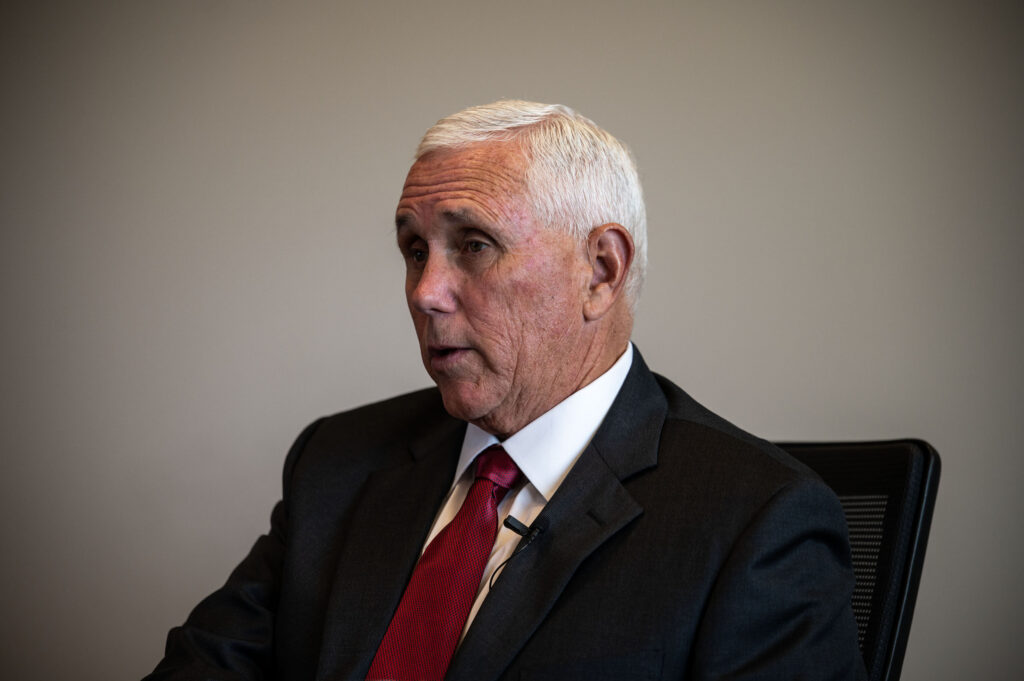
Q&A with Mike Pence | Former vice president says GOP’s populist turn from conservatism isn’t permanent
Ernest Luning
ernest.luning@coloradopolitics.com
Updated 10 hours ago
Former Vice President Mike Pence says he’s concerned that the Republican Party has taken a populist turn away from bedrock conservative principles during President Donald Trump’s second term, but he believes the party will return to its roots when Trump...

New federal plan sets short-term rules for Colorado River management
Marianne Goodland
marianne.goodland@coloradopolitics.com
Updated 9 hours ago
Interior Department’s plan spares Colorado from mandatory cuts for now After years of stalled negotiations among the seven states that rely on the Colorado River, the federal government on Friday released its own plan for managing the drought-strained system. Calling...
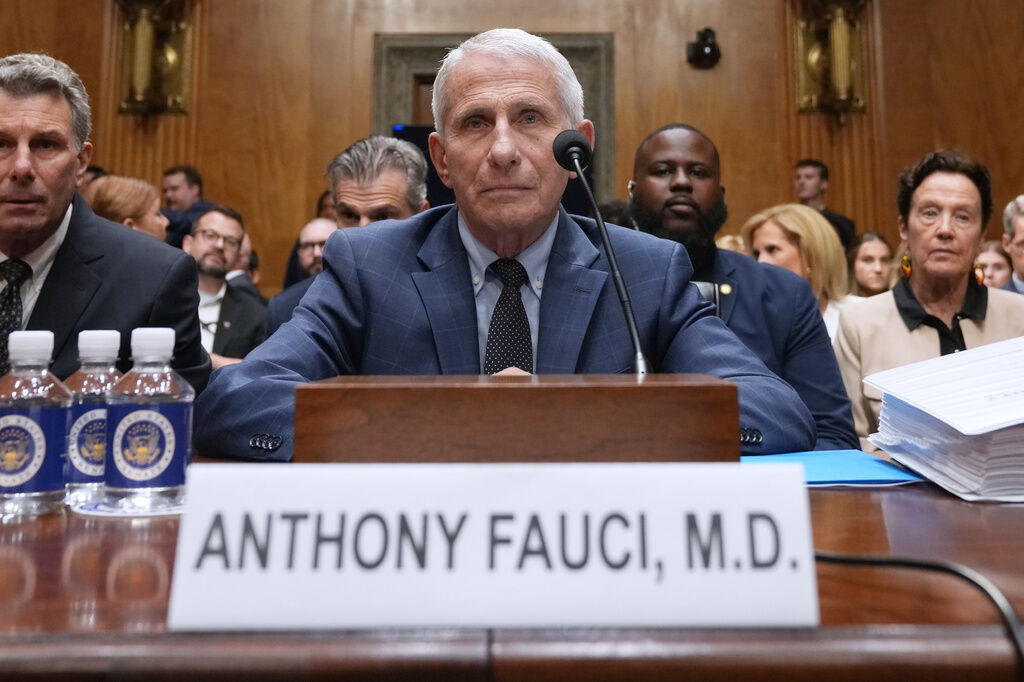
Fauci’s diary details blooming outrage toward ‘far right,’ softness toward Biden and China
Hudson Crozier
hudson.crozier@washingtonexaminer.com
Updated 14 hours ago
Dr. Anthony Fauci increasingly railed against “far right” critics of his approach to COVID-19 issues while describing strong support from the Biden White House in his pandemic-era diary, which was recently released by Congress. The former National Institute of Allergy...

Colorado is spared mandatory cuts under federal Colorado River proposal
The Associated Press
the-associated-press@coloradopolitics.com
Updated 15 hours ago
California, Arizona and Nevada to take less water under plan While Colorado has been spared from mandatory reductions, Arizona, California and Nevada would take less water from the Colorado River under a proposal announced Friday by the federal government to...

Republican Victor Marx taps George Markert as his lieutenant governor pick in Colorado’s gubernatorial race
Ernest Luning
ernest.luning@coloradopolitics.com
Updated 7 hours ago
Colorado Republican gubernatorial nominee Victor Marx named George Markert, a retired Marine colonel, as his running mate for lieutenant governor Friday morning, saying the former U.S. Senate candidate will bring “exceptional character, proven leadership and a lifetime of serving others”...

Misconduct complaints from ex-Colorado judicial discipline director dismissed against federal judges
Michael Karlik
michael.karlik@coloradopolitics.com
Updated 1 day ago
The administrative body for the Denver-based federal appeals court upheld a finding last week that misconduct complaints against Colorado’s chief federal trial judge and the chief appeals judge warranted dismissal and appeared to be a “litigation tactic” by the complaining...

Boulder County coroner IDs body found over 50 years ago
Matt Kyle
matt.kyle@denvergazette.com
Updated 15 hours ago
After nearly 55 years, a body found in Boulder County has been identified. The Boulder County Coroner’s office on Thursday announced it has identified a set of remains found in Bluebell Canyon in August 1971 as Douglas Sumner, 22. The...

First-ever Red Rocks naturalization ceremony draws most diverse group of new citizens
Michael Karlik
michael.karlik@coloradopolitics.com
Updated 10 hours ago
Colorado’s federal trial court held its first-ever naturalization ceremony for nearly 300 new citizens on Thursday at Red Rocks Park and Amphitheatre. “We’re doing it to commemorate the 250th anniversary of the Declaration of Independence and the United States. Red...