

Denver taxi, limo licenses to end
Close to 2,200 taxi, shuttle and limousine drivers will likely face fewer regulations in the New Year, when the City and County of Denver is expected to stop requiring them to qualify for and get “Herdic” licenses.
Such licenses were named for the Herdic cab, a horse-drawn carriage invented by Peter Herdicin in 1881. Herdic cabs were designed as passenger vehicles for public transportation, often painted bright yellow, and were predecessors to the modern taxi cab.
The Denver City Council’s Business, Arts, Workforce and Aeronautical Services Committee, at its Wednesday, Nov. 30, meeting, sent an ordinance repealing the Herdic license part of the municipal code to the full Council for consideration. Once approved, the city attorney’s office will drop an appeal to the Colorado Supreme Court of a state preemption ruling against the city regarding the rules and regulations.
The city has 1,457 active taxi licenses, 617 active limo licenses and 115 active shuttle licenses, and while the city excise and license division has issued Herdic licenses since 1950, it has regulated drivers for much longer, and the current ordinance language hasn’t had significant update since then, said Nathan Batchelder, a legislative analyst in the division. He noted Denver and Colorado Springs are the only municipalities in the state that require Herdic licenses.
The Colorado Public Utilities Commission officially began regulating these types of licenses around 1954, he told the committee, and the antiquated license language has made local enforcement and administration challenging.
“We took a deep dive into the regulatory structure of the division and the PUC and found many similarities like driver background checks,” and others, Batchelder said, along with a few differences.
For instance, the PUC regulates companies and drivers, while Denver only licenses each driver.
The PUC regulates transportation network companies, such as Uber and Lyft, while Denver International Airport has its own rules and regulations for commercial operators like taxis and shuttles at the airport, Batchelder noted.
In an effort to gain a better understanding of the local industry earlier this year, Batchelder said the division held several focus groups, all led by an independent facilitator, that included taxi, limo, shuttle company, Uber and Lyft representatives and drivers, along with hospitality and tourism industry representatives.
Batchelder said some general themes included that there are several layers of regulation and redundancy between local and state requirements, the division’s antiquated licensing framework doesn’t adapt to changing technology trends, requirements don’t reflect current industry changes and dynamics and they are cumbersome for drivers.
Lack of licenses leads to legal rulings
Assistant City Attorney Marley Bordovsky explained the state of Colorado preemption issues grew out of a 2014 case where two limo drivers were cited for not having Herdic licenses at DIA. The drivers decided to challenge the Herdic ordinance, were convicted in municipal court but appealed to Denver District Court, again challenging the Herdic ordinance.
This year, a Denver District Court judge ruled that Denver’s Herdic licensing ordinance was preempted by state law governing such carriers through the PUC, Bordovsky continued. The city appealed the district court’s ruling, and it is currently pending before the Colorado Supreme Court. Recently, the local limo association filed an amicus brief in support of the district court’s ruling that Denver’s ordinance is preempted.
Assistant City Attorney David Broadwell told the committee that “we think the best thing to do is to repeal this ordinance and we will drop the appeal of the lawsuit.”
Ready to unregulate
City Council is scheduled to consider the repeal ordinance regarding Herdic licenses on Dec. 12, with final consideration a week later on Dec. 19. If approved, the repeal will take effect on Jan. 1, 2017, and Batchelder said any pending application fees of $25 will then be refunded.
“I think, clearly, the PUC is asking for what we were expecting in these cases, so there is a lot of duplicated effort by the driver,” Councilwoman Debbie Ortega said. “I see enough safeguards and justifications in place and withdrawing our Herdic license requirement makes sense.”
The division will also talk to the PUC about a possible agreement for enforcement help, Batchelder said, and noted the state regulatory agency has only six inspectors for this industry statewide.

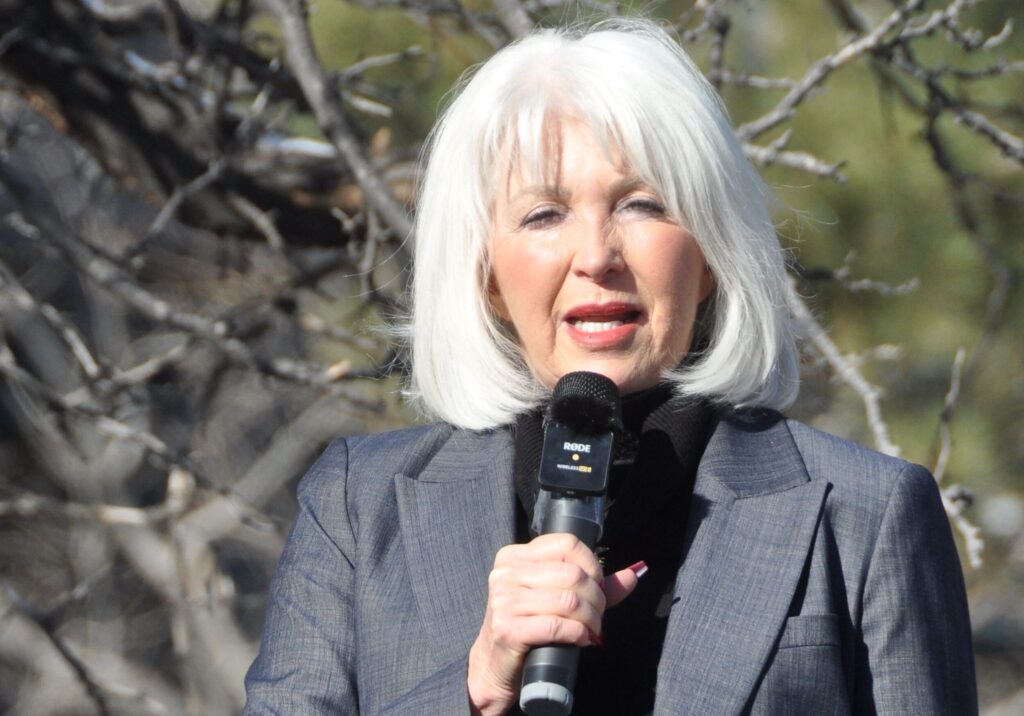
10th Circuit dismisses Tina Peters’ challenge to confinement as moot
Michael Karlik
michael.karlik@coloradopolitics.com
Updated 14 hours ago
The Denver-based federal appeals court granted the state’s unopposed request on Wednesday to dismiss former Mesa County clerk Tina Peters’ challenge to her confinement as moot. Although Peters received a commutation of her prison sentence last month from Gov. Jared...

Federal judge declines to recuse from death penalty case after Supermax visit
Michael Karlik
michael.karlik@coloradopolitics.com
Updated 14 hours ago
A federal judge declined to recuse herself last month from a death penalty case arising out of Colorado’s “Supermax” prison, finding that her tour of the facility earlier this year did not bias her decision-making. U.S. District Court Judge Charlotte...

Colorado legislators, candidates differ over social media regulations for minors
Bethany Johnson
bethany.johnson@denvergazette.com
Updated 13 hours ago
Following the 2020 accidental overdose of her daughter, Colorado’s Patti Lujan is still pursuing a lawsuit against Snapchat, the social media platform she claims connected her daughter with a drug dealer, police said. Lujan, like many parents, is looking for...

Colorado state Senate: Meet the primary election candidates
Marianne Goodland
marianne.goodland@coloradopolitics.com
Updated 12 hours ago
Colorado’s June 30 primary features a slate of state Senate contests, with several incumbents stepping aside and competitive fields emerging in both parties. These are some of the races to watch as voters begin to submit ballots. Senate District 3:...

Top five hot mic moments from world leaders at G7 Summit
David Zimmermann Washington Examiner
davidzimmermannwashingtonexaminer@wpstage.coloradopolitics.com
Updated 16 hours ago
As the 52nd annual G7 Summit came to a close on Wednesday in France, world leaders not only discussed diplomacy front and center, but also engaged in lighter conversations on the sidelines. There were many hot-mic moments in which President Donald...
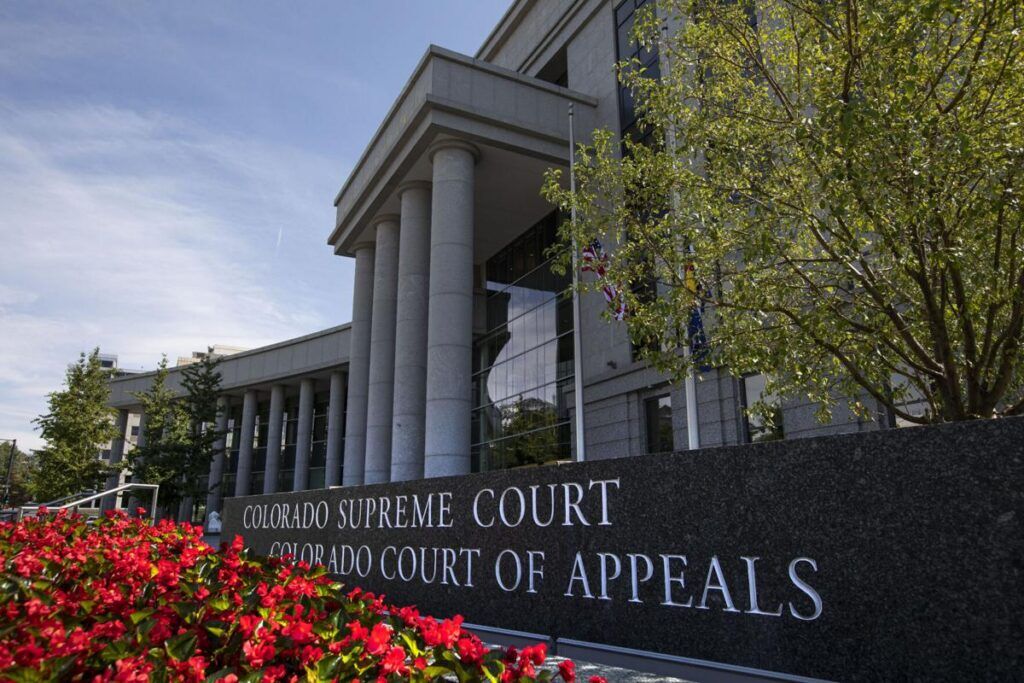
Appeals court clarifies offense of impersonating a peace officer
Michael Karlik
michael.karlik@coloradopolitics.com
Updated 19 hours ago
Colorado’s second-highest court clarified this month that a person commits the offense of impersonating a peace officer if they engage in “any conduct” while pretending to be law enforcement. In a case out of El Paso County, Richard James Coulier...

Hickenlooper raises $900K since April, heads into primary with almost $3 million on hand
Ernest Luning
ernest.luning@coloradopolitics.com
Updated 14 hours ago
U.S. Sen. John Hickenlooper raised just over $900,000 for his reelection bid in the 10-week pre-primary reporting period, the Colorado Democrat’s campaign said Wednesday. The campaign finished the period with almost $3 million in the bank, with more than 80%...
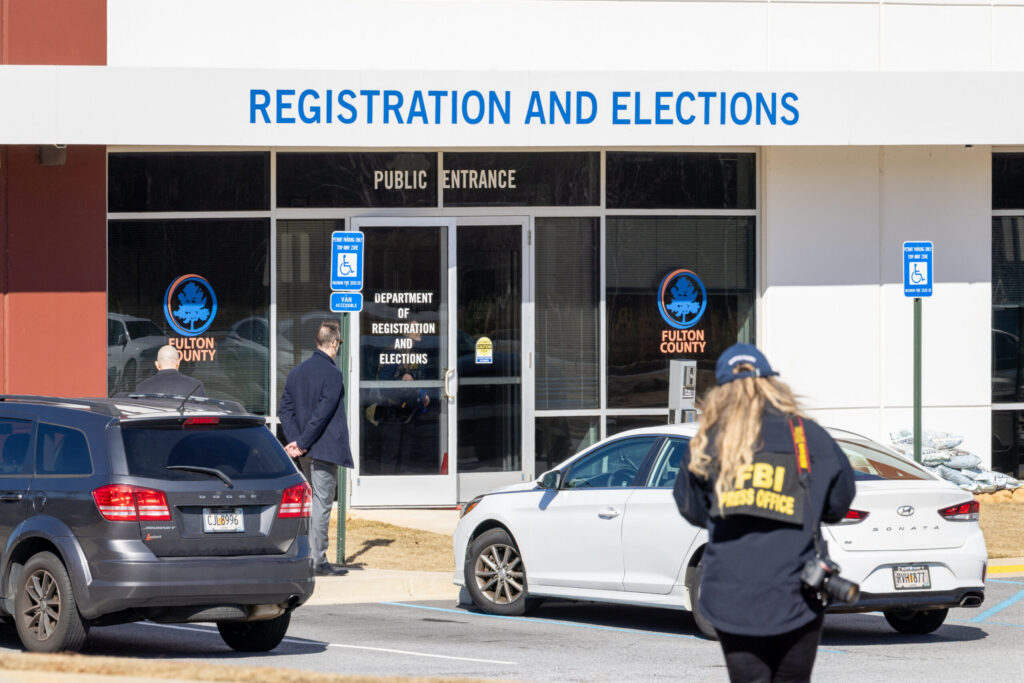
Four takeaways from Georgia, DC, Alabama, and Oklahoma primary elections
Rena Rowe, Washington Examiner
rena.rowe.washington.examiner@gazetteedit.wpenginepowered.com
Updated 18 hours ago
Voters across the country delivered a mixed verdict in a series of high-profile primary contests Tuesday, elevating political outsiders, boosting progressive candidates in deep-blue jurisdictions, and offering fresh clues about President Donald Trump’s hold on the GOP ahead of the...

Trump and Obama lock horns as White House tries to sell new Iran deal
NAOMI LIM Washington Examiner
naomi-lim-washington-examiner@coloradopolitics.com
Updated 18 hours ago
Former President Barack Obama‘s reemergence is looming over President Donald Trump‘s peace deal with Iran as the incumbent tries to sell his deal to an increasingly skeptical public after the nearly four-month war. Obama’s return to the headlines as he...

Littleton approves $1M for Starlight affordable housing project
Nicholas Fogleman
nicholas.fogleman@denvergazette.com
Updated 21 hours ago
The Littleton City Council on Tuesday approved a $1 million funding request to support construction of a new affordable housing development known as the Starlight Apartments. The council authorized the contribution from the city’s Affordable Housing Fund for the project,...
PREV
PREVIOUS
Updated: Legislative committees finalized
With the election now behind them, the names and faces of this year’s Colorado Senate and House committees have come into focus. Democratic and Republican Party leaders in the Senate and House have selected chairs, vice-chairs and members of committees for the 71st General Assembly. Agriculture, Natural Resources and Energy: Chairman Jerry Sonnenberg (R-Sterling); Vice […]
Trump and staff attend lavish costume party in Long Island
President-elect Donald Trump, still mulling key Cabinet positions, attended a lavish costume party Saturday night hosted by some of his most influential donors at their palatial Long Island mansion. Trump, who did not sport a costume, reveled with guests at the Mercer family estate for the annual Christmas party; this year’s theme was “Villains and […]