

Like Hart, sky-high political prospects of Swalwell given ‘The Monkey Business’ | Miller Hudson
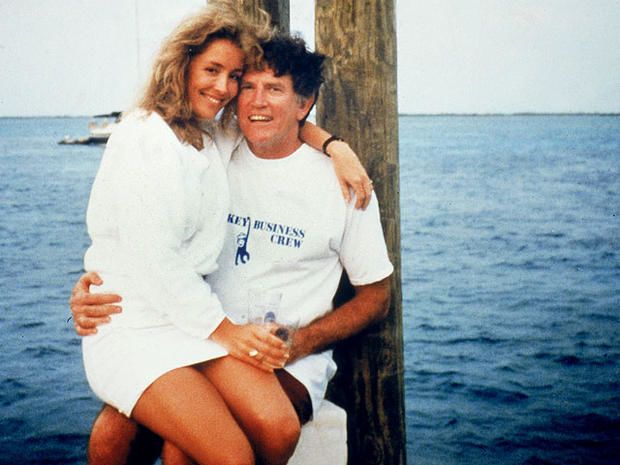
Eric Swalwell’s promising political career has likely reached an ignominious terminus. The man who aspired to the presidency in 2020 was plotting another route to that destination. Having entered California’s 2026 jungle primary for the governor’s office in Sacramento, he was leading the field when the San Francisco Chronicle and CNN ambushed the evident frontrunner much like the Miami Herald’s 1988 disclosure of Gary Hart’s relationship with Donna Rice aboard a yacht, astoundingly christened “The Monkey Business.”
At age 46, Swalwell could have secured a pole sitting position in 2036 or 2040 after serving eight years as governor of the country’s most powerful economic engine. Many admirers were left despondent when yet another Democratic Galahad had been slain by his inexcusably poor judgment.
Following the Miami Herald’s exposé, Hart jumped in and out of the 1988 campaign for several months, but it took less than a week to squelch Swalwell’s ambitions. On the day the senator’s trysts appeared on the front page of the Miami Herald, my wife and I were playing bridge that evening with three other Democratic couples in North Denver. Bill and Shirley Schley had started to accumulate tournament Master’s points at a skill level that exceeded the rest of us. After finishing our final rubber, just before 10 p.m., Bill suggested we catch the news. The first story cut to a reporter grilling Gary behind his Washington townhouse. Wearing horn-rimmed glasses and looking haggard he said, “I don’t know the person you are asking about.” By morning, a photo of Ms. Rice sitting atop his lap appeared on the front page of nearly every daily newspaper in the country.
I have always marveled at the reaction among our eight Hart supporters. All four women, our wives, rejected the story as impossible. Their refrain, “Gary’s too smart to do something so stupid”, still resonates in my memory. All four men weren’t nearly as sure. Rumors had pursued Gary throughout his career, back as far as his tenure as campaign manager for George McGovern’s 1972 presidential run. Shirley Maclaine’s memoir alludes to an intimate affair with Gary during the campaign. As males, we knew only too well many men who chase after younger women may as well be drug addicts — they simply can’t stop themselves. I had even better reasons to harbor doubts than anyone else that night.
First elected to the legislature in 1978, I was visiting Washington in the summer of 1979 when I met with Pat Schroeder at her congressional office. I recognize now she was playing on my greenhorn political naiveté. We were discussing prospects for the 1980 Colorado races when she confided to me, she was worried about Gary’s re-election prospects since he wasn’t returning to the state regularly. Then came her con. Pat explained Lee Hart had been sitting on the floor in her kitchen earlier that week, her back up against the refrigerator weeping. Gary had moved out and was living with a flight attendant. “I’ve told Gary he has to clean up his act,” Schroeder told me before she closed in with her ask.
Pat gave me the name and personal phone number for a Rocky Mountain News reporter. Though the journalist wasn’t aware of Gary’s D.C. living arrangement, he wanted to write a piece about Hart’s lengthy absences from the state and their implication for his 1980 re-election campaign. He needed an anonymous quote from a Democratic legislator reinforcing his “Come home, Gary”, theme. I agreed to help. Assured my identity would be protected, I provided the quote he needed, urging Gary to begin campaigning, not for a primary but for the general election. Within a week, I received an outraged call from Hal Haddon, who was Gary’s campaign manager, accusing me of being the source for the comments in the news story. I denied it, of course, but it taught me a lesson. The reporter was far more interested in cementing his connections to the Hart campaign than he was in establishing one with a freshman Democratic legislator. Nevertheless, Gary responded, which may have made the difference in a very close 1980 contest against Republican Secretary of State, Mary Estill Buchanan.
What was troubling me as we drove home after bridge and the startling news we had witnessed in 1988 was the fact I had a young couple from Rhode Island living in my basement. They had sold all their furnishings and used the money to drive to Denver to raise money for Gary’s presidential campaign. They were true believers who were about to find themselves stranded 2,000 miles from home without a paycheck. We tend to forget the sacrifices volunteers and staff make on behalf of candidates in both parties. In exchange, candidates carry a responsibility to honor those sacrifices. I gave the despondent pair $3,000 to return home and restart their lives. I was angry enough to let myself be quoted saying, “If you want to be the most powerful leader in the world, you should probably throw away your stash, remain sober and sleep in your own bed at night. Anything less is a betrayal of those who deserve the best from you.”
In 1984 I was serving as chairman of the Denver Democratic party, and we invited Bill Clinton to address our annual dinner. Between his acceptance and our dinner, the youthful governor had been deposed by voters in Arkansas. He was punished for raising the gas tax. Graciously, his office called me and offered to withdraw. I demurred and indicated it might be worthwhile to have Bill share his perspective on why he’d lost his grip on the governor’s chair. They were appreciative but asked me if we could alter a few aspects of our event. Usually scheduled on a Saturday night, Clinton was requesting whether we would move the dinner to a Friday night? He further asked whether we could find a condo in Vail where he could spend the remainder of the. weekend. Democratic National Committeeman Mike Muftic and his wife, Felicia, owned a spacious top-floor unit right downtown in Vail Village they were willing to loan us for the governor.
Bill showed up early to the dinner and very systematically worked his way through the entire ballroom, shaking every hand. I was impressed and pretty sure Arkansas and the country hadn’t seen the last of “Slick Willie.” A few weeks later, I ran into the Muftics and asked how their B&B lodgings had worked out for our guest. Mike grinned and said, “The neighbors tell us the governor didn’t lack for female companionship.” He rattled off a list of recognizable visitors which provided me with a laugh line that still works today, “I know three women who slept with Bill Clinton and I come from a small state.”
In the summer of 1995, I took a weeklong horseback ride from pub to pub across western Ireland. At Sweeney’s Lodge in Oughterrard, the proprietor had hung photos of famous guests, mostly British. Next to Keith Richards, I spotted Gary Hart. Asking him about Hart’s photo, Sweeney inquired whether I knew him. Confirming I came from Colorado and knew Gary well, Sweeney recounted, “You remember when Gary fled to Ireland for a month with his son John after “The Monkey Business”? This is where he stayed.” Apparently, London paparazzi were searching for him around the clock. Sweeney said he always denied Gary was hiding with him, saying, “He’s not here and even if he was, I wouldn’t tell you.” That would shut them up. It turned out the senator had returned there the previous week. Our host told me, “You just missed him.”
Many political observers believe it was Gary’s lingering demise that made it possible for Bill and Hillary Clinton to slide past his multiple peccadilloes with a “60 Minutes” admission that, “I’ve caused pain in my marriage.” The swift defenestration of Swalwell indicates we may be making progress on acceptable behavior. Just as it seems honesty must begin at home, however, we elected a brazen philanderer, habitual liar and money grubber as our president. Surely, we can demand better in 2028.
Miller Hudson is a public affairs consultant and a former Colorado legislator.

Colorado’s No. 1 education ranking should raise our ambition | GUEST COLUMN
Colorado Politics
colorado-politics@coloradopolitics.com
Updated 6 hours ago
By Scott Laband Colorado has earned the right to celebrate its new No. 1 ranking in education from U.S. News & World Report. Gov. Jared Polis called it “one of the proudest moments” of his time in office and shared the...

Colorado’s No. 1 education ranking reflects the power of school choice | GUEST COLUMN
Colorado Politics
colorado-politics@coloradopolitics.com
Updated 6 hours ago
By Peter Mason Colorado is now the No. 1 state in the nation for education, according to the 2026 U.S. News & World Report Best States rankings. That is a distinction worth celebrating. It is also a distinction worth understanding....

Group submits signatures for proposed Colorado graduated income tax
Marianne Goodland
marianne.goodland@coloradopolitics.com
Updated 11 hours ago
The measure, which eliminates Colorado’s flat tax, is expected to raise $2 billion in new revenue The proposal to amend the Colorado constitution to change the state’s flat rate into a graduated income tax came in under the wire Monday,...

Democratic group maps out path to Colorado House and Senate supermajorities
Marissa Ventrelli
marissa.ventrelli@coloradopolitics.com
Updated 13 hours ago
A national organization that works to elect Democrats to state legislatures has its sights on Colorado, unveiling a road map to establish a supermajority in both the House and Senate. Democrats have held a majority in the House since 2013...

Courageous Colorado bucks Trump’s federal stupidity | Miller Hudson
Miller Hudson
miller-hudson@coloradopolitics.com
Updated 17 hours ago
There are several theories regarding the rhythm of American politics. The most frequently cited is the pendulum hypothesis — positing that episodes of liberal dominance are then interrupted by spans of conservative control. Since Ronald Reagan’s presidential election in 1980,...

A historic moment during another major drought | Rachel Gabel
Rachel Gabel
rachel-gabel@coloradopolitics.com
Updated 3 days ago
Gustav Sumnick emigrated from Germany, traveled to Oklahoma and decided rather than be a Sooner, he wanted to be a farmer. He moved north to Nebraska and married an Irish immigrant farmer’s daughter. They farmed near Fremont, Nebraska, where the...

Colorado can’t forget the lessons of COVID | Jon Caldara
Jon Caldara
jon-caldara@coloradopolitics.com
Updated 19 hours ago
We are finally getting a clearer picture of what happened during COVID. Not because the people who locked us up, masked our faces and forced unproven chemicals into our bodies have suddenly become transparent, but because Anthony Fauci’s COVID-era diary...
Historic preservation supporters organize to oppose Trump changes | Bob Loevy
Tom Cronin
tom-cronin@coloradopolitics.com
Updated 3 days ago
Historic preservation organizations in Colorado Springs, the remainder of Colorado and across the nation are organizing to resist a recent effort to relax and weaken historic preservation laws in the United States. In Washington, D.C., the Advisory Council on Historic...
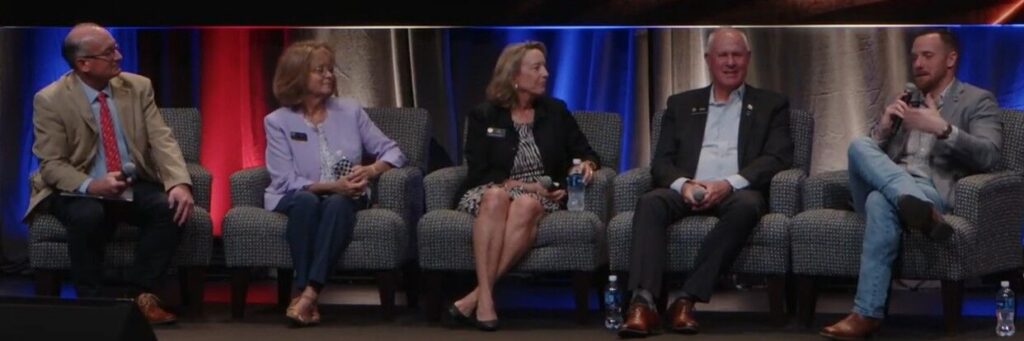
At conservative summit, Colorado Republican leaders concede Democrats’ election edge
Marissa Ventrelli
marissa.ventrelli@coloradopolitics.com
Updated 3 days ago
Four Republican state lawmakers told attendees at a gathering of conservative leaders on Friday they doubt their party can win statewide races, noting that Colorado’s electorate has been shifting toward Democrats but adding they see an opening in several pockets....
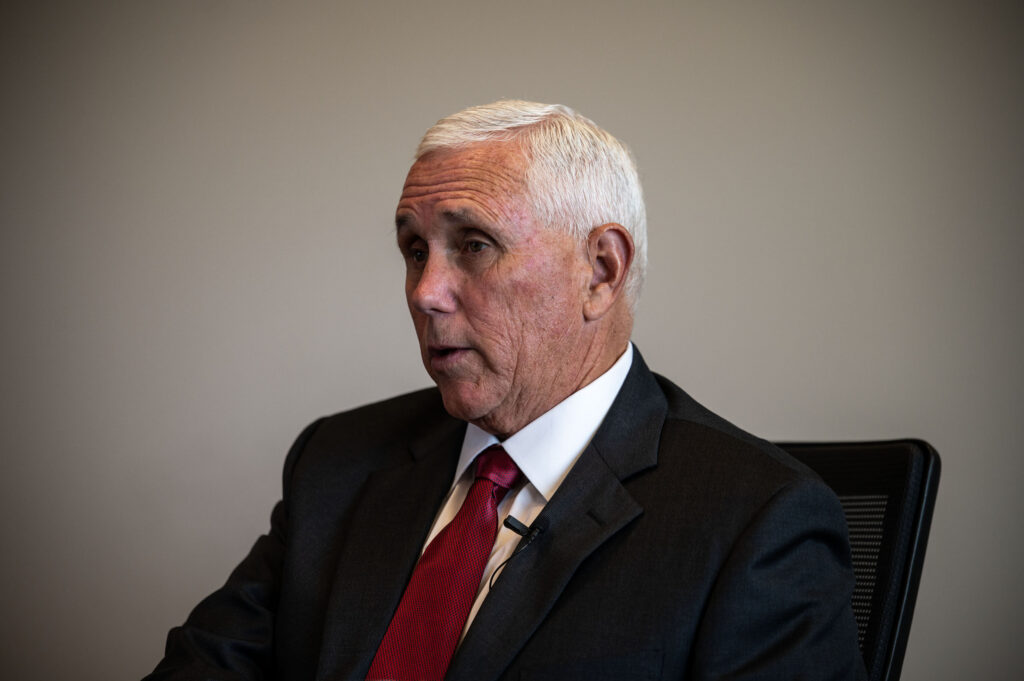
Q&A with Mike Pence | Former vice president says GOP’s populist turn from conservatism isn’t permanent
Ernest Luning
ernest.luning@coloradopolitics.com
Updated 3 days ago
Former Vice President Mike Pence says he’s concerned that the Republican Party has taken a populist turn away from bedrock conservative principles during President Donald Trump’s second term, but he believes the party will return to its roots when Trump...
PREV
PREVIOUS

State clean-energy edicts trump local concerns, interests in Elbert County | Rachel Gabel
A commission appointed by one man, the state’s governor, overruled the decision of a board of county commissioners elected by stakeholders across Elbert County. The Colorado Public Utilities Commission (PUC) overturned the county’s rejection of land use permits to Xcel (Public Service Company of Colorado) for a segment of a $1.7 billion 560-mile project to […]

In the Age of AI, much-needed protections in mental health care | OPINION
By Vincent Atchity Artificial intelligence is already changing so much about the way we live, and important conversations are being had about what guardrails are needed to ensure the safe use of this technology. One of the most urgent of those conversations is happening right now in Colorado, as lawmakers consider House Bill 1195, a […]