

YESTERYEAR: Youth government mimics real life, politicos undergo reapportionment drama, Hick faces Denver election woes
Fifteen Years Ago this week in the Colorado Statesman … When the cat’s away … While Colorado legislators were recessed, in their place, the Annual Youth in Government Program took over the House, Senate, judiciary and governor’s seats to get a hands on lesson in government affairs. Entering its 48th year, the youth program – sponsored by the YMCA of Metropolitan Denver – cast students as lobbyists, justices, pages, journalists and elected officials. More than 200 Colorado high school students from across the state participated.
Students prepared at their own schools where bills were researched and written and students got a primer on parliamentary procedures. Then, during the three-day session at the Capitol, bills were run at length through the legislative process, from lobbying to debating. On the third and final day, the bills that were passed went to the youth governor, Robert Lee (Fairfield High School-Boulder), to sign or veto.
Rep. Richard Decker (R-Fountain), said that young people frequently come out of school without any real awareness of how laws are made. “This program gives students an opportunity to experience the process through hands on participation.”
Colorado’s first Youth in Government was held in 1953 and continued to carry its fundamental message that, “Democracy must be learned by every generation.”
Meanwhile, back in the adult-run government, the Colorado Reapportionment Commission intended to finish carving 100 new state House and Senate districts before Thanksgiving. The bipartisan group had been meeting for six months to develop Colorado’s new legislative districts based on the 2000 census results.
After breaking into six groups to work on various regions of the state and prepare amendments to the plan implemented over the summer, the commission made 10 amendments to the House plan. The changes were minor, however. In Denver, District 10 was made more competitive.
Denver City Councilwoman Rosemary Rodriquez, the Commission’s chair, said that while she “encouraged her Republican friends that it is possible (to elect a Republican from Denver County), it’s hard to build a Republican district.” Despite testimony from Rep. Brad Young (R-Lamar), the commission voted on a house plan for southeastern Colorado that placed two incumbents, new Joint Budget Committee Chairman Young and Rep. Ken Kester (R-Las Animas), in the same district. Young mentioned that he would relocate to seek re-election and that he may seek a court challenge to the preliminary plan.
While the “House cleaning” stirred minimal animosity, the next debate about the Senate districts turned dirty at the start. Senate boundaries were of considerable importance to both parties. Commissioner Dan Muse introduced the first plan, which drew ire and criticism from Sen. Mark Hillman (R-Burlington), who called the map a “substantial rewrite” of the preliminary plan.
The map displeased Democrats on the panel because it effectively guaranteed two predominantly Republican Arapahoe County districts, while doing away with a principally Democratic Jeffco district. Rep. Mark Paschall, R-Arvada, said he supported Commissioner Jeff Wells’s plan, even though it drew him out of a Senate district for which he had already announced his candidacy.
“My commitment is to follow the constitution to minimize splits even when it does harm (to me),” Paschall said. “I’m proud to follow the rules and not partisan politics. We should have the courage to let the dust settle where it will on a constitutional basis.”
… Ten Years Ago … Another election, another set of issues. “Everything is on the table. There are no sacred cows,” declared Mayor John Hickenlooper. The mayor called a meeting of an emergency investigative panel, composed of fifteen different activists, public officials, and businessmen to investigate Denver’s Election Day “nightmare” as state Rep. Rosemary Marshall called it.
The “nightmare” resulted in tens of thousands of disenfranchised Denver voters, an election technology officer being put on “administrative leave” and the resignation of Denver Clerk and Recorder Wayne Vaden. After two days, the election wasn’t even officially over, with provisional and absentee ballots still being counted.
Due to the debacle, which affected Denver municipal elections for another year, talk circulated about using mail ballots for the May election in case the system wasn’t satisfactorily fixed. The question of throwing out the voter center model altogether and returning to precinct voting was raised and, most prominently, two moves were made to disband the Denver Election Commission (DEC) altogether.
That was one of the questions that Hickenlooper’s investigative panel examined during its five-week session. Two members of the panel, Denver City Councilwoman Rosemary Rodriguez and Denver City Auditor Dennis Gallagher were outspoken proponents of replacing the three member commission with a single elected clerk and recorder. Gallagher said of his previous complaints about Denver’s election problems, “I feel a bit like Cassandra at the gates of Troy – don’t let that horse in.” Gallagher had filed paperwork the week before to form a petition gathering committee with the goal of replacing the DEC question on the Denver ballot in May.
Rodriquez, a former Denver clerk and recorder, had recently been nominated by U.S. Sen. Harry Reid (D-Nev.) to serve on the federal Election Assistance Commission. She had been crusading for years to get Denver to switch to an elected clerk which is the model used by every other county in the state, with the exception then of Broomfield. Rodriquez had even sought the support of former Denver Mayor Wellington Webb to back such a change when she was the clerk, though he declined to do so.
Rodriquez raised the issue again and presented the panel members with a copy of the resolution she would introduce to the City Council on Dec 2. Marshall said that if the measure did make it onto the ballot, she would expect it to pass “without question.”
Marshall emphasized that she wasn’t closed to other options and added that if the panel discovered another, simpler way to fix the problems and keep the commission, she could be willing to consider it.
The last and generally agreed upon point was that whatever the root cause of the city’s issues, Vaden was not the only person to blame. In his resignation, Vaden wrote that his time with the DEC had been “a difficult and frustrating experience, which has led me to agree with the administration that a thoughtful and thorough re-examination of the entire organizational structure of the DEC is essential.”
… First Congressional District Rep. Diana DeGette’s efforts to help elect other Democrats paid off as her party picked up 29 seats in the U.S. House of Representatives, including Colorado’s 7th Congressional District, but her meteoric rise was stalled as she was forced out of the race for Democratic whip. DeGette dropped her bid and let current Caucus Chairman Jim Clyburn of South Carolina have the job, avoiding an intra-party fight. “For the good of the caucus she had decided not to run,” DeGette’s spokesman Brandon MacGillis said. DeGette remained one of the chief deputy whips. DeGette, as she entered her 7th term in the House, became the unofficial team leader of the Colorado delegation as its longest serving member.

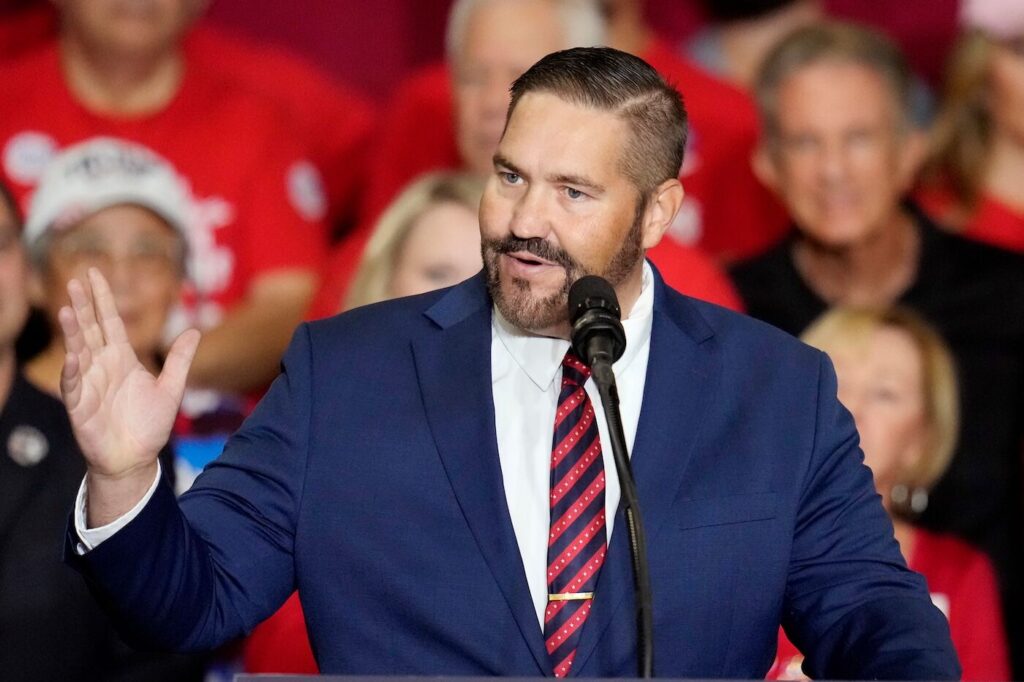
Top officials in Arizona’s Maricopa County agree on how to oversee elections | OUT WEST ROUNDUP
The Associated Press
the-associated-press@coloradopolitics.com
Updated 5 days ago
ARIZONA Officials agree on election oversight PHOENIX — Election officials in Arizona’s most populous county reached an agreement a week before the state’s July 21 primary on how to jointly oversee the vote, ending a prolonged legal battle. Republican Maricopa...

Colorado Politics Calendar Aug. 3-9
Rachael Wright, Special to Colorado Politics
rachael.wright@coloradopolitics.com
Updated 5 days ago
CoPo’s weekly political calendar will help you find political and public-policy events throughout Colorado. It includes candidate and issue campaign events, public policy meetings, court hearings, state and local party conventions, assemblies, debates, rallies, parades, speaking engagements, traveling dignitary appearances,...
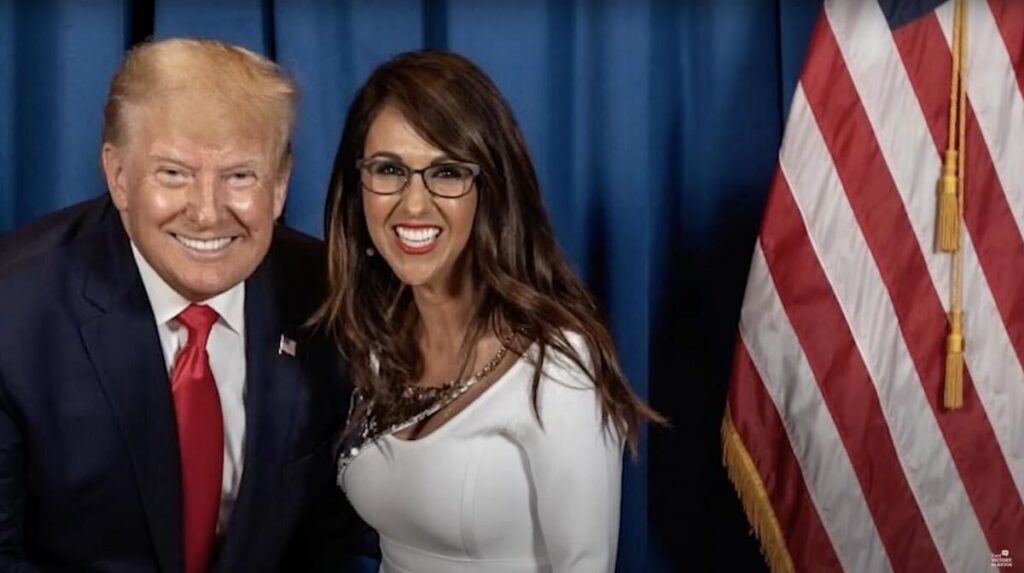
The primary political reform and precondition for all others | SONDERMANN
Eric Sondermann
eric-sondermann@coloradopolitics.com
Updated 5 days ago
In its current state, the American political system has no end of ailments. Far too many factors accelerate polarization and work against moderation and narrowing the differences. Media, and the way so many citizens limit themselves to agreeable, reinforcing sources,...
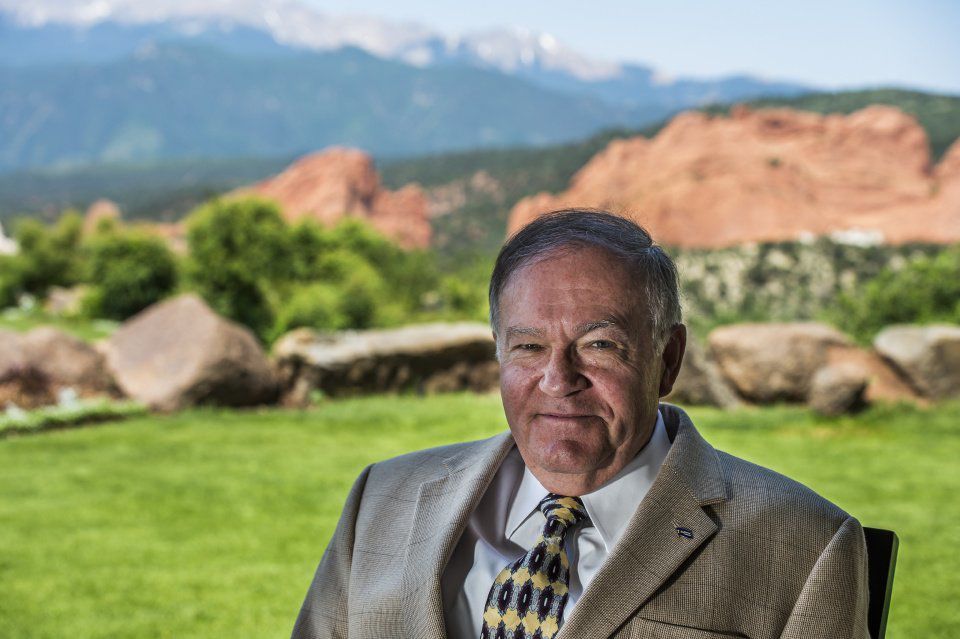
Susemihl wins surprise victory to replace Steve Durham as Colorado Springs state senator | A LOOK BACK
Rachael Wright, Special to Colorado Politics
rachael.wright@coloradopolitics.com
Updated 5 days ago
Forty-five years ago this week: In a closed session, the vacancy committee for Colorado’s Senate District 12 selected attorney Peter Susemihl to complete Sen. Steve Durham’s, R-Colorado Springs, term. Durham resigned his seat to become Region 8 Director of the...

10th Circuit partially revives lawsuit over 2020 Denver protest injuries
Michael Karlik
michael.karlik@coloradopolitics.com
Updated 14 hours ago
The Colorado-based federal appeals court revived a man’s claims against Denver on Friday after concluding a trial judge resolved the case in the city’s favor without analyzing two of the three instances of alleged excessive force and other constitutional violations....

At conservative summit, Colorado Republican leaders concede Democrats’ election edge
Marissa Ventrelli
marissa.ventrelli@coloradopolitics.com
Updated 2 days ago
Four Republican state lawmakers told attendees at a gathering of conservative leaders on Friday they doubt their party can win statewide races, noting that Colorado’s electorate has been shifting toward Democrats but adding they see an opening in several pockets....

Federal judges find Colorado immigration judge violated several orders
Michael Karlik
michael.karlik@coloradopolitics.com
Updated 1 day ago
Multiple federal judges in Colorado have freed people from immigration custody after determining that one immigration judge violated their directives for properly conducting bond hearings. For nearly a year, Colorado’s U.S. District Court has faced a flood of habeas corpus petitions...
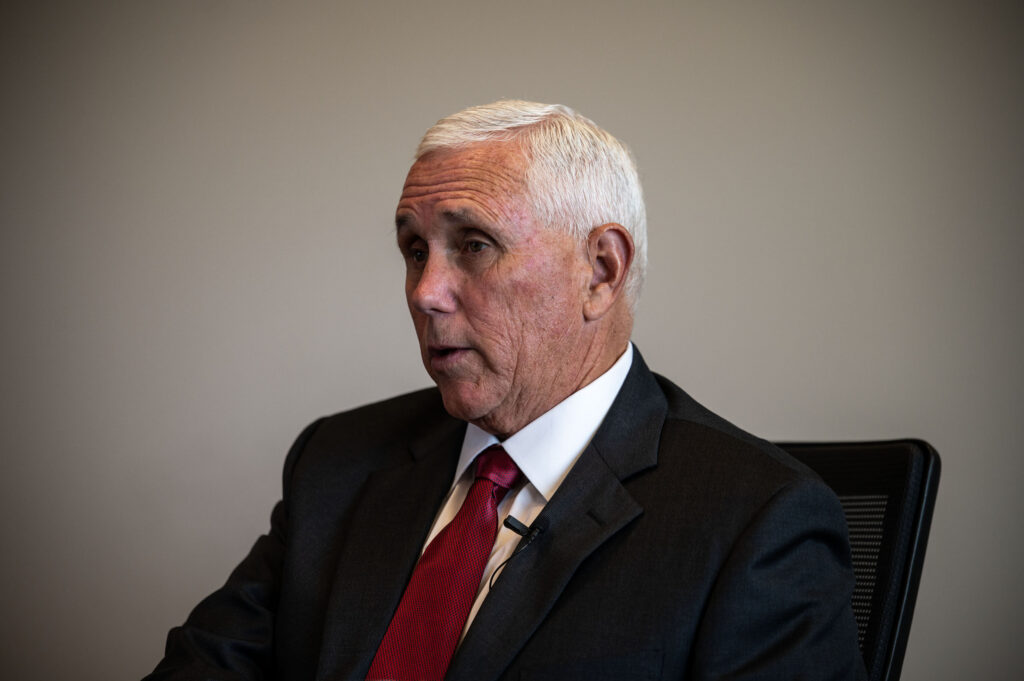
Q&A with Mike Pence | Former vice president says GOP’s populist turn from conservatism isn’t permanent
Ernest Luning
ernest.luning@coloradopolitics.com
Updated 2 days ago
Former Vice President Mike Pence says he’s concerned that the Republican Party has taken a populist turn away from bedrock conservative principles during President Donald Trump’s second term, but he believes the party will return to its roots when Trump...

New federal plan sets short-term rules for Colorado River management
Marianne Goodland
marianne.goodland@coloradopolitics.com
Updated 2 days ago
Interior Department’s plan spares Colorado from mandatory cuts for now After years of stalled negotiations among the seven states that rely on the Colorado River, the federal government on Friday released its own plan for managing the drought-strained system. Calling...
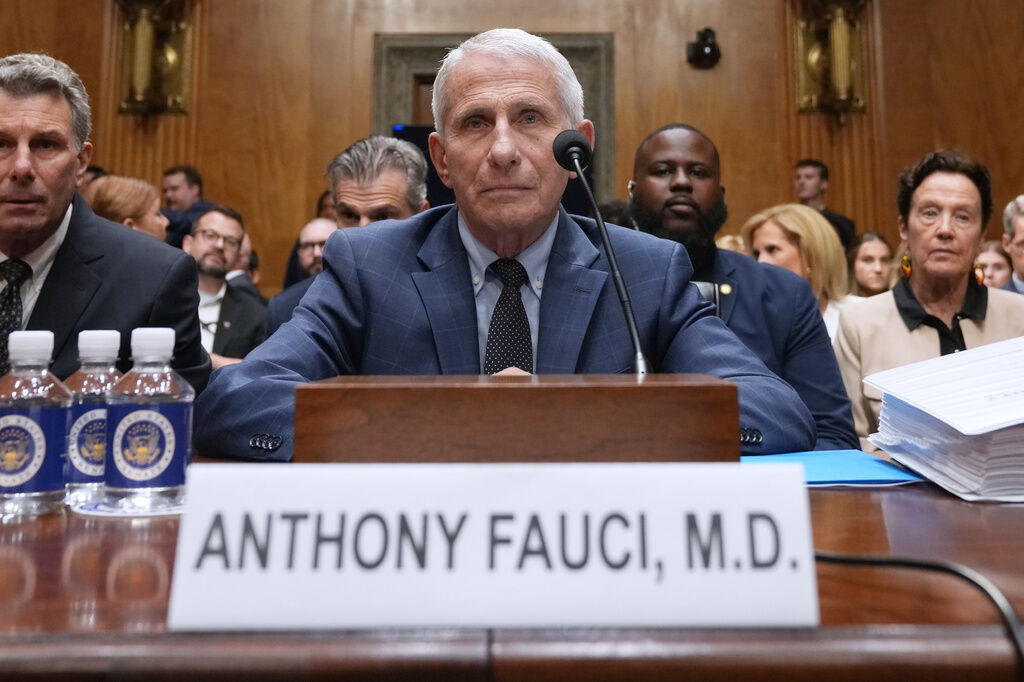
Fauci’s diary details blooming outrage toward ‘far right,’ softness toward Biden and China
Hudson Crozier
hudson.crozier@washingtonexaminer.com
Updated 3 days ago
Dr. Anthony Fauci increasingly railed against “far right” critics of his approach to COVID-19 issues while describing strong support from the Biden White House in his pandemic-era diary, which was recently released by Congress. The former National Institute of Allergy...