

Hiller: Colorado’s collaboration on clean energy

Colorado’s clean energy economy has seen remarkable growth over the past twelve years, and I’ve had a front row seat. As policy director on Ken Salazar’s 2004 Senate campaign, his state issues counsel from 2005 through 2007, and as the executive director of the Colorado Energy Research Collaboratory from 2007 to 2016, I’ve seen these changes firsthand: renewable energy technologies have become mainstream, successfully competing head-to-head with coal and natural gas for new electric power generation in Colorado and around the world; Coloradans have led the world in establishing regulatory systems to make natural gas a cleaner source of energy, and we’ve made huge strides in technologies to produce fuels and chemicals from plants and algae.
The Colorado Energy Research Collaboratory, which has helped spearhead much of this work, is a wonderfully successful collaboration of four of Colorado’s (and America’s) great energy research institutions: the U.S. Department of Energy’s National Renewable Energy Laboratory, Colorado School of Mines, Colorado State University, and the University of Colorado Boulder. The Collaboratory focuses on “clean energy,” including renewable energy technologies, such as solar and wind power, biorefining, and technologies designed to reduce adverse impacts of fossil fuels, such as measuring and reducing methane emissions from natural gas production and transmission.
By working in cooperation with businesses and Colorado’s elected officials, the Collaboratory has helped create one of the world’s most vibrant energy communities right here in our state. Over the past decade, this unique collaboration earned high praise from organizations like the Metro Denver Economic Development Corporation and the Brookings Institution.
Given the Collaboratory’s successes, it’s not hard to see why. From 2007 through 2015, 50 percent of Collaboratory-supported research proposals seeking U.S. Department of Energy funding were selected and funded by the DOE. By comparison, the average rate of success is less than 15 percent.
One example of a DOE-funded Collaboratory research project exemplifies the strength of our community: over the past two years, the Colorado School of Mines has coordinated a team of researchers from CSU, CU Boulder, NREL and the National Oceanic Atmospheric Administration, also in Boulder, to better identify and quantify methane emissions from natural gas production and transmission operations. Building on an initial commitment of $350,000 by the Collaboratory, this team attracted more than 20 natural gas companies and utilities to commit an additional $1.35 million, and successfully competed for more than $3.2 million in funding from the DOE. The results of this closely watched study will be published later this year.
Of course, the Collaboratory institutions aren’t the only players helping to drive the clean energy sector. For example, Xcel Energy worked with researchers at the National Center for Atmospheric Research to improve wind forecasting. As a result, Xcel has improved its wind forecasting accuracy by nearly 35 percent, and better forecasting and other operations improvements have saved Xcel’s customers a total of $60.6 million in fuel costs through end of 2015.
Today, NREL and the Collaboratory universities are preparing to launch a new effort to emphasize and accelerate the crossover from innovation to commercialization. By identifying high priority technology goals and assembling teams of relevant researchers, business leaders and investors, the Collaboratory institutions will work to significantly increase both the pace of research and the successful commercialization of the new technology.
Working hand-in-hand, the Colorado cleantech research community and the Colorado clean energy business community have laid the foundation for the continuing growth of this economic sector, supporting both a healthy Colorado economy and a healthy Colorado environment. The continued cooperation and collaboration among Colorado’s research universities, federal laboratories, large and small companies and state offices will help our state and the world achieve a sustainable, economical, and reliable energy future.


Colorado can’t forget the lessons of COVID | Jon Caldara
Jon Caldara
jon-caldara@coloradopolitics.com
Updated 3 days ago
We are finally getting a clearer picture of what happened during COVID. Not because the people who locked us up, masked our faces and forced unproven chemicals into our bodies have suddenly become transparent, but because Anthony Fauci’s COVID-era diary...

Historic preservation supporters organize to oppose Trump changes | Bob Loevy
Tom Cronin
tom-cronin@coloradopolitics.com
Updated 2 days ago
Historic preservation organizations in Colorado Springs, the remainder of Colorado and across the nation are organizing to resist a recent effort to relax and weaken historic preservation laws in the United States. In Washington, D.C., the Advisory Council on Historic...

The primary political reform and precondition for all others | SONDERMANN
Eric Sondermann
eric-sondermann@coloradopolitics.com
Updated 4 days ago
In its current state, the American political system has no end of ailments. Far too many factors accelerate polarization and work against moderation and narrowing the differences. Media, and the way so many citizens limit themselves to agreeable, reinforcing sources,...
Pueblo mayor, council concoct Trumpian Texas Two-Step | Dennis Maes
Dennis Maes
dennis-maes@coloradopolitics.com
Updated 3 days ago
Several weeks ago, an article was published positing Pueblo Mayor Heather Graham is a disciple of the calamitous Donald Trump school of governance — specifically as it related to questionable ethical practices and the misuse of public funds. Recently, Graham...
Colorado can’t afford to turn its back on proven public safety technology | GUEST COLUMN
Colorado Politics
colorado-politics@coloradopolitics.com
Updated 3 days ago
By Samuel G. Michael I recently saw a report that said Colorado is leading the way in artificial intelligence adoption for businesses. Across our state, more business owners and employees than ever before use AI for their everyday functions —...
As education conflicts abound across Colorado, who puts the kids first? | Paula Noonan
Paula Noonan
paula-noonan@coloradopolitics.com
Updated 4 days ago
Elected school boards and the Colorado Department of Education (CDE) have hit the headlines with fired superintendents, superintendent resignations, failures of oversight, and misdirected dollars. Cherry Creek School District’s superintendent was fired. Jefferson County Schools’ superintendent found a less stressful...

Clock is ticking on Colorado’s new AI rules | PODIUM
Colorado Politics
colorado-politics@coloradopolitics.com
Updated 4 days ago
By Aashis Luitel On Jan. 1, organizations using covered automated systems must begin complying with Senate Bill 26-189, Colorado’s new Automated Decision-Making Technology Act. They can identify those systems and start building the processes the statute clearly requires. What they...
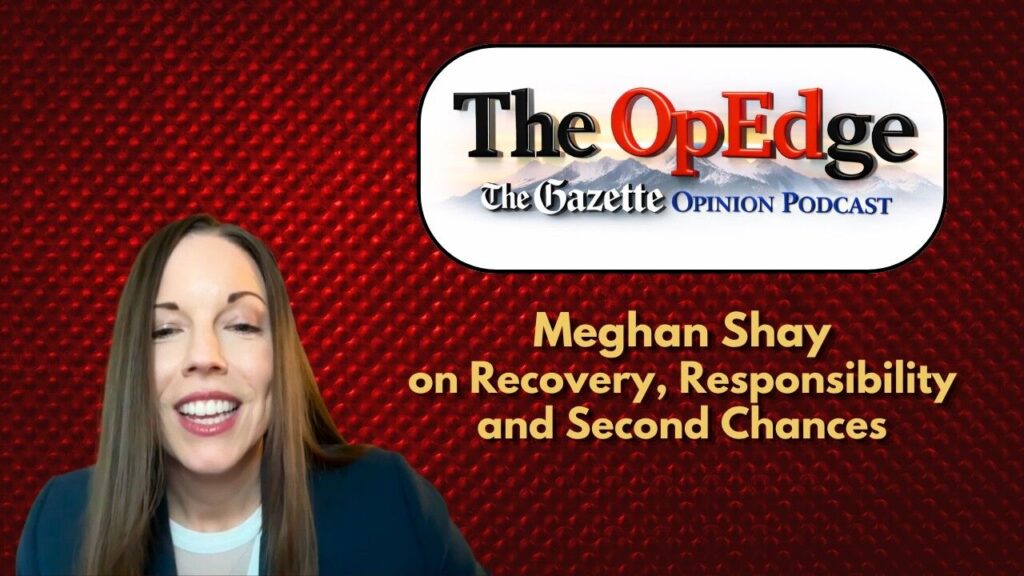
Meghan Shay on recovery, responsibility and second chances | The OpEdge Podcast
Tony Olivero
tony.olivero@gazette.com
Updated 5 days ago
Step Denver and Step Springs CEO Meghan Shay joins The OpEdge to explore addiction recovery, homelessness, and the role of accountability in lasting change. Shay tells host and investigative columnist Jimmy Sengenberger why she believes recovery is built on personal...
The outrages mount | Hal Bidlack
Hal Bidlack
hal-bidlack@coloradopolitics.com
Updated 6 days ago
My kindly and forgiving editors understand that, from time to time, I can’t help myself from leaping atop my rickety soapbox to vent. And, like many other political commentators have already done, I could easily fill this entire missive with...

Rural Colorado deserves a tax holiday | GUEST COLUMN
Eric Mulder
jstooksberry@gmail.com
Updated 6 days ago
Spend enough time in Colorado’s Eastern Plains, the San Luis Valley, or the Western Slope, and you’ll see boarded-up storefronts, schools consolidating classrooms, and small rural communities stretching every dollar to keep basic services afloat. Once the backbone of Colorado’s...
PREV
PREVIOUS

Stavropoulos and Hoban: DEA announcement is not an unexpected blow to the cannabis industry
On Aug. 12, 2016, the United States Drug Enforcement Agency denied a petition to initiate the rescheduling of marijuana from a Schedule I to a Schedule II substance. Despite recent outcry from many within the industry, this should not be considered a blow to the cannabis industry in the United States. This was in fact […]

Hooker: White House report affirms: National dialogue misses details of student debt
A new White House report on student debt affirms what Colorado State University’s president and other leaders in higher education have been saying publicly for years: Despite rising public concerns about college student debt loads, students at four-year public universities have lower average debt and are better able to repay those loans than students who […]