

Big Dog leaves mark at Clinton Global summit in Denver

The Big Dog returned to Denver for the second year in a row this past week with his domestic policy edition of the Clinton Global Initiative — part Davos-style deliberation of important issues by important people, part tent revival where true believers are called forward to attest to their personal or organizational commitment to achieve good things. And it’s all served up with a dash of New Age earnestness by the carnival barker who was our 42nd president.Production values are high. A full-time staff of 100 mostly young women from the Initiative’s New York offices was bolstered with twice that number of local volunteers, swarming delegates with attention and facilitating discussion groups tasked with producing measurable, achievable recommendations. Bill Clinton is beginning to show his age, having lost that poised-on-the-balls-of-his-feet pugnacity he evidenced 20 years ago in favor of a slower, stiffer and more stately presence. He retains, however, the razor-sharp intellect and commanding cadence of a talk show host.
The Fifth Annual Clinton Global Initiative America meeting saw 500 corporate representatives, elected officials and subject-area experts from across the country in attendance. With the impending official announcement of Hillary Clinton’s presidential campaign on Saturday, there was a heavy emphasis on metrics, emphasizing that 85 percent of CGI commitments — financial pledges — are converted into direct assistance provided to programs and beneficiaries.
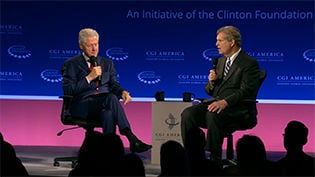
Former President Bill Clinton and Agriculture Secretary Tom Vilsack discuss “Unlocking the Potential of Rural America” at a session of the Clinton Global Initiative America meeting on June 9 in Denver.Photo courtesy Clinton Global initiative via Bloomberg TV

The panels that led discussions during breakout sessions and working group meetings were sprinkled with nationally recognized leaders on their. The second morning opened with a plenary discussion between the former president and Secretary of Agriculture Tom Vilsack, called “Unlocking the Potential of Rural America.” They were joined by Bob Dixson, the mayor of Greensburg, Kan., which was flattened by a tornado several years ago; Mary McBride, president of CoBank; and Tanya Fiddler with the Native American Four Bands Community Fund. The ensuing conversation was enlightening. Rural America continues to shrink in population, while increasing in economic importance, at least in part because of the 1,200-percent improvement in agricultural productivity since 1950.
Vilsack reported that specialty crop production of exotic grains, vegetables and greens was restoring profitability to small farming operations. He noted that he had recently visited an organic producer who was grossing $1 million per cultivated acre. He quipped that he hadn’t thought this was possible for anything “other than a few states that have legalized marijuana,” eliciting titters from the audience. Clinton responded, “That’s just what I need, Tom, an invitation to speak to marijuana growers,” alluding to the controversy regarding both his and Hillary’s speaking fees. Dixson, sounding like a prairie populist, advocated keeping wealth in the community. “Shop where you live, shop at home,” he counseled. The panel concluded that expanded technical education and broadband service were the keys to a rural renaissance.
During a discussion called “Infrastructure for Cities and States,” Randi Weingarten, president of the American Federation of Teachers, deplored the failure of Congress to invest in infrastructure maintenance. She reported that AFT was joining with a coalition of unions to use their pension-fund clout to assist in financing projects. Federal regulations have made this difficult, so these union funds have been largely confined to retrofitting projects, where returns on investment are high. “It’s very difficult to invest in projects with a 20- or 30-year timeline,” she groused. Dawn Zimmer, the Mayor of Hoboken, N.J., last seen on national television complaining about the great Chris Christie bridge scandal, raised an interesting issue. Along with Jersey City and Weehawken, her city is constructing levies and other structures to protect against a repeat of the flooding from Super Storm Sandy — apparently at considerable expense. “We don’t get credit for what we are doing,” she complained. “Flood insurance premiums have gone through the roof for our residents and here we are, socking them with taxes for protection. I’m not sure how much longer they will be willing to pay if they don’t see some premium relief.” Insurance industry representatives agreed, and CGI America had a new recommendation — establish a structure to recognize efforts to deal with rising sea levels and storm surges.
The closing plenary session focused on “Comeback Cities.” Philadelphia Mayor Michael Nutter was an avid cheerleader for the City of Brotherly Love, pointing out that his town had recently been selected the “coolest city in America.” He added, “When rock bands start relocating from Los Angeles to Philadelphia, you know we have something going on.” Detroit Mayor Michael Duggan, who inherited a city in bankruptcy, suggested delegates get online and purchase one of the three homes the city auctions each day. “You can buy a 6,000 square-foot, brick Tudor for $50,000,” he urged, “and we’ll throw in the empty lot next door for another hundred dollars.”
The CGI meeting is so well choreographed that it isn’t clear whether the 79 commitments that were announced sporadically throughout the proceedings represent newfound conversions or merely a confirmation of expenditures that would have been made in any case. Either way, Bill Clinton appears to be coordinating assistance for everything from pre-K education to workforce development and entrepreneurial micro-loans. Much like Jimmy Carter, before him, Bill Clinton’s legacy project marches on, accomplishing good work.

Jeff Crank, Jessica Killin set to face off in 2 debates in Colorado’s 5th Congressional District
Ernest Luning
ernest.luning@coloradopolitics.com
Updated 3 hours ago
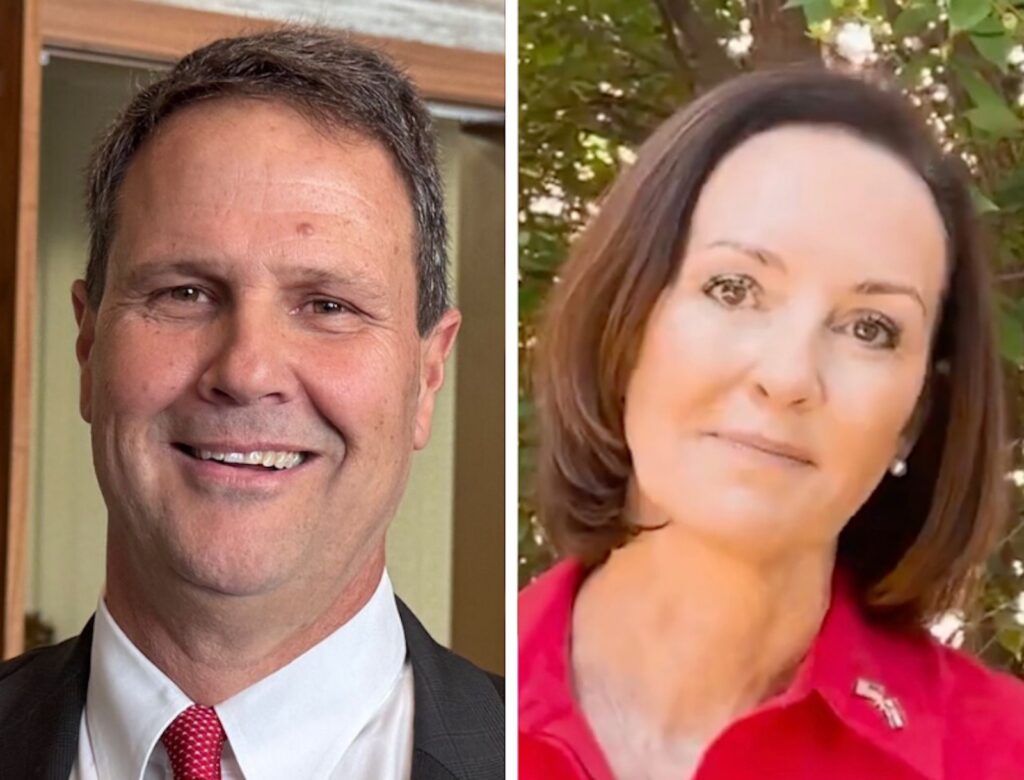
Republican U.S. Rep. Jeff Crank and Jessica Killin, his Democratic challenger, have agreed to debate twice in the weeks leading up to the general election in Colorado’s 5th Congressional District, their campaigns have said. Crank is seeking a second term...
Colorado judge explores sanctions against DOJ, ICE for rearresting man 4 days after release on bond
Michael Karlik
michael.karlik@coloradopolitics.com
Updated 4 hours ago
A federal judge in Colorado is considering sanctions against the government after immigration agents rearrested a man four days after an immigration judge found him suitable for release on bond. On July 28, U.S. Magistrate Judge N. Reid Neureiter ordered...

White House deploys private companies to help crack down on cybersecurity breaches
David Zimmermann
david-zimmermann@coloradopolitics.com
Updated 11 hours ago
The White House intends to use private companies in the United States to help crack down on cybersecurity breaches perpetrated by transnational criminal organizations. President Donald Trump signed a memorandum on Wednesday, directing his administration to employ the private sector...

Voters prefer socialist over MAGA candidate in 2028 matchup: Poll
Mabinty Quarshie
mabinty-quarshie@coloradopolitics.com
Updated 9 hours ago
New polling released this week suggests that a socialist candidate would defeat a Make America Great Again candidate in a hypothetical 2028 presidential matchup, a move that implies the reach of progressive leftists isn’t abating despite recent setbacks in Wisconsin....
Fort Carson garrison commander says staff cuts created ‘uncertainty and fear’
Mary Shinn
mary-shinn@coloradopolitics.com
Updated 6 hours ago
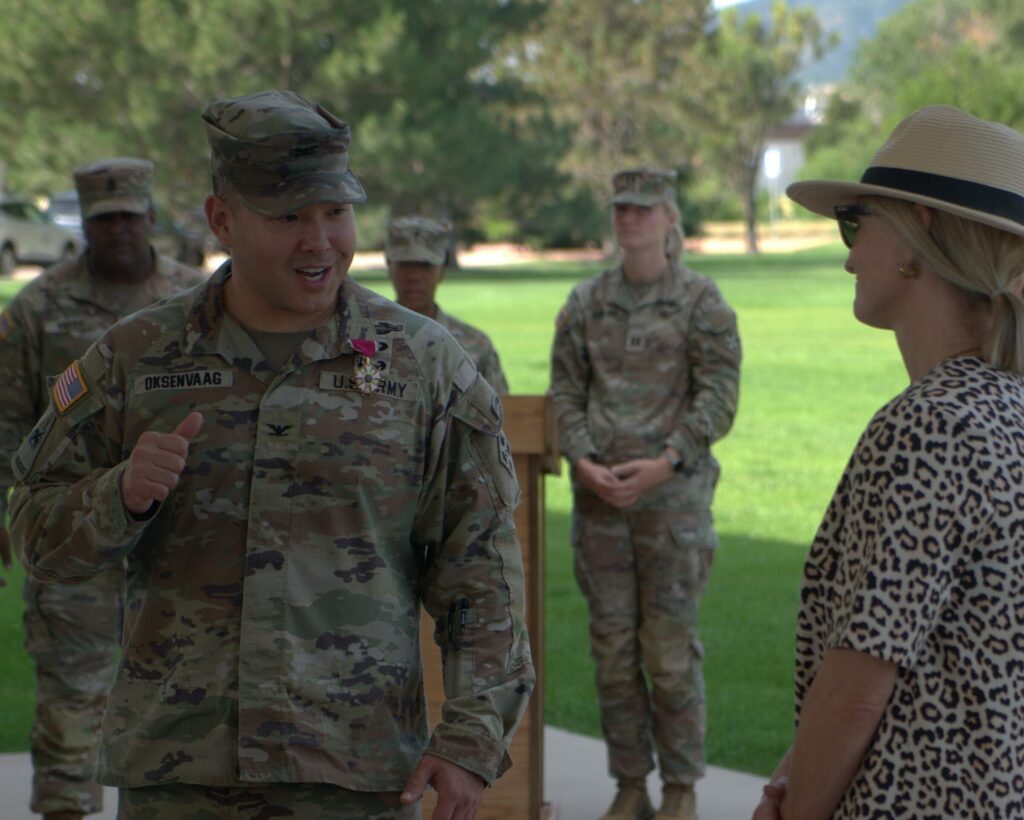
The Fort Carson garrison commander departed Wednesday after what he described as a difficult 18 months for installation and garrison staff. “I know the last 18 months has been marked by profound uncertainty and fear, but you weathered the storm...
Divided disciplinary panel censures Montezuma County judge after agreement reached
Michael Karlik
michael.karlik@coloradopolitics.com
Updated 11 hours ago
A disciplinary panel formally imposed a public censure, suspension, and further training on Montezuma County Court Judge Ian J. MacLaren on Tuesday by a 2-1 vote. Under constitutional Amendment H, which voters adopted in November 2024, MacLaren was set to...

Aurora police officer resigns after taking narcotics found during traffic stop
Kyla Pearce
kyla.pearce@gazette.com
Updated 6 hours ago
An Aurora Police Department officer resigned after investigators found that he took narcotics that were collected as evidence during a traffic stop. Michael Gallagher violated several agency policies, including substance abuse, tampering with evidence and lying in a criminal investigation,...

Douglas County measure to expand county commission advances to November ballot
Nicholas Fogleman
nicholas.fogleman@denvergazette.com
Updated 6 hours ago
Douglas County voters will decide in November whether to expand the county’s Board of County Commissioners from three members to five after election officials certified a citizen-led petition effort Wednesday. The Douglas County Clerk and Recorder verified 20,434 petition signatures,...
Colorado’s Western Slope magistrate judges describe unique role in federal judiciary
Michael Karlik
michael.karlik@coloradopolitics.com
Updated 1 day ago
Two of Colorado’s federal judges stationed on the Western Slope spoke to lawyers on Wednesday about their unique roles, the ways their workloads differ, and the need for more criminal defense lawyers to take cases outside the Front Range. “Here...
‘Ticked off’: Third-party U.S. Senate candidate in Colorado launches $1.3 million TV ad campaign
Ernest Luning
ernest.luning@coloradopolitics.com
Updated 3 hours ago
Bob Chew, the Forward Party nominee for U.S. Senate in Colorado, sends household objects flying in a TV ad set to run statewide through September, backed by $1.3 million in ad reservations across multiple platforms, his campaign told Colorado Politics....
PREV
PREVIOUS

Menten: RTD highly subsidized, no 'greedy profiteer'
The Regional Transportation District recently approved a 2016 fare structure that some think unfair. The agency held public hearings over several months and listened to concerns and adjusted the proposal. Still, multiple protests were organized, and even Occupy Denver decided to beat their drums. I believe by reducing expenditures on high-cost services, RTD can better […]

Woods, Zenzinger already in 2016 campaign mode
The race for one of Colorado’s most competitive state Senate seats is more than a year away, but the potential candidates are already in throw-down mode. Former Democratic state Sen. Rachel Zenzinger told The Colorado Statesman this week that she is “seriously considering” a rematch with incumbent Republican Sen. Laura Woods for the right to […]