

Hudson: Holocaust remembrance attracts Colorado pols
Temple Emanuel in Denver’s Hilltop neighborhood was filled nearly to bursting despite a wet, snowy evening last Thursday for the 34th Anti-Defamation League’s Mountain States Regional observance of the Shoah. Several dozen survivors of the camps were recognized together with a bi-partisan smattering of Colorado’s elected officials in attendance, including a strong showing from Denver candidates for municipal seats. The keynote speaker, Eva Mozes Kor, a survivor of Joseph Mengele’s demented medical experiments with twins, proved a tiny yet feisty, funny and inspiring keynote speaker. At age 81 she travels around the world from her home in Terre Haute, Ind., relating her horrific experiences as a child at Auschwitz.
Born in Romania, she arrived by cattle car at the concentration camp in August of 1944 with her twin sister, parents and two older sisters. Before the end of the first day the twin girls would be separated from the remainder of their family, none of whom they would ever see again, and were placed into a special dormitory with 12 other sets of female twins ranging in age from 2 to 14. When Eva used the latrine after four days of train travel, she observed three children’s bodies on the floor of the filthy, rat infested room. It was at this point that she vowed to herself she and her twin would survive no matter what happened. They were required to provide blood samples daily, while being injected with unknown substances. After falling desperately ill, Mengele moved her to the camp hospital observing that she probably had just two weeks to live.
Five weeks later she returned to the medical barracks where she reunited with her sister. In the meantime, her sister had continued to receive injections, which it would be discovered many years later had badly withered her kidneys. In 1987 Eva donated one of her own kidneys to her twin, who later died of cancer in 1993. On Jan. 18, 1945, Eva was “organizing” in the Auschwitz kitchens, a term the prisoners used for stealing bread, (She mentioned that she had been an excellent “organizer”) when an American bomber flew low over the camp where she could see an American flag decal on one wing. This was her first indicator that their freedom might be near. Nine days later the Nazi guards destroyed the furnaces, burned the barracks and began machine-gunning the remaining prisoners. She and her sister lay among the bodies and pretended to be dead. A few hours later, the first American troops rolled into the camp dispensing chocolates and their first real food in nearly a year.
The inhumanity of the Holocaust still defies belief, and Kor’s story moved her audience as it was recounted from the memories of an actual survivor. She proceeded to talk about the difficulties faced by children today. “Growing up is very hard. Even when your parents can afford to buy you jeans with holes in them,” she quipped. This was a lead-in to her own recognition of her prejudices when she recently visited a high school and observed three boys with pants, “…whose crotches were down around their knees while their pant legs were sweeping the floor.” She asked a teacher whether these young men were troublemakers and drug users? She was surprised to be told they were some of the best students in the class. “We all have our prejudices, which we must set aside in order to really know others. That was an important lesson for me to learn,” she explained. In recent years she has established a friendship with a former Nazi doctor at Auschwitz. While she had hoped he could tell her what Mengele’s twins study was intended to achieve, he could not help her, having served in the extermination unit.
Aware that historians were uncertain exactly how the gas chambers and crematoriums were managed, she inquired if he recalled how they were operated and he replied, “…every night of my life I have to remember what we did.” She asked him to accompany her to Auschwitz to explain what he remembered to the oral history project. They met there with members of their families. Eva said she felt she should bring him a gift. “But, what do you get for a Nazi doctor?” she asked. Eventually she decided to write him a letter of personal forgiveness for his role at the camp. She described her surprise that the letter freed her -permitting her to release her sense of being a victim. “Our anger is a seed for evil, while our forgiveness can be a seed for peace,” she concluded, “…now you have survived my remarks!”
Another speaker noted that 2015 was the 100th anniversary of the Armenian genocide, the 70th anniversary of the Shoah, the 20th anniversary of the Rwandan and Bosnian genocides, and still we are faced with recent sectarian killings across the Middle East proving we still have not turned away from anger. As a part of the Shoah Remembrance the Greenberg, Traurig law firm conducts an annual essay contest for Colorado students writing “Tributes to Moral Courage: Standing up Against Injustice.” “Crossing the Border”, the second place winner for middle schoolers, written by Julianna Campos of Grand Junction’s Holy Family, describes the journey of a 14-year old Nicaraguan teenager conscripted into the Sandinista Army. It concludes with the following surprise, “I can not imagine being 14 years old and crossing the border by myself into a foreign country where I did not speak the language or know where I was going or what I was going to do. All of that, plus living in fear that if my home government found me, I will most likely die. I am so proud for the moral courage Omar Gabriel Barcia Campos showed. I am proud to call him my Dad!” Campos received political asylum at the time and now lives with his family in Mesa County.
– Miller Hudson is a public affairs consultant. He can be reached at mnhwriter@msn.com.


What courageous citizenship really looks like | Vince Bzdek
Vince Bzdek
vince.bzdek@gazette.com
Updated 11 hours ago
By Vince Bzdek What exactly is courage? Ernest Hemingway famously called it grace under pressure. Mark Twain wrote that “courage is resistance to fear, mastery of fear — not absence of fear.” C.S. Lewis refined that even more: “Courage is...
The coming election and mischief in the making | SONDERMANN
Eric Sondermann
eric-sondermann@coloradopolitics.com
Updated 3 days ago
America’s tribalism is such these days that we struggle to even agree on the basic rules. Elections have always been hotly contested. As the saying goes, “Politics ain’t beanbag.” The process has long involved elements of nastiness and underhanded conduct....

Colorado Politics Calendar Aug. 31-Sept. 6
Rachael Wright, Special to Colorado Politics
rachael.wright@coloradopolitics.com
Updated 4 days ago
CoPo’s weekly political calendar will help you find political and public-policy events throughout Colorado. It includes candidate and issue campaign events, public policy meetings, court hearings, state and local party conventions, assemblies, debates, rallies, parades, speaking engagements, traveling dignitary appearances,...
Tancredo in Running for Dept. of Ed. Position | A LOOK BACK
Rachael Wright, Special to Colorado Politics
rachael.wright@coloradopolitics.com
Updated 4 days ago
Forty-five years ago this week: “I know that my name has been placed before the Secretary of Education, and I know that I’m one of three or four being considered for the Department of Education’s Region 8,” said state Rep....
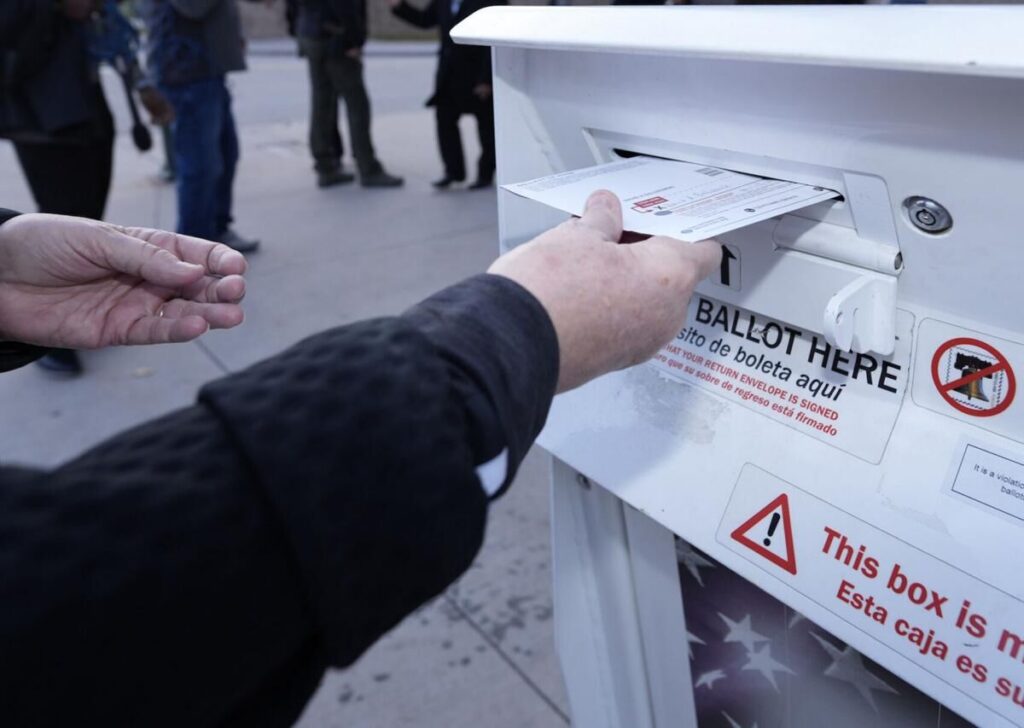
Colorado measure adding ID checks to mail-in voting qualifies for ballot
Marissa Ventrelli
marissa.ventrelli@coloradopolitics.com
Updated 1 day ago
A ballot initiative that would require voters to include additional information on mail-in ballots has qualified for the November election, according to the Secretary of State’s Office. Backed by El Paso County Treasurer Chuck Broerman and former Deputy Secretary of...
Colorado election website error exposes personal data of confidential voters
Marissa Ventrelli
marissa.ventrelli@coloradopolitics.com
Updated 1 day ago
A system update accidentally lifted protections on confidential records in Colorado, exposing dozens of voters’ personal information, according to the Secretary of State’s Office. The limit that normally blocks access to confidential voter profiles was inadvertently disabled during an update...

PUC adds weekly comment after killing private talks
Scott Weiser
scott.weiser@gazette.com
Updated 1 day ago
The Colorado Public Utilities Commission will take public comment at the start of every commissioner’s weekly meeting beginning Sept. 9 as part of its new transparency mandate, the commission announced, expanding a slot previously limited to the second Wednesday of...
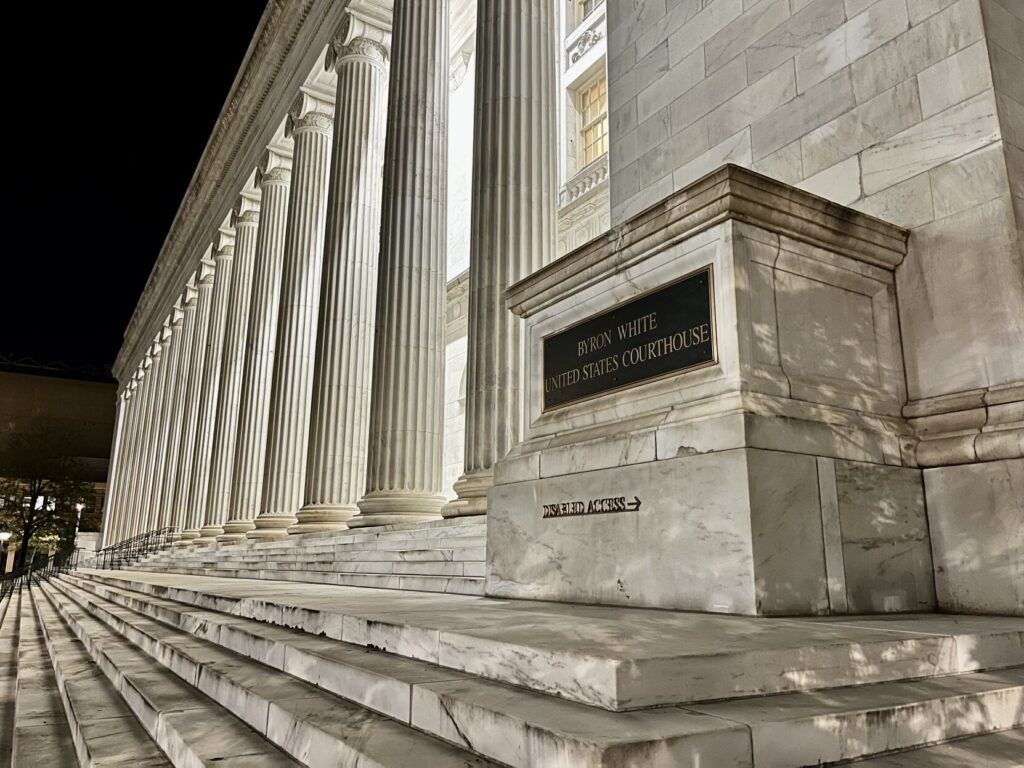
10th Circuit overturns framework for sentencing probation violators by 11-1
Michael Karlik
michael.karlik@coloradopolitics.com
Updated 10 hours ago
In a rare decision by all 12 of its full-time judges, the Denver-based federal appeals court ruled in a lopsided vote on Friday that one of its members created a sentencing process for probation violators that was out of step...
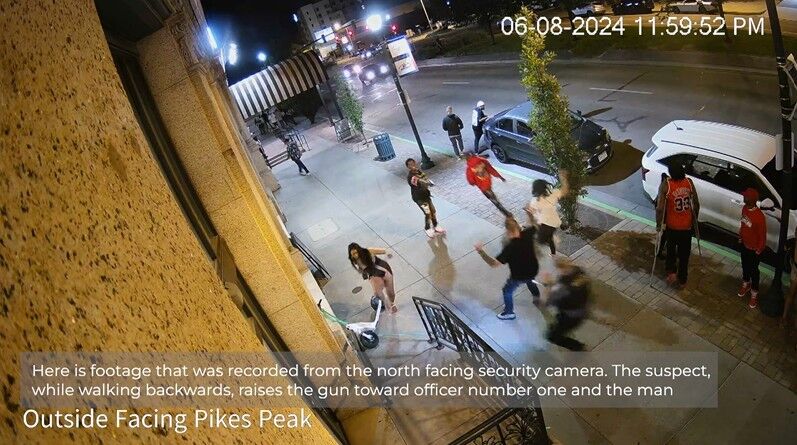
Federal judge dismisses excessive force lawsuit against Colorado Springs, officer
Michael Karlik
michael.karlik@coloradopolitics.com
Updated 14 hours ago
A federal judge concluded last week that a Colorado Springs police officer could not be held liable for shooting a suspect three times after the man menaced two victims with a gun and fled the scene. Al’morion Germany was involved...

DeFlock started from one man’s curiosity — now Flock cameras are a midterm issue
Claire Carter
claire.carter@washingtonexaminer.com
Updated 1 day ago
Will Freeman wasn’t looking to start a national movement when he launched DeFlock after noticing Flock Safety’s automatic license plate readers along the side of the road. The software engineer was driving across the country in 2024 when the cameras...
PREV
PREVIOUS

Former governors back Hick on student testing standards
Gov. John Hickenlooper brought in a couple of heavy hitters this week to push back against legislative efforts that would dramatically reduce standardized testing in schools. Hickenlooper was joined by former Govs. Bill Owens, a Republican, and Roy Romer, a Democrat, during a Capitol press conference, Wednesday, where the three men championed state testing as […]
Letter: Another reason to oppose TPP
Thank you for reporting on the Trans Pacific Partnership (TPP) trade agreement in your recent article, Trans-Pacific trade agreement supporters, opponents spar. I would like to make an important clarification to that article, which references the ability for foreign countries — through state-owned enterprises — and foreign companies “to sue the U.S. government”. That lawsuit […]