

Severance tax is biggest fight so far in 2015-16 budget

The state Senate Monday issued its first votes on the 2015-16 state budget. The Senate Appropriations Committee voted to pass the budget bill, Senate Bill 15-234; and a package of related budget bills.
The biggest budget fight may come from one of those related bills. SB 255 takes $20 million from the state’s severance tax fund and transfers it to the general fund. The bill passed on a 4-3 vote with bi-partisan opposition.
Severance taxes are levied by the state for “severing” a mineral from the earth. Half of the severance taxes received by the state go back to local communities impacted by mineral extraction. The Department of Local Affairs distributes those funds through its Local Government Severance Tax Fund. The other half goes to water projects, regulation of oil and gas and mineral industries, low income energy assistance and wildlife conservation. The Department of Natural Resources (DNR) distributes the funds through its Severance Tax Trust Fund. Water projects, under the Colorado Water Conservation Board, get the lion’s share of the severance tax money that goes to DNR.
SB 255 would take the first $20 million received in severance taxes, before those tax revenues are distributed to either fund, and put it into the general fund to help balance the 2015-16 budget. It’s the only bill in the budget package not sponsored by the entire JBC. Rep. Bob Rankin, R-Carbondale, voted against it in committee.
He’s not alone in his opposition. Monday’s “no” votes in Senate Appropriations came from Sens. Jerry Sonnenberg, R-Sterling; Laura Woods, R-Arvada and Mary Hodge, D-Brighton.
Since the appropriations committee was the committee of reference, witness testimony was allowed, and the hearing did not lack for opposition.
Diane Orf, representing the Colorado Water Congress and the Associated Governments of Northwest Colorado, pointed out the tax revenue helps local communities in down times. Next year may be one of those, when severance taxes are expected to reflect the decline in oil and natural gas prices. “Those projections are not comforting,” Orf told the committee. “It’s hard for local communities to sit back and let [the tax] go,” since it’s intended to be squirreled away for the bad years.
Orf also pointed out that the severance tax dollars that pay for water projects may be needed to pay for projects recommended in the state water plan. Those recommendations are expected in June.
JBC Chair Sen. Kent Lambert, R-Colorado Springs, told the committee that he reluctantly carried the bill. He pointed out the governor’s budget proposal requested $47 million from severance taxes, and that was not acceptable to the JBC. “We’ve tried to keep this down to a maximum” of $20 million, he said.
Fellow JBC member Sen. Pat Steadman, D-Denver, had a different take. He told those who opposed the bill that the more severance tax money that comes in, the more “it pushes general funds out the door” for refunds under the Taxpayers’ Bill of Rights (TABOR). It would be nice if the severance taxes could be saved for a rainy day, but TABOR doesn’t allow it. Steadman also said that since severance taxes contributed to the state exceeding its TABOR revenue limit and resulting refunds, “you’re going to help us pay for it.”
Rankin told The Statesman that it’s possible that the severance tax issue may become a referred measure to the voters. Lambert said Monday that Rankin had not discussed that in committee.
The severance tax decision was a compromise reached with the governor’s office, Lambert told The Statesman Monday. “We do have to compromise a little bit; we do have a split legislature, and there were other balancing priorities we had to consider.”
The JBC made several last-minute decisions to balance the budget. That included reducing the K-12 appropriation by $50 million, which would have helped reduce the negative factor. There is still $25 million in the 2015-16 budget for the negative factor, Lambert said.
The negative factor is a budget stabilization tool devised by lawmakers in 2009. It allows the Legislature to subtract dollars from K-12 funding based on how much is available for school finance. About a billion dollars was subtracted from K-12 funding during the recession. Last year’s budget put $110 million toward reducing the negative factor.
The $20 million also will help pay for bills that haven’t yet been passed, Lambert said. Senate President Bill Cadman, R-Colorado Springs, pointed out last week that $8 million had been set aside to fund the workforce development package. Another $5 million each has been set aside to fund bills coming out of the House and Senate Appropriations committees.
Lambert pointed out that local communities have other tax revenues available, such as a sales tax assessed on real or personal property. Lambert said severance taxes brought in a windfall in 2014-15, estimated at $369 million.
The JBC’s compromise also included what to pay for in capital construction. The 2014-15 budget put $279.1 million into 22 capital construction projects. Some projects require multi-year funding, and the 2015-16 budget bill pays for those continued costs. The budget bill also pays for other capital-related responsibilities and a new project, a “Campus Commons” building at the University of Northern Colorado that requires $23 million in state funding.
The Senate divided into its caucuses on Tuesday to discuss the budget bill and amendments. The budget package will go to the Senate floor for second reading on Wednesday and final vote on Thursday.

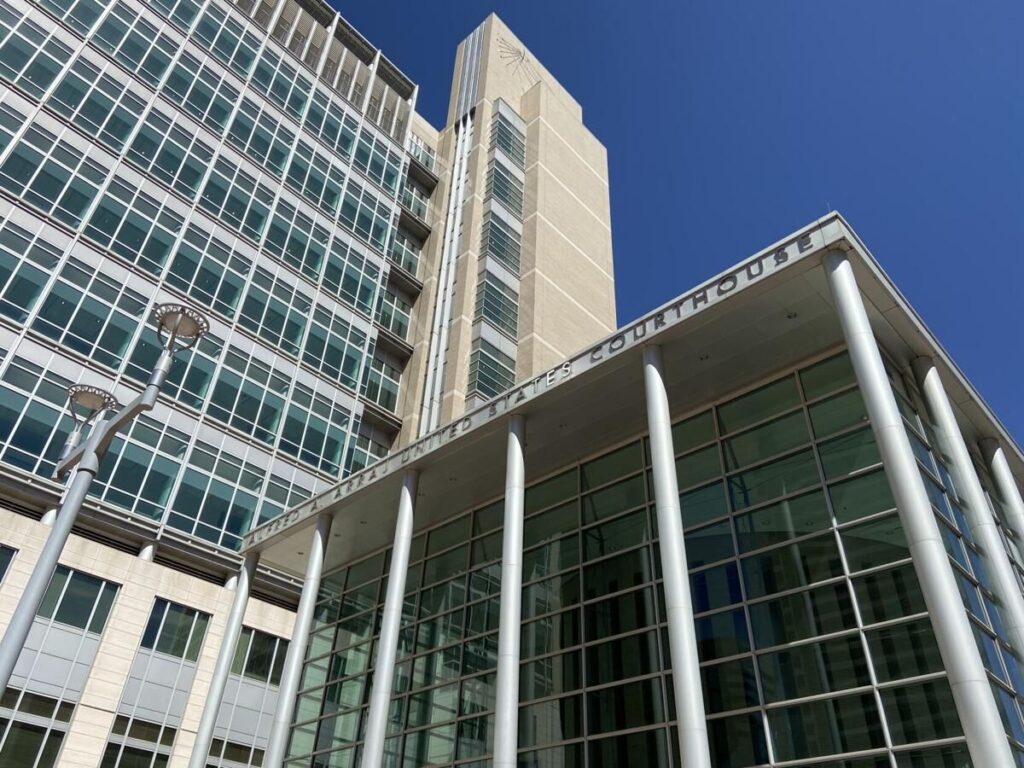
Federal judge hears arguments about Colorado’s 3-day gun purchase waiting period
Michael Karlik
michael.karlik@coloradopolitics.com
Updated 1 hour ago
A federal judge heard arguments on Monday about the constitutionality of a 2023 Colorado law that generally imposes a three-day waiting period on firearm purchases after the initiation of a background check. The test that the U.S. Supreme Court created...

U.S. Supreme Court clears way for Trump mail voting order in advance of midterms
Wire Services
wire-services@coloradopolitics.com
Updated 5 hours ago
WASHINGTON • The U.S. Supreme Court on Monday cleared the way for President Donald Trump to move ahead with an executive order that seeks to restrict the mailing of ballots to American citizens in an eligible voters list. The executive...
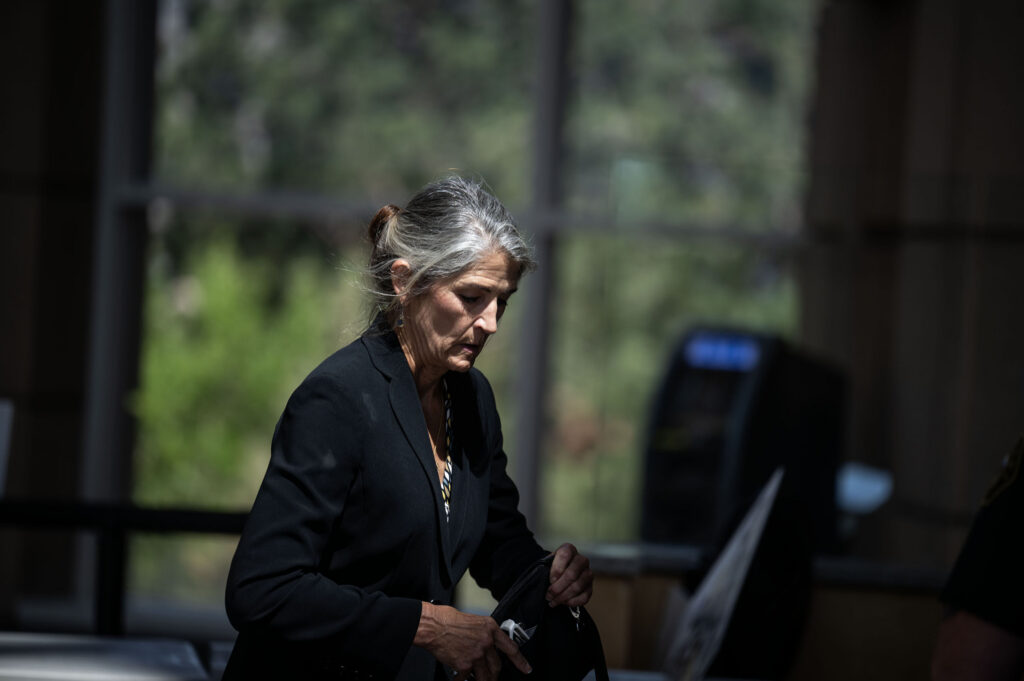
Colorado Supreme Court intervenes in Weld County prosecution dismissed due to Missy Woods misconduct
Michael Karlik
michael.karlik@coloradopolitics.com
Updated 5 hours ago
The Colorado Supreme Court ordered a Weld County trial judge last week to respond to the district attorney’s claim that he improperly dismissed a criminal case because of “outrageous” conduct by the Colorado Bureau of Investigation. Daniel Lee Eatinger stood...

Trump opens ‘economic D-Day’ offensive against Iran as war nears six-month mark
Christian Datoc
christian-datoc@coloradopolitics.com
Updated 10 hours ago
President Donald Trump is seeking to increase the financial pressure on Iran with new secondary sanctions on nations and foreign actors propping up the regime’s economy as the war between the United States and Tehran nears the six-month mark. Treasury...

Trump announces 50% tariffs on Canadian cars, auto parts, and steel
Naomi Lim
naomi-lim@coloradopolitics.com
Updated 10 hours ago
President Donald Trump escalated the trade war with Canada after talks collapsed last week, announcing Monday that the United States would impose 50% tariffs on cars, trucks, automotive components, and steel starting Jan. 1, 2027. “Canada has been ripping off...

Iran puts out propaganda video tracking Barron Trump’s location, offering $10 million for his assassination
Timothy Nerozzi
timothy-nerozzi@coloradopolitics.com
Updated 11 hours ago
The Islamic Revolutionary Guard Corps is putting a hit out on President Donald Trump’s son, Barron Trump, with an inflammatory video claiming to track his location. State-run television in Iran is broadcasting a propaganda video claiming to show the locations...
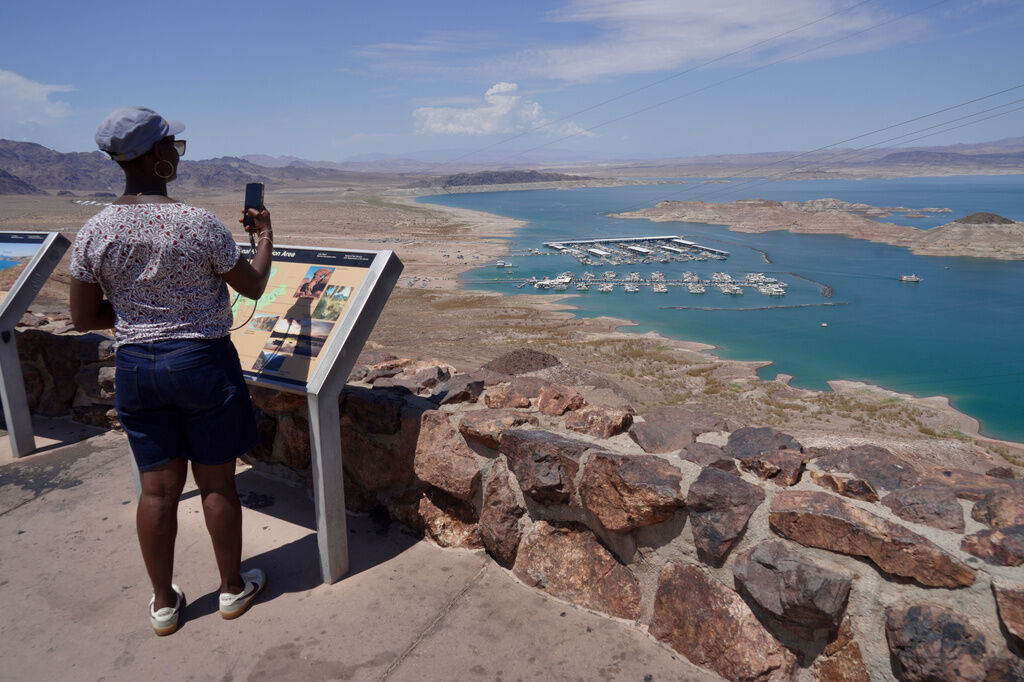
Nevada sues Trump administration over Colorado River cuts
Marianne Goodland
marianne.goodland@coloradopolitics.com
Updated 3 hours ago
On Monday, the state of Nevada filed a lawsuit against the Trump administration and Interior Secretary Doug Burgum, seeking to block the Colorado River management plan. On Friday, Burgum released a “record of decision” that would reduce water allocations to...

Healthcare Freefall: Longer drives, fewer options for maternity care in Colorado
Thelma Grimes
thelma.grimes@coloradopolitics.com
Updated 13 hours ago
Editor’s Note: Colorado’s healthcare system is entering a period of accelerating instability — a “tsunami,” as multiple leaders describe it — driven by collapsing hospital finances, shrinking Medicaid reimbursements, disappearing services and a political fight over who is responsible for...
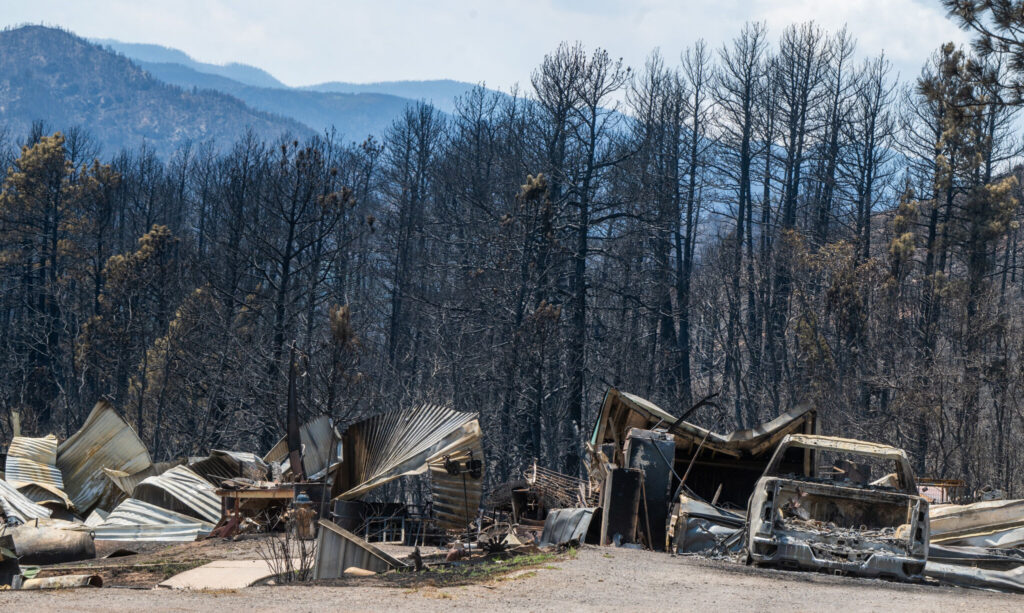
Polis requests federal disaster declaration for Colorado wildfires and floods
9News
9news@coloradopolitics.com
Updated 7 hours ago
On Sunday, Gov. Jared Polis officially requested a Major Disaster Declaration from President Donald Trump and the Federal Emergency Management Agency to support recovery from two wildfires and the subsequent flooding and debris flows on both burn scars. Polis requested a declaration...

US strikes another boat in eastern Pacific, killing two, Pentagon says
The Associated Press
the-associated-press@coloradopolitics.com
Updated 14 hours ago
U.S. forces have struck another vessel in the eastern Pacific, killing two people the Pentagon says were trafficking drugs. The U.S. Southern Command announced the strike in a social media post early Monday. The death toll from the Trump administration’s...
PREV
PREVIOUS

Klingenschmitt: In the Old Testament they stoned the prophets - Opinion
In the Old Testament, they didn’t elect prophets. They stoned them. I didn’t come here to be a career politician. I came to speak truth. Long before I was elected HD15’s State Representative, I served as an ordained minister, former Navy Chaplain, and I still preach two hours every Sunday in my private ministry on […]

CU's Benson complies uneasily with Democratic probe into climate professor
University of Colorado officials have turned over information – albeit grudgingly – on professor Roger Pielke Jr. to U.S. House Democrats on what he calls a “witch hunt” into the funding of certain climate scientists. CU President Bruce Benson complied last week with a request by U.S. Rep. Raul Grijalva, D-Ariz., for Pielke’s salary, external […]