

Imbroglio embroils election bill
The Legislature could be on the verge of approving sweeping changes to the way most municipalities conduct elections in the state, but not until a lawmaker intends to introduce last-minute changes before the final Senate vote on the legislation.
As it’s written, the bill, HB 1130, would allow military and overseas voters in Colorado municipal elections the same opportunity to return ballots using so-called electronic transmission – via fax machines and email – as the same voters have been able to do for years in county, state and federal elections, among other changes to municipal elections law.
But a flurry of protests that have reached a fever pitch this week claim that the bill’s language would open the door to all manner of online voting, including posting ballots to Twitter or texting votes to election clerks. What’s more, the bill’s critics charge, clerks in small towns aren’t equipped to verify emailed ballots, which they contend can easily be hacked, spoofed or diverted.
The bipartisan bill – sponsored by state Reps. Dan Nordberg, R-Colorado Springs, and Su Ryden, D-Aurora, and state Sens. Owen Hill, R-Colorado Springs, and Leroy Garcia, D-Pueblo – sailed through the House on a vote of 65-0 and was waved ahead, again without opposition, in a Senate committee hearing last week. When the bill came up for second reading in the Senate on Tuesday, it passed a voice vote with nearly all in agreement.
It’s that virtual unanimity through nearly every step of the legislative process that makes the rare prospect of third-reading amendments even more unusual, a predicament acknowledged by Sen. Kevin Lundberg, R-Berthoud, who is leading the charge to conduct a massive overhaul of the bill at the 11th hour.
“Whenever you open up election law, there are myriad issues that are there. I have always tried to head election law into the most secure fashion possible so we can have the most confidence in the integrity of our election system,” Lundberg told The Statesman on Thursday. “This bill continues to develop a policy that has been put in place by the clerks and the secretary of state more than the Legislature in encouraging use of the internet for delivery and receipt of ballots.” And that’s what he intends to change, warning that the way the bill is written will open a can of worms.
“This bill does say electronic transmission or other ways of voting – it opens the door wider, much wider to whatever else you can do electronically,” he said. ” A Facebook page could somehow be construed as electronic transmission of a ballot. I’m not sure I want to put Mark Zuckerberg in charge of my ballot. I’m more than not sure, I’m certain.”
Lundberg says that one amendment he’s preparing – in full cooperation with the bill’s prime sponsors, he emphasizes – would eliminate the “electronic transmission” term. The provisions for emailing or faxing ballots have expanded far beyond the original legislative intent, which was to make ballots available to soldiers serving on the front lines, where mail service was spotty or unavailable, Lundberg said. He noted that secretary of state rules for state and federal elections don’t restrict emailed ballots “only when mail is not feasible, it’s laid out as an option that you can do it when you want to do it.”
While hardly anyone uses fax machines anymore, voting with emailed ballots – using a PDF form that can be filled out, printed and then scanned back before return, in most cases – has become quite popular. The state counts some 22,000 military and overseas voters, and use of electronic transmission is on the rise.
“I want to make sure that it’s the emergency position and not the default position if you’re overseas,” Lundberg said. “My big concern about 1130 is it continues to reinforce that policy, in this case for municipal elections. That’s a very, very dangerous road to continue to go down.”
Nordberg, who has been working with Lundberg on a set of amendments, said he welcomes the chance to fix the bill but cautions against losing sight of its original intent, which is to allow front-line members of the military to vote in local elections, regardless of the way their home towns conduct balloting. (So-called statutory cities, with populations under 2,000, can only conduct elections according to Title 31 of the Colorado statutes, though larger, home-rule cities have the option of coordinating elections with county clerks under Title 1 rules for state and federal elections.)
“Military voters shouldn’t be punished just because they live in a statutory city,” Nordberg told The Statesman on Thursday. “Right now, home rule cities, depending on their charter, do their best to accommodate military voters. But in statutory cities, there is no such accommodation. Clerks aren’t even enabled to help military voters in statuary cities. That’s what we’re attempting to address. We still have some things to work out, it’s going through the process like every bill does, but in the end I’m confident we’ll accomplish these goals.”
He took issue with the charges of some of the bill’s critics, that the bill “somehow creates an internet voting system that doesn’t exist,” adding, “To the extent that we can make our electronic voting more secure, and to what lengths we allow individuals to use electronic voting, that’s what we’re trying to do here. I have absolutely no interest in establishing any new venues for Internet voting.”
Geoffrey Wilson, general counsel for the Colorado Municipal League, which worked with Nordberg to develop the bill last fall, was aghast that the bill was facing a furor so close to the finish line.
“If there ever was a bill I assumed would be beyond the ordinary sort of controversy, I assumed this would be it,” he said, adding that criticisms of the bill were misplaced. “A lot of their anxiety seems to be driven not by actual problems, but by hypothetical problems. There’s talk about the risk voters take with electronic transmission of their ballots, but we have our uniformed personnel risking their lives for the country. I’m not suggesting a huge risk with the integrity of our elections, but if ever there was a time worth taking a risk, it’s with our military personnel.”
But the risks are real, argues Barbara Simons, a nationally recognized expert on computer security and a board member of the Verified Voting watchdog organization. Simons, who is among numerous election-integrity advocates who have deluged lawmakers with warnings about the bill’s pitfalls, told The Statesman that sending ballots by email is “a really bad idea. It’s fundamentally insecure. The secure ballot is an important thing, we shouldn’t be giving it up.”
While she acknowledges that there might be instances when emailing ballots makes sense – when troops don’t have access to expedited mail provided for voting – Simons warns that widespread use of the technique “is just blazingly insecure” with the very real potential for abuse. “These ballots are going to be sent unencrypted, in the clear – anybody can read them. But they can be changed en route – when a ballot goes through someone else’s server, it can be detected or changed or it can be dropped. They’re just playing with fire here.” *
A spokesman for Secretary of State Wayne Williams said that the state’s top elections official supports the bill as written but is open to reasonable fixes.
“What he’s trying to do is give as many options to vote to military voters as possible,” Williams spokesman Tim Griesmer said on Thursday. “He would like to see that happen. But the secretary is certainly amenable to helping to work with whatever these amendments end up looking like and trying to find a solution that’s agreeable to everyone.”
The bill was scheduled to be heard this week but has been laid over for third reading in the Senate until Monday, although the introduction of the state budget, the “Long Bill”, could delay consideration further.
– Ernest@coloradostatesman.com
*Correction: Barbara Simons does not believe that there are instances where emailed ballots makes sense, as an earlier version of this story reported.

Colorado justices agree fraud claims belong in corporate dispute
Michael Karlik
michael.karlik@coloradopolitics.com
Updated 15 minutes ago
The Colorado Supreme Court decided on Tuesday that a corporate plaintiff validly pursued fraud claims over conduct that was not covered by a contract or by a set of interrelated business agreements leading up to the contract. Previously, the Court...
Colorado Supreme Court says intimate messages irrelevant to assault case
Michael Karlik
michael.karlik@coloradopolitics.com
Updated 2 hours ago
The Colorado Supreme Court decided on Tuesday that a Douglas County judge acted reasonably by blocking evidence of a defendant’s BDSM-related conversations with the victim in his trial for assault and false imprisonment. While the Court of Appeals believed that...
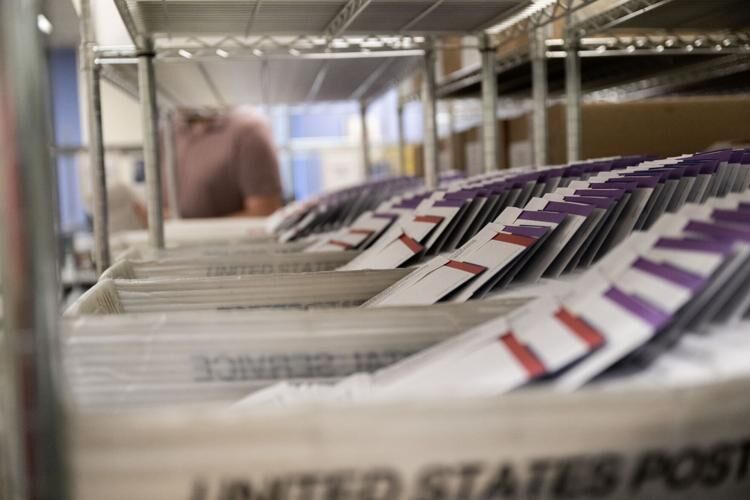
Postmaster general spars with Senate Democrats over mail-in ballot restrictions
Molly Parks
molly.parks@washingtonexaminer.com
Updated 2 hours ago
Senate Democrats sparred with Postmaster General David Steiner on Wednesday over the U.S. Postal Service’s move to stop delivering mail-in ballots in states that don’t hand over their voter rolls to the federal government. Steiner, who has stayed out of...

Douglas County water plan entering public review phase
Nicholas Fogleman
nicholas.fogleman@denvergazette.com
Updated 6 minutes ago
After more than two years of formal work, Douglas County officials are moving into the public review phase of a countywide water plan they say will help guide future development and water resources through 2050. The Douglas County Water Commission...
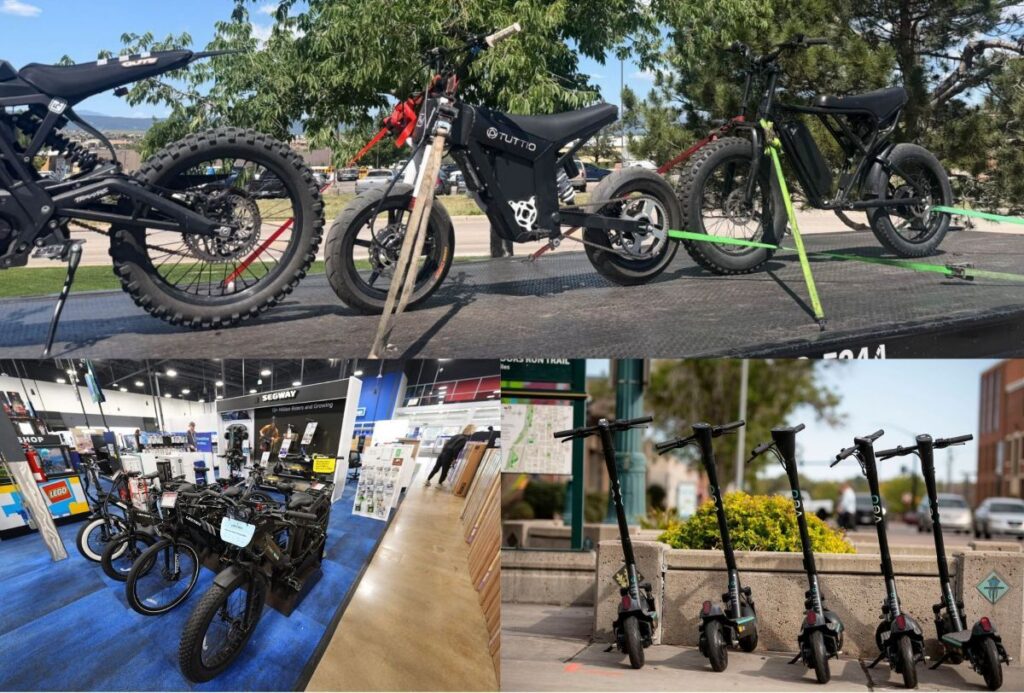
Douglas County cracks down on illegal scooter, off-road vehicle use
Nicholas Fogleman
nicholas.fogleman@denvergazette.com
Updated 5 minutes ago
Douglas County joined a growing list of local governments regulating electric scooters and motorcycles, setting standards and penalties for misuse. County commissioners approved an ordinance Tuesday regulating off-highway vehicles and low-powered scooters following broad community support and a presentation from...
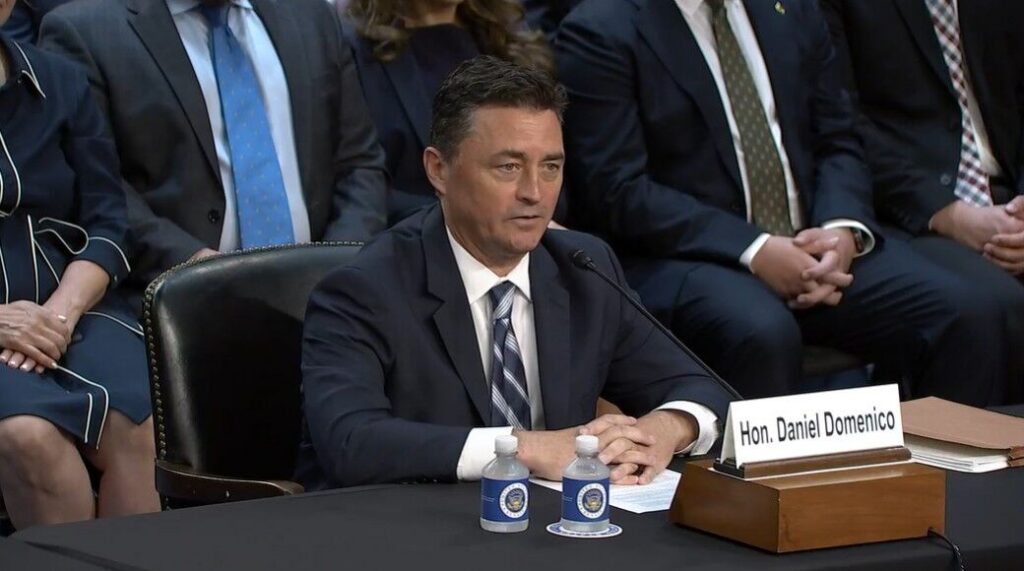
Trump’s 10th Circuit nominee declines to name 2020 election winner, defends immigration decisions
Michael Karlik
michael.karlik@coloradopolitics.com
Updated 3 hours ago
President Donald Trump’s nominee to the Denver-based federal appeals court declined to say who won the 2020 presidential election during his appearance before the U.S. Senate Judiciary Committee on Wednesday, and defended his recent rulings in immigration detention cases. U.S....
Colorado repeals attorney immigration attestation law after one year
Nico Brambila
nico.brambila@denvergazette.com
Updated 19 hours ago
One year and 12 days. That’s how long a Colorado law requiring attorneys to certify they would not use court data for federal immigration enforcement remained on the books before lawmakers repealed it. Gov. Jared Polis signed the initial legislation,...
Colorado’s ‘right to natural gas’ measure submits signatures to qualify for November ballot
Marissa Ventrelli
marissa.ventrelli@coloradopolitics.com
Updated 22 hours ago
A natural-gas rights initiative backed by Advance Colorado is likely headed to the November ballot, triggering a parallel campaign by environmental groups seeking to impose new liabilities on oil and gas operators. Petitions for Initiative No. 177 were turned in...
Colorado’s ‘right to natural gas’ measure submits signatures to qualify for November ballot
Marissa Ventrelli
marissa.ventrelli@coloradopolitics.com
Updated 22 hours ago
A natural-gas rights initiative backed by Advance Colorado is likely headed to the November ballot, triggering a parallel campaign by environmental groups seeking to impose new liabilities on oil and gas operators. Petitions for Initiative No. 177 were turned in...

Economists: Colorado budget improves slightly, but deficits still loom
Marianne Goodland
marianne.goodland@coloradopolitics.com
Updated 22 hours ago
State economists reported a stronger-than-expected bump in general fund revenue driven largely by higher individual income tax collections, yet warned that Colorado remains on track to begin the next fiscal year with a sizable shortfall. State economists upgraded “significantly” the...
PREV
PREVIOUS
Two West Slope sheriffs join pot suit
Six Colorado sheriffs, including two from the Western Slope, have joined the Drug Free America Foundation’s lawsuit against Amendment 64, which legalized recreational marijuana in Colorado. The goal of the lawsuit, according to Delta County Sheriff Fred McKee, is to force the U.S. Supreme Court to finally rule on whether states can defy federal law […]

Coffman turns 60, braces for new challenge ahead
Declaring that “60 is the new 40,” U.S. Rep. Mike Coffman welcomed some 150 guests to his birthday party on Saturday at the Summit Steakhouse in Aurora. “I hope that’s true, I really hope that’s true,” he said with a smile before dropping to the floor and doing 100 pushups at the urging of the […]