

$806M project to add express lane to I-270 approved
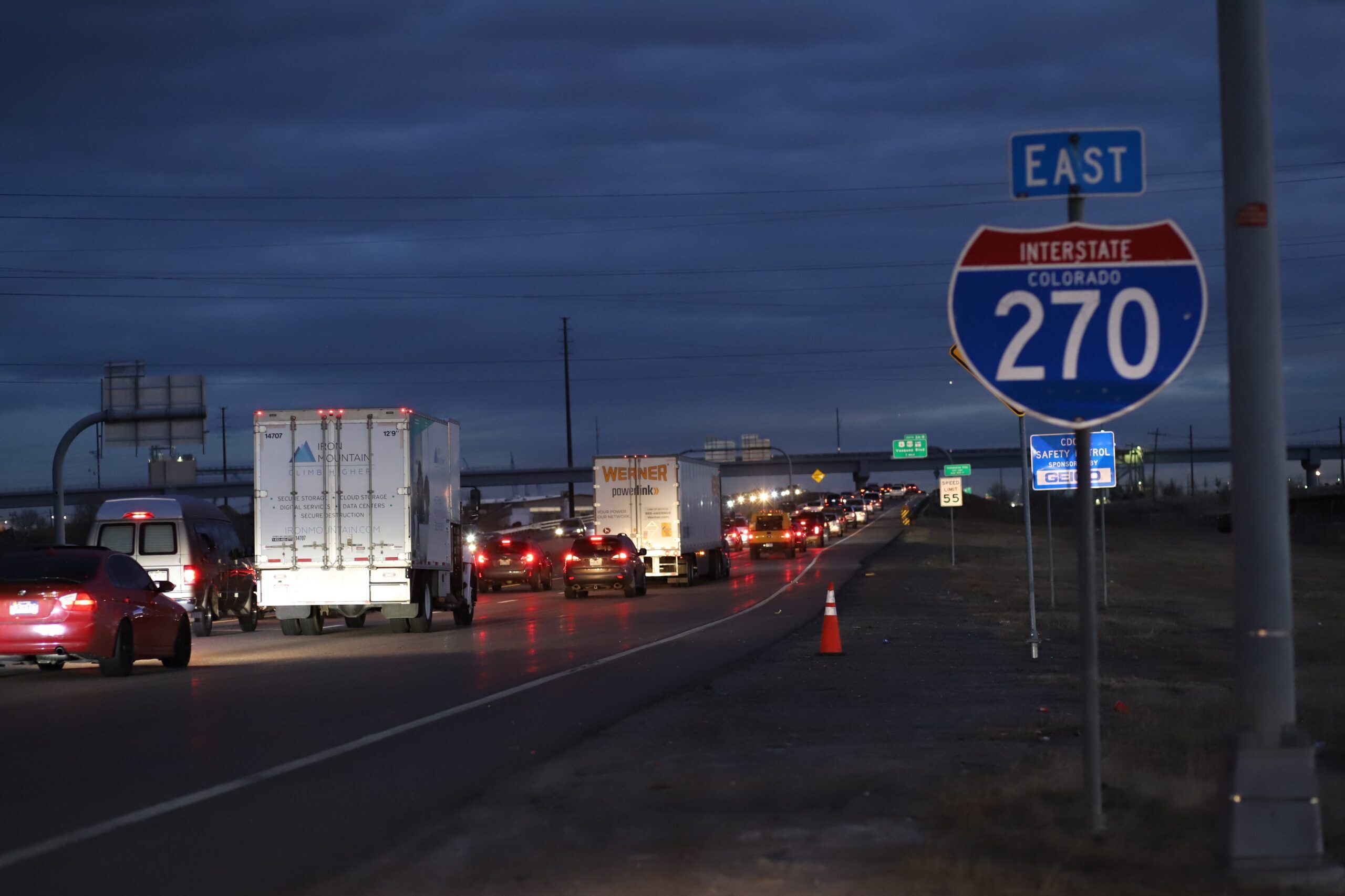
Transportation officials have approved an $806 million project to add an express lane to I-270 after years of studying proposed solutions to congestion and deterioration of the interstate.
The Federal Highway Administration and Colorado Department of Transportation have been weighing options since November to add either a general-use lane or an express lane to the 6.5-mile stretch of I-270 from the U.S. 36 interchange to I-70 in north Denver.
A final Environmental Impact Statement and Record of Decision were published Tuesday, giving officials the green light to move forward with construction. The project will include reconstructing the entire 6.5-mile stretch of interstate and adding the new lane.

Construction is expected to begin this fall.
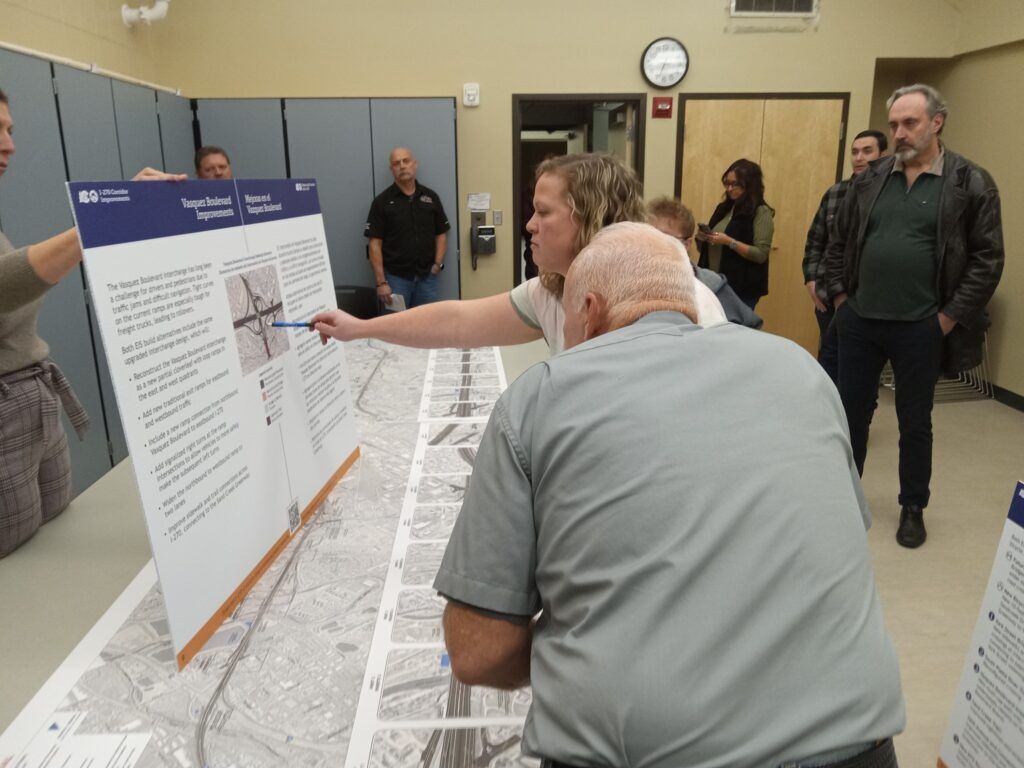
The project will also replace 12 bridges, rebuild the Vasquez Boulevard interchange, add a new pedestrian overpass bridge and improve the on and off-ramps at I-76.
Other plans were considered throughout the process, but the chosen plan “most effectively improves travel time and reliability, corridor safety, and freight operations,” the Record of Decision states.
Adams County Commissioner Julie Duran Mullica said county officials are “grateful” to the state transportation department and the federal agency for deciding to improve I-270.
“This is an important next step toward needed improvements to the I-270 Corridor that will make a real difference for the people who live, work and travel along this corridor,” Mullica said. “We’re excited to see this project move into its next phase and, ultimately, to see these long-needed improvements come to fruition for our residents, businesses and the entire region.”
The I-270 corridor improvements project team will host a telephone town hall at 6 p.m. on Oct. 6 for 133,000 residents who live along the corridor to share more information about the final design and construction phasing.
Funding will come from a combination of state and federal sources, including the Colorado Transportation Investment Office, state legislative funds and federal grants.
Phase I of the project, to fix critical bridges along the corridor, will cost $307 million. Phase II, reconstructing and redesigning the roadway, will cost $402 million. Phase III, which includes designing and reconstructing final bridges and pedestrian overpasses, will cost $97 million.
The decision ends a six-year environmental review of the corridor, which included “extensive” public comment and coordination with local government and agencies, according to a news release.
I-270 started construction in the late 1960s, according to CDOT. The highway was meant to help connect metro area residents to Stapleton International Airport, which opened in 1929 and was replaced by Denver International Airport in 1995.
The highway corridor now handles more than 100,000 vehicles every day, with up to 17% of those vehicles being freight trucks.
The state transportation agency began looking into options in 2020 to fix a variety of challenges on I-270, which, officials acknowledged, carries “far more traffic than it was designed for.”
In 2023, the state agency determined that the project was complex enough that it warranted a detailed environmental assessment. The process of creating an Environmental Impact Statement (EIS) started in August 2024.
In November, the agency released an EIS outlining issues and proposed solutions. Officials recommended adding a toll lane to the two-lane highway and finalized that decision in Tuesday’s published report.
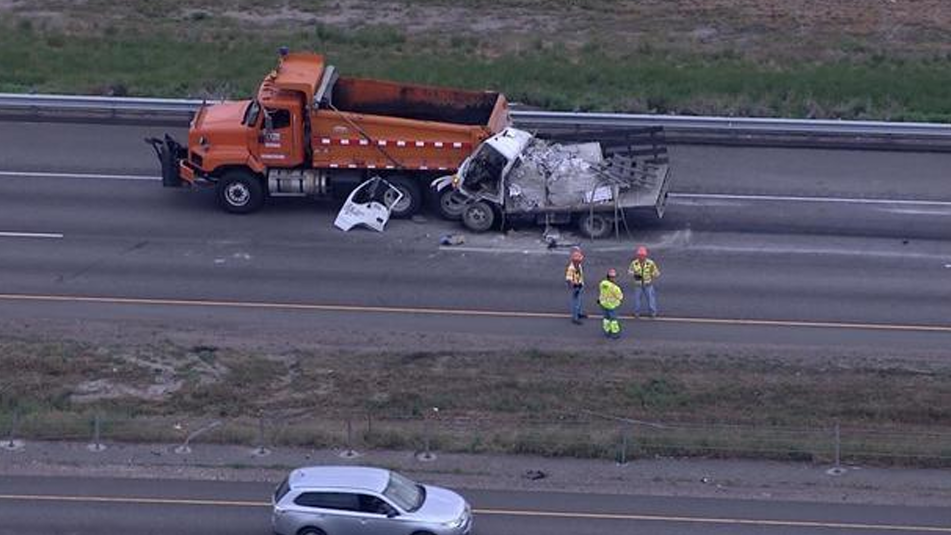
The I-270 currently averages about 42 crashes per mile per year, about 40% more than other similar freeways in Colorado, a state report said.
Between 2014 and 2022, more than 3,000 crashes were reported on I-270, with almost 1,000 reported injuries and 14 reported deaths.
At its posted speed limit, it should take up to eight minutes to drive from end-to-end. It typically takes more than twice that long in the morning and up to 25 minutes in the afternoon, according to data cited by the state report.
Without improvements, peak-hour travel times on I-270 are projected to more than double by 2050.
Other issues along the corridor include deteriorating pavement, tight interchange ramps, narrow shoulders and short merge areas.
Not everyone agrees with the newly finalized plan.
Several environmental groups, including Earthjustice and GreenLatinos, argue that adding lanes does not solve traffic problems and the interstate project will impact certain communities more than others.
The two organizations proposed another plan for the interstate that involved expanding transit, creating “green” buffers and building safer connections for people walking and biking.
Their concerns were ignored, Earthjustice wrote in a statement Wednesday.
“CDOT is choosing to widen a highway when it could be investing in solutions that actually move people while protecting the health of the communities along I-270,” GreenLatinos project manager Carlos Matutes said. “The choice is not between congestion and highway expansion. We can reduce congestion without asking communities that have already carried the burden of pollution to carry even more.”
The full Environmental Impact Statement and more information on the project are available on the state transportation agency’s website.


Denver Mayor Mike Johnston to unveil 2027 budget after weeks of warning of tough choices
Nico Brambila
nico.brambila@denvergazette.com
Updated 2 hours ago
Denver Mayor Mike Johnston will unveil his proposed 2027 budget Thursday after weeks of warning that the city is entering a tighter financial era despite stronger-than-expected revenue collections this year. The city’s general operating fund is $1.66 billion. In a...

Lawsuit challenges Douglas County commissioners’ ballot actions
Nicholas Fogleman
nicholas.fogleman@denvergazette.com
Updated 36 minutes ago
A new lawsuit against Douglas County commissioners seeks to invalidate the board’s intervention in efforts to expand the commission from three members to five and restore the original ballot language approved by more than 20,000 petition signers. The suit marks...

Denver Water proposes 6% rate increase for 2027
Nico Brambila
nico.brambila@denvergazette.com
Updated 2 hours ago
Water could be more expensive for Denver residents next year. Denver Water commissioners received a staff proposal for rate increases Wednesday expected to generate about 6% more revenue in 2027. What individual customers pay would depend on where they live...

Colorado joins lawsuit challenging changes to Endangered Species Act
Marissa Ventrelli
marissa.ventrelli@coloradopolitics.com
Updated 20 hours ago
Colorado once more joined a coalition of states challenging the Trump administration — this time on proposed rules regarding the Endangered Species Act. The pair of lawsuits challenge new rules made under Interior Secretary Doug Burgum, who earlier said the...

Colorado congressman asks DOJ to investigate violent student ICE walkout
Nico Brambila
nico.brambila@denvergazette.com
Updated 20 hours ago
U.S. Rep. Jeff Crank is asking the Justice Department to investigate violence at last week’s anti-ICE student walkout in Denver, including whether outside organizations helped organize, fund, or influence the demonstration. Crank sent a letter Tuesday requesting the investigation to...
Federal judge dismisses Douglas County’s challenge to collective bargaining law
Nicholas Fogleman
nicholas.fogleman@denvergazette.com
Updated 1 day ago
A federal judge dismissed claims brought by the Douglas County Board of Commissioners alleging that a state law granting county employees the right to organize and join labor unions violates free speech protections and conflicts with federal labor law. Douglas...

Jeffco Public Schools eliminated 350 jobs as part of budget cuts
Matt Kyle
matt.kyle@denvergazette.com
Updated 1 day ago
Jeffco Public Schools eliminated 350 full-time positions as part of ongoing budget cuts between last school year and this school year. The district has operated in a budget deficit in the range of tens of millions of dollars over the...
Disgraced ex-CBI analyst Missy Woods sentenced to prison in DNA scandal
Jenny Deam
jenny.deam@gazette.com
Updated 2 days ago
A Jefferson County district court judge on Tuesday sentenced a disgraced former Colorado Bureau of Investigation DNA analyst to a decade in prison for altering and deleting data in scores of criminal cases over several years. Jefferson County District Judge...

With its water source dry, a southeast Colorado town’s clock is ticking
Savannah Eller
savannah-eller@coloradopolitics.com
Updated 2 days ago
The Cucharas is not a mighty river, but the people of La Veta knew they had a problem brewing when it ran dry at the beginning of June. “We’re getting by,” said La Veta Mayor Doug Brgoch. “It’s not great.”...

Fort Carson soldiers run Indonesian exercise, refine communications tech
Mary Shinn
mary-shinn@coloradopolitics.com
Updated 2 days ago
Fort Carson soldiers are overseeing an expansive military exercise in Indonesia while honing new communications technology for the Army. More than 4,700 personnel are participating in the annual training, known as Super Garuda Shield 2026, taking place across several regions...
PREV
PREVIOUS

Colorado joins lawsuit challenging changes to Endangered Species Act
Colorado once more joined a coalition of states challenging the Trump administration — this time on proposed rules regarding the Endangered Species Act. The pair of lawsuits challenge new rules made under Interior Secretary Doug Burgum, who earlier said the endangered species law has been abused by federal agencies for years in order to “obstruct […]

Federal judge explores new sanctions against ex-Colorado judicial discipline director
A federal judge on Wednesday directed Colorado’s former judicial discipline director, for the third time this year, to explain why she should not sanction him for his latest conduct in his litigation against the state’s judiciary. Christopher S.P. Gregory, who served as the executive director of the Colorado Commission on Judicial Discipline between 2022 and 2024, raised […]